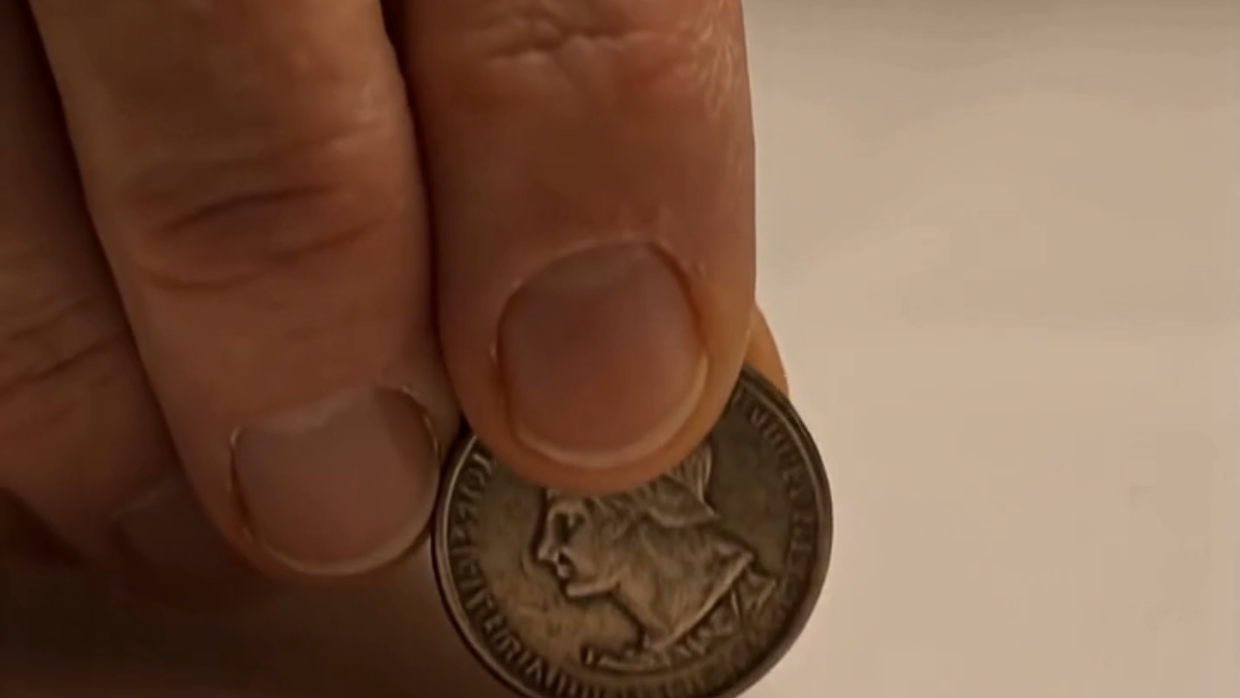
She counted 47 coins in front of the waiter… But the dessert wasn’t for her table.
The coins hit the white tablecloth one at a time. Clink. Clink. Clink.
Margaret’s fingers were steady, but her heart hammered against her ribs. Forty-seven coins. She’d counted them three times at home, spread across her kitchen counter under the flickering bulb that she couldn’t afford to replace.
The waiter—his name tag read “Brendan”—stared down at her with barely concealed disgust. “Ma’am, we accept card or cash. Bills.”
“This is cash,” Margaret said quietly.
Brendan’s jaw tightened. Around them, the low murmur of Carlotta’s Bistro dimmed. Forks paused mid-air. A woman in pearls whispered something to her husband.
Margaret kept counting. Twenty-three. Twenty-four. Twenty-five.
She was fifty-one years old. She’d worked at the packaging plant for nineteen years before the line shut down. Unemployment ran out four months ago. She’d sold her wedding ring in March.
But she was here. And she had forty-seven coins.
“Ma’am.” Brendan’s voice dropped to a hiss. “You’re holding up service.”
“I’m ordering,” Margaret said. She didn’t look up. Twenty-nine. Thirty.
“The cheapest dessert is seven dollars,” Brendan said. His tone suggested she couldn’t afford it.
“I’ll take the tiramisu,” Margaret said.
Brendan blinked. “That’s… that’s eighteen fifty.”
“I know.”
She pushed the final coin into place. Quarters, dimes, nickels, pennies. She’d arranged them in neat stacks.
Brendan stared at the coins like they were contaminated. “I’ll have to count this.”
“Please do.”
He scooped them up with both hands, coins spilling between his fingers. Margaret watched him retreat to the register, his shoulders rigid with irritation.
At the corner table, a man in a faded blue jacket sat alone. His delivery bag—insulated, logo peeling—rested against the chair leg. He was maybe thirty, with dark circles under his eyes and flour dust on his sleeves.
His name was David Chen.
Margaret knew because she’d looked him up after the third time.
The first time was six weeks ago. She’d come home from another failed job interview to find a grocery bag on her doorstep. Bread. Peanut butter. Canned soup. Apples. No note.
She’d thought it was a mistake. Or charity from the church, though she’d stopped going after Richard died.
The second time, two weeks later, the bag had fresh vegetables. Chicken. Rice. Milk.
The third time, she’d been awake. Sitting in the dark living room at eleven PM because the anxiety wouldn’t let her sleep. She’d heard footsteps on the porch.
Through the window, she’d seen him. The delivery driver. Young. Tired. He’d set the bag down carefully, glanced at the dark windows, and left.
She’d opened the door and found still-warm containers from Jade Garden. Enough Chinese food for three days.
That’s when she’d started tracking him.
She’d followed his delivery route one night, staying a block behind. Watched him stop at four other houses. Elderly Mr. Patterson on Elm. The Ramirez family with the new baby. The teenager whose parents had overdosed last year.
David Chen worked for QuickBite Delivery. He did the closing shift, nine PM to two AM. And he was stealing food.
Not for himself.
For people like her.
Margaret had gone home that night and cried for the first time since the funeral. Then she’d started saving.
Every coin. Every penny she found in the parking lot, every nickel from the coin return at the laundromat, every quarter she should have spent on bus fare but walked instead.
It took six weeks to save eighteen dollars and fifty cents.
Brendan returned, his face pinched. “It’s correct.” He sounded disappointed.
“Thank you,” Margaret said. “Please bring the tiramisu to that table.” She pointed to David.
Brendan followed her finger. “The… that man?”
“Yes.”
“You want me to bring your dessert to a stranger?”
“He’s not a stranger,” Margaret said. “He’s the reason I’m alive.”
The words came out louder than she’d intended. The couple at the next table stopped pretending not to listen.
Brendan’s expression shifted from annoyance to confusion. “Ma’am, I don’t—”
“Just bring him the tiramisu,” Margaret said. “And tell him it’s from apartment 4C.”
She stood before Brendan could respond. Her knees protested—she’d been rationing her arthritis medication—but she made it to David’s table without stumbling.
He was staring at his phone, but the screen was dark. Just giving his hands something to do.
“David Chen,” Margaret said.
His head snapped up. His eyes went wide.
“You don’t know me,” Margaret continued. “But I’m apartment 4C on Riverside. You’ve been leaving food at my door for six weeks.”
David’s face drained of color. He started to stand. “I—I don’t—”
“Sit down,” Margaret said gently. “Please.”
He sank back into his chair. His hands were shaking.
“I’m not here to get you in trouble,” Margaret said. “I’m here to say thank you.”
“You can’t—” David’s voice cracked. “You can’t tell anyone. I’ll lose my job. I’ll—they’ll press charges. I have student loans. My mom’s medical bills—”
“I’m not telling anyone,” Margaret said. “I’m buying you dessert.”
David stared at her.
Brendan appeared with the tiramisu, setting it down with exaggerated care. He looked between them, clearly hoping for an explanation.
“Thank you,” Margaret said. Brendan hesitated, then retreated.
David looked at the tiramisu like it might explode. “I don’t understand.”
“You’ve been feeding me for six weeks,” Margaret said. “Tonight I’m feeding you.”
“With coins,” David whispered. “You paid in coins.”
“It’s all I have.” Margaret pulled out the chair across from him. Her legs were giving out. “May I?”
David nodded mutely.
Margaret sat. Up close, she could see how young he really was. Twenty-five, maybe. Old enough to have debt and responsibilities. Young enough to still think he could save everyone.
“How did you know?” David asked. “About the food?”
“I saw you. Three weeks ago. I was having a bad night.”
“I thought everyone was asleep when I—” He stopped. “I’m so stupid.”
“You’re kind,” Margaret corrected. “There’s a difference.”
“I’m a thief.”
“You’re a saint.”
David’s laugh was bitter. “Saints don’t steal.”
“Saints do what’s necessary,” Margaret said. “You’ve been keeping five families fed. I checked. Mr. Patterson. The Ramirez family. The Kowalski boy. The Hendersons. Me.”
David’s eyes glistened. “How did you—”
“I followed you one night. I’m sorry. I needed to understand.”
“You should have reported me.”
“Why?” Margaret leaned forward. “So you could lose your job? So those families could go back to being hungry? So I could go back to choosing between electricity and food?”
“It’s not sustainable,” David said. “I’ve been using my employee meal credits, taking damaged orders, claiming cancellations that don’t exist. Eventually they’ll audit. Eventually—”
“Eventually you’ll get caught,” Margaret finished. “I know.”
They sat in silence. Around them, the restaurant had returned to its normal volume, though Margaret caught several glances in their direction.
“The tiramisu’s going to melt,” Margaret said.
David looked down at it. “I can’t eat this.”
“Why not?”
“Because you paid for it with coins you probably needed for something else.”
“I needed it for this,” Margaret said. “I needed to look you in the eye and tell you that you saved my life. Not just my stomach. My life. Do you understand?”
David’s throat worked. He didn’t speak.
“I was going to kill myself,” Margaret said. The words came out flat. Clinical. “I had the pills. I had the note written. And then I found food on my doorstep. Fresh food. Real food. Not from a food bank. Not expired. Not charity with pity attached. Just… there.”
A tear rolled down David’s cheek.
“I thought it was a mistake,” Margaret continued. “Then it happened again. And again. And I realized someone was choosing me. Someone was saying, ‘You matter. You deserve to eat.’ Do you know how long it had been since I felt like I mattered?”
“I didn’t know,” David whispered. “I just saw your address on a canceled order one night and the apartment looked dark and I thought—”
“You thought someone might be hungry.”
“Yeah.”
“You were right.”
David wiped his face with his sleeve. “I don’t know what to say.”
“Say you’ll eat the tiramisu,” Margaret said. “Say you’ll let me give you something back.”
“You don’t owe me anything.”
“I owe you everything.”
David picked up the fork. His hand was still shaking. He took a small bite, and something in his expression crumbled.
“When’s the last time you ate?” Margaret asked.
“I had crackers this morning.”
“David.”
“I give away my meal credits,” he said. “And I’m trying to save money. Mom’s chemo is—” He stopped. Set down the fork. “I’m sorry. You don’t need to hear this.”
“Yes, I do,” Margaret said. “Because now I understand.”
“Understand what?”
“Why you do it. You’re trying to save your mom. And you can’t. So you save everyone else instead.”
David’s face crumpled. He covered it with his hands.
Margaret reached across the table and gripped his wrist. “Listen to me. You can’t save everyone. But you saved me. That counts. That matters.”
“It doesn’t feel like enough.”
“It never does,” Margaret said. “But it’s what we have.”
They sat like that for a long moment. The restaurant noise faded into background static.
Finally, David lowered his hands. “Thank you,” he said. “For the tiramisu. For not reporting me. For—”
“For being alive?” Margaret offered.
“Yeah.”
“Thank you for the same.”
David managed a small smile. He took another bite of tiramisu.
Margaret’s phone buzzed. She pulled it out—a cracked iPhone 6 she’d had for seven years—and saw a text from an unknown number.
“This is Brendan, your waiter. The couple at table seven paid your bill. They want to remain anonymous. They also left this.”
A photo loaded. A business card. “Henderson & Associates. We’re hiring. Ask for Julie. Mention Margaret.”
Margaret stared at the screen.
“What is it?” David asked.
She showed him.
David read it, then looked up at her. “Henderson. That’s—”
“The family you’ve been feeding,” Margaret finished. “The ones with the new baby.”
“Julie Henderson is a lawyer,” David said. “Corporate law. I’ve seen the name on their mail.”
Margaret’s hands were shaking now. “This is—I don’t—”
“It’s a job,” David said. His smile was growing. “Margaret, it’s a job.”
“I haven’t worked in months. I don’t have references. I—”
“You have dignity,” David interrupted. “You have the kind of strength that saves forty-seven coins to buy a stranger tiramisu. That’s a better reference than any resume.”
Margaret felt tears coming. She tried to stop them and failed.
David pushed the tiramisu across the table. “Your turn.”
“What?”
“Eat. You paid for it. You should have some.”
“But you—”
“We’ll share,” David said. “Like you shared your story. Like I shared the food. We’ll share the tiramisu.”
Margaret picked up the second fork Brendan had left. She took a small bite. It was sweet and rich and she couldn’t remember the last time she’d tasted anything so good.
They ate in silence, passing the plate back and forth.
When it was gone, David said, “I should get back to work. I have four more deliveries.”
“Will you be careful?” Margaret asked. “With the… the food?”
“I’ll try,” David said. “But I can’t stop. Not yet. Not while people are hungry.”
“I know,” Margaret said. “Just promise me you’ll eat. Use one of those meal credits for yourself sometimes.”
“I promise,” David said. He stood, shouldering his delivery bag. Then he paused. “Margaret?”
“Yes?”
“If you get that job… if things get better for you… will you tell me? I’d like to know.”
Margaret stood too. “I will. And David?”
“Yeah?”
“When they catch you—because they will—call me. I’ll be your reference. I’ll tell them exactly what kind of man you are.”
David’s eyes filled again. He nodded, not trusting his voice.
Margaret watched him leave, weaving between tables toward the exit. The delivery bag bumped against his hip. She wondered which family would find food on their doorstep tonight. She hoped they’d know, somehow, what it meant.
Brendan appeared at her elbow. “Ma’am? The couple wanted me to give you this too.”
He handed her a folded piece of paper.
Margaret opened it. Inside, in neat handwriting:
“We know what David’s been doing. We’ve known for three weeks. We’re not reporting him because he’s the reason our daughter has food when I’m working late. But he’s going to get caught. When he does, we’ll pay his legal fees. In the meantime, we’re setting up a community fund. If you know others who need help, tell them to call this number. No questions asked. No shame. Just food. —Julie Henderson”
Below was a phone number.
Margaret read it twice. Then a third time.
“Ma’am?” Brendan said. “Are you okay?”
Margaret folded the note carefully and put it in her pocket. “Yes,” she said. “I think I am.”
She walked out of Carlotta’s Bistro into the cool October night. The street was quiet. Somewhere a few blocks away, David Chen was delivering food to someone who needed it. Somewhere in the city, Julie Henderson was probably working late, her baby asleep, planning how to help the man who’d helped her.
And Margaret was going home to call about a job.
She had forty-seven cents left in her pocket. It wasn’t much.
But it was enough for bus fare.
She decided to walk anyway. Save it for tomorrow.
Because now there was a tomorrow worth saving for.