For three years, she fed the same man every Tuesday. The last time he showed up, he left behind an envelope with a name she never expected to see.
The bell above the door chimed at exactly 6:47 a.m., same as it had every Tuesday for the past three years.
Sarah Martinez looked up from the coffee pot and smiled. Booth seven. Always booth seven.
“Morning, Frank,” she called out, already reaching for the decaf.
Frank nodded, his weathered face creasing slightly. He had to be in his seventies, maybe older. Salt-and-pepper beard, flannel shirt worn thin at the elbows, work boots that had seen better decades.
He never ordered. Didn’t need to.
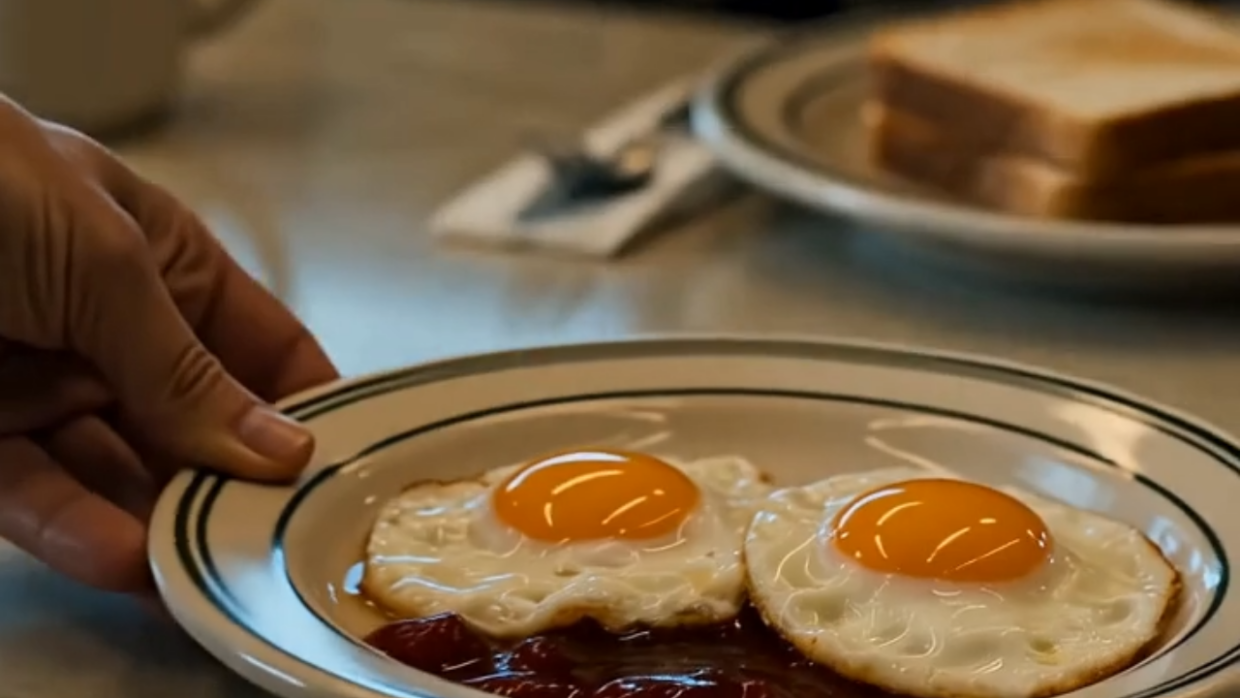
Black coffee, two eggs over easy, wheat toast, no butter. $8.47 with tax.
Sarah had stopped charging him two years ago.
“On the house,” she’d say every time, waving away the crumpled bills he’d pull from his pocket.
Frank would nod, leave a twenty under his plate anyway, and shuffle out by 7:15.
This Tuesday started the same.
Sarah slid the plate across the counter, the eggs still steaming. “Careful, hot.”
Frank looked at her for a long moment. Longer than usual.
“You’re a good person, Sarah,” he said quietly.
She laughed. “It’s just eggs, Frank.”
“No.” His voice was firm. “You’re a good person.”
Something in his tone made her pause, coffee pot still in hand. But Frank was already focused on his plate, cutting his eggs with the side of his fork like he always did.
Sarah’s daughter Emma burst through the kitchen door, backpack bouncing. “Mom, I need seventeen dollars for the field trip and Mrs. Patterson says—”
“Not now, baby.” Sarah glanced at the clock. “You’re gonna miss the bus.”
Emma groaned but headed for the door. “Love you.”
“Love you more.”
The morning rush hit at 7:05. Construction workers, nurses ending night shifts, the courthouse crowd grabbing coffee before the 8 a.m. docket.
Sarah didn’t notice Frank leave.
She found the twenty under his plate at 7:43, same as always. But there was something else.
A plain manila envelope, sealed, with her full name written across the front in careful block letters.
SARAH ELENA MARTINEZ.
Her middle name. She never used her middle name.
“Weird,” she muttered, tucking it into her apron pocket. The lunch rush was coming and table four needed ketchup.
The envelope stayed in her pocket through the afternoon shift. Through Emma’s homework battle at table two. Through the dinner crowd and the dishes and counting the register.
It wasn’t until 9 p.m., after she’d locked the door and Emma was asleep in the back office, that Sarah finally opened it.
Inside was a single piece of paper, folded in thirds.
A business card fell out first.
RICHARD CASTELLANO, ATTORNEY AT LAW.
Sarah’s stomach dropped. Lawyers meant problems. Lawyers meant money she didn’t have.
She unfolded the paper with shaking hands.
It was a letter, handwritten in the same careful block print.
*Dear Sarah,*
*If you’re reading this, I’m gone. Don’t be sad. I’m 74 and I’ve had a good run.*
*You don’t know me, but I’ve known you for three years. Every Tuesday I watched you give food to people who couldn’t pay. I watched you help that kid with his math homework. I watched you work double shifts so your daughter could take piano lessons.*
*My wife died six years ago. No kids. No family. I spent two years not knowing what to do with myself.*
*Then I found your diner.*
*You never asked why I came every week. Never asked why an old man sat alone in a booth for an hour. You just smiled and called me Frank and made me feel like I mattered.*
*That’s worth more than you know.*
*I’ve taken care of some things. Call Richard. He’ll explain everything. Don’t argue, just accept it. You’ve earned it.*
*Thank you for giving me a reason to wake up on Tuesdays.*
*Frank Castellano*
Sarah read it three times.
Her hands were shaking so hard the paper rattled.
She pulled out her phone and dialed the number on the business card before she could talk herself out of it.
A man answered on the second ring. “Richard Castellano.”
“This is Sarah Martinez. I… I found a letter. From Frank?”
A pause. “Ms. Martinez. Yes. I’ve been expecting your call.” His voice was gentle. “I’m very sorry for your loss.”
“I don’t… I didn’t really know him. He was just a customer.”
“He spoke of you often.” Richard cleared his throat. “Ms. Martinez, my father left very specific instructions. I’m his son and his executor. Could you come to my office tomorrow? There are documents you need to sign.”
“Documents?”
“It’s better if we discuss this in person. Would 10 a.m. work?”
Sarah looked around the empty diner. The cracked vinyl booths. The flickering light above table three she couldn’t afford to fix. The stack of past-due notices in the drawer under the register.
“I… yes. Okay.”
“Excellent. I’ll see you then.”
He hung up before she could ask anything else.
Sarah didn’t sleep that night.
At 9:47 a.m., she stood outside a glass office building downtown, Emma’s hand clutched in hers.
“Why are we here?” Emma asked.
“I’m not sure, baby.”
Richard Castellano’s office was on the third floor. He was younger than she expected, maybe fifty, with kind eyes and his father’s careful way of moving.
“Ms. Martinez.” He shook her hand. “And you must be Emma.”
Emma nodded shyly.
“Please, sit.” Richard opened a folder on his desk. “I’ll get straight to it. My father was a retired contractor. He built half the commercial buildings in this city. He was also a very private man who didn’t believe in fanfare.”
Sarah’s heart was pounding.
“Three years ago, after my mother passed, he became depressed. Wouldn’t leave the house. Wouldn’t eat.” Richard’s voice wavered slightly. “Then he started going to your diner every Tuesday. He’d come home different. Lighter.”
“I just… I gave him breakfast.”
“You gave him more than that.” Richard slid a document across the desk. “This is the deed to the building your diner occupies. As of last Tuesday, you own it outright. No mortgage, no liens.”
Sarah’s vision blurred. “What?”
“My father purchased the building eighteen months ago from your landlord. He’s been your landlord since then, though you didn’t know it. The building is now yours.”
“I can’t… that’s not…”
“There’s more.” Richard pulled out another folder. “This is a trust account established in Emma’s name. It contains sufficient funds for a four-year undergraduate degree at any public university in the state, plus living expenses.”
Emma gasped. “Really?”
“Really.” Richard smiled at her, then turned back to Sarah. “And this is a business account in your name. It contains $150,000. My father’s instructions were specific: use it to renovate the diner, or expand, or whatever you choose. It’s yours.”
Sarah couldn’t breathe. “Why?”
“Because you were kind to a lonely old man who had nothing left to live for. You didn’t know he had money. You didn’t know who he was. You just saw a person and treated him with dignity.” Richard’s eyes were wet. “That’s rare, Ms. Martinez.”
“I didn’t do anything special.”
“You did everything special.” Richard pulled out one more envelope. “He wrote you another letter. This one’s personal. I haven’t read it.”
Sarah took it with trembling hands.
*Sarah,*
*Richard probably told you I was depressed. That’s a nice word for it. Truth is, I was waiting to die.*
*Then I walked into your diner because it was raining and I needed coffee.*
*You smiled at me like I was somebody. Like I mattered.*
*Do you know how long it had been since someone smiled at me like that?*
*I came back the next Tuesday to see if you’d do it again. You did.*
*I kept coming back because your diner was the only place I felt human.*
*I watched you struggle. I saw the shut-off notices you tried to hide. I heard you on the phone with the bank, begging for more time. I saw you give your daughter the last piece of pie and tell her you weren’t hungry.*
*I saw you give free meals to people who needed them, even when you needed them yourself.*
*That’s who you are.*
*I have more money than I’ll ever spend and no one to spend it on. My son is successful and doesn’t need it. So I’m giving it to someone who will use it to keep being kind.*
*Don’t feel guilty. Don’t feel like you owe me anything. You already gave me what I needed.*
*You gave me Tuesdays.*
*Live a good life, Sarah. You’ve earned it.*
*Frank*
Sarah was crying so hard she couldn’t see the words anymore.
Emma wrapped her arms around her mother’s waist. “Mom? Are you okay?”
“Yeah, baby.” Sarah pulled her daughter close. “Yeah, I’m okay.”
Richard slid a box of tissues across the desk. “There’s one more thing. My father left instructions for his funeral. He wanted it small. Just me, my wife, and… well, he hoped you’d come.”
“When?”
“Thursday. 2 p.m., Riverside Chapel.”
“I’ll be there.”
Thursday afternoon, Sarah stood in a nearly empty chapel, holding Emma’s hand.
Richard was there with a woman who must have been his wife. A priest. A handful of older men Sarah didn’t recognize.
And booth seven from her diner.
Sarah stopped dead. “Is that…”
“He wanted it here,” Richard said quietly. “He said booth seven was where he felt most at home. I had it removed and brought over. I hope that’s okay.”
Sarah’s throat was too tight to answer.
The service was short. The priest talked about a man who built things, who loved his wife, who found joy in simple kindness.
When it was over, Richard approached Sarah. “The booth is yours, of course. I’ll have it returned tomorrow.”
“No.” Sarah’s voice was firm. “Leave it here.”
“Here?”
“Yeah.” She looked at the worn vinyl, the scratches on the table, the spot where Frank had sat every Tuesday for three years. “This is where he wanted to be. So this is where he should stay.”
Richard smiled. “He’d like that.”
Three months later, Martinez Diner reopened after renovations.
New booths. New kitchen equipment. New sign out front.
But booth seven stayed exactly the same.
Sarah had a small brass plaque installed on the wall beside it.
FRANK’S BOOTH
IN MEMORY OF FRANK CASTELLANO
WHO TAUGHT US THAT KINDNESS MATTERS
And every Tuesday morning at 6:47, Sarah poured a cup of black coffee and set it at booth seven.
Just in case.
One Tuesday, six months after the reopening, a young man in an Army uniform walked in.
He looked around, uncertain.
Sarah smiled. “Sit anywhere you’d like, honey.”
He hesitated, then slid into booth seven.
“Coffee?”
“Please. Black.”
Sarah poured, noticing the shadows under his eyes, the way his hands shook slightly.
“You okay, sweetheart?”
He looked up, surprised by the gentleness in her voice. “Just got back. Still adjusting.”
“Where from?”
“Afghanistan. Nine months.”
Sarah set down the coffee pot. “Breakfast is on the house.”
“You don’t have to—”
“I know.” She smiled. “But someone once taught me that kindness matters. What’ll you have?”
The soldier’s eyes were wet. “Eggs over easy? Wheat toast?”
“Coming right up.”
As Sarah walked to the kitchen, she glanced back at booth seven.
The morning light was streaming through the window, illuminating the plaque on the wall.
And for just a moment, she could have sworn she saw Frank sitting there, smiling.
“Thank you,” she whispered.
The soldier looked up. “Ma’am?”
“Nothing, honey.” Sarah wiped her eyes. “Just talking to an old friend.”
She brought him his eggs, refused his money, and watched him eat.
When he left, there was a twenty-dollar bill under his plate.
Sarah picked it up, laughing through tears.
Some lessons, she thought, are worth passing on.
She took the twenty and put it in a jar under the register.
The label read: FOR PEOPLE WHO NEED IT.
By the end of the month, the jar was empty.
By the end of the year, she’d filled it seventeen times.
Emma got accepted to State University with a full scholarship, but Frank’s trust fund meant she could focus on studying instead of working three jobs like Sarah had.
The diner expanded into the space next door. Sarah hired four new people, all of them single parents who needed flexible hours.
And every Tuesday, booth seven stayed reserved until 7:15.
Most weeks it sat empty.
But sometimes, someone would sit there who looked like they needed to feel human again.
And Sarah would smile and pour coffee and remember that kindness isn’t about grand gestures.
It’s about showing up.
It’s about seeing people.
It’s about making someone feel like they matter.
Frank taught her that.
And she spent the rest of her life teaching it to everyone who walked through her door.
Five years later, on a Tuesday morning, Sarah was training a new waitress named Monica.
“That booth,” Monica asked, pointing to booth seven. “Why’s it always empty?”
Sarah smiled. “That’s Frank’s booth. It’s for people who need to remember they’re not alone.”
“Who’s Frank?”
“Someone who taught me everything important.”
Monica looked at the plaque. “Must have been a good teacher.”
“The best.” Sarah poured two cups of coffee. “Come on, I’ll tell you about him.”
They sat in booth seven, and Sarah told the story.
About the quiet man who came every Tuesday.
About the kindness that saved her life.
About the legacy that kept growing, one free meal at a time.
“Wow,” Monica whispered when she finished. “That’s beautiful.”
“Yeah.” Sarah looked around the diner—full of people, full of life, full of second chances. “Yeah, it is.”
The bell above the door chimed.
Sarah looked up, smiled, and called out, “Sit anywhere you’d like, honey.”
And the day continued, ordinary and extraordinary, exactly the way Frank would have wanted it.
Because in the end, that’s what kindness does.
It doesn’t just change one life.
It echoes.