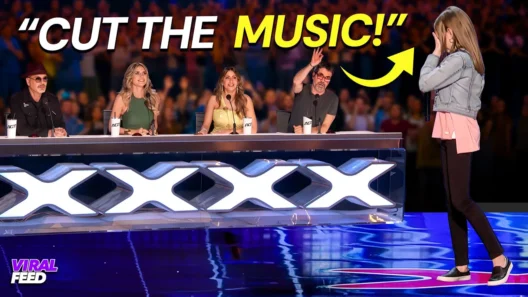
Backstage was already boiling before the first big risk hit the stage. A contestant fanned herself and groaned that it was so hot her makeup was melting. A friend shot back, half-mocking, half-soothing: “Oh, you’re so dramatic.” Then the doors swung open, lights spilled forward, and the third episode of America’s Got Talent 2026 turned into a night about nerve. Acts who had day jobs and night dreams. Daring builds that could fail in a heartbeat. And comedy sharpened by years of grind.
The season has been a tug-of-war between showmanship and singularity: Is an act bold enough to be unforgettable, and tight enough to carry that memory past the moment? Episode 3 wrestled that question again and again, sometimes to a heartbreak, sometimes to a roar. It made for a longer, livelier argument about what a life on stage demands—and what audiences reward.
Business by Day, Bold by Night
Infinite Spin strode out first in sequins and purpose. The group introduced themselves with a grin: “We are fabulous.” They were from Sacramento, and they didn’t just perform together; they worked alongside each other, too. “We work in environmental consulting, in lobbying, and we’re all businesswomen,” one member said, owning the full story—spreadsheets by morning, spotlight by night. They called their act Infinite Spin, and they were candid about why they were there: after long days of meetings and memos, performing let them be “a totally different person” and let their “passion shine.”
From the first beat, their routine tried to push camp into choreography. Shoes, signs, show-womanship—somewhere between a rehearsal joke and a statement of rebellion, it aimed for wild and whipped toward wobbly. A judge’s question about whether the idea came from a night out drew laughter and the kind of honesty that makes the room lean forward. “Safety first, Simon,” one of the women promised, then cracked, “Of course. We definitely had a few drinks.”
But looseness can be a liability on a stage this sharp. One judge, trying to steady the moment, wished the plan had matched the personality. She pointed to an earlier sign-spinning act that had “still gave us some showmanship” and then leveled with them: “This was just a bit all over the place. This is a no for me. Sorry.” Another judge echoed that, urging more polish and focus. The final word came like a mentor’s pat on the shoulder and a reality check all at once: “I think this is we call work in progress. We’ll see you again sometime in the future, I think. I would have said yes. They’ve said no.”
It stung, but the team handled it with the grit of people who know the difference between an off night and a bad idea. “We really, really appreciate it, and I’m so proud of these girls,” one member said as they headed off, businesslike to the end.
A Question Too Far, Then a Joke Even Further
The show turned playful and prickly moments later when the panel started peppering another contestant with personal questions, and one voice from the desk ribbed a colleague: “Why are you asking all these questions?” It was a reminder of what makes the talent show both tender and chaotic—artists arrive with a dream, judges with taste and television ticks, and in the space between, acts find their footing or lose the room.
The Balloon You Didn’t See—and the Laugh You Did
Then came Akira, 51, from Japan. Calm. Warm. Precise with his words even as his English bent around the edges. He explained that performing was his full-time job back home and that he’d been at it for about a decade. When asked if he wanted to explain the act, he shook his head. Better to show it than say it.
What followed wasn’t a typical talent-show crescendo. It was a feather-light piece of mischief and timing that skipped right past literal description. At one point, he gently urged the room along—”Slowly. More slowly. Okay. Okay. Okay.”—as if coaxing everyone into the same comedic breath. Then, almost as quickly as the trick promised to reveal itself, it swerved. A judge blinked and deadpanned, “You came all the way from Japan to show us that. Well, not show us that, actually.” And yet another judge leaned in with a kind of delighted frustration: “I actually don’t know what it was, but it made me laugh.”
“I am so honored to be here,” Akira told them at the start. Minutes later, near the end, he stood there, arms soft at his sides, and said simply, “I gave everything.”
Comedy often lands hardest when it re-teaches an old truth. In Akira’s case: you don’t always need to see the punchline to feel it. One judge said, “You are really, really funny. I love you.” Another tried to resist and failed: “I want to say so bad that I didn’t like it, but I did like it.” The panel split along taste lines, but the chemistry was unmistakable. When a holdout said, “I’m saying no. Absolutely not,” the moment set up a classic TV seesaw and a finale that matched the mood. A gravelly nod closed it: “A 100% yes.”
Some nights, AGT doesn’t crown a lesson. It crowns a feeling. The room exhaled as applause washed back toward the stage. A judge, almost unexpectedly tender, murmured, “That made me quite emotional.” Then, with a showman’s wink to the people who made the whole thing possible, another voice announced, “This is my favorite audience.”
The Machine With a 50-50 Shot
Two men in safety vests wheeled out a contraption that looked like a carpenter’s dream and a producer’s nightmare. “This is a chain reaction machine,” said Steve Price, standing shoulder-to-shoulder with his partner, Mark Robbins. One hailed from Michigan, the other from Minnesota. “We’re a professional chain reaction artist,” Steve added, their grammar a little off, their purpose not at all. This build, they said, was among their “most ambitious” ever—more than a week of “twelve, fourteen hour days nonstop.”
There are acts that risk a flat note. Then there are acts that risk gravity. In a twist that delighted the audience and raised the stakes, the host volunteered to be part of the machine. “Terry Crews has volunteered to actually be a part of the machine,” one of the builders said, and the camera cut to Terry getting strapped in, half-heroic, half-“what did I just agree to?”
The build strung a forest of tiny chances across the stage—marbles that could stick, wedges that could slip, a wheel that could spin too slowly by a single breath. A judge whispered the math out loud, probably for all of us watching at home: “It just takes one thing placed wrong, and they are screwed.”
They counted down. Terry hung still. Then release. A ball dropped. A lever flipped. A path of dominoes burst to life and for a handful of seconds it was perfect, straight out of a toy box mirage. “It’s perfect speed. So good so far,” someone breathed—to the builders, to the gods of physics, to whoever would listen.
And then the nightmare. A slow roll died out on a track, a piece we couldn’t see gripped at nothing, and a murmur rippled across the room: “Oh, no. It’s, like, losing momentum.” The next beat hung there, daring the moment to hold. A small nudge from a legal rescue point brought it back to life, the way great live theater sometimes gets a second chance in the same breath. A wheel wobbled and caught. “Oh, the wheel. The wheel. The wheel,” cried a voice—half despair, half awe—as the last cascade clattered home. When it landed, the applause said everything: it’s not just about whether it worked. It’s about whether you saw them risk it.
The judging was deliciously human, too. Sofia praised the labor: “I can tell that that was so much work for you guys. I mean, I cannot even imagine the preparation to be able to have all this going and so perfectly. So good job.” Another judge wanted more help for the audience: “Because I wasn’t aware of exactly what was going on, I would have liked a little bit of commentary so I could follow along.” Simon quipped the line heard round the internet: “Well, I think if you’re above the age of four, you could understand it. Yes.”
“I actually thought it was brilliant. It was so clever. I think people are gonna love watching this.”
The panel still split: “It’s a yes for me,” one said. “No. It’s a no for me. Found it boring,” said another. “Yes,” countered a third. Three yeses, and the duo was through, the next round practically begging them to go even bigger—and to narrate the chaos as it unfolds.
Thirteen Years, Three Jobs Lost, and One Immaculate Set
Some acts arrive with an origin story that already sounds like an opening monologue. Chris Sosa had that and more. “Since I was a kid, I’ve always been a fan of comedy,” he said backstage. The path wasn’t a straight line. “I worked at McDonald’s, got fired. I worked as a lifeguard, got fired.” He tried retail, too. “I was also working at Steve Madden. I was selling the heels. I did get fired, though.” He shot a look at the camera that said, Now do you see why I’m here? Seconds later he all but wrote his own cold open: “I really wanna win the whole thing. I hope my landlord sees this because he’s still waiting on his rent right now, and I just want him to know it’s coming.”
On stage he was crisp. “What’s your name?” a judge asked. “I’m Chris…” he started, tripping over excitement and then locking in: thirty-two, from Humble, Texas—”It’s spelled like Humble,” he joked—and a stand-up for thirteen years. The dream? “The greatest entertainer of all time. I wanna be up there with the tops. Movie stars, shows. I wanna do it all. Manifest.”
Then the set. In a handful of minutes he embroidered identity, family, and physical comedy together with a clean stitch. He said he had Puerto Rican, Dominican, and Mexican roots—and then dropped the twist that split the room with recognition: “And I can’t speak Spanish.” He told us his parents had “just learned English” and so raised him with it, which is how a kid from a Latino home in Texas could wind up talking like a ranch-hand uncle. He smacked the sound of it perfectly: how “country folks talk to each other” and somehow “say everything and nothing at the same time.”
Hey. What going on, Charles? Shoot. I can’t call it. Hey. I’ll tell you one thing, though. Hey. I’ll tell you one thing for sure. Let me tell you something. I couldn’t even tell you.
From there he danced—literally. “What I lack in language, I gain and move, people,” he teased. He credited his dad with teaching him the universal cure for awkwardness: rhythm. “I’m gonna learn you how to dance,” his father told him. Then came the bit that brought the house down: “So you’re gonna take it your hang… You’re gonna get yourself a wedgie… and you take it out with no hands.” The call-back landed like a drumbeat—”Y’all wanna know the greatest lesson I learned that day?”—followed by the country koan that had become his signature: “I couldn’t even tell you.”
It was clean. It was warm. It was unflappable. And it never stopped being funny. The panel knew it, too. “The most important thing is you’re funny,” Simon said, then offered the bluntest metric in live comedy: “If you don’t get the audience in about thirty seconds, you are toast.” He grinned. “Every part of that routine was funny.” Another judge went further: “I had a feeling you were gonna be great, but I didn’t think you were gonna be this great. You didn’t miss one joke.” Sofia, visibly delighted, said she related to “every single one” of the bits and added, “I’m so proud that a Latin guy can be so funny. Very proud of you.” Mel put a bow on it: “My cheeks are killing me from laughing,” she said. “You gave me that proper belly laugh.”
By the time a judge called him “one of the best contestants we’ve had today,” the decision felt inevitable. The yeses tumbled toward him, and with them a path to bigger rooms and tighter sets. Thirteen years into a career, he finally had the crowd he was built for and a TV moment to prove it.
A Variety Turn That Needed One More Turn
Not every strong idea lands on its first try. A performer introduced herself with a wink: “My name is Lady Tada.” The name promised flash reveals and sudden flourishes, and she had plenty of skills to wave around. But variety, more than almost any other genre, isn’t just about ability—it’s about escalation. The panel saw hard work and scattered highlights, then told her the truth she probably knew already: “You know how to do a lot of things, but nothing got to, like, a great, great level.” The advice was steady and kind. “Bit more practice. Come back again.” It landed with the same weight as the earlier “work in progress” verdict: sometimes the best yes is the one you earn two auditions from now.
What the Night Said About Talent
Thread the acts together and the episode reads like a case study in risk—comic, mechanical, personal. Infinite Spin reminded us that fun has to be framed or it spills. Akira proved that laughter can be the cleanest magic trick in the room. The chain reaction team showed how craft becomes theater the moment you let an audience witness the possibility of failure. And Chris Sosa proved the old rule that never ages: write what you know, sharpen it for strangers, and then perform like your rent is due.
Episode 3 also gave a little seminar in judging. There were lines that will echo through fan threads for weeks. The panel sparred over how much explanation an act needs versus how much show-and-tell should simply be allowed to sing. When one judge asked for more commentary to follow the machine, another cracked, “If you’re above the age of four, you could understand it.” It was tart, sure, but it got at something real: there’s a fine line between guiding an audience and underestimating them.
Just as important were the gentler notes. After Akira, a judge confessed the performance made them “quite emotional,” and another called the crowd their “favorite audience.” That generosity can sound like showbiz frosting, but on this night it felt earned. The audience wasn’t just watching. They were part of what kept marbles rolling and punchlines peaking. They gasped in unison when the machine hesitated, and they cheered with their whole chest when Chris’s “wedgie” technique—part parody, part pure movement—brought the room together.
A Season Gaining Steam
There’s a reason these episodes hit harder as the season settles in. The acts get braver. The panel gets bolder about taste. The little human asides—someone fanning herself because the lights turned the backstage corridor into a sauna—start to feel like part of the shared story. Even the snarky moments carry a core of care. In one exchange early on, a judge cramped the pace with too many questions about home life, and a colleague snapped, “Why are you asking all these questions?” The point wasn’t to shut anyone down; it was to keep the focus where it belonged: on the act, on the craft, on the seconds that matter.
By the end of Episode 3, you could feel the season gathering its themes. There’s the running argument about novelty: is something new enough to warrant a lane by itself, or must it hit familiar beats to carry a crowd? There’s the question of scale: the chain reaction team vowed that, if they won, they’d put the prize toward “a huge warehouse” and build machines “so impressive and so large” that they’d “warrant their own Super Bowl.” You could almost see the blueprints in their eyes.
And there’s the thread of persistence. Thirteen years for Chris Sosa to get to a moment where “every part” of his routine sang. Ten years for Akira to finesse a style so delicate it works best when the viewer can’t quite pin it down. Long days and longer nights for the builders, “twelve, fourteen hour days nonstop,” to make sure a single wheel would eventually spin at just the right second. These aren’t accidents. They’re crafts honed across years, waiting for the night when risk and readiness line up.
The Aftertaste of a Live Night
What lingers are the textures. The way a judge said, with clear surprise, “You don’t look like that kind of guy, actually,” after Akira twisted expectations. The way the chain reaction’s hiccup exposed the crowd’s nerves, each little “oh, no” a vote of investment. The way Chris’s Texas rhythm knocked around the end of each joke: a shorthand for the culture he grew up in and the stages he hopes to own. Even a dismissal—not harsh, but honest—carried the music of a future return: “Come back again.”
The night didn’t settle the question of what AGT rewards most. It redrew it. Surprise matters. So does stamina. So does the sensation that you’re watching something no one else in the room could pull off, not in that exact way, not in that exact moment. That’s the needle Akira threaded. That’s what the builders courted with every carefully placed tilt and track. That’s what Chris turned into a laugh so clean you could time a metronome to it.
And then there was the give-and-take that defines a show like this. Acts make the stage electric. Judges squeeze it into shape. The audience keeps the current flowing. When it truly clicks, as it did several times in Episode 3, it feels less like a contest and more like a live-wire collaboration.
Where It Goes From Here
Episode 3 left us with acts to root for and skills to argue about. Infinite Spin has a spirit built for late nights and another shot; they’ll need sharper edges to match their joy. The chain reaction duo earned their second chance the hard way and now know exactly how much narration can help heighten the wonder. Akira walked out with laughs that didn’t require explanation—only trust. And Chris Sosa picked up the kind of momentum comedians dream about, the kind that can carry across rounds and into tours.
That’s the beauty of this point in the season: nothing is settled, and everything feels possible. If you want to feel the tension of a machine daring physics, watch a joke find a room in real time, or see how a single brave idea can make an entire theater lean forward together, this episode delivers. Watch the full video to catch the risks, the recoveries, and the moments that made a packed house forget the heat and just live in the show.