The surprise that felt inevitable
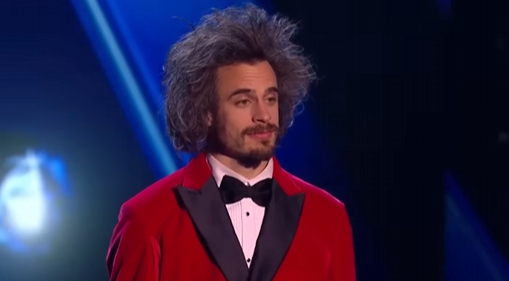
By the time the confetti fell and the cheers rose, the feeling was less shock than release. Britain had spent a season asking for joy, and a Norwegian clown with a radiant grin kept answering. The video gathers every beat of Viggo Venn’s path through Britain’s Got Talent 2023, a trail of stumbles so artful they turn out to be steps, and jokes so bare their punchlines glow. It lets us watch, again and again, as something that looks like chaos becomes a plan — and then a win.
He begins by reducing the stage to a playground, and the judges to co-conspirators. He ends by making the nation into a chorus. The journey in between is where the trick really happens. It’s where he explains a joke while telling it, goads the panel while thanking them, and flips live television from a pressure cooker into a toy. It’s also where we hear, in simple lines and sideways glances, how a clown builds a world with almost nothing but nerve and timing.
The audition: a face, a country, and the first switch
What comes off at first as a fumble is actually a thesis. Venn pretends to misread the room, then reads it perfectly. He points to the judge everyone watches and makes a game of the gap between what we assume and what we see. He takes the stoutest figure on the panel — the emblem of the format — and makes him into a prop, without malice, then turns to the audience and gifts them the payoff.
“Simon’s face is like this.”
Laughter lands before meaning does, and that’s the point. Venn follows it with a cultural feint that doubles as cheeky reassurance:
“In Norway, that means you’re doing really good.”
It’s a sly formulation. The joke is not Norway, not Simon, not even the face. The joke is the distance between a performer’s panic and our desire to see him succeed. He collapses that distance by admitting it out loud and announcing, in effect, that awkwardness is now the show. In a weekend talent arena built to reward polish, he frames rough edges as his instrument.
Moments later, when the crowd wants more, he toys with refusal. He asks whether there’s “any more” then answers himself, then says “no” and “no” again, dusting the stage with tiny stops that signal he’s in control by pretending to lose it. This pattern repeats across the season: the grin, the stumble, the switch, the control.
Doing as Simon says (and not doing it at all)
The second act seals the pact. Venn arrives promising order where there was pandemonium. He faces the judge he teased and promises respect, then shows us what he’s really setting up: a slow boil that ends with another topple into glee.
“Hello, Simon.”
“I’ll be serious today.”
“I’ll do as Simon says. I’ll, put this here and I introduce myself properly.”
It sounds deferential, almost meek. It is not. It’s a spoof of television ritual — the tidy intro, the proper setup, the dignity of a conventional contestant — that lets him derail expectations a second later. He even gives the formal line the format wants before bending it into nonsense that somehow explains him better than any bio could.
“My name is, Vigo Venn.”
“That means my mother is Norwegian and my dad is a diagram.”
The father who is a diagram is a blueprint. Venn opens a door to the essential truth of clowning: identity as geometry, a person drawn as a shape you can move around. It’s a quick hint that his act won’t be about prowess but about perspective — how you look at a person, a rule, a show. The earnestness is real, but so is the sabotage. He promises to behave, then sets up one of the season’s purest running gags: the obsessive introduction that never quite lands, a name that changes mid-sentence, an identity in flux by design.
The language games: Bruno or Juan?
Names, in Venn’s world, bend. They are sound first, sense second. He leans into the show’s fresh dynamics by greeting a new judge not with reverence but with a linguistic slip that lets him play with power. The set-up is mock-formal — he wants to introduce himself the right way. But in his mouth, the right way is the funny way, and the funny way is the honest way: he is nervous and delighted and very much aware of who sits to his left.
“My name is”
“Juan. My Bruno. My name is Bruno.”
“You are Bruno, the new guy.”
Here’s the real move: he stumbles into the judge’s own name and then circles it, turning a slip into a duet. He flatters and teases at once, acknowledging transition — a new personality on the panel — while reclaiming it for his act. The exchange makes him a colleague, not a supplicant, a performer who can hold court with television royalty by pretending he can’t find the right word. It also fortifies his persona as an exile in language, which pays off later when he sings a line so simple it transforms into a device.
The crowd rewards the dance because everything about it feels safe and high-stakes at once. The laughter here is never cruel, because the first fool is always the man on the stage, and he is the first to point at himself.
The catchphrase that wasn’t: “Hello, darling. It’s a man.”
There’s a line that recurs through Venn’s performances, a fragment that at first sounds like a misheard lyric or a machine translation. It becomes, with repetition, a key. He says it like an announcement, then like a greeting, then like a song. It’s an anti-catchphrase so blunt it resets the room each time it appears.
“Hello, darling. It’s a man.”
He drops it as if stating the obvious, then turns it into mischief. Why say it? Because saying the most primary thing — here is a person — makes every other claimed identity fair game. Is he Bruno? Is he Juan? Is he someone who can master a pristine routine? Or is he a man who will dismantle a pristine routine because that’s where the delight is?
In one sequence, the line ricochets as if the stage itself is echoing him. He repeats it, splits it, then stitches it back together. He toys with permission, asking if he can do it “just one” more time, then hears a chorus of “No. No. No.” and does not resist so much as lean into the refusal, which charges the next surprise. When he later thanks a judge for being a “great dancer,” the line lands as sincere praise and a wink, the button on a game he’s been playing since his first hello.
The point is not the phrase. The point is what the phrase unlocks: the license to be glaringly simple until simplicity turns into the rarest thing on a family entertainment stage — genuine risk. He does not hide behind virtuosity. He walks out in front of it, claiming and disowning it at once.
The Norwegian joke he doesn’t tell
Any comic knows that promising a great joke is already a joke. Venn tees up a national gag with the eager confidence of a middle-school talent show and the steely sense of timing of an old hand.
“Can I tell you a Norwegian joke?”
“Yeah. This is a really good one. You’re gonna love it.”
“Have you heard it before?”
The question undoes the promise. How could we have heard it before? Maybe because it’s the same non-joke he’s been telling since he walked onstage: that the setup is the punchline if you lean into it hard enough. He promises an actual joke and, instead, slips toward music, because of course the truth he’s after can’t be told in a neat anecdote. It has to be sung, chanted, repeated until the room recognizes itself.
Finding a song: language as trampoline
Venn invites a judge into his challenge and frames his hurdle as a strength. He does not apologize for his accent or his phrasing. He makes them the beat of the night and the reason to listen closer.
“I think it’s time for me to show my real talent. Don’t you think?”
“Alicia, you know, I struggle a bit with the language, but, tonight I’ve written a song.”
The most basic confession — that words are a tangle — gained him fresh control. A song is an end-run around the trap of eloquence. It means melody can do the work of grammar. It also lets him place a single ridiculous sentence on a pedestal and ask the room to sing it back. That’s not dodging language; it’s turning language into choreography. The result is a communal rhythm that flattens the space between stage and seats. You’re no longer watching a contestant; you’re maintaining an inside joke.
Live TV as toy box
He treats the architecture of television — its rules, pauses, and liveness — as a comedian’s sandbox. Where others see a countdown clock and a panel to impress, he sees a prop he can point to and dare to wobble. The performance turns meta, but never arch. It remains childlike in spirit, which makes the meta almost radical on such a show.
“Is this live?”
“Okay.”
“Can we what do we do now? Live, so we just And what should I do now? Job is another one.”
He is not actually lost. He is pretending to be, then pretending to pretend to be, and somewhere in the third layer the room starts to fizz. This is a high-wire act disguised as a stumble. A singer can nail a note. A clown can misplace a beat and still win the night. He does both by making time itself part of the act, an elastic he stretches and snaps back.
Gifts, thanks, and a dance
As the weeks stack, Venn tends the human part of the equation. He keeps the judges included without letting them steer. He makes the room feel like a party thrown by someone who can’t stop laughing at his own decorations. He arrives with a present, holds it like a secret, and then undercuts the ceremony with a line so disarming it lands as both gag and gratitude.
“No. I I have a gift for you. What? Oh, you know what it is. Oh. But thank you thank you so much for having me on your show, and, I have a little gift.”
“What’s that?”
“Can I open it now? Did you buy it?”
“I picked it myself.”
The object is almost irrelevant. The act of giving centers the relationship. It says he understands where he is — a program built on big reveals — and chooses to reveal something small and sweet instead. He caps it with a flourish of flattery that cuts two ways: deadpan praise that’s probably sincere, and a roguish nudge that keeps every exchange elastic.
“Thank you. You’re a great dancer.”
“Oh, thank you. Do you do you wanna say it, Simon?”
“Yeah.”
“The what? One more time.”
The callback lands because it isn’t forced. The phrase returns, and with it, the sense that the show itself is now in on the bit. When a judge agrees — when a judge sings along, or almost does — the hierarchy that anchors reality TV softens. That’s the power of a stubborn refrain and a performer who dares to keep knocking until the room opens the door from the inside.
The tension of “no”
Across the series, one of Venn’s surest tools is the careful use of rejection. He asks for something tiny — a repeat, a tweak, a second go — and receives a clear refusal. He does not argue. He absorbs it. The rhythm of “no” becomes a beat he can dance against. The audience — whose default in a talent final is to say yes to any show of effort — discovers that saying no to a clown can be an even bigger invitation to play.
This is skill masquerading as naivety. Not many performers are brave enough to ask for less, or to risk the dead air that follows a denial. Fewer still can turn that air into oxygen. Venn uses it to make boundary a partner, and television — so fond of bloat — feel light.
Finals night: the gravity of silliness
Then comes the night when everyone stops pretending this is small. The live results roll on with their usual thunder, and his quiet war against grandeur continues to the last.
“Vigo, you’re staying.”
“You’re in the final three.”
“Don’t go anywhere.”
It is a classic television climb, but the context has shifted. He did not get here by promising to change our lives in four minutes. He got here by promising to change our mood. The other finalists stand dazzling tall: a dancer with precision beyond her years, a magician of timing and pathos. The host’s language swells because that is what it is designed to do. The cameras find faces and the night tightens.
“We’re left with Liliana Clifton, Viggo Ven, and Killian O’Connor. The public chose you as this year’s final three, but only one of you will live here leave here as this year’s winner.”
First, a goodbye with grace:
“The third place act in Britain’s Got Talent Twenty Twenty Three is”
“Third place is Killian O’Connor.”
“Thousands of people, and you’ve made it to third. Yeah. What do wanna say to everybody who voted for you?”
“Thank you, everyone.”
Applause salutes a season’s worth of effort. The format does what it always does, and still the tension spikes, because even a clown can feel a finish line rushing near.
“Here we go after an incredible year of auditions, five unbelievable semifinals, and an amazing final, it all comes down to this. Just two acts remain, Liliana Clifton and Vigil Venn. One of you is about to leave here with a quarter of a million pounds and a spot on the bill at the Royal Variety Performance.”
The drumroll becomes a state of mind. It hangs between syllables, stretching the seconds into the kind of space where a season’s narrative can crystallize. You can sense how different their arts are. You can feel how much Britain loves each in a different way. You can hear, even in silence, the echo of a goofy refrain.
“The winner of Britain’s Got Talent 2023 is”
The pause sings, then breaks.
The moment of coronation
There is a rush of noise and a simple announcement that will read, for years, as one of the show’s sweetest blind corners: the time the nation handed the crown to pure play.
“Congratulations, Viggo Ven. You are the winner of Britain’s Got Talent 2023.”
He takes a breath and reaches for a line that brings the season’s central image to the surface, a joke and a confession at once:
“I feel, extremely visible right now. Thank you so much.”
In four words, he folds costume, persona, and fame into a single feeling: visibility. On a platform built for the hard sell, he accepts the win with the softest flex: more thanks than triumph, more delight than programmatic pride.
The host, sensing what the public sensed, offers him the cue he’s played with all season — a chance to address not just the country but the judge who seemed least likely to fall for a chaos merchant.
“Who what would you like to say? You clearly captured the heart of Britain.”
“Loads of people have voted for you. What would you like to say to the people who voted for you? Not just the heart of Britain, but the heart of Simon.”
“Yes.”
“Thank guys. Thank you. But, yeah, thank you so much everyone who voted for me.”
That last thank-you lands with unusual weight. It says the room got the joke and the man behind it. It says the audience wanted not just the neatest routine but the most human one. It also says something about how television, hauled along by a million small choices from millions of small homes, can still surprise itself.
The runner-up and the grace note
Finals night is not only a coronation. It’s a space for acknowledging those who made the season sing. The hosts turn to the young dancer whose grace steadied the weeks and give her a place to speak.
“Let first, me just chat to our Liliana, our runner-up on Brains Got Talent. How do you feel?”
“It’s just so amazing because of all the support I’ve had. Listen. You were brilliant. Absolutely brilliant. Let’s hear it one more time for this year’s runner-up, Liliana Clifton.”
The ritual matters because the victory makes more sense in its light. Venn’s silliness is not a rejection of craft but a celebration of a different kind. The show that hosts both can, at its best, honor the entire spectrum of effort: the drilled and the wild, the pristine and the precarious. This year, the precarious won. The drilled still dazzled. Both made the season feel big.
Why it worked: the art of the modern TV clown
Viggo Venn didn’t win because he told the best joke or executed the hardest trick. He won because he understood the medium well enough to sabotage it gently and love it while doing so. He mined silence, repetition, and refusal. He managed the room by pretending the room was managing him. He hit a cultural pocket that felt right for a season when we all knew too well what it felt like to be overexposed, underwhelmed, and ready to laugh at the fact.
The clown has always been a radical figure in variety. In a lineup of singers, dancers, magicians, and daredevils, the clown insists that nothing happens unless we all agree it’s happening. That’s a negotiation, not a demonstration. It demands partnership with an audience, not just applause from one. Venn’s biggest weapon wasn’t a prop or a stunt; it was consent. He asked permission — may I do it one more time? — and respected the “no” he got while spinning it into forward motion. That paradox, request and refusal as dance partners, became the season’s quiet engine.
There’s also the small matter of how he handled authority. Joking with Simon without needling him; flirting with Bruno’s exuberance without becoming a sidekick; leaning on Alicia’s warmth without presuming; thanking the show while mispronouncing it with a twinkle — these are delicate moves. They require a performer to read micro-moods at speed, to pilot a persona that is guileless and cunning, and to bottle awe so it never curdles into sarcasm. Venn held that balance. It shows in the way the panel’s temperature changed around him, from puzzled to protective to gleeful.
Finally, there is the matter of words. By saying so little so often, he restored the magic of the obvious. Announcing that he is, in fact, “a man” is both nothing and everything. It’s a dare to care for the bare fact of presence, and a shield against the temptation to make meaning heavy. Television so often treats language as cement. Venn treated it as air. He floated on it, breathed through it, and invited a nation to take a simple line into its lungs until it turned into song.
After the laughter: what a win like this says
It says that a mainstream audience can pick delight over spectacle. It says that the country still has a soft spot for a rascal who is kind. It says that the edges of a talent format are wide enough to hold a performer who refuses to turn himself into a tidy package. It also says something about our appetite for risk. We like to be reassured, but we also like to watch someone wiggle on the hook and grin as he does it, to see him deny us the perfect arc so he can give us the truer one.
This win will be remembered because of how it felt. The beats are easy to quote. The moments are easy to replay. The thread that runs through them — a person giggling at his own audacity, eyes shining with gratitude, and a nation leaning in, then laughing, then voting — is harder to describe and simple to see. It’s the thread that ties a season of odd little jokes into a rope strong enough to pull down a trophy.
The curtain call
As the hosts wrap and the stage swells with people, formality re-enters the frame. The thanks roll out in standing rows. The show tips its hat to the panel, the production, the ocean of hopefuls who turned up and turned out. A familiar name rings out among the judges, a final nod to the cast of characters who rode shotgun on this bumpy, buoyant ride.
“We would like to say thank you Come back. To our fantastic judges, Bruno Tonioli, Alicia and Sam and Carl.”
It’s messy even in farewell, which feels exactly right. A show built on neat beats and cliffhangers closes on the season that found victory on the off-beat. The last word belongs — as it should — to the audience, whose cheers stitched mischief into momentum and then into something career-making.
Watch the full journey
If you want to know why this worked, watch the jokes that don’t look like jokes and the pauses that melt into applause. Watch the moment a judge’s stern face becomes a comic instrument; watch a garbled introduction become a handshake; watch a half-sentence become a refrain the whole room owns. Watch the quiet assert itself as a kind of roar. Then watch the winner, exaggeratedly visible, say thank you like a man still a little stunned that making a room this happy can be enough to win everything.
The video captures the rise in full — the awkward hello, the earnest promises, the slippery names, the song that shouldn’t be a song and somehow is, the gift held out with both hands, the no that becomes a yes, the final hush that blooms into a nation’s cheer. Revisit it, share it, and listen for your favorite line sneaking up again. One more time? Maybe not. But there’s always time to watch how a fearless fool turned a talent show into a masterclass in joy.