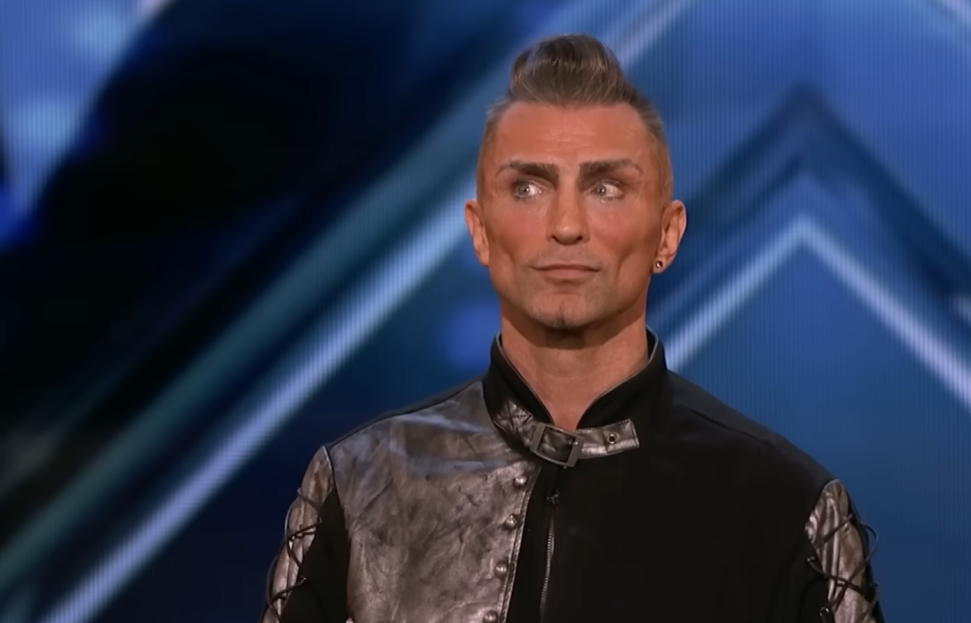
On a talent stage that runs on chatter and charm, Aaron Crow walked out, said nothing, and turned the room into a held breath. He was not there to wink or quip. He was there to make danger feel close. Before he arrived, the panel had been clear about what they craved from the season: higher stakes, bigger risks, real peril. One judge summed it up in a blunt, almost offhand wish for escalation: I want axes and knives and swords. Thats what it was missing for me. Another voice doubled down on scale and consequence: I think it should have been something perhaps on fire. I think it just needs a bit more danger danger at the end or something and, a beat later, It has to be something quite large and could be catastrophic if it went wrong.
Into that hunger stepped a quiet figure with a fixed stare and a rituallike pace. The judges tried to engage him with the usual small talk. Who are you? one asked. Do you not want to talk? came next. How old are you? Are you excited? Even a mischievous needle: Do you think that youre hot? He just absorbed it all. Okay, someone finally said, breaking the awkwardness. Good luck. Another tried to stick a label on the mystery: Good luck. What is it? Magic?
What followed didnt behave like ordinary TV magic. It felt slower, heavier, built from soundless ritual more than patter. A simple object1 fruit on a tablesignaled that the props themselves were not the point. Its an apple, someone narrated helpfully, as if naming it could make the danger smaller. It could not.
The man who doesnt shake hands
On this show, every contestant usually starts with a handshake. Aaron Crows refusal became part of his myth right away. Are you agreeing to this? a judge asked a volunteer as the boundaries of the performance got personal. Then the simple interaction turned odd and unforgettable. I I dont shake hands. Hi. How are you? Really? The words landed like a door closing. Whatever was about to happen would be conducted on his terms.
That aloofness bothered people in the best way for television. He came off as austere but not aloof; the distance was theater. It sharpened the audiences focus and it made every gesture mean more. Even walking toward the panel caused a stir. Wait. Hes coming down here? No. Why is he coming here now? Why is he coming here? one voice said, sharing a thought many in the seats were having. A different judge tried to play along, then checked the fine print midsmile. This wasnt the kind of act where you scold someone for not dancing big enough. This was the kind of act where you drew a line, and then the act erased it.
Hes sticking his eyes shut
The moment that turned curiosity into dread arrived with a small, oldworld detail: molten wax. The stage lights glowed, and the audiences murmur grew jagged. The narration from the table told a truth and a warning in the same breath. Hes sticking his eyes shut with the wax. Then the explanation that somehow made it worse: Why? So he cant see. The stakes clicked into focus. He was building a predicament you couldnt talk your way out of.
Faces tightened. Oh my god, came from the panel. Then again: Oh my god. Audiences know nerves when they hear them shift. The shows voice offered a direct disclaimer that sounded as much like a plea as a rule:
Do not try this at home. Do not try this at work. Do not try this at school.
Somewhere in the crowd, a person asked the question that haunts every extreme stunt: How did he know? and got the only honest answer a magician ever owes: I dont know.
From here on, Aaron Crows silence did the talking. He worked with blades, distance, and timing, turning ordinary props into instruments of suspense. The panel started to look for exits, literal and emotional. Even the breezy asides carried an edge: The good news is gone, a judge deadpanned. Meanwhile, audience reactions swung between awe and a strange kind of grief for their own nerves. You could hear people weighing outcomes in whispersthe showmanship of a stunt is not just what happens onstage; its the math that strangers in Row 14 do in their heads.
Bow, arrow, and a red dot
By the time he returned for a later round, the judges knew to brace for escalation. Backstage chatter previewed it with a grim wink. So then this this next guy coming out like me or straight. Is crazy. I mean, Im telling you that hes a a, like, experienced guy. I saw the pineapple that I came this close to dying. The props that rolled out made it plain: not cards, not scarves. A weapon.
Someone voiced what everyone could see but few were ready to name: What is that? Another echoed, What what is that? I dont know. The inventory grew brisk and blunt. What is that? A knife. A bow and arrow. And again, like the mind clinging to a label: Bow and arrow. The chill in the room deepened with a single fear: No. Is he gonna shoot an arrow at Heidis head? Oh my god.
The stages laser rig blinked to life. Okay. Laser, someone observed, as if naming the glow would control it. Thats great. It wasnt. The dot drifted to a judges chest; you could feel the panels collective step backward. Oh my gosh. He put it on you. came with a nervous laugh that didnt land. Logistics replaced bravado. Is there a way I can get out? asked the seated target. Another voice gave up the pretense: I dont feel good about it.
Names finally arrived with the stakes. Aaron Crow, the host announced to formalize the dread, while also admitting that the unknown had returned: He doesnt speak. He doesnt speak. No. He does not. Okay. So this makes it challenging. The panel tried to draw boundaries even as they knew they would cross them. We told everybody to step it up because this is the judge cuts. Cant imagine how somebody steps up something when they just about decapitate a judge. A simple question landed with gallows humor: What do you think hes gonna do with that bow and arrow? The answer was a single, dry word: Dangerous.
The laser dot reappeared. Woah, a judge blurted. A second attempt to make light of the hot red beadThats greatcame out strained. Then two sentences flattened the studio into suspense theater: You and I, you go. and the followup scramble, Is there a way I can get out? Even a joke felt like a prayer.
I have a bad feeling about this
If the audition had been about building a mystique, and the next round about elevating peril, the live tension was about human limits. Midsequence, the refrain surfaced from multiple corners of the room: I have a bad feeling about this. Its a line that belongs to blockbuster movies, but said in this settingas a weapon aimed and a performer narrowed his breathingit sounded more like a contract with fate.
Even the smallest exchanges felt fraught. There was a nudge here, a startle there. Hey, someone offered, like a friend tapping a shoulder before a first drop on a roller coaster. Another tried to redirect the night back toward fun: Dont want it. The mind doesnt get to choose what it wants when a red dot is painting your jacket. The panel, who had been the shows steadiest narrators, started to stutter. K. Oh. No. No. No. Really? Okay. K. K. The words werent vocabulary anymore; they were heartbeats.
And yet, the reaction that matters most in a piece like this is the one you dont hear: the gap where a theater goes silent because the outcome has captured all the oxygen. Crow moved through that oxygen like a metronome.
Better get this right
Every great danger act arrives at a moment when the audience wants an adult in the room to call it off. Here, the adult was also the stakes. A judges voice cracked the tension with a plea that doubled as an accusation: Better get this right. That plea came with a boundary no one wanted crossed: You know my son is in the audience. Another voice, trying to keep banter alive, only made the edge sharper: Well, I I k? You better get this right. I dont The sentence trailed off, but the meaning didnt.
The panel bantered as a way of taking back control. Thanks, Mel, someone said, to break the gloom. A muttered apology cut through the tension lines on the table. Thanks. Yeah. Then this, resigned and precise: Sorry, Simon. Theyd asked for knives. Theyd asked for swords. They had received both, and then some.
The act turned personal. A card appeared, a message scrawled to one person in the room. The room seemed to shrink, as if all the earlier talk had set up this one intimate command of trust.
Dear Howie, in the past, I have scared you a little, but trust me one last time.
Last time.
Being singled out like that changes the temperature of a stage. Its one thing to gasp from the safety of the desk; its another to be told, by card and by stare, that the next beat is yours. Around the table, someone tried to quantify what it meant. So this is about how hes living or dying. Right? The reply was flat: Yeah. Pretty much. Then the instruction that made everybody in the building an accessory: Youre gonna choose one of these. Stand up. Stand up.
Choice is the cruelest tool in a danger performance. One second, youre watching. The next, youre choosing, and the trick binds your will to its outcome. Thats why the wobble of a participant matters so much. Yep. Are you sure? the show asked, and the human answer came back, pure and panicked: No. Ive changed my mind. No. No. No. Ill stay with that one. It is the sound of a person attempting to unmake time.
Why silence makes danger louder
What distinguishes Aaron Crow from other danger acts is not his props. You can buy fruit, wax, and arrows in a weekend. Its the dramaturgythe way his silence thickens the air, and the way he makes judges narrate their own fear. He doesnt have to tell you a story; you tell it for him, line by line, as your brain fills each pause with an outcome you cant stand to imagine. This is why offhand chatter grows into a Greek chorus around him. At different points, you hear overlapping threads: This looks interesting. A hopeful start. Then a skeptical aside: Id like things we havent seen before. Later, the dread: I have a bad feeling about this. And finally, gallows clarity: Better get this right.
The panelHowie Mandel, Heidi Klum, Mel B, and Simon Cowellplay their roles as foils and witnesses. They try to pull him into their cadence. Do you not want to talk? Are you excited? They throw up guardrails. Is there a way I can get out? They call out the props as if labeling them might defang them: What is that? A knife. A bow and arrow. And yet, the structure of his theater doesnt budge. He moves. They react. He creates a vacuum. They fill it with the very texture of fear that the audience pays to feel.
In that sense, Crows work feels less like a stunt and more like a mirror. It reflects the pushpull that built the season itself. Early on, a judge dismissed an athletic routine with cutting impatience: How could you do that? She just did three flips and then almost banged her head on the floor. That was not exciting? Not really. Then, moments later, the same panel voices the rule they need for whats coming: Do not try this at home. Do not try this at work. Do not try this at school. They wanted risk until they got it. Then they wanted warnings, and they wanted out. Crow gives them both and sells the paradox back to us as entertainment.
Audience empathy, televised
One reason the sequences land so hard is that the show refuses to let you sit comfortably in the back row. The cameras eye and the panels patter pull you into the hot zone. A stray thought becomes a spoken sentence. Are you agreeing to this? morphs from stage direction into an ethical prompt. A production detail turns into a confession. Theres no way I would get that. The nervous syllables snowball. K. K. Okay. The theater of embarrassment, the theater of dread, the theater of awethey all braid together.
Sometimes the tension even loosens into a laugh, but only for a second. In one exchange, a judge tries a gentle tease as instructions land: You and I, you go. Then comes the honest check: Is there a way I can get out? The joke cant hold, because the room keeps reminding you that an object with an edge is in play. A fruit is no longer a snack. Its a target. A laser dot is no longer a cat toy. Its a countdown.
By now, the panels earlier manifestoI want axes and knives and swordshas boomeranged back around. Theyve gotten what they asked for, but on the performers terms. Crow wont be coaxed into small talk or let anyone set the rhythm. Thats what makes even the smallest exchanges meaningful. Thanks, a judge mutters after a nervefraying decision lands. Yeah. A sheepish, Sorry, Simon, follows. Courtesy becomes a coping mechanism.
Trust as a weapon and a promise
The letter to Howie crystallizes what Aaron Crow does best: he weaponizes trust while honoring it. It begins as polite acknowledgment of the past and sharpens into a request that feels like a dare.
Dear Howie, in the past, I have scared you a little, but trust me one last time.
Last time.
Theres tenderness in that one last time, and also finality. Hes asking for a closing argument, not just another round. Around him, life intrudes. You know my son is in the audience, a judge says, personal stakes laid bare. Then a recommitment to the rule of the room: Better get this right.
And then the choice. Television usually pretends that decisions are painless. Crows theater makes indecision its star. The hesitation arrives in staccato: Yep. Are you sure? No. Ive changed my mind. No. No. No. Ill stay with that one. There is a reason these acts haunt their volunteers. Even when the blade misses, the memory doesnt.
What the season asked for, and what it got
Looking back at the run as a whole, you can hear the seasons thesis in the panels early critique: go bigger, risk more. I found it a bit boring, one said of an earlier routine, drawing a line between boring and worth it that only danger could cross. The counterpoint came from another seat at the table. For you, its always about being more dangerous. Yeah, came the response, unbothered. That frank appetite set a high bar. Crow didnt just clear it. He turned it into a tightrope and walked it in silence.
Part of what made his appearances feel so inevitable is that he embraced show businesss contradictions instead of dodging them. He let the panels wisecracks breathe. He let their fear breathe longer. He absorbed stage whispers like This looks interesting and Woah and let them mature into I have a bad feeling about this and Better get this right. And through it all, he honored the most important sentence a show like this can broadcast:
Do not try this at home. Do not try this at work. Do not try this at school.
That warning rang not as scolding but as respectfor the craft, for the audience, and for the difference between theater and recklessness.
How close is too close?
This is the question that danger performers ask every time they lift a blade. With Aaron Crow, the answer is: close enough that you can measure the distance with a breath. You could see it in the small reactionsa wince, a hand rising, a chair inching back. Is there a way I can get out? was less a request for permission than a reading on the rooms collective pulse. The humor that bubbled up in the margins only underlined the stakes. What do you think hes gonna do with that bow and arrow? a judge asked, feinting at levity. The answer came back as a stone: Dangerous.
These beats work because they fold the viewer into the act. When you watch someone else choose the bag, or the path, or the fruit, you experience a strange empathy. You are both grateful not to be standing there and uncomfortably aware that the act is asking you to imagine that you are. A small cascade of halfwordsK. Oh. No. No.isnt just nervous chatter. Its a chorus, a way of saying what everyone is thinking without saying too much at all.
After the breath you were holding
When the last decision lands and the last object drops, you realize how long youve been clenching your jaw. That release is the currency of this kind of theater. The panels courtesy phrasesThanks and even a rueful Sorry, Simonsound like people returning to themselves after a storm.
There are no grand speeches waiting on the far side of the stunt, because the act has already said everything it needed to say. It said it with a sealed eyelid. It said it with a fruit that wasnt just a fruit. It said it with a red dot that turned a studio into a held note. It said it with a letter to one judge that doubled as a promise to the audience: this will be dangerous, and it will be done with care.
Even the stray, playful moments work in its favor. Its an apple, someone explained early on, as if they could define what they were looking at into something safe. Much later, when a volunteer hesitated—Are you sure? No. Ive changed my mind. No. No. No. Ill stay with that one.—the show reminded us that choice is the scariest prop of all.
The legacy of a silent season
Aaron Crows run didnt need monologues, and it didnt need redemption arcs. It needed a stage, an object, and a line that everyone agreed not to cross until he asked them to. He kept his mystique even as the panel tried to puncture it. He doesnt speak. He doesnt speak. No. He does not. Okay. So this makes it challenging, the host said, halfteasing, halfawestruck. The challenge, it turned out, was a gift. Silence forced every other elementmusic, movement, the microtheater of facial expressionsto carry more weight. And it made the panels own words into the soundtrack of their suspense.
Thats why the seasons through line reads so cleanly now. The judges wanted the boundary pushed. Crow pushed it, then handed the decision to them and to us. They wanted knives and swords. He gave them wax and arrows too, not as shock props but as punctuation marks. He turned the most ordinary production beatsa fruit on a table, a red dot finding its homeinto rites of passage you could feel in your ribs.
What lingers isnt just the image of a blindfolded man at the center of a circle of fear. Its the echo of the simplest sentences: Do not try this at home. Do not try this at work. Do not try this at school. Better get this right. Is there a way I can get out? Are you sure? No. Ill stay with that one. In a medium full of spectacle, these tiny human fragments felt like the bravest things on offer.
If you crave a study in how danger, restraint, and trust can turn a televised act into a communal event, this run delivers it. Watch the silence do its work. Watch the panel talk themselves into and out of courage. And when the letter arrives—Dear Howie written plain as day—watch how one performer builds a contract with a room, keeps it, and then lets the air out slow.
Aaron Crows season is remembered for objects that cut and a mood that bound people together. It also leaves a practical gift behind: a renewed respect for what stage risk really is—craft, rehearsal, and control dressed as chaos. If youve read this far with your shoulders creeping up toward your ears, thats the point. Now, take a breath, and see it unfold for yourself. The video holds the wax, the apple, the laser, the bow, and the letter. The warning is right there too. The rest is your pulse.