The night Britain’s Got Talent forgot its filter—and found its soul
Every season, Britain’s Got Talent promises surprises. Season 19 keeps that promise, then loads it into a confetti cannon and fires it straight at your expectations. The video opens like a fever dream: a figure wanders into view wearing an oversized Simon Cowell head and a towel-like skirt, mugging to the crowd while the real Simon leans back in amused disbelief. “Is that Simon? Oh my god,” Alesha Dixon blurts, wide-eyed, and we’re off. Within moments, a stroller arrives carrying what look like mutant doppelgängers of Ant and Dec. The audience screams, Simon points and laughs, and the whole thing promptly mutates again into a white seagull routine. It’s absurd. It’s brazen. And it sets the tone: tonight, the weird wins.
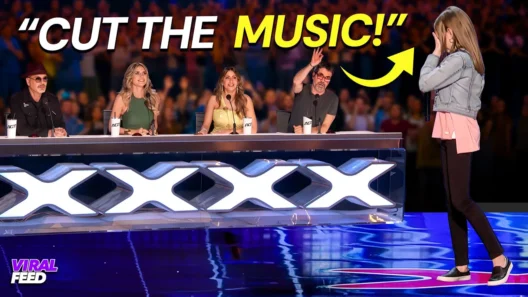
In a show built on big talent and bigger feelings, this lineup taps another British crowd-pleaser—pure anarchy. Jokes land because they wobble. Music sticks because it shouldn’t. One minute you’re groaning, the next you’re wiping away tears of laughter. Even the panel seems to lose its footing by design. “Why do they find this funny?” someone asks out loud, yet the chuckles keep rolling. By the time the judges decide, “When someone gets four x’s, there’s nothing for us to say. So thank you,” you realize the show knows exactly what it’s doing: letting chaos speak for itself.
Mr. Cherry, the cherry on a very strange sundae
Enter Mr. Cherry—karate gi, cherry-patterned pants, headband, and the grin of a man who knows he’s about to cross a line and then dance on it. He ambles on holding jars of pickles, struggles dramatically with one, then slides across the stage trailing spray. What begins as slapstick escalates into a gag you will not soon forget. He turns, bares his backside for a split-second sight gag so nakedly silly that Simon covers his eyes, and then somehow, impossibly, produces a champagne fountain from the most improbable of bottle positions. Confetti falls. Mr. Cherry crowns himself in it. Alesha and KSI hug and hop and holler like friends at a confetti-streaked New Year’s party. KSI even sweeps the human cherry into a hug as if he’s carried the room to victory.
This is the kind of act that makes health-and-safety officers write memos in their sleep. Thankfully, the show beats them to it. The voiceover booms a sincere reminder: “Don’t try this at home. It’s dangerous.” The warning lands, but so does the laughter. It’s not that the stunt is tasteful; it’s that it’s fearless—and in that fearlessness, it finds a peculiar charm. The talent here is committing to the bit with total abandon. The judges know it. The crowd knows it. And it turns out, abandon is contagious.
Clicking into the spotlight: Yubio’s minimalist gamble
Then the pendulum swings from explosive to exquisitely small. A young man steps out and introduces himself: Yubio, from Tokyo. He wants to win. He wants to build a recording studio if he does. He starts clicking—fingers, foot, rhythm, motion—tight little syncopations that travel the cavern of the theatre. The skill is real, the craft clear. “Wow. That is some quick clicking,” someone marvels. But the panel is unconvinced.
“You flew all the way in from Japan to do that.”
It isn’t cruel so much as honest. This is a gladiator’s arena for 90-second stories, and a clicking etude struggles to fill a story arc. “It’s definitely a skill set, but today, I’m gonna say no,” comes one verdict. “I like you, but it’s a no,” adds another. He thanks them with grace. It stings. But if the night has a pattern, it’s that simplicity gets swallowed by spectacle—unless it’s simple enough to become an earworm.
When the jungle band finds its groove
The lights dim. A gorilla lumbers to a drum kit. The room titters, then the kit erupts, and the gorilla—arms pumping, back tight, eyes focused—suddenly turns out to be a rock-solid drummer. KSI shouts in excitement. A troupe of chimpanzees rushes in, all rhythm and attitude, and the stage becomes a simian street party. They build into a dance stack, monkeys atop monkeys, and the theatre roars at the kind of visual gag that also happens to be an athletic feat.
“Did you not love that. The dancing monkey’s vibe,” one voice calls out approvingly. A judge loves “every bit of it.” Another can’t quite climb aboard. The deciding vote hangs with the man who started the season with a chuckle at his own lookalike. Simon smiles thinly, then tips his hand with a line that somehow makes everything make sense:
“I know that my son Eric’s gonna love you. I’m gonna take that x away… I’m gonna say yes.”
It’s a neat little parable about the show’s beating heart. BGT is a family circus. If a troupe can wow a child and keep the grown-ups grinning, it has done its job. On this night, the monkeys get to swing again.
The Scotch egg that ate the room
Christy Covsh arrives holding Britain’s most divisive picnic snack. He smiles, breaths deep, and sings. Not about love, not about heartbreak—about a Scotch egg. “Breadcrumbs,” he croons. “Sausage.” “Boiled egg.” Over and over, with a stomp and swivel that should make no sense and somehow makes all the sense in the world. He pulls another egg out of his shoe as if conjured from a commuter’s nightmare. The crowd, baffled and delighted, begins to submit to the chant.
One judge confesses they’ll “happily put you on the Royal Variety based on just that song,” then stamps a yes. Another calls the dance “wicked” and tips a hat to Alesha by saying they “studied a lot of your work,” adding a wink to the panel dynamic. Doubters cling to reason: “It’s a no for me.” But reason has no earplugs. “I’m not gonna get that song out of my head,” someone admits, surrendering to the earworm. Simon, seeing the tide turn, sighs the sigh of a man who has watched taste dissolve in laughter before. “Has everyone lost their mind?” he asks—then smiles at the memory of his own early years on the panel. “Give it a couple of seasons. This will be right up your street.”
The joke, of course, is that it already is. Britain’s Got Talent has always been as much about the party as the prize. A perfect pop hook delivered with cheek is an instant passport into the show’s lore. Even the skeptics can’t help humming “Breadcrumbs, sausage, boiled egg” on the way out.
Twenty hours to turn into a firework
Yami travels from Taiwan—twenty hours, he notes—to stand in a shiver of tension and do something so simple it astonishes: become a firework. He bows, breathes, and the contraption beside him sputters to life. Sparks and smoke erupt like a stalled volcano, then crescendo as he kneels amidst the burst. It is theatre 101—rhythm, breath, build—executed with cheeky spectacle.
Not everyone sees it that way on first pass. “It’s a no for me,” comes a verdict. The crowd winces. “I got twenty hours turned into a firework, and you said no,” Yami chides, equal parts wounded and wry. Momentum shifts. Another judge declares yes. Alesha looks to the audience, weighing the moment and the roar in the room. “Come on. Yes,” someone urges from the panel. The sparkler does what sparklers do: glows a little brighter. The act passes, a small lesson in how conviction—and timing—can swing the room.
The Susan Boyle superfan and the mercy of memory
Jojo Wills, 25, strides in with a claim that raises the stakes: “I am a huge fan of Susan Boyle… her number one fan. I am obsessed.” For millions, Susan is not just a contestant; she is a miracle in human form, a voice that redefined what the show could be. To invoke her is to conjure both hope and peril.
Jojo chooses a path both brave and treacherous. A theremin keens in thin air. A puppet of Susan Boyle floats in his hand like a ghost of auditions past. The idea might have worked at a smaller, stranger gig; here, with the weight of Susan’s memory in the rafters, it wilts. “I think even Susan Boyle would be disappointed in that,” someone says, gently but firmly. “Think anyone would be,” another adds, and the panel moves him along.
“Do you not recognize me?” a voice calls from off the beat, and a small subplot bursts open. Catherine O’Malley—who has appeared with her husband Joe in seasons past—steps forward in green Wicked Witch glam, broom in hand. She and Joe were once an inseparable double act. Amanda Holden once told her, “I wonder whether you should consider going solo.” The advice has hung like a dare in the wings ever since.
Catherine O’Malley defies gravity—sort of—and takes flight anyway
Catherine breathes and goes for it: “Defying Gravity,” the powerhouse from Wicked that swallows lesser singers whole. She lifts the broom. She seems to hover. The notes test her, but don’t break her; the performance teeters, then steadies on heart. Joe, ever the showman, pops up dancing in the aisles, trying to upstage from a distance. The panel smiles and lets the marriage have its moment.
“That is a very, very tricky song to sing,” one judge says, the gentlest, truest critique possible. “You did a good job of that. Your husband was still trying to upstage you in the aisles.” Then the show’s empathy engine whirs to life. Simon invites “Mister O’Malley” to join his wife onstage. The pair stand together, a picture of the years they’ve sung and the miles they’ve learned.
“You come as a pair. You go together like peas and carrot,” one judge says—then, with a sigh, “But sorry. I’m saying no to Catherine.”
It stings. And yet the plot twists again. “You may have improved the act,” another tells Amanda, conceding that her original nudge toward a solo run “really, really” shaped what happened tonight. Catherine gets three yeses. She’s through. You can’t make this stuff up because the power of the moment is not perfect pitch—it’s perseverance that reads as human and brave.
Laurent’s balloon, Elsa’s dress, and the beauty of failure
Laurent declares himself a business manager who has come to “show what I am able to show.” He appears as a makeshift Elsa in a patchwork hot air balloon, a rope at the ready, and a look of sincere hope that stage magic will behave. It doesn’t. He pulls a line. It sputters. He waits. The room waits. He vanishes briefly. He reappears. Confetti tries to be destiny and mostly becomes confetti.
“It doesn’t work… You saw a thing. Try it again.”
Brutal? Maybe. But then the panel reveals the soft underbelly of this circus. “That was probably one of the worst acts I think I’ve ever seen,” one judge says, sparing no blushes. Amanda counters with a grin that could light a panto: “That is one of my all-time favorite songs, and I think that was wonderfully, brilliantly bad. And I loved it.” Another confesses, with theatrical sincerity, “That was one of the most beautiful things I’ve ever seen in my life. It’s a no for me.”
It reads like parody, but it lands as kindness. Theatre is not just about triumphs; it is about attempts that turn into memories. “Watching Ant and Dec enjoy this act made my day,” someone adds, and the audience nods because joy is transferable. Even flops can be gifts when they’re shared without cynicism.
Between sense and nonsense lies Britain’s sweet spot
Threaded through the night is a running argument with itself. What counts as talent? Precision, or audacity? A perfect run, or a perfect laugh? The show keeps pushing you between both poles. A man clicks with impeccable rhythm and goes home. A man sings about a Scotch egg and becomes a stadium chant. A woman tackles a Broadway mountain and squeaks by on spirit. A troupe of faux-primates pounds the drum and gets a lifeline for making a child somewhere joyful. A human firework glows enough to turn a no into a yes. When the panel deadpans, “We’ve decided that when someone gets four x’s, there’s nothing for us to say,” they’re not dismissing people. They’re leaving room for the night’s unspoken thesis: sometimes silence lets the crowd answer for you.
It helps that the show’s steward-in-chief has learned to play the long game. Simon will still wince, still mutter about sanity, still pull on red sunglasses when the madness peaks. He’ll also make the save when it matters because he knows the currency of delight. “I know that my son Eric’s gonna love you,” he says, or “I’m gonna take that x away,” and suddenly what looked like a judge’s whim reads as a reading of the room. Ant and Dec bounce the energy back from the wings. Alesha measures the music and the moment. Amanda wraps failure in warmth. KSI, part hype-man, part truth-teller, shouts with the crowd and then honestly calls time when the craft isn’t there. When the panel finally says, “Thank you… there’s nothing for us to say,” it’s not a dismissal—it’s a punctuation mark on a sentence the audience has already finished.
What even is going on?
There’s a point late in the show where even the most seasoned viewer throws up their hands and laughs. A person in a chicken costume shuffles on, and someone actually asks out loud: “What is going on?” Elsewhere, a sign seems to scream Crazy at the theatre itself, as if the building were the act. The stage coughs glitter and smoke. Bodies vanish and return. Music and noise slide over each other like oil and water that the show insists are a cocktail. The panel, half exasperated, half enamored, shrugs at the delirium.
And yet, watch closely: there is order in the storm. Each oddball apparition hides a small, earnest premise. The giant Simon head winks at fame. The seagull costume pokes fun at British seaside kitsch. The gorilla drummer is a knock-knock joke with a punchline of genuine rhythm. The Scotch egg anthem is a spoonerized love song to national quirks. The human firework sells suspense for those of us who crave a “wow” we can feel in our ribs. Laurent’s sputtering balloon is a parable about how dreams actually look when they’re still being built.
The difference between a mess and a movement is intention. This particular parade is intentional in the best way. It’s curatorial chaos. By the finale, when the panel groans, “I really thought this is gonna be a great year,” and then, wryly, “Season 19. You bet,” you realize the line is a nudge and a wink. Of course it’s a great year—just not in the pristine way a press release might define it. It’s great because it’s alive.
The talent we deserve
Britain’s Got Talent is most British in the moments it feels least polished. It delights in the pub chant, the panto pratfall, the village fête gone gloriously off-piste. It adores underdogs and undermines snobbery. It treats laughter as a standing ovation and sincerity as its own standing army. On this night, sincerity wears many costumes: a karate gi, a red ribbon, a gorilla suit, a witch’s hat, a snow queen’s dress, a hard hat for sparks.
The lessons are simple enough to write on the back of a ticket stub. If you’re going to be weird, be fully weird. If you’re going to aim high, aim so high we have to crane our necks. If you’re going to fail, fail big enough to make us clap anyway. And if you can give a child a story to tell at breakfast, you’ve bought yourself another round on this stage.
Some of the night’s choices will drive purists up the wall. That’s fine. The purists can keep their walls. The rest of us will keep our chorus: “Breadcrumbs. Sausage. Boiled egg.” We’ll keep our shared gasp at a shower of sparks. We’ll keep the image of a judge covering his eyes with one hand and flicking a yes with the other. We’ll keep the small kindness of letting a long-running duo stand hand-in-hand while one of them steps forward alone.
Why you’ll want to watch
It’s rare to find a video that folds this much surprise into one sitting and still lands on its feet. But this one does, over and over. From the instant Alesha blurts, “Is that Simon? Oh my god,” to the final shake of the head as a giant chicken takes a bow, you’re in a conversation with your own sense of taste—and with a panel of judges who, to their credit, are willing to let that conversation get loud. You’ll watch a man turn a bottle and a joke into a confetti-soaked celebration. You’ll watch a room argue about whether a drum-beating gorilla is silly or sublime, then pick sublime because your kid is laughing. You’ll discover that a picnic snack can be a pop chorus. You’ll remember that travel and risk still count for something when a human sparkler finds his yes.
Above all, you’ll watch a show that knows its audience and still refuses to be predictable. Season 19 begins by tearing its own playbook in half and tossing both pieces to the crowd. The result is a night that makes you wonder what on earth comes next—in the best way. If you need a reminder that talent is as much about nerve, joy, and shared disbelief as it is about notes and numbers, press play. Then tell us the truth: are you still humming about breadcrumbs?