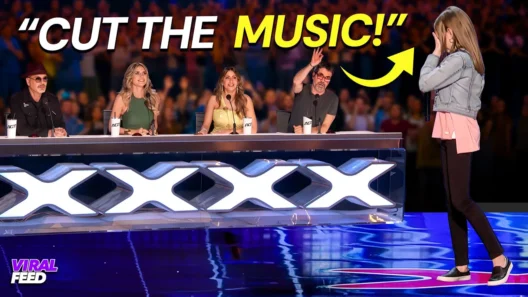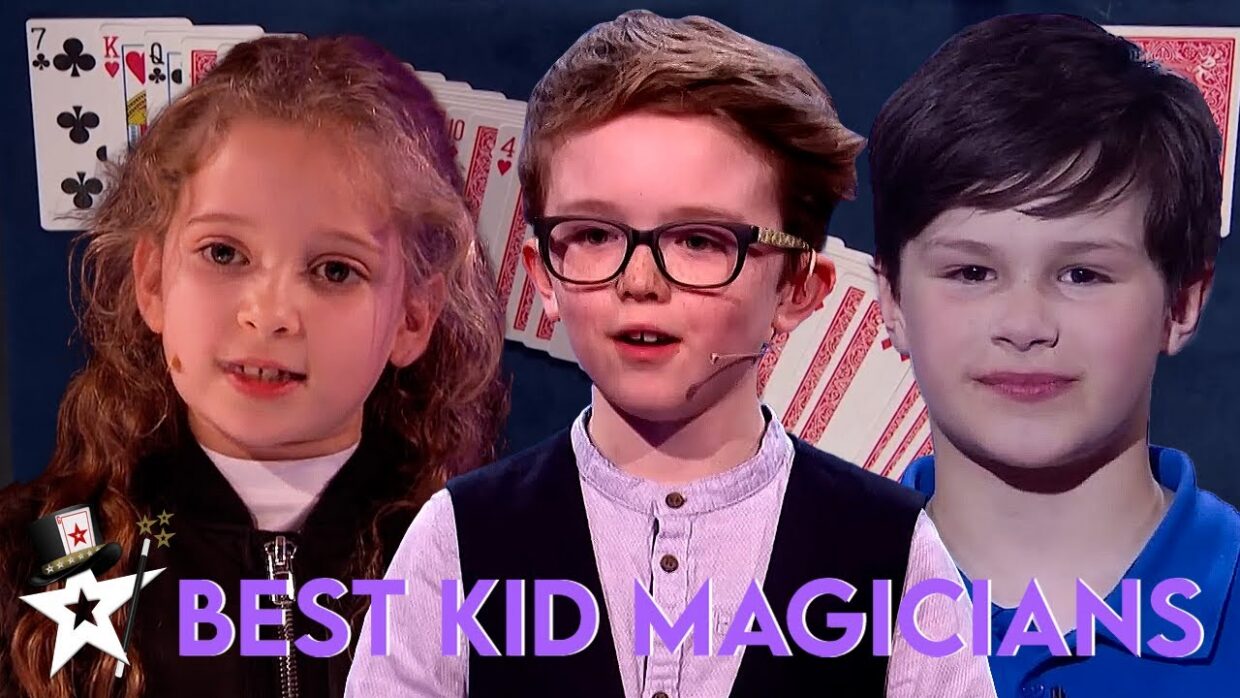
Every so often, a talent show becomes a time machine. Not the kind with blinking dials, but the kind that delivers you back to the first moment you felt astonishment. Best Kid Magicians EVER on Got Talent! is that ride, a sprint through audacity, invention, and childhood nerve. It opens with a cool confession and a promise: a teenager in a sharp suit steps into the light and announces, calmly, that he will prove time travel exists.
He is Jasper Cherry, 16, from Lancashire, England. He smiles toward the judges and the crowd and reminds us where his story began. “When I first discovered magic, I was nine years old,” he says, admitting he was shy, and that sleight of hand gave him a voice. He made the finals on Britain’s Got Talent, heard the kind of praise that sticks—”You, my man, have got a huge future ahead of you”—and now brings that promise across the Atlantic.
His premise sounds impossible, which is exactly the point. Jasper ushers Heidi Klum onstage, and he is disarmingly practical about it. “This is not a card trick,” he says, even as cards flutter under his hands. He invites Heidi to call stop, to select a card (the five of spades), to watch as he mixes face-up and face-down cards into the kind of mess you’d expect to take minutes to undo. Then he asks for a photo—Heidi holding the deck—and for everyone, not just Heidi, to take out their phones.
What follows is cheeky theater. He taps at his screen and counts down. The idea lands with a grin: they’ve all gone back five minutes. Heidi shows her phone; the time agrees. So does his. So, he insists, do theirs. The twist is in the deck itself. The chaotic shuffle behaves as if it never happened. A single card, Heidi’s, contradicts the uniform order. Jasper points at the photo they took moments earlier, the one Heidi now holds. The picture has changed too, he says—Heidi, smiling, cradling a deck that already knew what history would become.
And then he pulls the floor out from under us. If you could go back five minutes, why not more? Why not earlier, before he left England? A video diary rolls. A sleepy Jasper, dawn in Lancashire, talks into his phone about his trip to America, and then casually reveals he already knew the identity of Heidi’s card. The punchline isn’t a shout; it’s a shrug. Of course he knew. Time is pliable in the hands of someone 16 and certain.
If Jasper bends time, the next performer bends authority. A 10-year-old named Ryland bounds onstage like a confetti cannon, announces that he’s a magician, and, in the same breath, that his dad is one too. “He gave me some of the magical powers that he didn’t need anymore,” the boy says with a frankness that has Simon Cowell laughing before the first reveal. Asked what he’d do with a million dollars, he’s painfully specific: “I’ll give some to my mom, my sister, and my dad, and spend the rest on Legos.”
Ryland’s trick is democracy weaponized. He gives each judge a sealed envelope and introduces an army of cartoonish friends—drawn animals and objects, each paired with numbers—then makes the panel mix and match to their hearts’ content. The drawings they land on, at the positions they choose, spell a word when seen through Ryland’s eyes. A snake becomes an S, angular peaks squeeze into an M, the simple outlines of a house make an A, and a curved slice clicks into a C. Together: SCAM.
Ryland is delighted. That will be their magic word, he declares. He has the panel open their envelopes: the pictures inside match the ones they just selected. The kids on his team turn around to show the backs of their shirts, printed with an equation in big block letters: “Word equals scam.” It’s funny, self-aware, and—here comes the mischief—only the beginning.
On the screen behind him, we are suddenly in hushed, wobbly-cam footage of the AGT theater. Ryland narrates as he sneaks past a desk. “Better be quick. Can’t get caught.” He plants the word like a signature at every turn. And then the reveal: the stage, the signage, even the area around Simon is branded with “SCAM” in a joyous act of premeditated cheek. “Sorry, Simon,” the boy says, not sounding sorry at all. The message isn’t cynicism; it’s a wink. Magic admits its artifice, and somehow that makes the astonishment bigger.
Where Ryland scripts a prank, another 10-year-old builds a puzzle out of puzzles. He arrives with a tableful of Rubik’s cubes—classic blocks, pyramids, monstrous shapes with axes like starfish—and a promise to solve them “in a matter of seconds.” First, though, he needs them mixed. Judges fumble with the alien geometry. One piece clatters to the floor. He is unfazed. “Some people don’t even know how to turn it,” he says, then hands another down the row. “It’s okay. It’s not broken.”
In between cubes, he plays a character game, showing off accents as though they were different keys on the same piano. The effect is equal parts comedy and control. The more the room sputters—”What is happening today?”—the more he grins and tightens the screws. When his moment comes, it’s like a trapdoor opens. Hands blur. Colors line up. Scrambles collapse into solved faces. The audience rises to meet him, not just because he solved the cubes, but because he solved the chaos with poise.
The compilation turns, as good anthologies do, and offers quiet alongside the bang. A school-uniformed reader steps up with three books and an oversized blackboard. She is crisp, bossy in the best way, and meticulous about fairness. The judges flip through the books and agree that every page looks different. Then she asks Simon to lift a little box. He can’t. Neither can anyone else. Everyone sits again, half-amused, half-bewildered, and she says a nonsense incantation—”Doozy Charms”—and only then will the box behave.
Now we are inside a classic reading trick reframed as a logic puzzle. Simon picks one book. A page number is named—77. A single word is chosen by someone else, freely. “Kettle,” Alicia says after a beat. The young magician points to the blackboard. She says she wrote one word before the show. The dust blooms as she wipes the slate. The word they find is the word Alicia just plucked from hundreds of pages: kettle. It hangs there, ordinary and impossible at once.
Layered across acts are the smaller graces that make kid magicians such potent performers. They speak casually to icons and turn that proximity into a strength. Jasper, asked what changed since his first big shot, mentions the Blackpool Magic Convention like it’s his neighborhood park, and tells the camera he’s “walking onto the stage this time with a lot more confidence.” Another child negotiates with Simon Cowell as if they were haggling over chores. The confidence is not arrogance; it’s the earned ease of kids who have lived onstage long enough to forget to be small.
Technology pops in and out of the frame, not as a crutch but as texture. Jasper’s phone is both proof and prop. A photo is a bookmark in time that, somehow, flips to a different page when the story changes. A sneaky video turns into a reveal that breaks the fourth wall without breaking trust. Even when a camera follows a kid into the aisles or backstage, the tricks remain human-scale, grounded in choices the audience believes they made themselves.
What binds these routines is a kind of self-aware play. Ryland declaring “scam” doesn’t puncture wonder; it magnifies it, the way a magician showing empty hands before a vanish makes the vanish feel larger. When the cube-solver jokes about taking long enough to fly to India for curry while a judge struggles with a twist, he isn’t stalling; he’s creating dramatic irony. When the book-lover can’t be moved—literally—until she utters the silliest of spells, the stubborn box becomes a symbol: magic works here when we agree it should.
There is also a throughline of community. These kids recruit helpers as co-conspirators, not props. Heidi isn’t just choosing a card for Jasper; she’s safeguarding the deck and the photo that will eventually give the lie to her memory. The judges who end up in Ryland’s prank are not embarrassed so much as included, which is why the laughter lands as delight instead of discomfort. The readers and mixers and number-callers are necessary. That feeling—of a whole room colluding in joy—is why these young performers come off as generous instead of slick.
Not every astonishment shouts. Watch how pauses work. Jasper lets silence sit over the idea that time has snapped back five minutes, long enough for a thousand private calculations to fail. The book trick waits an extra beat before the chalk dust clears to show “kettle,” as if to let skepticism breathe before it is gently denied. Even in the rowdier bits, there is always a focused calm at the center. That tension—the storm and the eye—gives these acts a depth you might not expect from performers who are learning to drive or, in some cases, to multiply.
The grown-ups on the panel mirror the audience’s arc. They begin indulgent, sometimes wary—”What is your talent, young man?”—and end leaning forward, analyzing nothing and loving everything. Heidi’s laugh becomes a gasp. Simon’s arched eyebrow softens into the appreciative slackness that only a great reveal can carve into a face. The kids, for their part, seem to absorb that shift and stand a little taller each time.
What lingers after the final applause is not just the memory of specific reveals—decks that undo messes, time that rewinds, words that leap from paper to slate—but a broader picture of craft. These are not lucky guesses and jittery hands. They are structured routines with hooks, callbacks, and neatly tied bows. They are stories that kids tell with objects, jokes, and permission to pretend. Even their slips—an awkward pause, a scattered piece, a stray giggle—fold back into the narrative and make it warmer.
It is tempting, watching all this, to compare: whose hands are fastest, whose premise is boldest, whose ending lands hardest. The smarter way to see it is as a chorus. One voice says that time can be teased. Another insists that honesty and “scam” can live in the same trick. A third shows that chaos can be tamed cube by cube if you keep breathing. A fourth proves that the quietest word—kettle—can be thunder when it appears in the right place.
And maybe that is the sly lesson humming beneath the ovations: magic is not the opposite of truth; it is a way to feel it. When a teenager tells you he’s ready now, and then your phone and his phone agree to disagree with the clock on the wall, you feel the elasticity of certainty. When a 10-year-old spray-paints a stage with a word that means deception and still leaves you trusting him more, you feel how performance can turn vulnerability into power.
By the end, the episode has done what the best theater always does. It holds a mirror to the room, and the room, grinning, recognizes itself: eager to play along, quick to forgive, faster still to celebrate someone taking a swing. These are not miniatures of adult magicians. They are their own thing—born show-people with kid logic and professional timing, taking a juggernaut stage and making it feel like the world’s most charming school assembly.
If you need your sense of wonder topped up, this collection delivers it in spades—five of them, if you ask Jasper. Set aside your disbelief, silence your inner skeptic, and let these young performers reset your clock. Then press play and watch the future of magic arrive early, one impossible choice at a time.