The year luck showed up with a camera
Some people get lucky once, maybe twice, and spend the rest of their lives telling the story. In 2024, the camera caught them in the middle of the story. A woman in a lottery line heard the number and nearly refused it. A pilot with a dead engine at 600 feet found a runway. A car sat under a lightning strike that chose the road instead. A pizza delivery man swung across a gap like a man with web shooters. The footage is not a list of miracles. It is a record of seconds where physics, timing, and nerve collided, and the person on the other side of the collision was still standing.
Money that arrives like a punchline
The most human reaction to luck is disbelief. A woman who found out she had won $2,000,000 did not immediately celebrate. She asked the person in front of her, “Are you kidding me? Yeah. You’re kidding me. This is real? Are you serious?” The pause before the answer is the whole story. Most people imagine a jackpot as a clean event: ticket, number, money. The video shows the messier version. The winner’s face moves through shock, suspicion, and a kind of guarded hope, as if the money might vanish if she believes it too quickly. That is what luck does to the body. It arrives before the mind has a place to put it.
Air, altitude, and the thin line between show and rescue
The sky gives luck its sharpest edge. A helicopter carrying Bolivia’s president, Evo Morales, malfunctioned immediately after takeoff. The crew landed it safely, and the passengers walked away from a machine that had already announced trouble. A little later, a plane’s engine stopped at 600 feet. The pilot still found a way down. In both cases, the people involved were not performing a stunt. They were doing their jobs, and the jobs demanded a margin of error that the machines did not have. That is the difference between a dare and a rescue. A dare can be planned. A rescue has to be invented in the air, with the ground rising fast enough to make the decision feel permanent.
Water, boats, and the people who almost became headlines
On water, luck often looks like distance. A group of boaters found themselves near a plane that was about to become a problem. The transcript calls it a near miss, but the footage makes the geometry clear: the plane, the water, and the people on the boat all moved through the same small patch of sky and surface. A motorboat driver charged with reckless operation and using a cell phone while driving added another layer of human error. The fishermen saw the boats coming and had to trust that the water would keep them upright. In these moments, luck is not a feeling. It is a measurement: how many feet, how many seconds, how many degrees of turn separate a story from a rescue.
Lightning, glass, and the objects that almost won
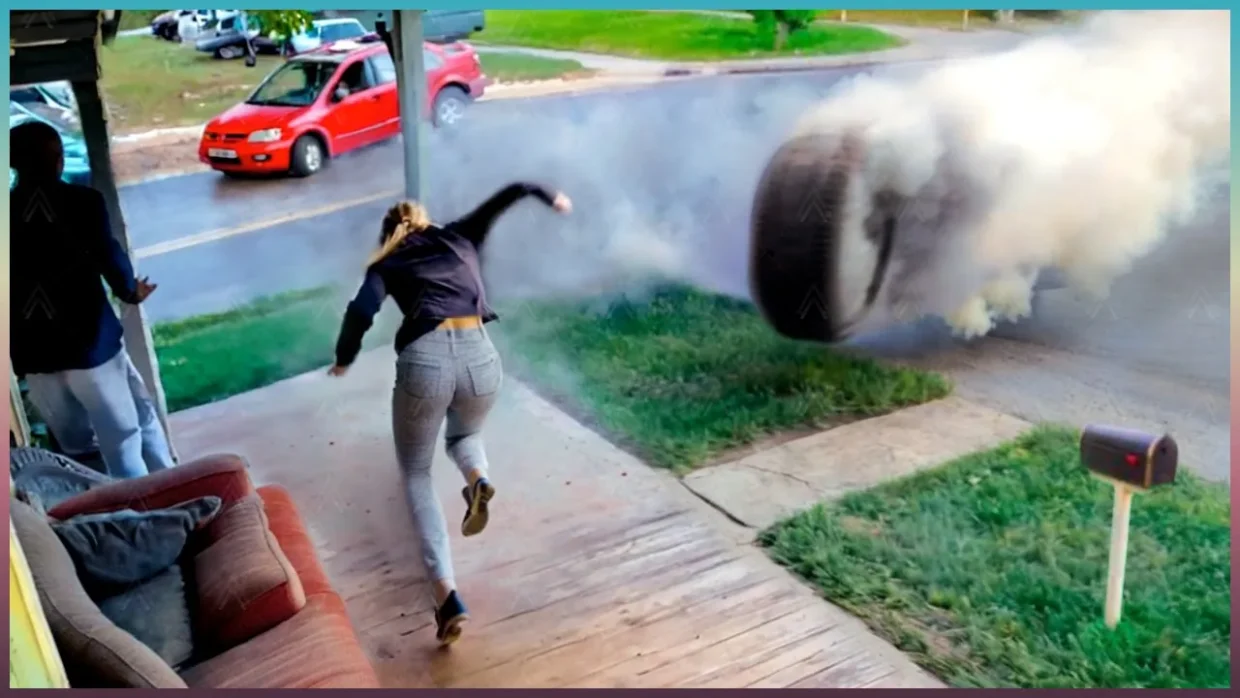
Some of the luckiest people in the video are the ones who never knew they were in danger until the camera showed them. A car sat in the path of a lightning strike, and the bolt missed. A driver parked a fraction of an inch from a pillar. A man lifted his head at the worst possible moment and still came away unharmed. A phone fell out of a hand and landed toward the person sitting behind it. These are not grand rescues. They are small, ordinary objects refusing to do the obvious thing. The lightning chose the road. The pillar stayed where it was. The phone did not shatter. The body did not break. Luck, in these scenes, is the absence of a worse outcome.
Sports, skill, and the moment the crowd stops breathing
Sport gives luck a scoreboard. A fan won $50,000 by making a shot from 40 meters, 131 feet away, through a small opening. A baseball player named Ronald Acuna shot the ball right at a fan’s cup. A school team won on a last-second throw, and the player who made it said, “Take it away. That’s for the win. It’s on line. It’s good.” A bowler who had almost given up hope found a strike when the ball did something no one expected. A basketball player named Jordan Mickey made a headshot that looked like a plan, even if the plan may have been invented after the ball left his hand. In sport, luck is easier to see because the rules define the impossible. The shot is either in or out. The ball is either in the cup or not. The clock either expires or it does not.
Animals, streets, and the luck that has no explanation
Animals make luck feel older. A fisherman on a kayak was attacked by a hammerhead shark and managed to chase it away. A white shark tried to take a fisherman, and the man came away with a story. A bull seemed to spare a man, or the man was lucky enough to be in the wrong place at the right time. A surfer used a fall to conquer a heavy wave. An activist danced next to fifteen-foot tiger sharks. These are not accidents with a clean cause. They are encounters where the human body is small, the animal is large, and the outcome depends on a split-second choice that may not even be a choice. The camera makes the danger visible. It also makes the survival look accidental, which is the closest thing to luck the video gets.
Everyday luck, and the people who almost missed it
The best luck in the video is the kind that happens to ordinary people doing ordinary things. A driver passed out behind the wheel and missed all the other cars. A man avoided falling into a deep hole without spilling his coffee. A girl put a plate under her face at the last second. A passerby caught a drone before it could be lost. A pizza delivery man swung across a gap like a real-life Spider-Man, and someone in the footage said, “Someone remind him about the web shooters.” These moments do not need a stadium or a scoreboard. They need a witness. Without the camera, the driver would have woken up with a scratch. The man with the coffee would have kept walking. The girl would have had a plate to explain. The luck is real, but it only becomes a story when someone records it.
Why the footage matters
These videos are not proof that luck is a force. They are proof that luck is a pattern. It shows up in the same places: a machine that fails, a body that falls, a ball that flies, a car that stops, a person who is not where the danger expected them to be. The video collects those patterns and puts them in one place, so the viewer can see how often the world almost goes wrong and how often it does not. The lottery winner’s disbelief, the pilot’s landing, the lightning that missed, the fan’s $50,000 shot, the pizza man’s swing: all of them are the same event seen from different angles. Something dangerous happened. Something ordinary happened instead. The camera stayed.
Watch the full video and you will see the year in a different light. You will see the people who were lucky, the people who were skilled, and the people who were simply in the right place when the world made a small mistake. The footage does not explain why they survived. It only shows that they did, and that the next person in the frame may be the one who gets to tell the story.