Starting a tarot practice can feel overwhelming when it seems like you need to memorize all seventy-eight cards first. A daily one-card pull keeps it small: one card, a minute or two, and a few honest notes about what you notice. This post walks you through the habit and includes a free printable Daily One-Card Tarot Pull Journal you can download and keep beside your deck.
What’s inside the printable
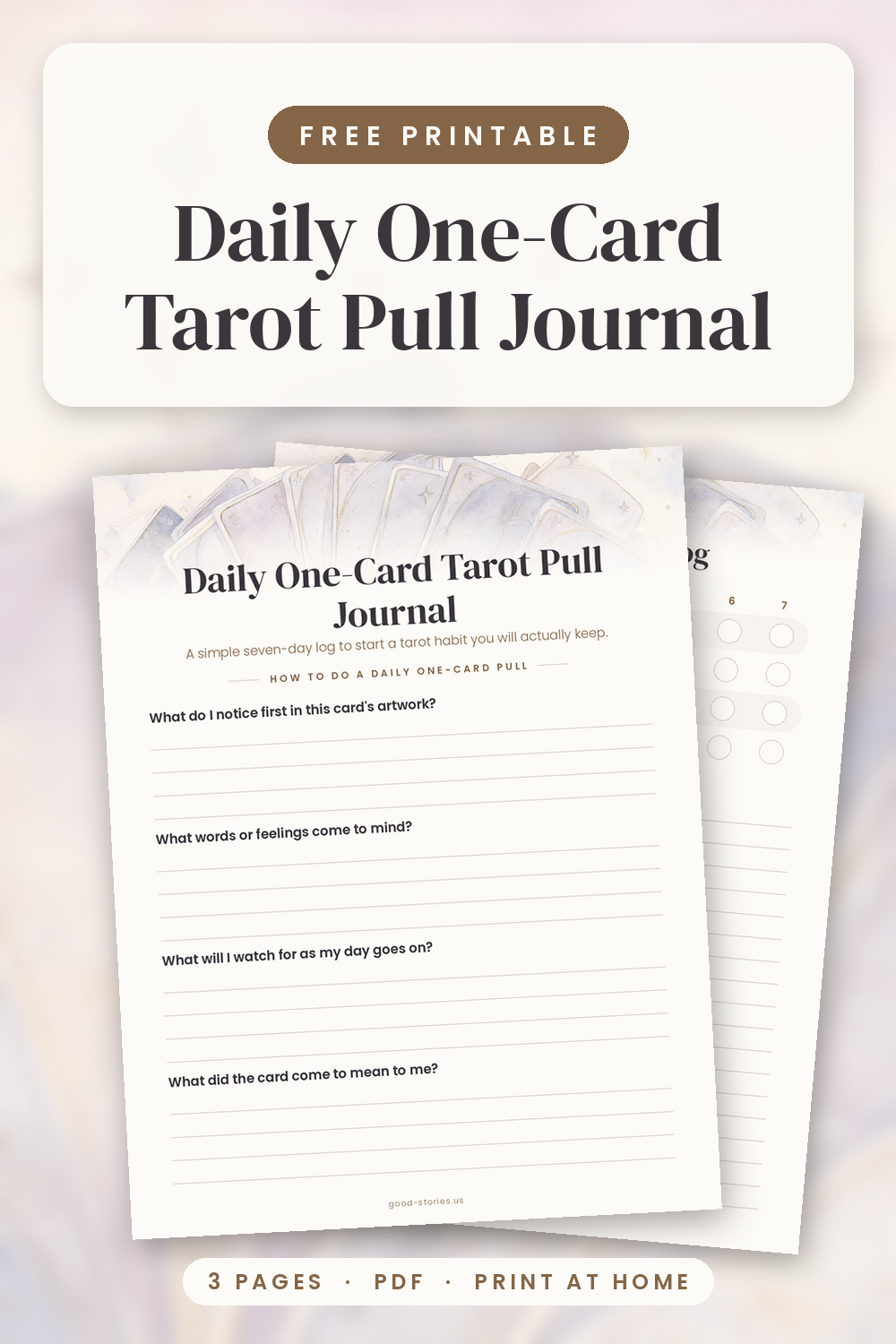
The printable is three pages, designed to be used together over one week.
- Page 1, How to Do a Daily One-Card Pull: a how-to page with four reflection prompts for your first pull, each followed by writing lines.
- Page 2, My Seven-Day Pull Log: a seven-day tracker with a column for each day and rows for the card drawn, your first thought, one word for the day and what you noticed later.
- Page 3, Look Back on Your Week: a look-back page with four prompts to review the week’s pulls and choose a question to carry into next week.
What a daily one-card pull really is
A one-card pull is a short, repeatable ritual for self-reflection. You draw a single card, usually in the morning before the day gets loud or in the evening when you can look back on it, and you give it a minute or two of attention. It does not require predicting the future or knowing every card by heart. The card is simply a prompt: an image and a word that help you notice what you already think, feel and wonder. New readers often find one card a day easier than a full spread because there is only one thing to look at. Over a week, those small moments add up to a record of your own thinking.
A quick tour of your 78-card deck
A standard tarot deck has seventy-eight cards, and it splits into two friendly halves. The twenty-two Major Arcana speak to big-picture themes: beginnings, endings, choices, patience and change. The fifty-six Minor Arcana cover everyday life in four suits. Wands tend to show up around energy, action and creativity. Cups often point to feelings, relationships and intuition. Swords are about thoughts, words and decisions. Pentacles bring the practical side: work, money, routines, the body and home. You do not need to memorize meanings to begin. The suit tells you the subject and the number hints at a stage or mood, and your printable log gives you room to record your own first thought so the deck can teach you as you go.
Draw and read one card
Shuffle in whatever way feels natural and hold an open question rather than a demand. Something like “What should I keep in mind today?” invites reflection far better than “Will I get the job?”. Draw one card and look at it before you reach for the guidebook. What do you notice first? Does the scene feel calm, tense, busy or restful? Write those impressions in your log before you read anything else, because your first reaction is the part no book can give you. Then look up the traditional meaning and see where it agrees with you and where it surprises you. Keep the pressure low: there is no wrong first impression, and a card that feels blank today often reads clearly a week later.
Use the follow-along printable each day
This is where the Daily One-Card Tarot Pull Journal earns its keep. Page one walks you through your first pull with four reflection prompts and lines for your answers, so you never stare at a blank page. Page two is the seven-day log, with a column for each day and rows for the card you drew, your first thought, one word for the day and what you noticed later. Page three helps you look back and choose a question to carry into next week. Two minutes a day is enough to fill it in, and at the end of the week the look-back page turns scattered draws into something you can actually see: a repeated card, a mood you keep circling, a question that keeps returning.
Grow the habit without forcing it
Small rituals survive; ambitious ones usually do not. Keep the journal beside your deck so the two travel together, and pull at the same time each day, whether that is with your morning coffee or before bed. When the same card returns after a few weeks, revisit your old page instead of starting fresh: comparing what the card meant then with what it means now is one of the best ways to learn the deck. If you miss a day, pick up the next day without guilt. The log is there to help you notice patterns, not to earn a perfect streak. One card a day for a month will teach you more than a ten-card spread you attempt once and abandon.
How to use your printable
Print the pages on US Letter paper at 100 percent scale. If you use A4, choose “Fit to page” in your printer settings so nothing is clipped at the edges. Single-sided printing works well if you like to spread the pages out, and double-sided keeps everything on two sheets. A few ideas: keep page one as a reference and print extra copies of the seven-day log for each new week; clip the log to a clipboard and leave it on your nightstand; slip the pages into a binder to look back across months; or print a set as a gentle gift for a friend who is curious about tarot. There is no wrong way to use it, only the way that makes you reach for it again tomorrow.
Tarot for beginners does not have to mean memorizing a book before you start. One card, one page and two quiet minutes a day are enough to build a habit that helps you reflect and learn your deck at your own pace. Download the free printable, set it beside your cards, and see what the week has to say.