Some nights the last thing you want to do is pull out measuring cups, weigh a chicken breast, or open an app just to get dinner on the table. Good news: you don’t have to. The balanced plate method is a simple visual guide that works with whatever you’re already cooking — a quick stir-fry, leftover roast chicken, even a plate of takeout. No cups, no scale, no math. You just look at your plate and adjust.
Start With Half a Plate of Vegetables and Fruit
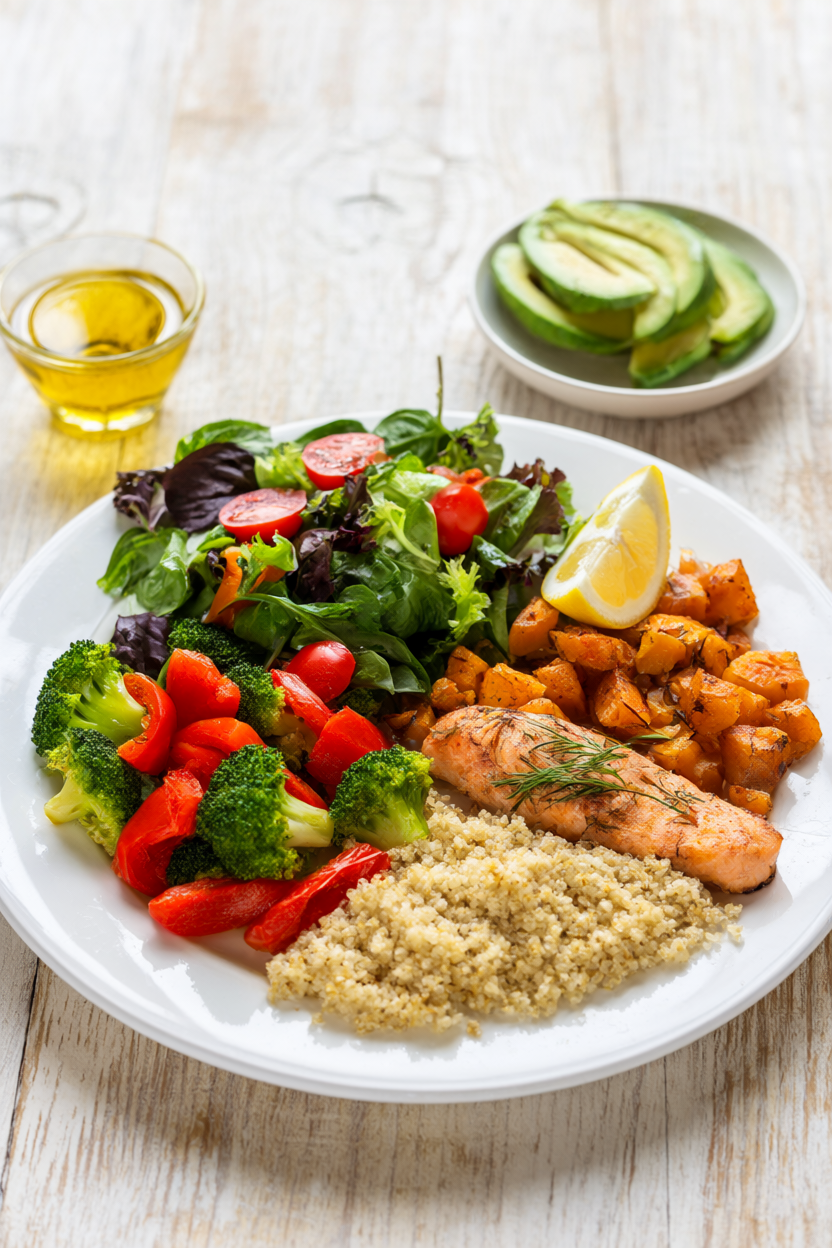
Make vegetables and fruit the biggest part of the meal. Aim for about half the plate, and don’t worry about being exact — a little more or less won’t make or break dinner. Produce adds fiber and volume, so your plate looks and feels generous and satisfying. Roasted broccoli, sautéed peppers, a pile of baby spinach, cherry tomatoes, or last night’s roasted carrots all count. So does fruit: berries with breakfast, apple slices at lunch, or orange segments alongside dinner. Fresh, frozen, and canned (drained and rinsed) are all fair game. If half a plate feels like a lot at first, start with a third and build up from there. The goal is simply to make vegetables the easy, obvious choice most nights — and a bag of frozen mixed vegetables heated in five minutes is a perfectly good answer.
Give a Quarter Each to Protein and Whole Grains
Split the other half of the plate between two things. One quarter goes to lean protein: chicken, fish, eggs, tofu, Greek yogurt, beans, or lentils. Protein digests more slowly than starches, which helps the meal feel satisfying for longer — handy whether you’re heading back to work or off to an evening walk. The last quarter belongs to whole grains or starchy vegetables: brown rice, quinoa, whole-wheat pasta, oats, potatoes, sweet potatoes, or corn. Whole grains bring fiber along with their carbohydrates, so a modest scoop goes a long way. The exact amounts matter far less than the proportions. Cooking for one? A single chicken breast and a scoop of rice fill those quarters beautifully. Feeding a crowd? The same shape works on a platter — half vegetables, a quarter protein, a quarter grains.
Add a Little Healthy Fat and Let Your Hand Measure
Finish the plate with a small amount of healthy fat — a drizzle of olive oil, a few slices of avocado, a sprinkle of nuts or seeds, or a spoonful of nut butter. Fat carries flavor, and it helps your body absorb vitamins A, D, E, and K from all those vegetables, so that little drizzle is doing more than tasting good. When you would rather skip the measuring spoons, your hand makes an easy guide:
- Palm of your hand: a portion of protein
- Cupped hand: a portion of grains or starchy vegetables
- Thumb: added fats like olive oil, butter, or nut butter
- Fist: a serving of vegetables
These are rough, forgiving estimates, not rules. Hands and appetites come in different sizes, so trust what feels right for you.
Mix and Match Your Way to a Balanced Plate
The best part of this method is how flexible it is. Any protein plus any vegetable plus any whole grain plus a healthy fat makes a balanced plate. Roasted salmon with broccoli and quinoa, finished with lemon and olive oil. Chicken, bell peppers, and brown rice with sliced avocado. Eggs, sautéed spinach, and whole-grain toast with a little butter. Tofu, snap peas, and soba noodles with sesame oil. Greek yogurt, berries, and oats with almond butter — yes, breakfast counts, too. Once you see the pattern, you can build a balanced plate from whatever is already in your fridge, which means fewer grocery runs and less food wasted. Start with the vegetables you have on hand, add the protein that is closest to done, and fill in the rest. Five minutes, no measuring, dinner sorted.
Building a balanced plate isn’t a diet and it isn’t a rulebook. It’s a simple way of looking at a meal that makes healthy eating feel doable on a Tuesday night when you’re tired and hungry. No counting, no guilt — just a plate that’s roughly half vegetables, a quarter protein, and a quarter grains, with a little fat for flavor. Try it for a few dinners this week and notice how it feels. Once the pattern sticks, you will use it without thinking, and dinner will be better for it.