If you have ever slipped a smooth stone into your pocket or kept one on your desk, you already know the quiet pull these small objects can have. This guide walks through what crystals have traditionally been associated with, how to choose and care for a beginner-friendly set, and how a simple log can turn passing curiosity into a gentle reflection habit. A free printable crystal log sheet is included, so you can begin today with nothing more than a pen.
What’s inside the printable
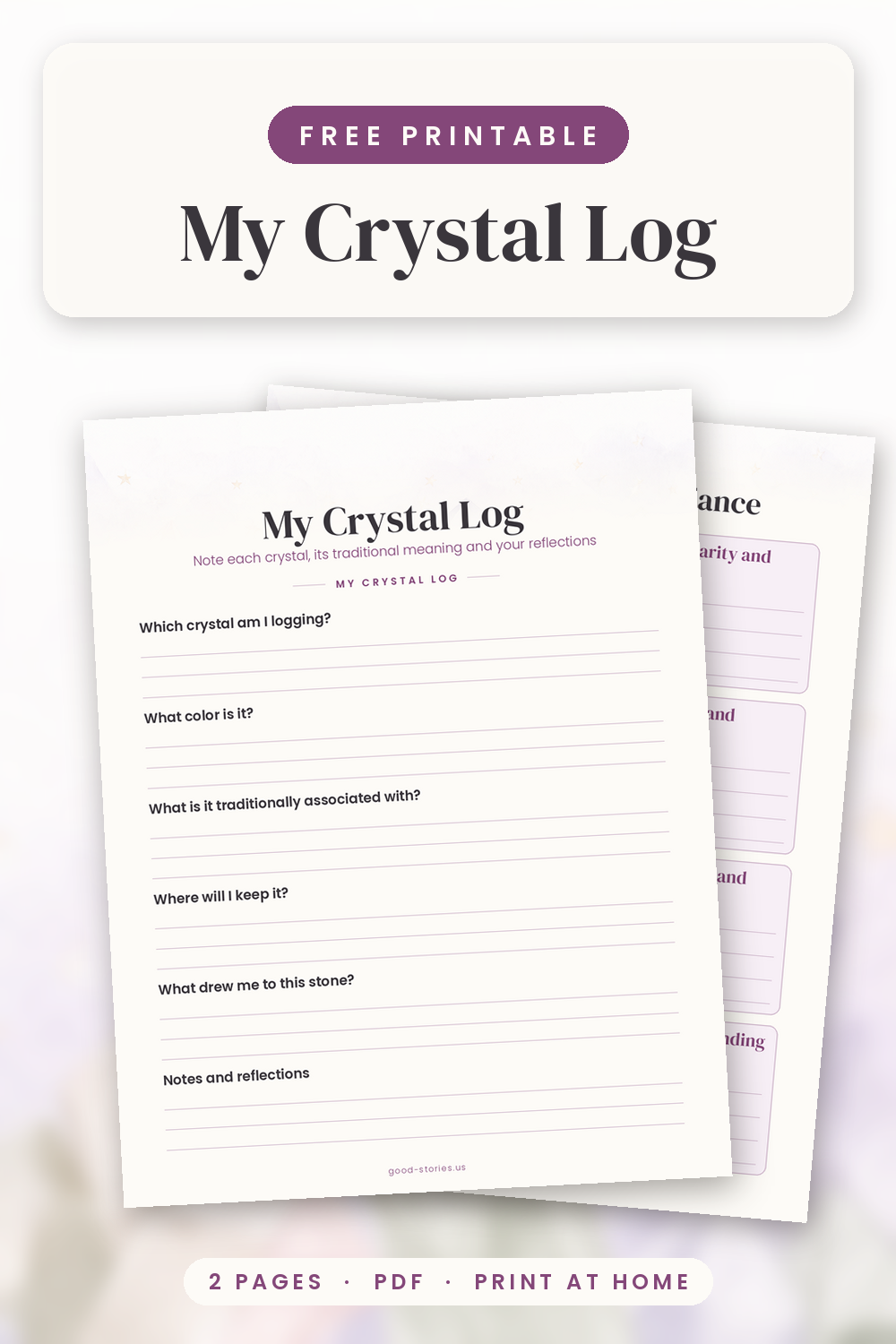
The printable has two pages, one to fill in and one to keep handy:
- Page 1 — My Crystal Log (writing lines): six prompts for one crystal per entry, covering which crystal you are logging, its color, its traditional association, where you keep it, what drew you to it, and free notes.
- Page 2 — Common Crystals at a Glance (eight boxes with writing lines): eight common stones with their traditional associations, each box with space for your own notes.
Crystals as a tradition
Crystals are naturally formed minerals, which means their atoms settle into repeating internal structures over very long stretches of time. That orderly structure is part of why they catch the light the way they do, and it is also part of why people have been drawn to them for so long. Across many cultures, stones have been collected, traded and given symbolic meaning: protection, clarity, luck, remembrance. It is worth saying plainly that these associations are traditions, not treatments. A crystal is not medicine, and it does not replace care from a doctor or a therapist. What it can be is a visual reminder, a small object that carries the meaning you choose to place on it, sitting quietly where you will see it every day.
Common beginner crystals and their traditional associations
If you are just starting out, a handful of well-known stones is plenty. Here is what each one is traditionally associated with:
- Amethyst, the purple variety of quartz, is linked with calm and reflection.
- Clear quartz is associated with clarity and focus.
- Rose quartz, soft pink and often tumbled smooth, is tied to gentleness and matters of the heart.
- Citrine, with its warm golden color, is linked with optimism and brightness.
- Green aventurine is associated with opportunity and fresh starts.
- Lapis lazuli, a deep blue stone used in jewelry and carving for millennia, is linked with wisdom and truth.
- Selenite, named after Selene, the Greek goddess of the moon, is traditionally connected with moonlight and stillness.
Choosing and displaying your first crystals
Resist the urge to buy a dozen stones at once. The simplest way to begin is to notice which colors and shapes you feel drawn to, then start with two or three. A small starter set, maybe one stone for calm, one for clarity and one for warmth, is easy to keep track of and easy to learn. Grouping stones by color is a pleasing way to display them, whether on a windowsill shelf, a bedside tray or a corner of your desk. If you enjoy a monthly theme, October’s traditional birthstones are opal and tourmaline, a nice excuse to rotate something new into view. There is no wrong arrangement; the point is simply that you see the stones and remember what they mean to you.
Caring for your crystals
A few simple habits will keep a collection looking its best. Dust stones with a soft, dry cloth rather than a wet one, and handle them gently, because many are softer than they look. Amethyst and rose quartz can fade with prolonged direct sunlight, so keep them out of a bright south-facing window or rotate them into indirect light. Selenite needs special care: it is a form of gypsum and is water-soluble, so wipe it with a barely damp cloth instead of soaking it. When storing stones together, keep softer ones away from clear quartz, which is hardness 7 on the Mohs scale and can scratch its neighbors in a pouch or bowl. None of this is complicated, and it keeps your stones pleasant to hold and to look at.
Using the free printable crystal log
The printable is designed to slow you down a little. Page one gives you a full entry for a single crystal: its name, its color, its traditional association, where you keep it, what drew you to it, and a notes section for anything you want to remember. Page two is an at-a-glance sheet for eight common stones, with space under each association for your own words. The easiest rhythm is weekly: choose one crystal, fill in one entry, and treat the writing as a small pause rather than homework. After a month or two, you will have a personal record of the stones you were drawn to and why, which is often far more interesting than any chart.
How to use your printable
Print the PDF on US Letter paper for the intended layout. If you are using A4, choose Fit to page in your print dialog so nothing is trimmed at the edges. A few ways people like to use it: keep the log in a nightstand drawer next to the stone you are focusing on; fill in one entry each week during a quiet evening routine; take the at-a-glance page along when you visit a shop so you can compare notes; or revisit earlier entries at the end of the month and highlight the associations that still feel true. If you print a second copy, the at-a-glance page works well taped inside a journal cover.
Whether you keep one stone or a small bowl of them, the rewarding part is the noticing: which colors you reach for, which meanings resonate, and how that changes over time. Download the log, fill in your first entry this week, and let the quiet ritual do the rest.