Vintage bakery cakes have a quiet confidence. Nothing shouts; the decoration is built from buttercream itself, worked by hand into swags, ruffles, fringe and soft sculpted shapes. If you love that look but are not sure what to ask for, these six textured buttercream cake designs give you a clear place to start. Each is a finish rather than a theme, so it sits easily beside flowers, linen and colours you have already chosen. None of them needs a themed prop or a seasonal hook, which is why they keep working long after the trend has moved on. Below, each idea comes with the practical detail that matters most — what to request, when to book it, and how to keep the texture looking sharp from the first photograph to the last slice.
1. Lambeth Swag Cake
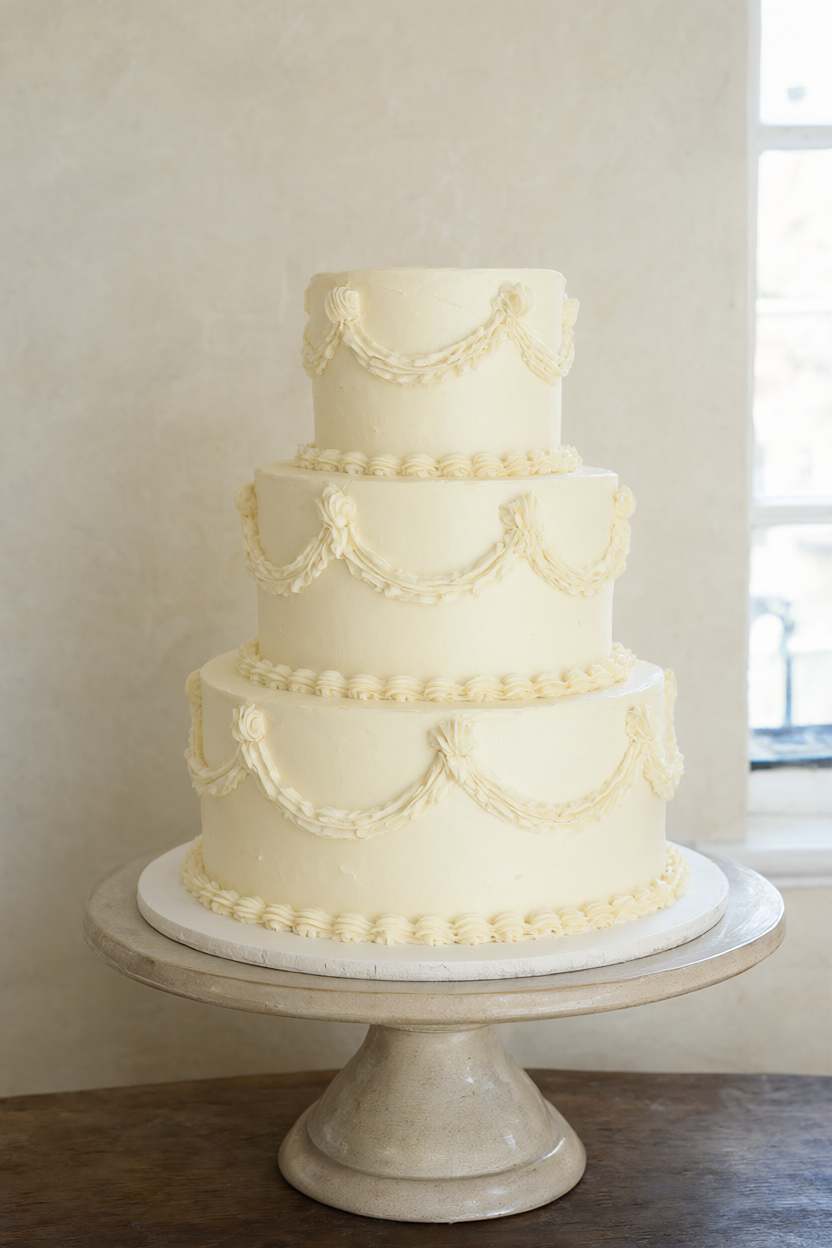
Lambeth piping is vintage overpiping at its boldest: piped swags, shell borders and small rosette clusters built up in a single buttercream colour. Ask your baker for lambeth-style piping by name and book early, because overpiped tiers take far longer at the bench than a smooth finish. Keep the cake out of direct sun and skip extra flowers — the piping is the decoration. A footed stand lifts the lowest border clear of the table and lets the shell work read properly in photographs. A border that sits slightly proud of the tier is the sign of real lambeth work, so ask to see a photo of the baker’s previous swags. If your venue is warm, ask for the cake to be set up close to serving rather than hours before guests arrive.
2. Wave-Knife Buttercream
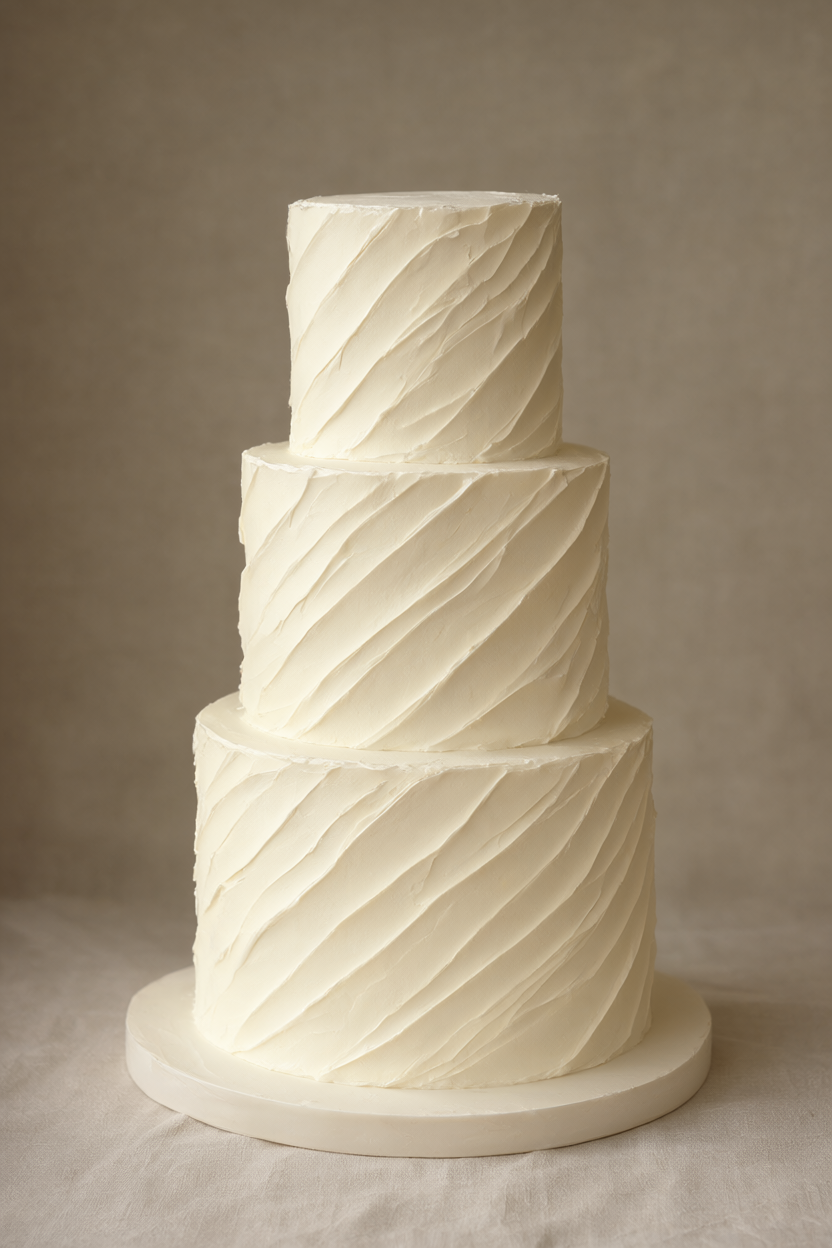
A flat palette knife dragged in sweeping arcs gives the cake a fabric-like ripple without a single piping bag. It reads best on one tall tier, where the pattern has room to move, so resist adding a second tier just to make it taller. Ask the baker to chill the cake before the final pass; cold buttercream holds the ridges crisp instead of slumping. Look at a sample under the venue’s evening light, since the shadows are half the effect. A pale or warm-white buttercream shows the ridges better than a dark colour, which hides the shadows you are paying for. Keep the rest of the table simple — a busy runner or tall centrepiece will flatten the waves visually.
3. Long Rectangular Statement Cake
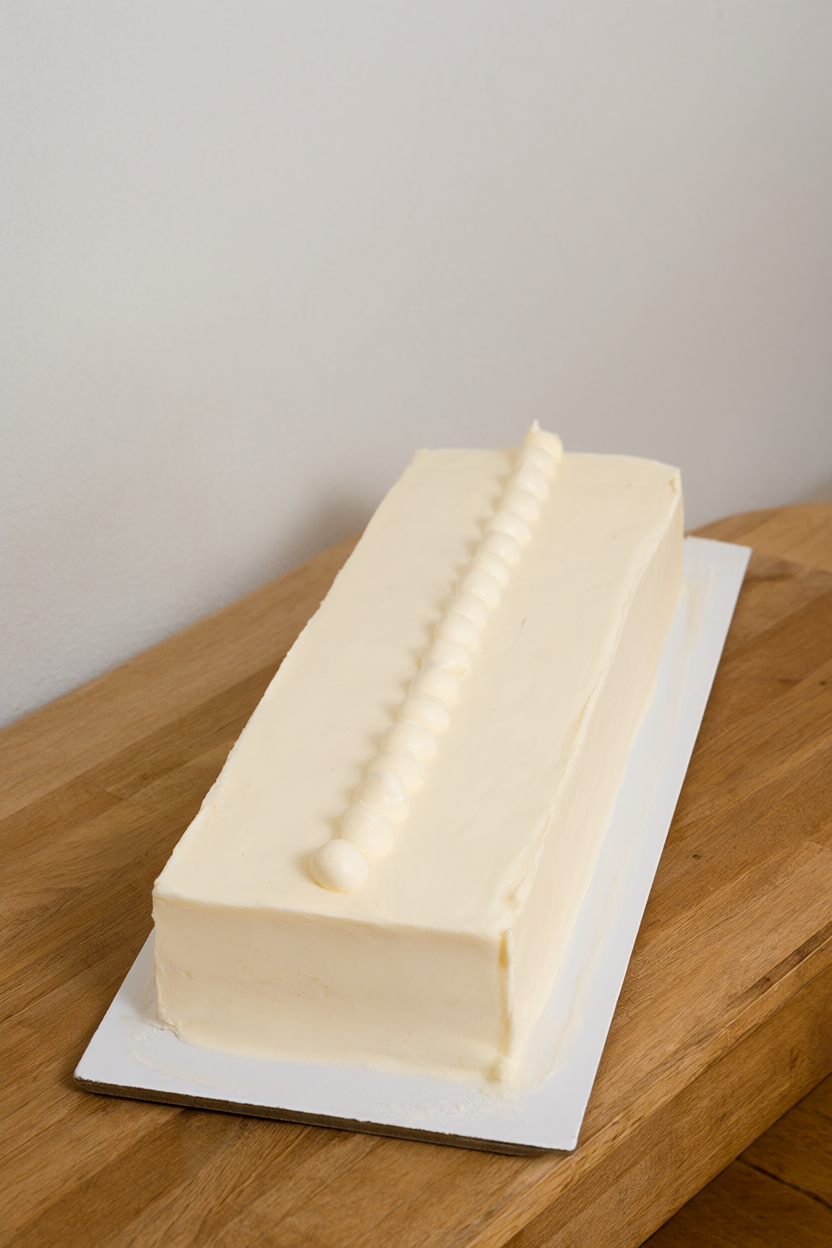
Swap tall tiers for one long rectangular cake that runs down the centre of the head table. A single row of small piped dots along the top edge is all the decoration it needs, and it keeps the sides clean for slicing. Measure the table before you order, then confirm the caterer’s slicing plan, because a long cake is quicker to cut into a neat line of portions. Keep the piped edge shallow so it does not drag when the first slice is lifted, and ask for a board that matches the tabletop so the cake looks built in rather than placed on top. Ask for the dots to be piped in the same colour as the base so the line reads as texture rather than pattern.
4. Monochrome Ruffle Tiers
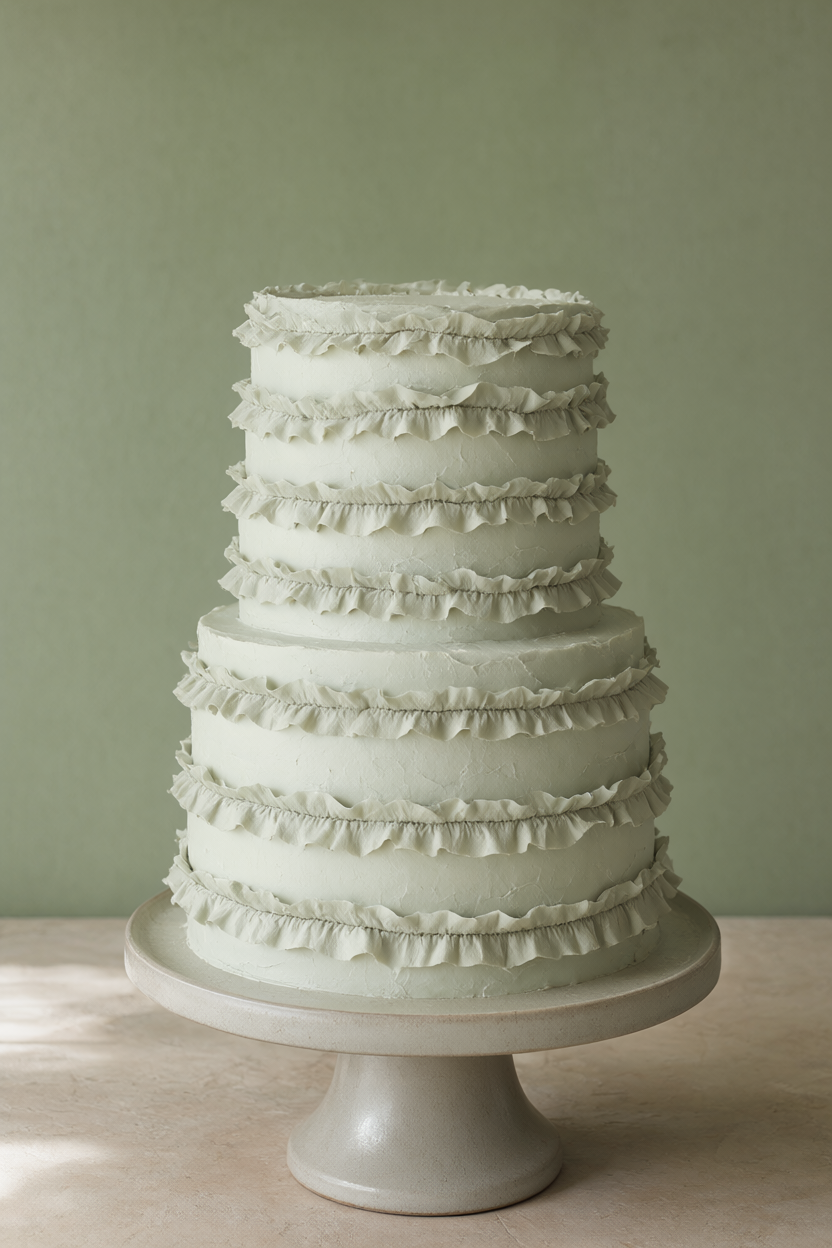
One colour, one texture: ruffled tiers in a buttercream a shade or two off white. Choose the shade first and let the ruffles carry the whole design; extra flowers or a coloured board will only compete. Ask for the ruffles to be piped close together so no bare cake shows between the folds. Ruffles need a cool room, so place the cake away from doors, heaters and late-afternoon sun, and check that the stand has a matte finish to match the softness. A single colour also means any small repair on the day will disappear into the pattern. If you want a little contrast, change the shade between tiers rather than adding a second decoration.
5. Bas-Relief Arches
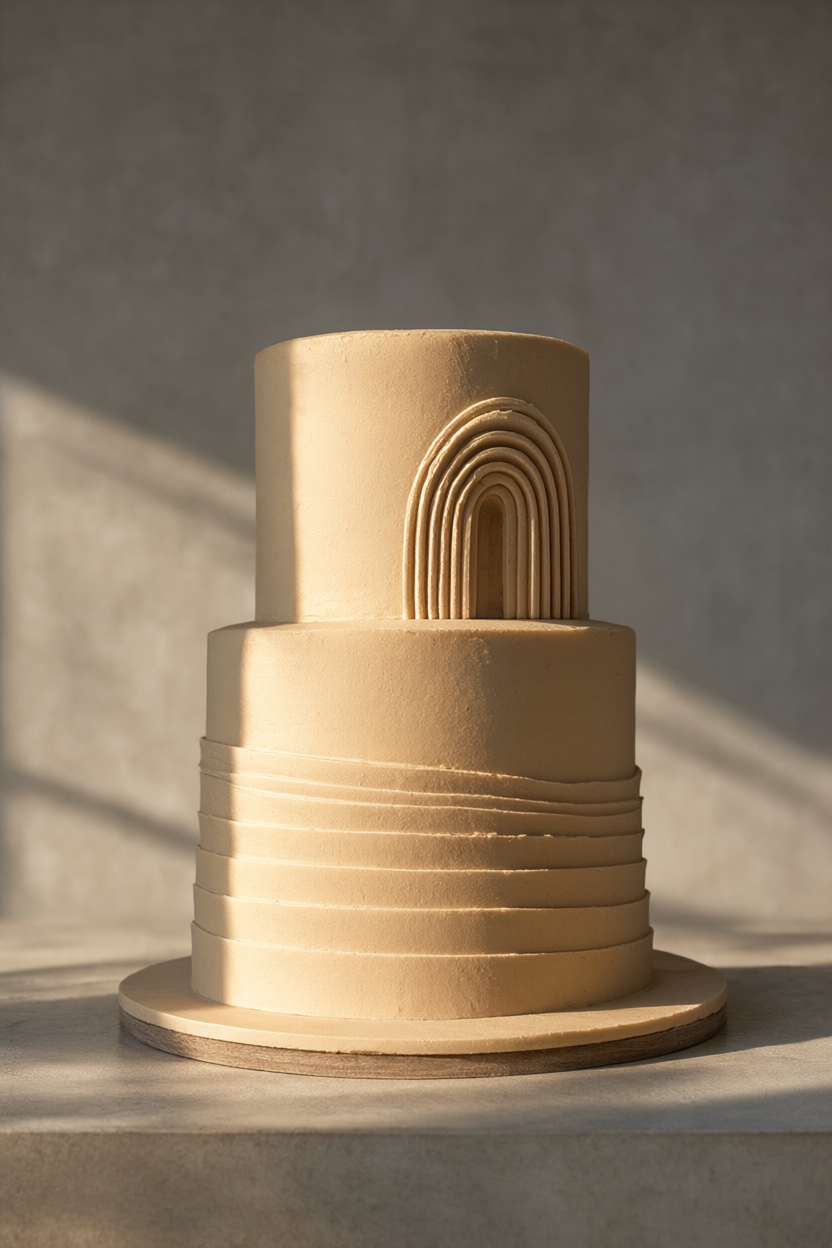
A smooth base with raised, sculpted arcs and stripes smoothed by hand, like plaster relief. Pipe thick shapes onto a chilled tier and smooth them with a small offset spatula; ask the baker to test the spacing on parchment first so the pattern stays even around the curve. Two tiers are plenty, because the relief needs quiet space around it. Raking light is what makes the shadows work, so mention any strong window light or pin spotting when you plan the table. Choose a sand, stone or pale clay tone over bright white, which tends to flatten the raised edges. Keep the pattern off the very edge of the top tier so candles and a cake topper still have a flat place to sit.
6. Piped Fringe Skirt
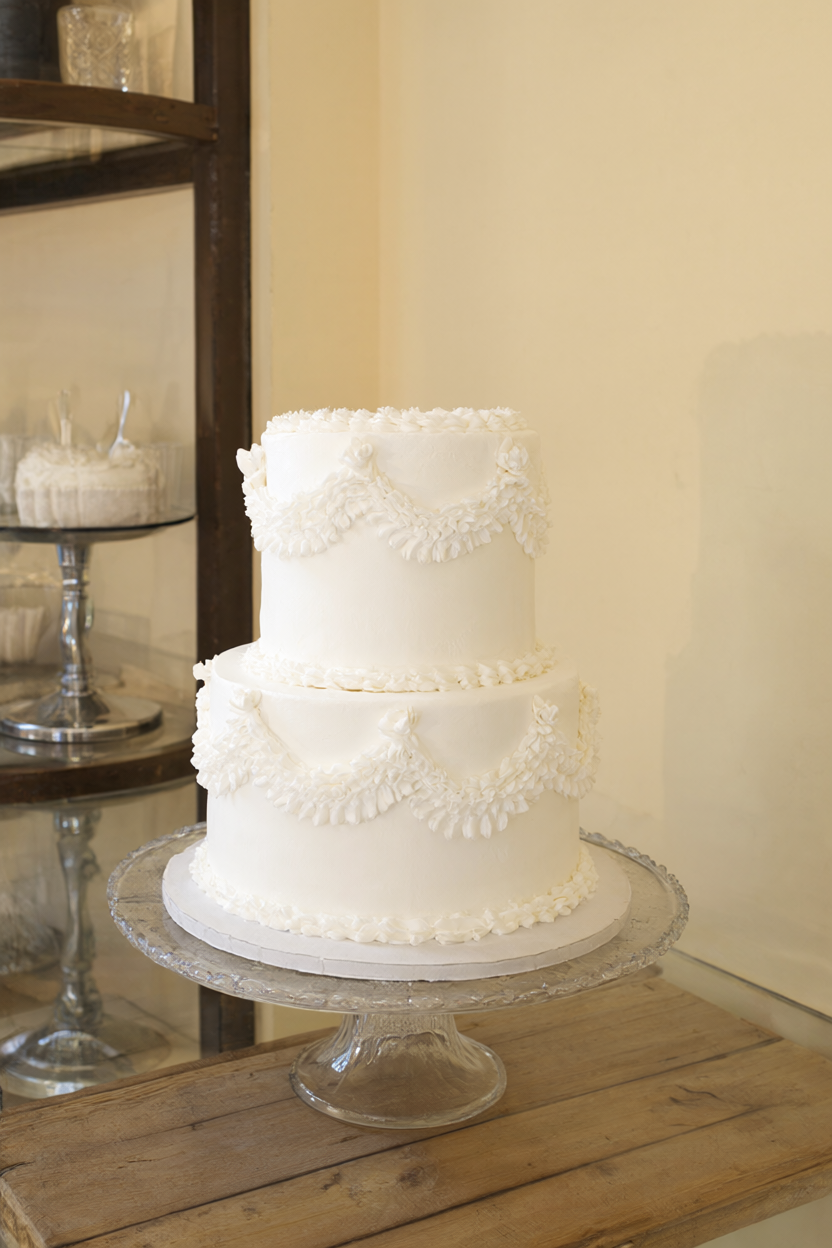
Vertical strands piped with a petal tip turn the sides of the cake into curtain fringe. The buttercream needs to be stiff and the hand steady, so ask for a baker who pipes fringe regularly rather than one who will try it for the first time on your cake. Chill the cake fully before transport and keep it out of humid air, which softens the strands. Have it delivered close to serving and set it down once, gently, rather than moving it between tables. A milk-glass or footed stand keeps the skirt clear of the tablecloth. Short strands are easier to keep tidy than long ones, so choose a length that stops above the stand’s rim.
Whichever finish you choose, the trick is to treat the buttercream as the decoration rather than a background for it. Take one idea, ask for it by name, and give your baker the time and the cool room the work needs. Keep the styling quiet around it and let the texture do the talking. The result will look like a cake from an old bakery window, made properly for your day. And when the pictures come back, the texture will be the thing guests remember.