Some nights you open the fridge, stare at whatever is inside, and the real question isn’t what sounds good — it’s where to start. The balanced plate method answers that in about ten seconds. No app, no counting, no separate dinner for the kids. Just four zones on a plate you already own, filled with food you probably already like. It’s a calm, practical way to get a weeknight meal on the table without turning dinner into a project.
Start With Half a Plate of Vegetables and Fruit
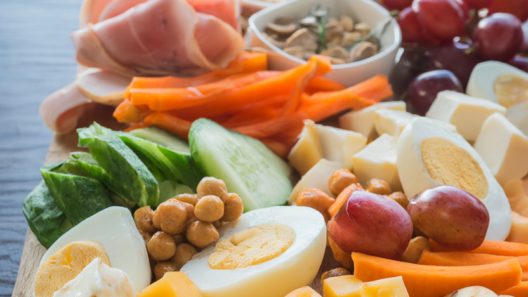
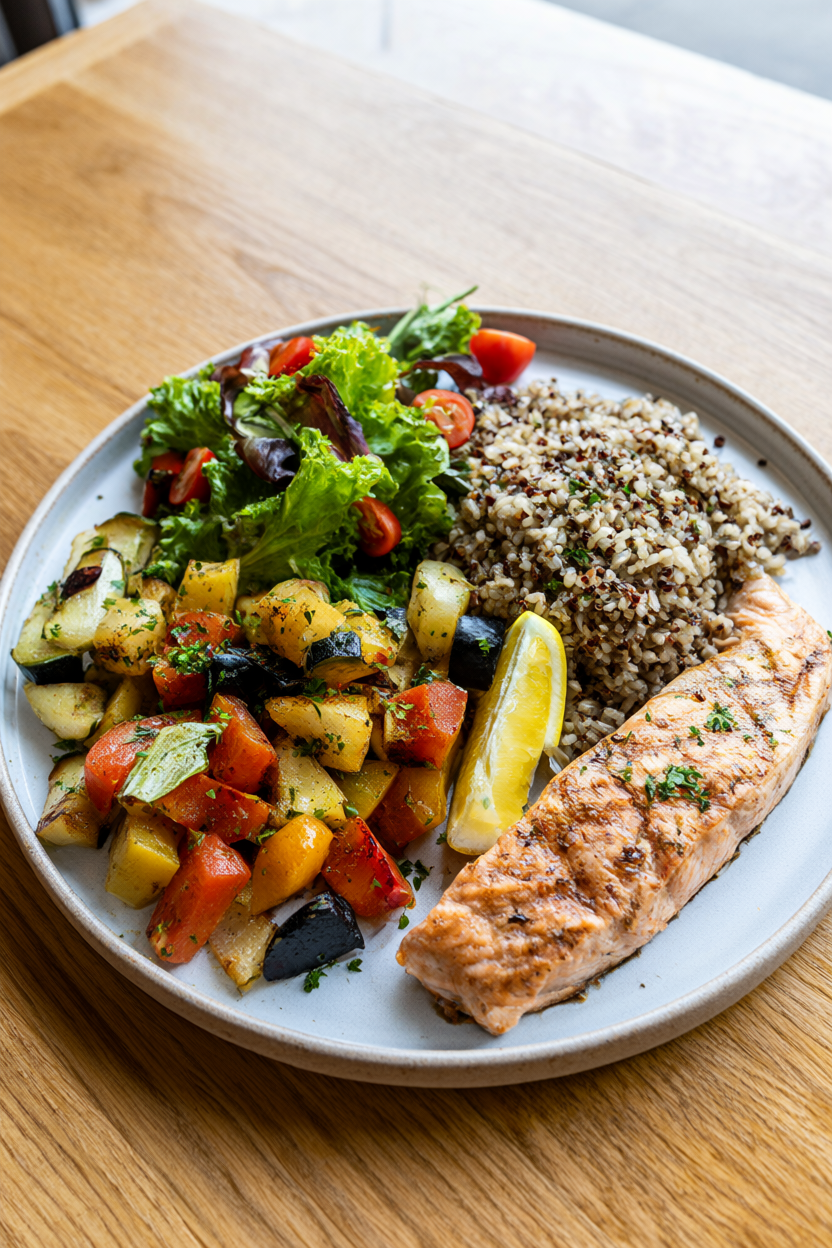
Half of the plate belongs to vegetables and fruit, and this is the part where you can afford to be generous. They add volume, fiber and nutrients, so the plate looks and feels like a real meal instead of a small one. Roasted carrots, a handful of greens, cherry tomatoes, sliced peppers, steamed broccoli — whatever is in the crisper drawer or the freezer counts. Fruit belongs here too: apple slices, berries, orange segments, or a few grapes alongside a salad.
The trick is to pick one or two vegetables you actually enjoy and let them take up real space on the plate. A pile of green beans next to a scoop of rice is a very different dinner from three lonely spears at the edge.
Give a Quarter of the Plate to Protein
A quarter of the plate is for protein: fish, eggs, beans, tofu, or lean meat. Protein helps you feel full longer, which matters on a night when dinner has to carry you until morning. Keep it simple — a fillet of salmon, a couple of eggs, a scoop of chickpeas, or some browned tofu all do the job.
This is also the easiest spot to swap. Not a fish person? Use beans. Out of eggs? Tofu works. The quarter stays the same size; the food inside it can change with whatever you have on hand.
Use the Last Quarter for Whole Grains or Starchy Vegetables
The final quarter is for whole grains or starchy vegetables: brown rice, quinoa, potatoes, or corn. This is the part that makes the meal feel like dinner rather than a side salad, and it’s the one to cook in a bigger batch than you need. A pot of rice or quinoa early in the week, or roasted potatoes tucked into the fridge, turns the next few dinners into assembly instead of cooking.
Add a Little Fat, Then Treat the Plate as a Template
A modest amount of fat finishes the plate: a drizzle of olive oil, a few slices of avocado, a small handful of nuts or seeds. Fat helps your body absorb fat-soluble vitamins, and it makes the whole meal taste better — a little goes a long way, so think of it as a finish rather than a foundation.
And here’s the most important part: the plate is a template, not a rule. Some nights you’ll be hungrier, some nights you won’t, and portions should follow your appetite and your activity rather than a diagram. The same balance also shows up in other shapes — a bowl of soup with beans and vegetables, a stir-fry with tofu and rice, or a grain bowl piled with greens all hit the same idea without looking like a plate at all.
Once the four zones feel familiar, weeknight dinners get a lot less decision-heavy. You’re not measuring anything or following a recipe to the letter — you’re just looking at the plate, noticing what’s missing, and filling the gap. That’s the whole method: half vegetables and fruit, a quarter protein, a quarter whole grains or starchy vegetables, and a little fat to bring it together. Simple enough to use on a Tuesday, flexible enough to keep using all year.