New Year’s Eve is the one night when the glass matters as much as the food. You want something that fizzes, catches the light, and feels like a celebration — without handing everyone a can of soda. The good news is that non-alcoholic New Year’s drinks can be festive and low in sugar at the same time. These five easy moves will help you pour something bright and bubbly that you can feel good about at midnight and the morning after.
Swap the Soda Base for Sparkling Water
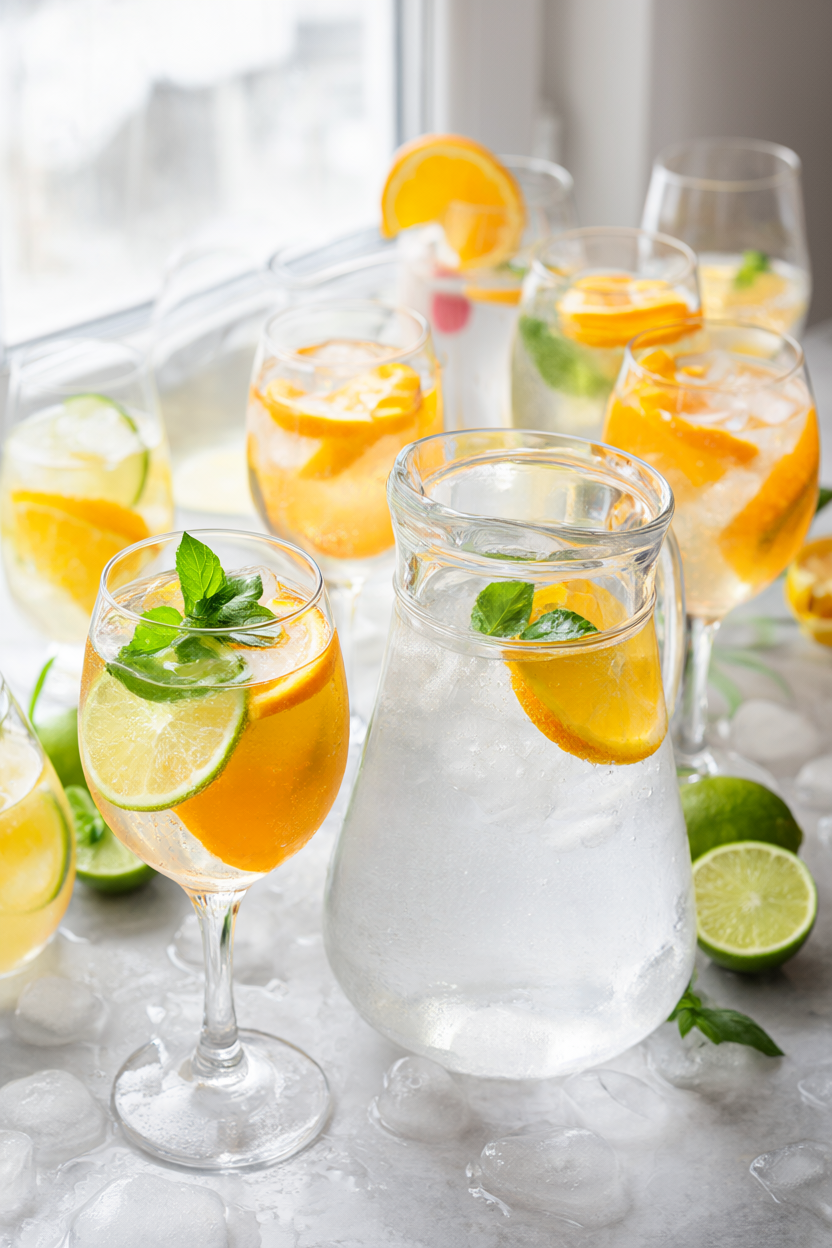
A 12-ounce regular soda has about 39 grams of sugar — roughly 10 teaspoons at 4 grams per teaspoon — while unsweetened sparkling water has none. That single swap is the biggest lever you have, and it takes about two seconds. Pick up plain or naturally flavored sparkling water instead of soda or sweetened tonic, then add the festive parts yourself: a squeeze of citrus, a few mint leaves, and plenty of ice. If you want a little sweetness, add a splash of juice rather than opening another can. Nobody at the party will notice what is missing; they will notice how fresh the drink tastes.
Read the Added Sugars Line Before You Pour
Non-alcoholic does not automatically mean low-sugar. Plenty of bottled mocktails, sparklers, and so-called healthy sodas taste dry and still carry a surprising amount of sweetener. Turn the label over and find the Added Sugars line. Added sugar is listed under names such as cane sugar, corn syrup, dextrose, and fruit juice concentrate, so a quick scan tells you a lot. If one of those names appears near the top of a short ingredient list, the drink is mostly sweetener — put it back and choose a simpler bottle. A short ingredient list with no added sugar is usually the safer bet.
Pour Juice as a Splash, Then Add Citrus and Herbs
100% juice has vitamins, but compared with whole fruit it has almost no fiber, so a glassful delivers a lot of sugar quickly. Treat juice as a flavoring instead of a base: an ounce or two over ice is enough to color a drink and wake it up. Save the tall glass for sparkling water and use the juice the way you would a squeeze of lemon. This is also where citrus and herbs earn their place. Skip flavored syrups and reach for lemon, lime, orange peel, mint, and basil. A strip of peel twisted over the glass, a few muddled mint leaves, or a basil sprig adds more flavor than a pump of syrup, and it looks beautiful on the table.
A few combinations to try:
- Lemon and mint in plain sparkling water
- Lime and basil with a splash of 100% cranberry juice
- Orange peel and a cinnamon stick for a cozy winter note
Know Your Daily Added Sugar Target
It helps to know the number you are working with. The Dietary Guidelines for Americans recommend keeping added sugars under 10% of daily calories — about 50 grams on a 2,000-calorie day. That is the whole day, not just the drink in your hand, and a couple of sweet sips can use up a big share of it. Keeping the target in mind makes the choice easy: sparkling water with citrus for the toast, and a smaller splash of juice when you want something sweeter. You do not have to count every gram at a party. Just know that drinks are one of the easiest places to save, because the flavor comes from citrus, herbs, and bubbles rather than sugar.
The best New Year’s drink is the one you actually enjoy, and none of these swaps ask you to give up the fun. Set out a pitcher of citrus sparkling water with mint and orange slices — an easy low-sugar base that doubles as one of the simplest non-alcoholic punch recipes — and let people add their own splash of juice. Keep the citrus, herbs, and a couple of juices on the table, and you have a build-your-own bar full of New Year’s mocktails and fresh New Year’s Eve drink ideas. Cheers to a fresh, fizzy start to the year.