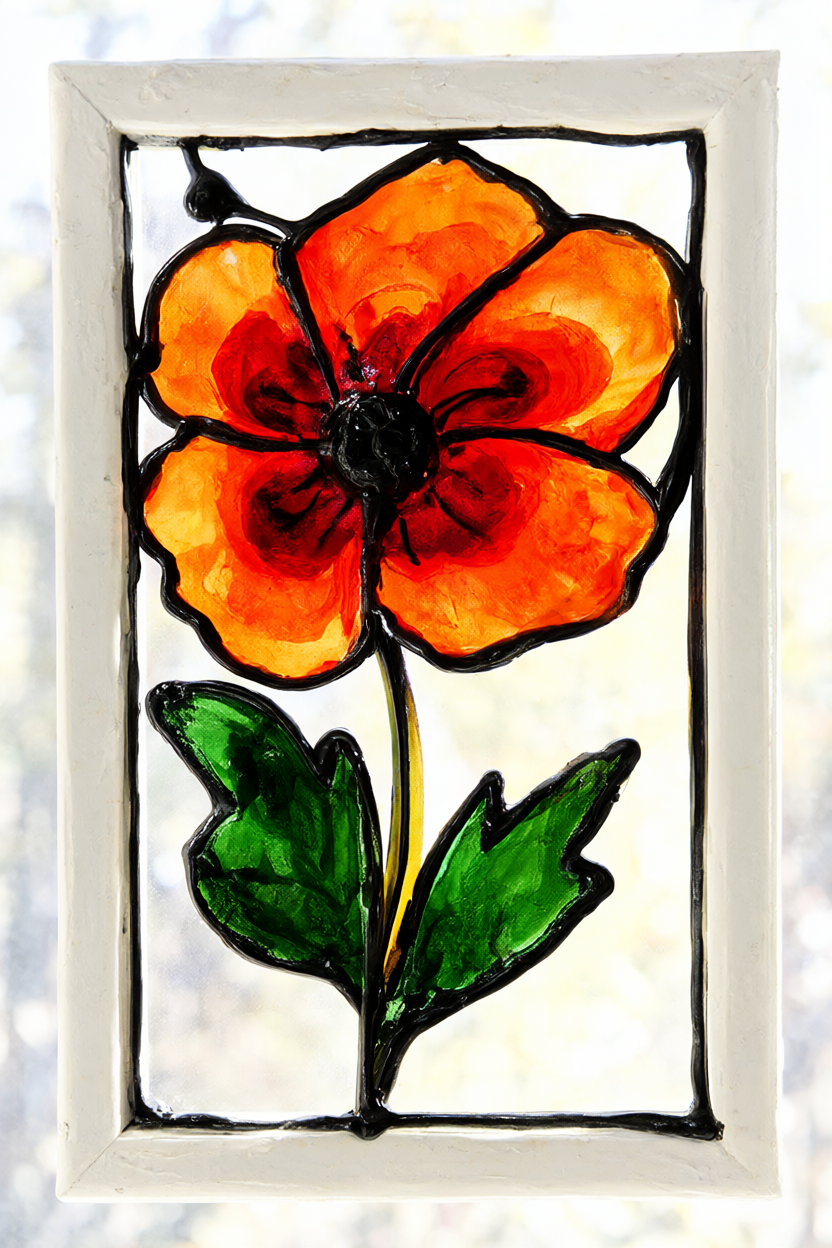
A plain thrifted 5×7 frame and a handful of small glass paint bottles can turn one window into a little jewel box. This faux stained glass suncatcher uses black hot glue as the leading and a single poppy as the star, so it reads like real stained glass from across the room. It is Easy and beginner-friendly, about 45 minutes of hands-on work plus 24 hours of flat drying, roughly $18-25 if you buy everything new, and there is a free printable supply list and step checklist included below.
At a Glance
- Difficulty: Easy and beginner-friendly — no glass cutting, no soldering, no kiln.
- Hands-on time: About 45 minutes, plus a few short waits for the glue to set.
- Drying and curing: 24 hours drying flat, then about 7 days to fully cure.
- Cost: About $18-25 if you buy the glue sticks, a glass paint set and a frame new. A thrifted frame runs $2-4, and most people already own the glue gun, brushes, scissors and tape.
What You’ll Need
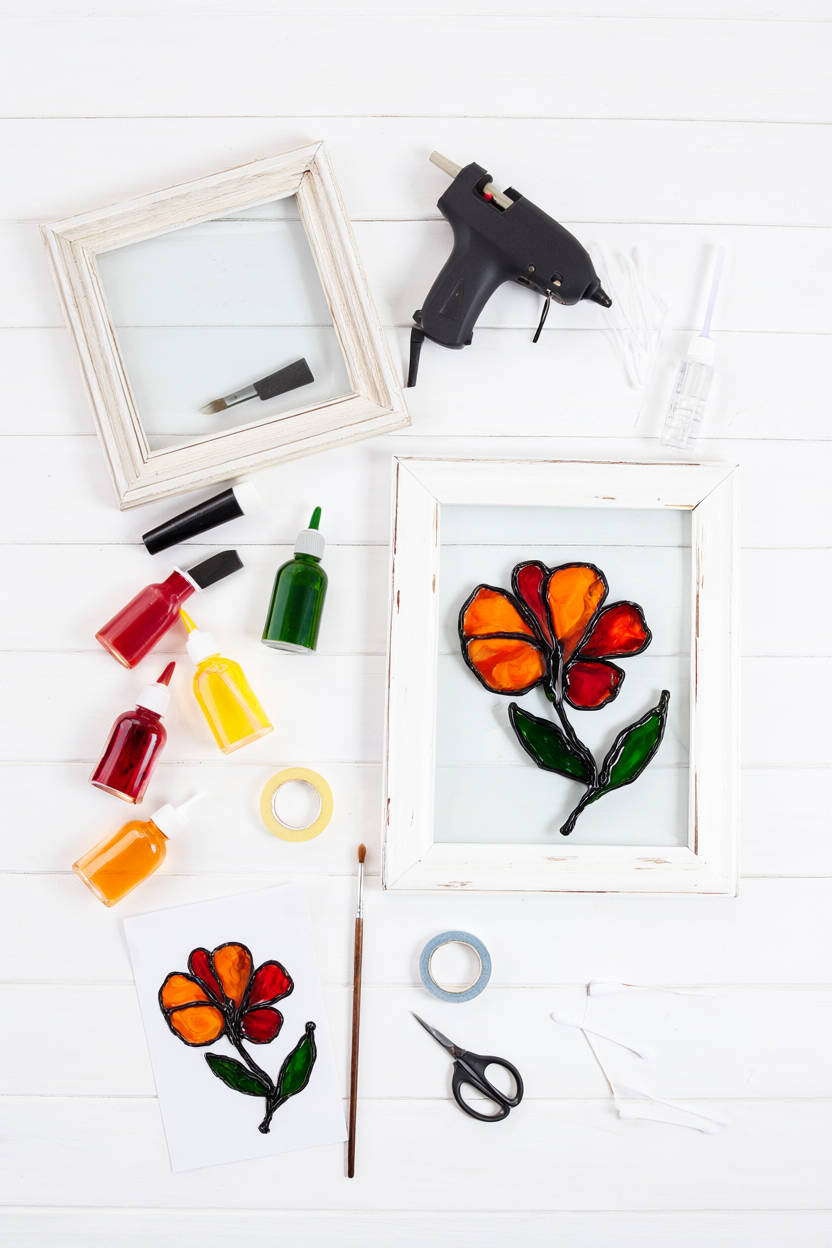
- 5×7 in (13×18 cm) picture frame with real glass, thrifted or dollar-store — 1
- Black hot glue sticks — 5
- Hot glue gun with a fine nozzle — 1
- Translucent glass paint in 4-5 colours: tangerine, ruby, yellow, leaf green and cobalt — 2 oz bottles
- Small liner brush — 1
- Small flat brush — 1
- Rubbing alcohol — small bottle
- Cotton swabs — 10
- Painter’s tape — 1 roll
- Printed 5×7 poppy template — 1
- Scissors — 1
- Clear suction cup hook or 20 in chain — 1
- Paper towels — a few
Step-by-Step Instructions
Give the steps a quick read before you squeeze any glue — the order matters more than the speed. Set everything out on a flat table you can leave undisturbed, and keep paper towels within reach for drips.
- Take the glass out of the frame, wipe both sides with rubbing alcohol and a cotton swab, and let it dry completely. Keep the frame and backing aside. Clean glass is the whole secret here, because dust and fingerprints stop paint from gripping — from now on, hold the pane by its edges.
- Print the poppy template at 5×7 in, trim it to the design edge with scissors (kids should ask an adult for help), and tape it to the back of the glass, face up, so the lines show through. Tape all four edges so the paper cannot shift while you trace.
- Load a black glue stick and trace every outline, keeping the nozzle on the glass and moving slowly in 2-3 in runs. Steady, even pressure gives smooth lines, and you can build a second pass on any thin spot while it is still warm. The nozzle gets very hot, so rest the gun on its stand between runs and keep your fingers behind the tip.
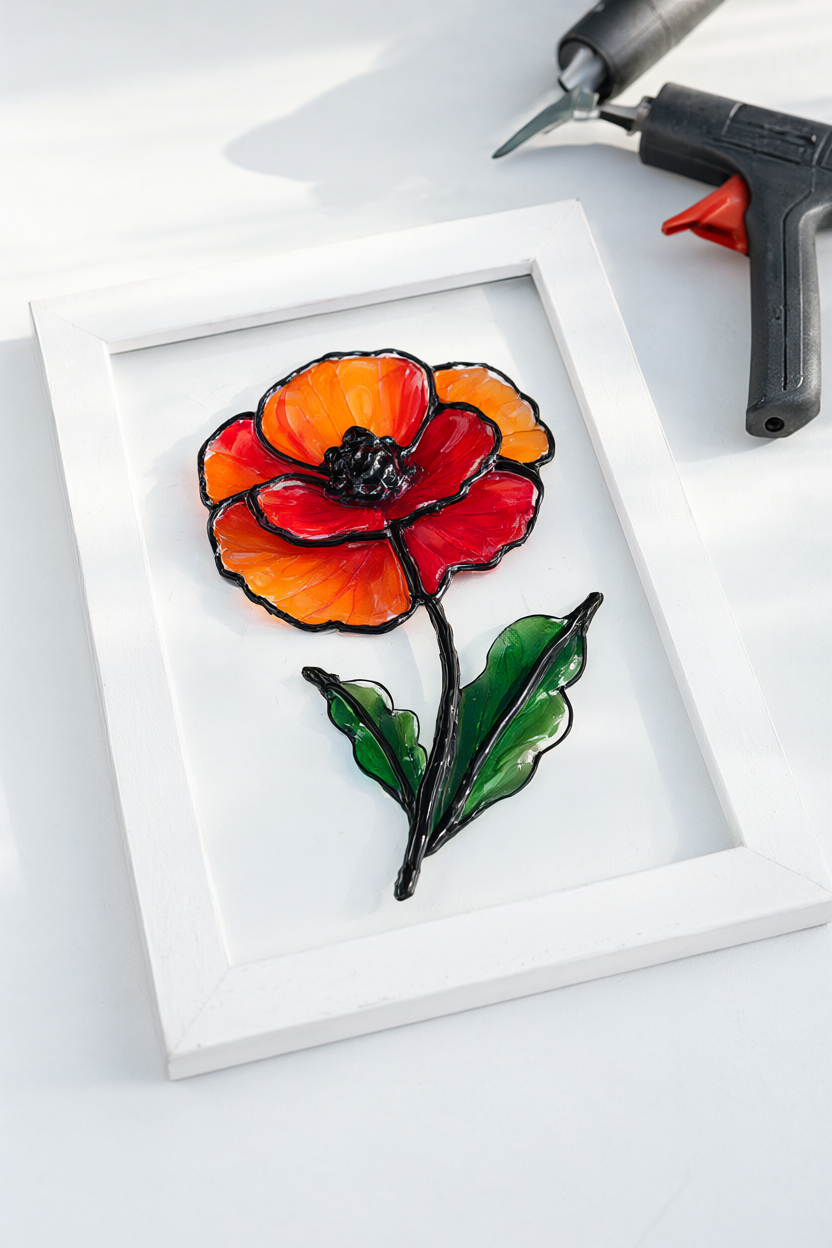
- Let the glue set for 2-3 minutes, then pull off the fine strings with a dry cotton swab. Only lift the spiderweb strands, never the outline itself.
- Squeeze a small puddle of tangerine glass paint into one petal and spread it with the flat brush, stopping just short of the glue line. Use the liner brush to push paint into corners. A thin coat that hugs the leading looks far better than a flooded one.
- Fill the remaining petals with ruby, adding a touch of yellow at the centre, and fill the two leaves with leaf green. Work one colour at a time and wipe the brush on a paper towel between colours so they stay clean. If a colour looks pale, leave it — the second coat goes on after the first is dry to the touch.
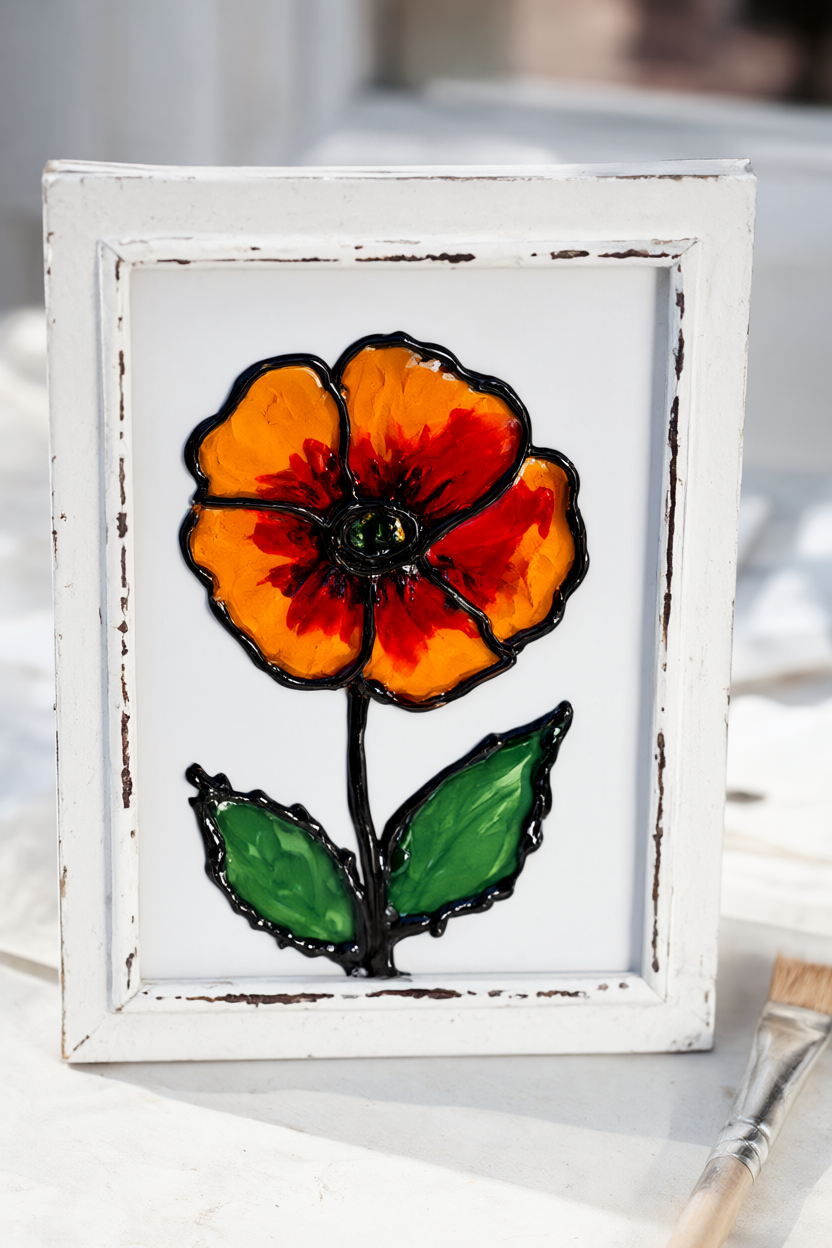
- Let the piece dry flat for 24 hours, away from dust and pets, and add a second thin coat to any pale patch after the first is dry to the touch. Glass paint stays soft until it cures, so resist the urge to poke it.
- Reassemble the frame, attach a suction cup hook or a 20 in chain, and hang it in a bright window with the painted side toward the window glass, so daylight passes through the colour before it reaches your eyes.
Make It Your Own
Swap the palette. Plum, dusty rose and amber turn the same poppy into a sunset panel that suits a bedroom window. Keep the black leading exactly as it is — that dark outline is what makes soft colours glow.
Change the drawing. Trace a butterfly, a monstera leaf or a simple letter monogram instead of the poppy. Letters work best in thick, simple shapes, and a cobalt monogram looks lovely above a front door.
Make a set. A row of three 4×6 frames with one flower each makes a window gallery. Hang them at the same height with 2 in between, or give one as a housewarming gift — it weighs almost nothing and travels well.
Beginner Mistakes (and Easy Fixes)
- Glue lines that are thin, wobbly or stringy. Squeeze slowly with the nozzle touching the glass and work in short runs, then lift the strings with a dry cotton swab once the glue has set.
- Paint flooding over the glue borders. Load the brush lightly, switch to the liner brush near the lines, and build two thin coats instead of one wet one.
- Skipping the alcohol wipe. Dust and fingerprints stop glass paint from gripping, so clean both sides and handle the pane by the edges only.
Your Free Printable
The free PDF is two letter-size pages you can print at home. Page 1 — “What You’ll Need” checklist of every material and tool with quantities. Page 2 — “Step by Step” checklist of the nine assembly steps in order. Keep it on the craft table, tick each item off as you go, and file it with your supplies for the next frame you spot.
Questions You Might Have
Do I need a kiln or soldering iron?
No. The black hot glue stands in for lead came and the glass paint air-dries, so the whole project is a glue gun and two brushes. That is why this version is so friendly for a first attempt.
Will the hot glue peel off?
It grips clean glass well, and the frame traps the pane so the lines cannot lift at the edges. Just never soak or wash it — dust it with a dry cloth and keep it out of the dishwasher.
Can I use acrylic paint instead?
No — acrylic dries opaque and can peel from glass. Use translucent glass paint or glass stain, which is made to bond to glass and lets the light through the way a suncatcher should.
Save This for Later
Pin the image below to your craft board so this project is waiting the next time a thrifted frame catches your eye.

A small project like this is a gentle way to spend a rainy afternoon, and the reward is something you get to look at every sunny morning. Once the frame is back together, the hardest part is choosing which window gets it.