There is something about a baby animal in autumn that stops us mid-scroll. Maybe it is the round eyes, maybe the way a fox kit lifts one paw as if the whole carpet of fallen leaves were a stage built just for it. Whatever it is, it works every single time.
So here are ten small creatures, each one clearly having the best day of its life. Take your time with them. Notice which one you would take home, and keep an eye out for the fact tucked under every photo. Some you will know, and one or two may surprise you.
Grab a warm drink, settle in, and let the season do the rest.
All photos in this gallery are AI-generated illustrations.
1. The Fox Kit Who Owns the Clearing
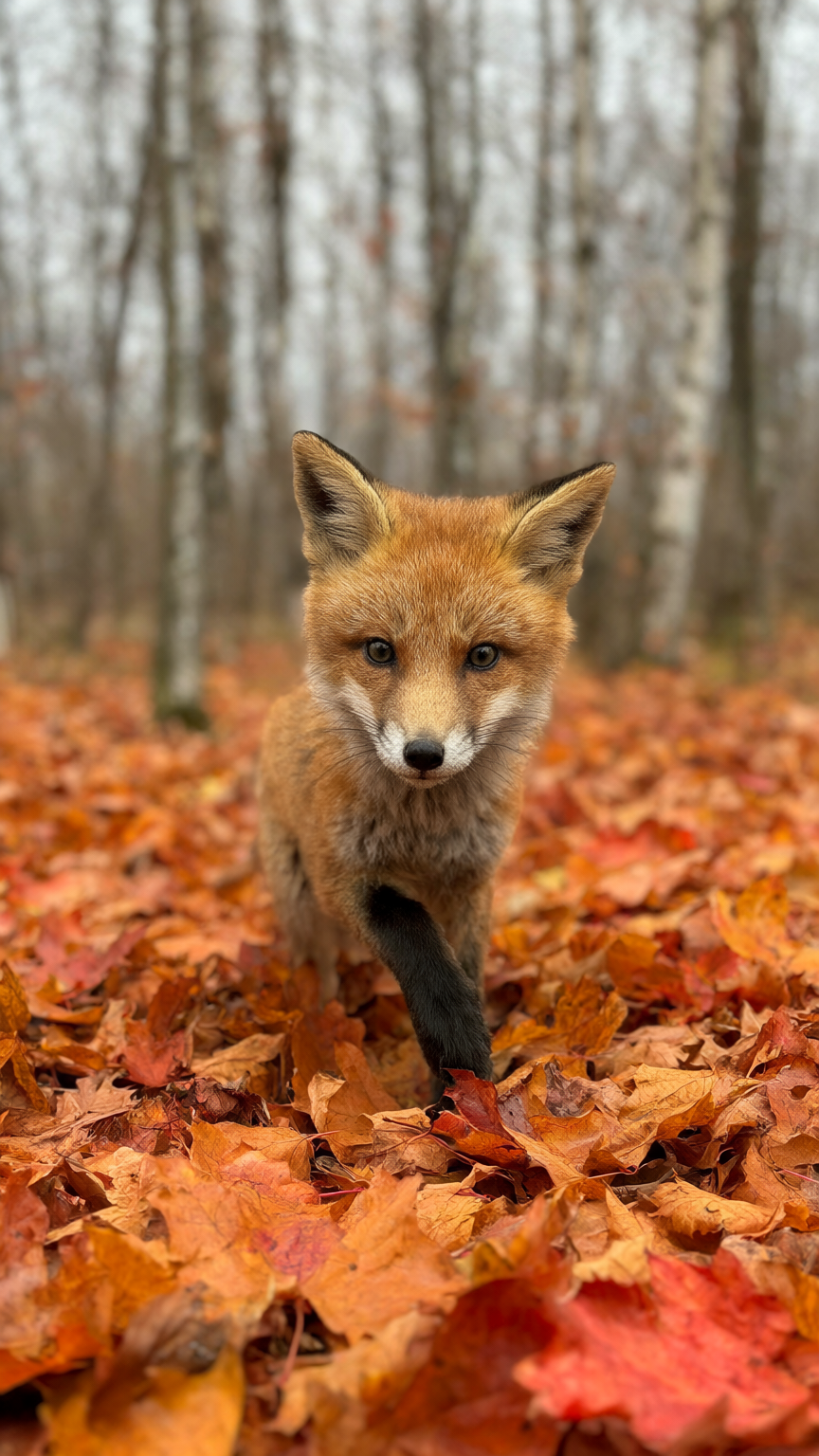
This fox kit stands in the middle of a clearing as if it has just remembered an appointment. One dark front leg is lifted mid-step, the black-tipped ears are pricked, and all around it the maple leaves have gone the color of a lit fire. What makes it so endearing is the seriousness. Kits this age practice pouncing, stalking and stopping dead still, and every one of those lessons looks like a small job performed by a very small professional.
Red fox kits are born in a den called an earth, usually in spring, and their eyes open at around two weeks old. The famous white tip on the tail is there from the start, a family flag that helps kits follow each other through tall grass.
2. This Puppy Found the Best Leaf Pile
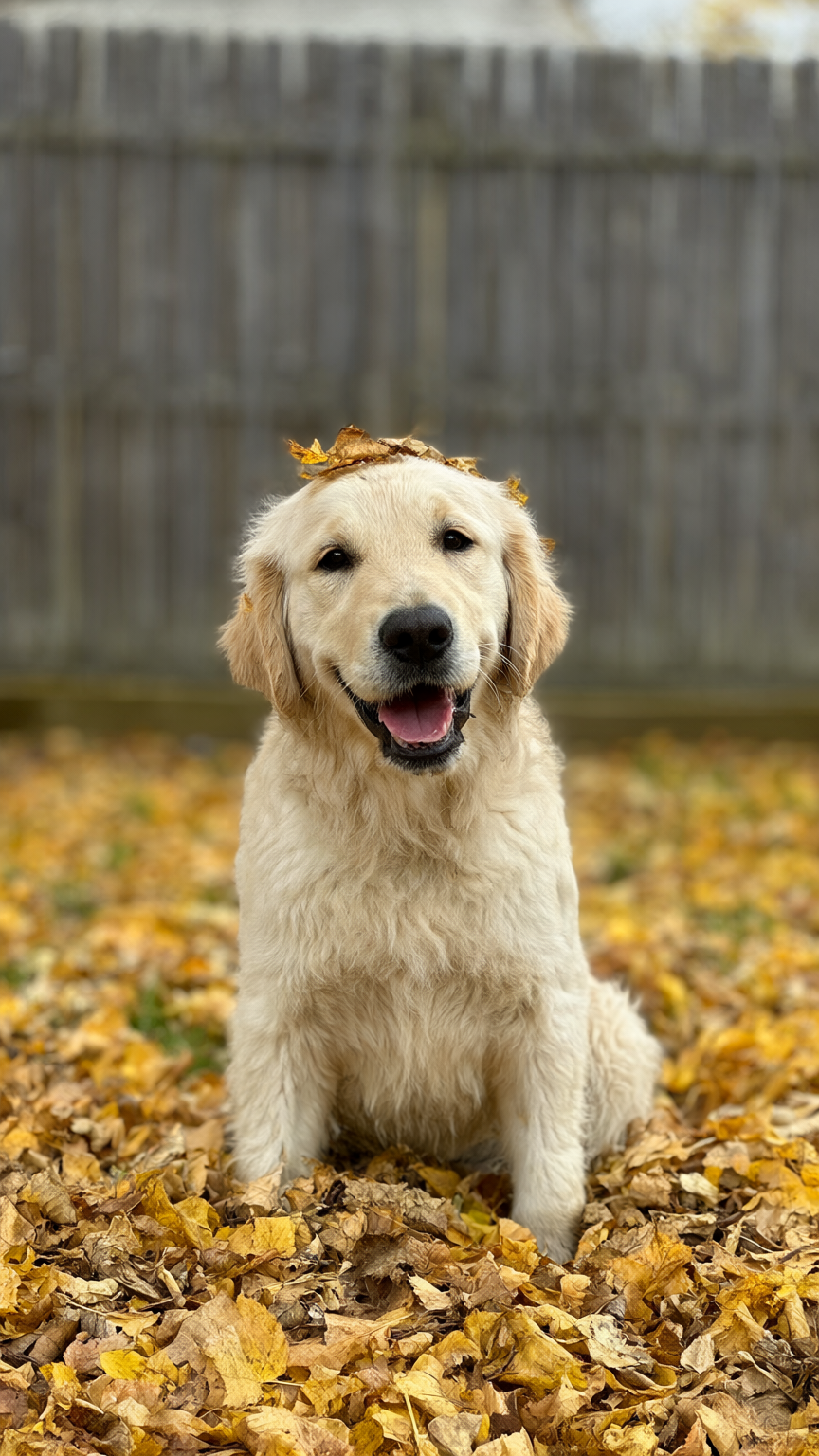
Somewhere in this backyard, a rake was used for about four minutes before the pile was claimed. The cream-colored puppy sits square in the middle of the yellow leaves, mouth open in a happy pant, ears flopped, and one maple leaf has landed on its head like a tiny hat. Nothing about the scene is tidy and everything about it is perfect: the fence blurred behind, the dry leaves crackling, the sheer pride of having found the softest seat in the garden.
Golden retrievers were bred in Scotland to work alongside hunters, which is why they tend to carry things around so happily. Their noses hold far more smell receptors than ours, so that leaf pile is probably a whole newspaper of news to this one.
3. A Fawn in the Morning Mist
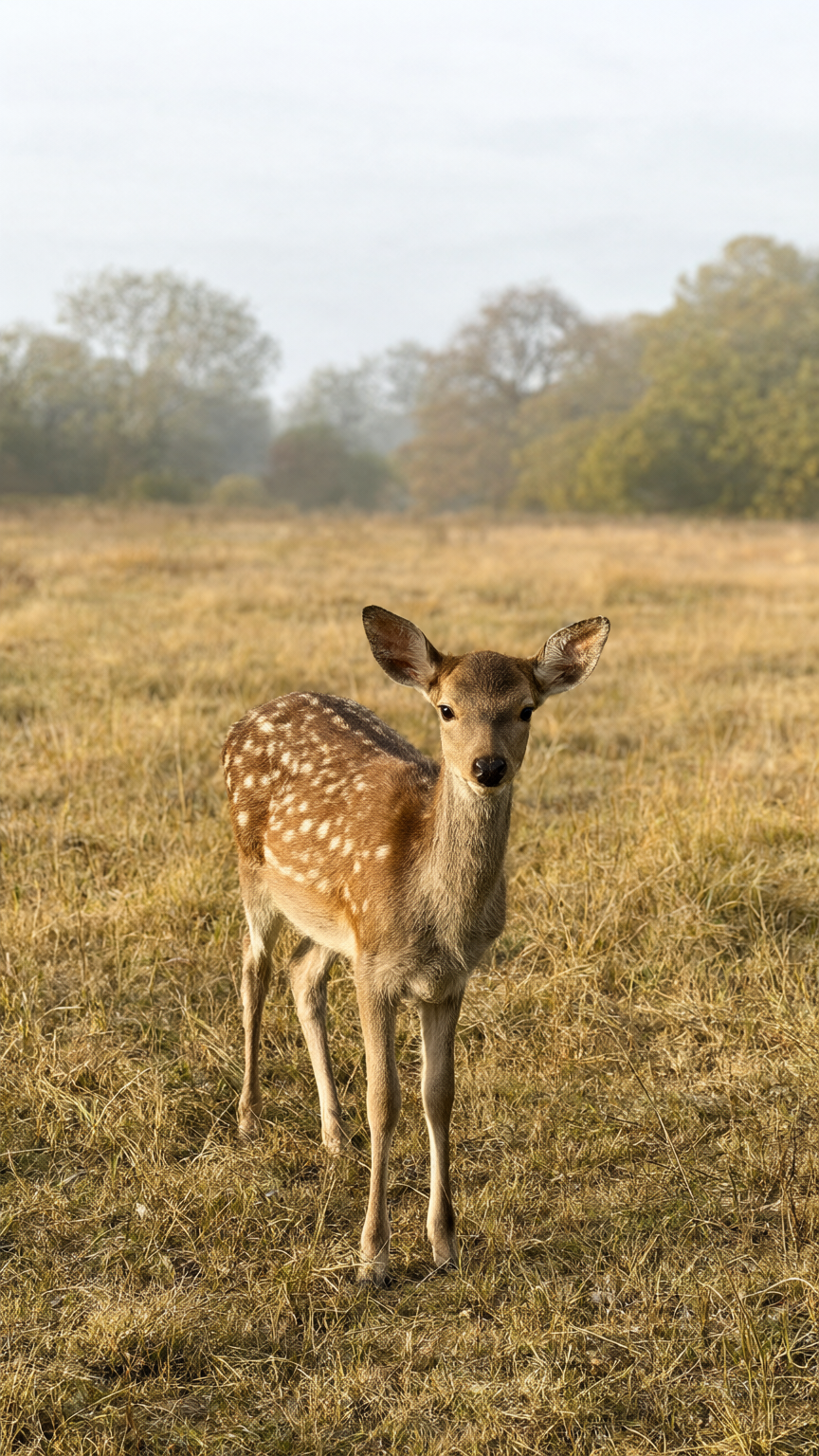
The meadow is all dry gold and cool grey, and in the middle of it a spotted fawn has turned its head to look straight at us. The white spots scattered over its tawny coat are not decoration; they break up the outline of a small body against sunlit grass, so a fawn can simply stand still and nearly disappear. Here the mist has done the opposite and made it the softest thing in the frame.
Deer fawns are born with those spots and lose them after a few months, once they no longer need to hide in tall grass. They can stand and walk within hours of being born, which is a serious skill for a creature that spends its first days staying put and staying quiet.
4. The Squirrel With the Perfect Acorn
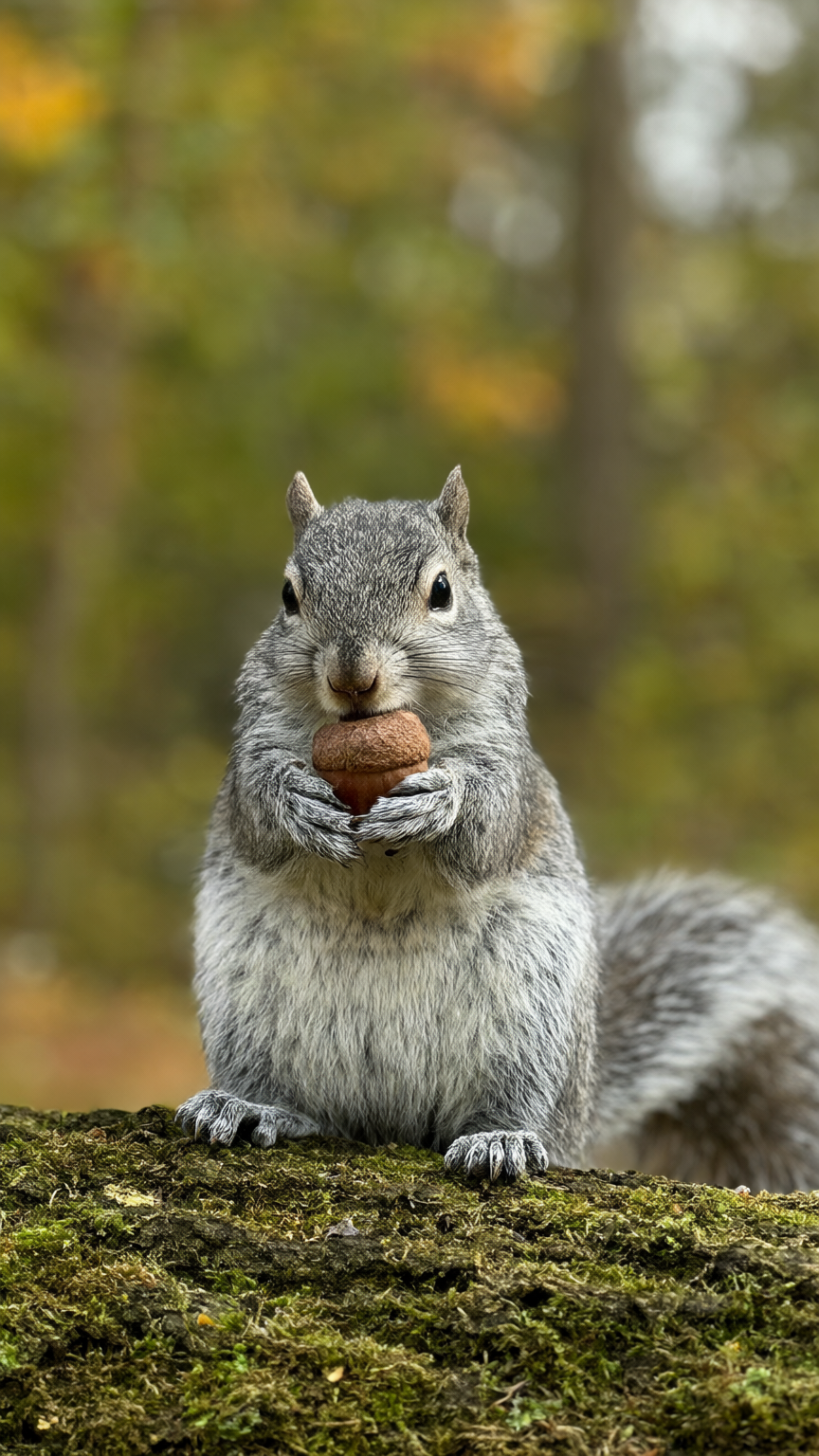
A grey squirrel has found an acorn, climbed onto the most photogenic mossy log in the forest, and is holding its prize in both paws like a tiny trophy. The tail curls up behind, the eyes are bright, and the whole pose suggests it knows exactly how good this looks. Squirrels are busy in autumn for a reason: every acorn buried now is a meal saved for the cold months, though the map in their head is famously imperfect.
Grey squirrels can rotate their ankles so they can climb down a tree head-first, which is why they look so casual on a trunk. The acorns they forget to dig up sometimes grow into new oak trees, so a scatterbrained squirrel is also an accidental gardener.
5. A Hedgehog on a Very Important Mission
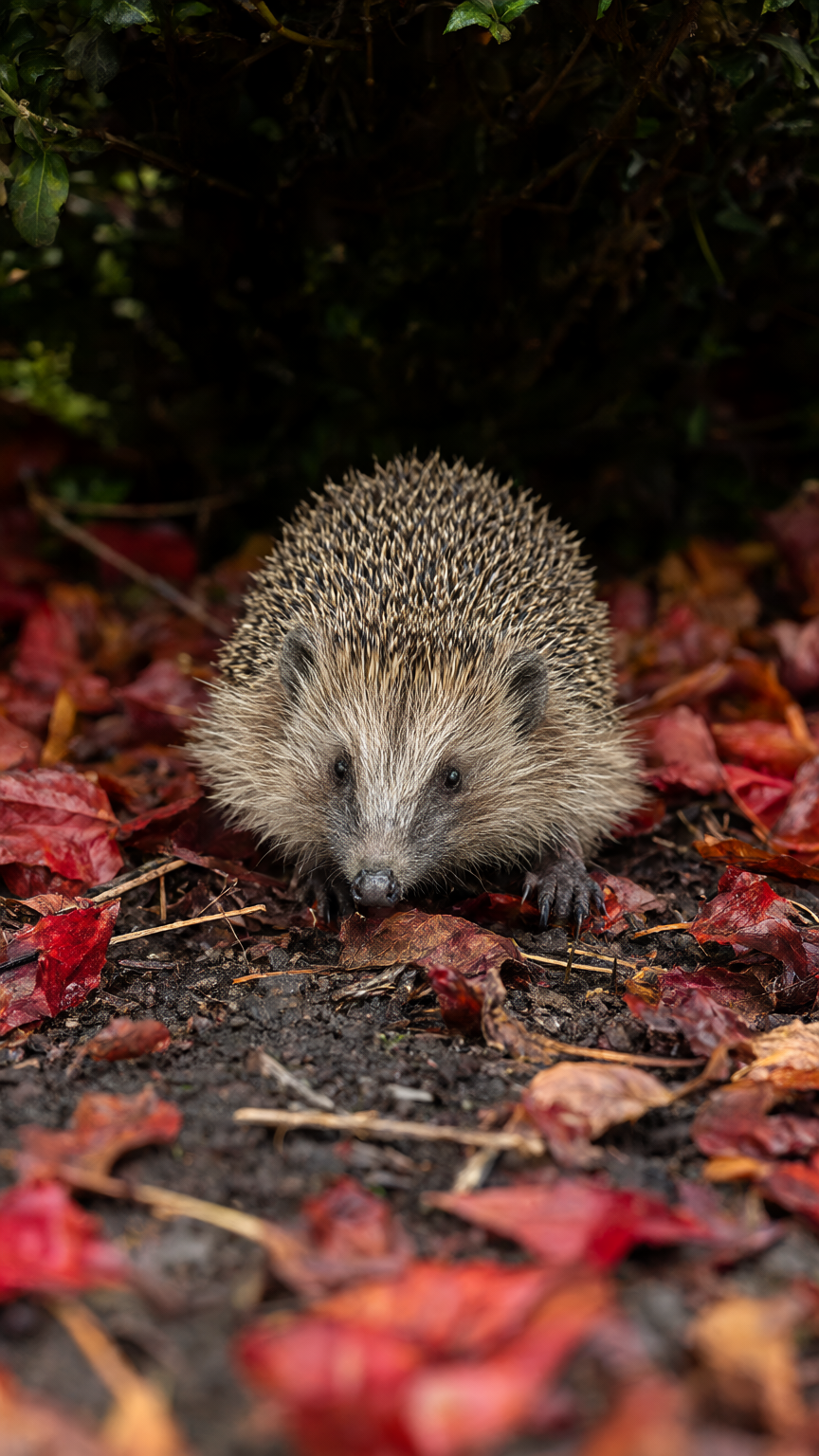
Under the hedge, a brown hedgehog is moving through a drift of red and russet leaves with its nose to the damp earth, and you can almost hear the snuffling. It has somewhere to be, clearly. Hedgehogs are night-loving insect hunters, and autumn is the season for eating as much as possible before the cold sets in. The pale snout, the little feet, the absolute focus of the thing: it looks less like a wild animal and more like a very short commuter in a fur coat.
A hedgehog’s spines are modified hairs, and a baby hedgehog is called a hoglet. When it rolls up, it uses a ring of muscle along its back to pull the prickly coat around itself like a drawstring bag.
6. Somebody Found the Porch Pumpkins
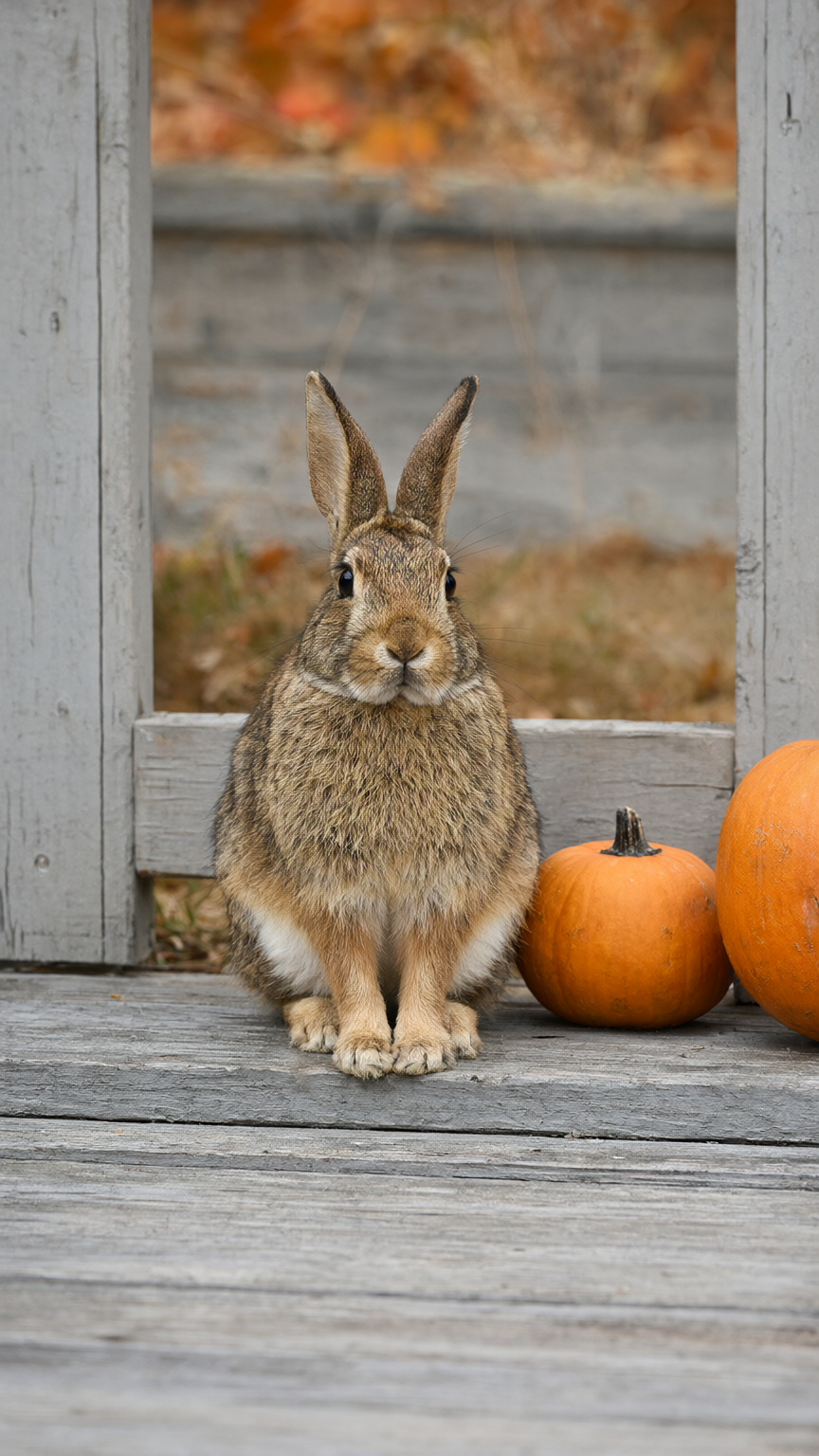
A brown cottontail has claimed the front step, sitting upright between two orange pumpkins as if it were posing for a family portrait. The tall ears swivel, the nose twitches, the dark eyes take in everything at once. Porch steps are excellent rabbit territory: a raised platform with a clear view, a garden nearby, and a human who keeps putting out interesting orange objects.
Rabbits’ front teeth never stop growing, so they spend a lot of their day chewing tough plants to wear them down. A cottontail’s tall ears are not just for hearing; they also help the rabbit shed heat, which is useful when you are wearing a fur coat all year.
7. Four Ducklings Out for a Paddle
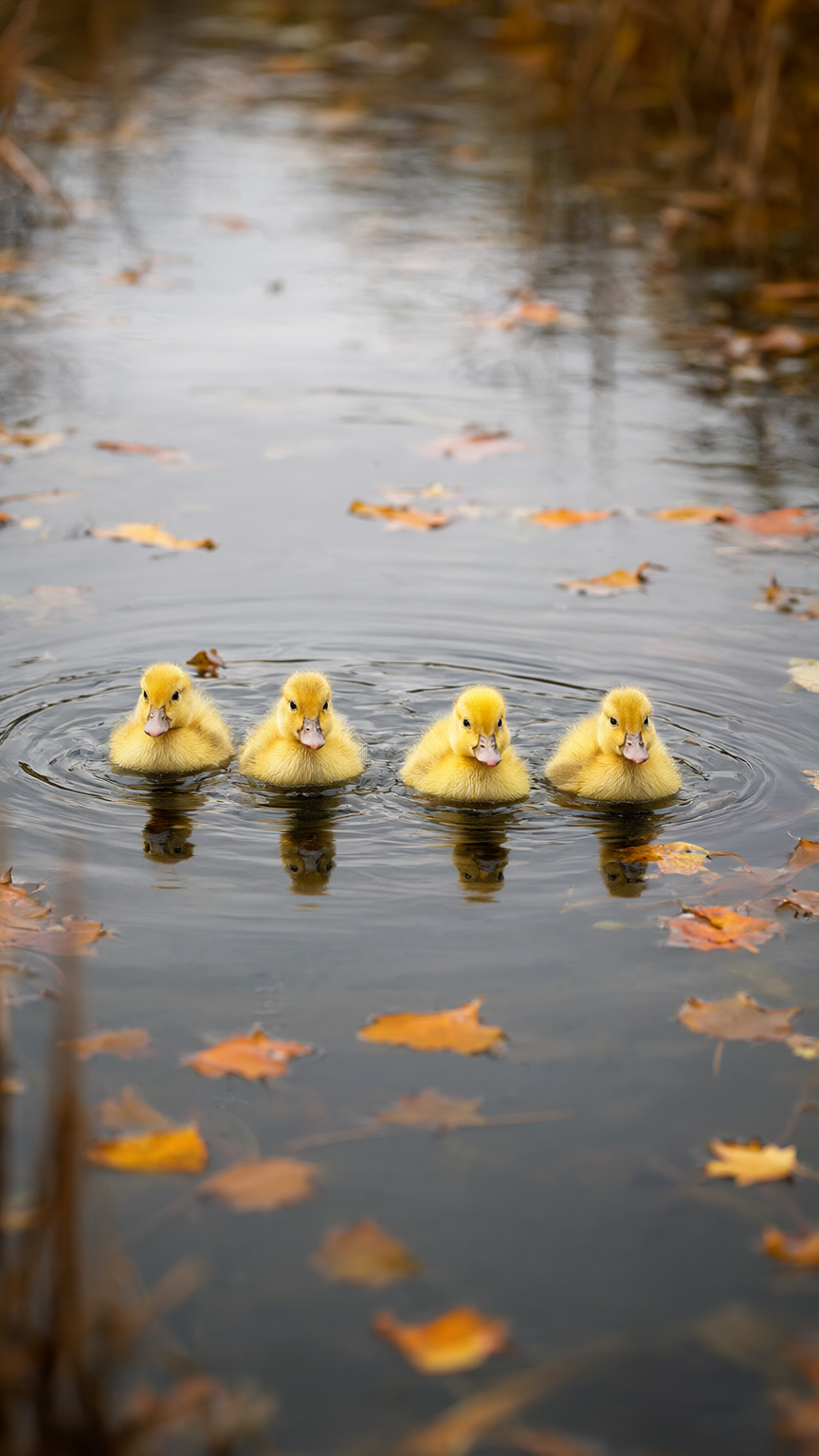
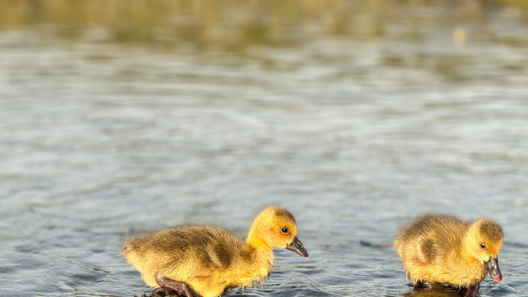
Four yellow ducklings are paddling in a neat little row across a grey pond dotted with floating orange leaves. The ripples spread around them, the reeds blur at the edges, and the line keeps perfect order for about a second at a time. Ducklings are all fluff and purpose. They paddle hard, they stay close to whoever they have decided is family, and they make even a puddle look like an expedition.
Ducklings can swim and feed themselves within a day of hatching, and they are famous for imprinting, following the first moving thing they see as if it were their mother. That is how you end up with a brood of ducklings trailing after a dog, a boot, or a gardener.
8. The Lamb Who Loves Autumn Air
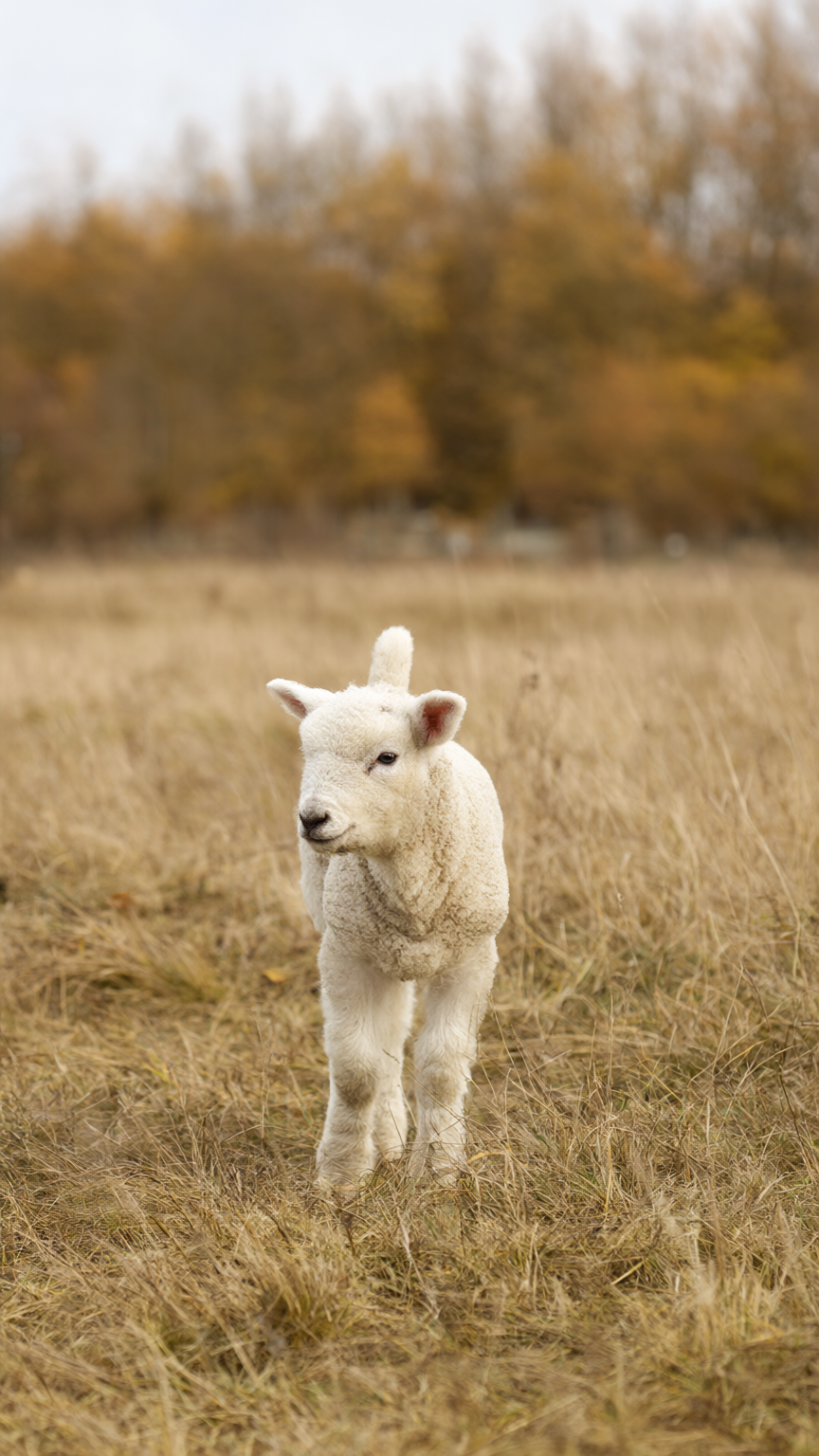
A white lamb stands in dry golden pasture grass with its head tilted toward us, short tail up, dark eyes steady. Behind it the autumn trees have gone a muted gold and everything looks like the last warm week before the cold. Lambs have a particular way of standing: all four feet planted, slightly surprised by the world, as if they have just noticed they are outside. It is a very good look on this one.
Lambs can usually stand and feed within an hour or so of birth, and they can recognize their mother’s bleat in a field full of other sheep. Sheep also have rectangular pupils, which give them a wide view of the grass around them without much head-turning.
9. A Piglet Peeking From the Barn
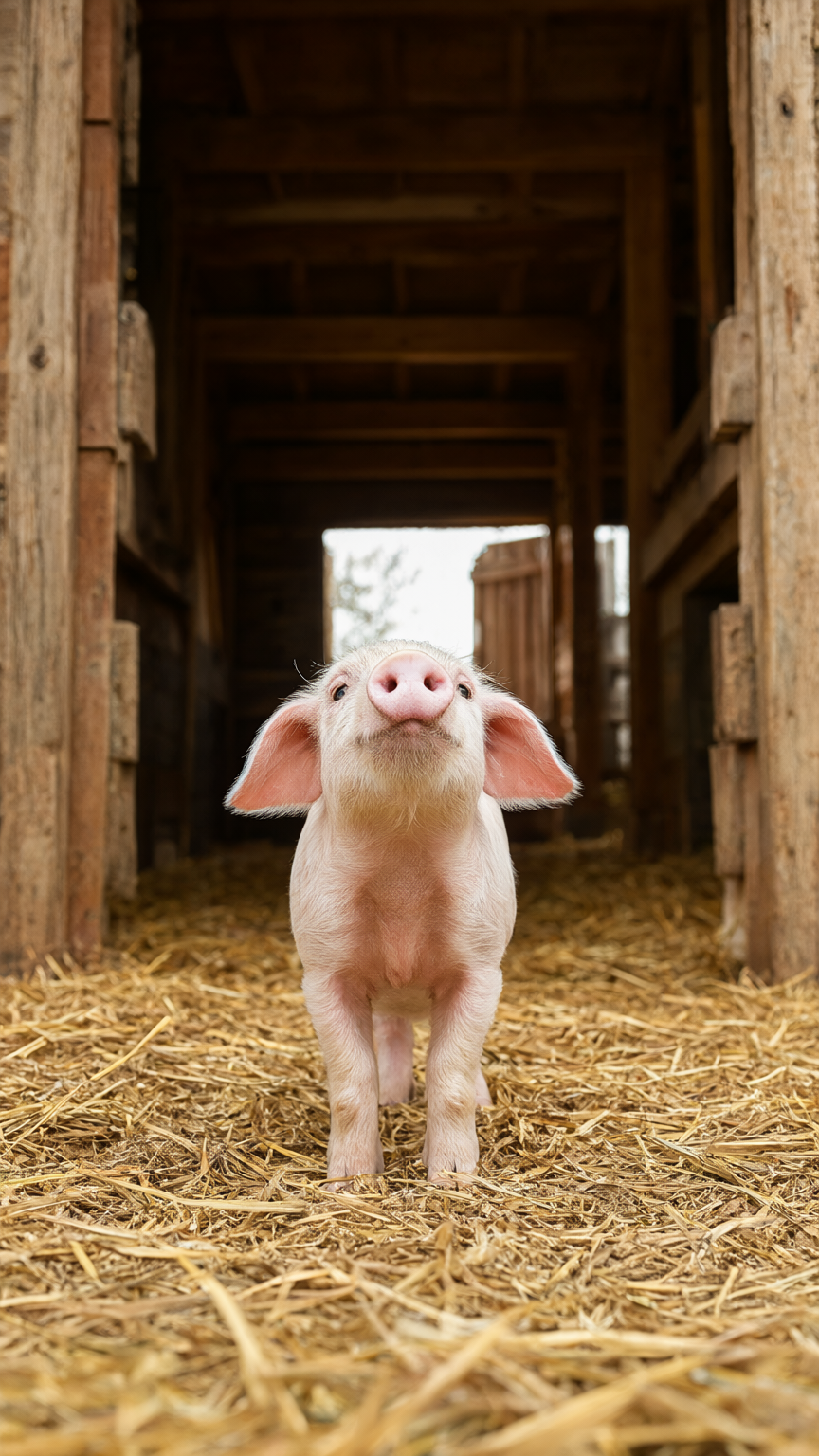
A small pink piglet stands in the barn doorway on fresh straw, nose lifted, front hooves forward, wide ears flopping over its face. The daylight comes in behind the wooden beams and makes the straw glow. Piglets are curious by nature, and this one looks like it has just heard something worth investigating at the far end of the yard. The posture is all business; the face is all softness.
Pigs cannot sweat much, so they use mud and shade to stay cool, which is where the phrase about sweating like a pig gets things completely backwards. They are also among the cleverest of the farm animals, quick to learn routines and quick to learn where the food is kept.
10. This Goat Kid Claimed the Stump
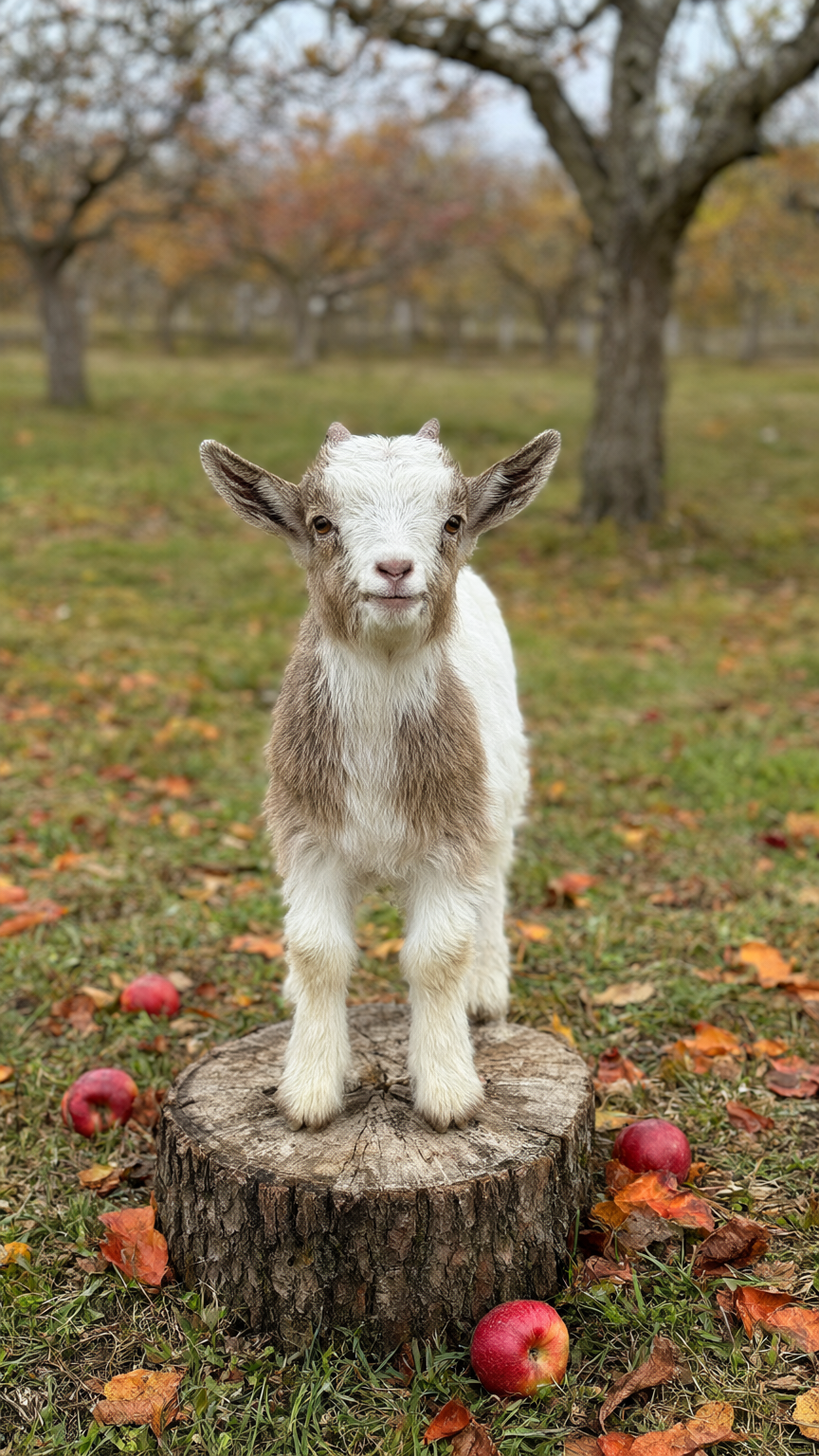
The white and brown goat kid has found the best seat in the orchard and is not giving it up. Chin up, tiny horn buds showing, amber eyes fixed on something off-camera, it stands on a cut stump with red apples and orange leaves scattered on the grass below. Baby goats are famous for hopping and twisting in the air, but this one has chosen stillness, and it turns out a small goat standing still is almost unbearably jaunty.
Goats have rectangular pupils that give them a wide field of view, keeping watch for predators while their heads are down in the grass. A baby goat is called a kid, and young kids love to climb, which explains the stump, the fence, and probably the roof.
Thank you for wandering through the leaves with us. If one of these small faces made you smile, you already know which one. Give your own pet an extra scratch tonight, put a pumpkin on the step, and come back for the next gallery; there are always more soft ears and crisp mornings waiting.