Weeknights in October have a way of getting away from us. The sun sets earlier, the kitchen gets darker, and by six o’clock the easiest dinner is whatever we can find in the fridge. Meal planning for beginners doesn’t have to mean a color-coded calendar or a whole Sunday spent cooking. It can be five small decisions that turn a vague week into five dinners you are glad to sit down to, plus a grocery trip that does not run long. There is no perfect version to chase.
Plan five dinners, not seven
Seven nights sounds tidy, but a week rarely goes to plan. Start with five dinners and let the week fill in the rest. Leftovers cover one night, and one simple fallback covers the other: eggs, a pot of soup, or toast with something good on top. That small permission matters. Five planned dinners is a full week of healthy meal planning, not a half-finished one, and it leaves room for the nights when nobody wants to cook. Write the five dinners down somewhere you will see them, and let the plan be a promise you can keep rather than a test you can fail. If a dinner works, make it again the next week; repetition is a beginner’s friend, not a failure of imagination.
Cook one anchor component
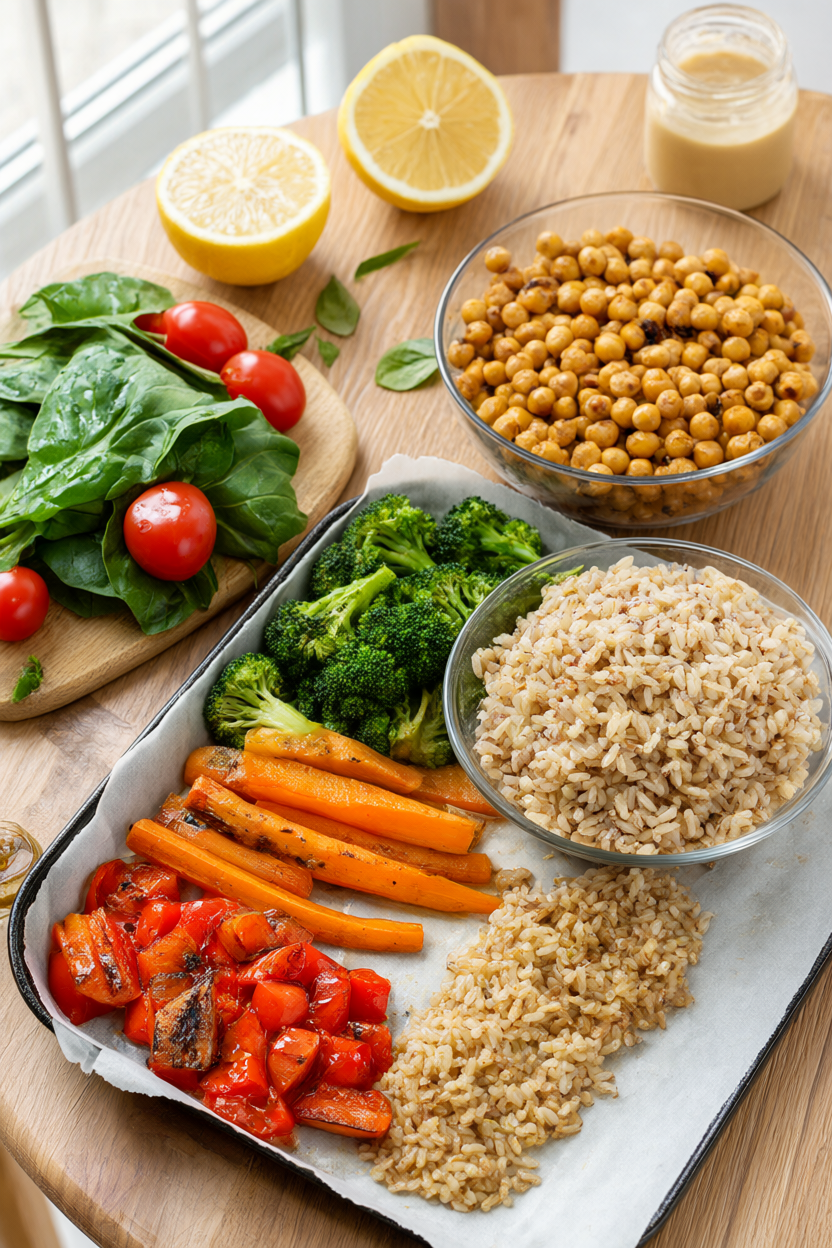
A single batch of something is often the difference between a rushed dinner and a calm one. Cook one anchor component early in the week, then reuse it in two or three dinners. Pick one:
- A pot of rice or grains, enough for a few nights.
- A tray of roasted vegetables.
- A batch of chickpeas, which bring fiber and protein to whatever they join.
One pot of grains can become a bowl on Tuesday, a side on Thursday, and the base of a soup on Friday. The point is not to cook everything at once. It is to cook one thing that makes the next three dinners easier, so the weekly meal plan has something sturdy to stand on. That is the whole trick: one effort, several easier dinners.
Build a balanced plate
Once the components are ready, the plate does the thinking. Aim for half vegetables, one quarter protein, and one quarter grains. It is the same split every night, which is exactly why it works for beginners: no recipe to look up, just a shape to fill. A scoop of roasted vegetables, a spoonful of chickpeas, and a scoop of rice is a complete dinner. Swap the vegetables for whatever looks good and the grain for whatever you cooked, and the shape still holds. Build the plate in the same order each time: vegetables first, then protein, then grains. That is the quiet magic of the balanced plate. It turns meal planning ideas into dinner without a lot of deciding.
Shop once and prep smart
Step four is the shopping trip. Write your list in the order you walk through the store — produce, protein, dairy, pantry — so you are not doubling back down the aisles. Check the pantry first so you don’t buy what you already have. One list, one trip, and the weekly meal plan stays honest.
Step five is the prep. Do only what saves time later:
- Wash and cut vegetables.
- Cook grains.
- Marinate protein.
Leave dressings, herbs, and crunchy toppings for the day you eat them. They take a minute and taste fresher that way. This is the meal prep for the week that earns its place: a short session now, easier easy weeknight dinners later. The list and the prep are where a little planning turns into an easier week.
That is the whole plan: five dinners, one anchor component, a balanced plate, one smart shop, and a short prep session. None of it needs a special app or a free afternoon. Pick one step to try this week, and let the next one follow.