Portion control sounds like math homework: a kitchen scale, a set of measuring cups, and a calculator balanced on the counter. It doesn’t have to be. Your hands come with you everywhere, and they’re already roughly matched to your body. This simple hand guide turns any plate — a quick weeknight dinner, a restaurant entrée, a holiday table — into a balanced meal without a single measuring spoon.
Portion Size vs. Serving Size on Your Plate
Start with a word that trips people up. A serving size is the reference amount printed on a food label — the number a manufacturer uses to report calories and nutrients. A portion is whatever you actually put on your plate. The two are often different, and that’s okay. The label is a benchmark, not a rule. A bag of chips might list three servings, but the handful you eat beside a sandwich is your portion. Packaged foods can be sneaky here, too: a muffin the size of your fist may count as two or three servings on the label, while a whole apple is one. Knowing the difference takes the guilt out of the equation: you haven’t broken anything by eating more or less than the label suggests. You’ve simply chosen your portion. The hand measures below give you a fast way to eyeball a sensible one at any meal, and you can adjust from there based on how hungry you are.
Palm for Protein, Fist for Vegetables
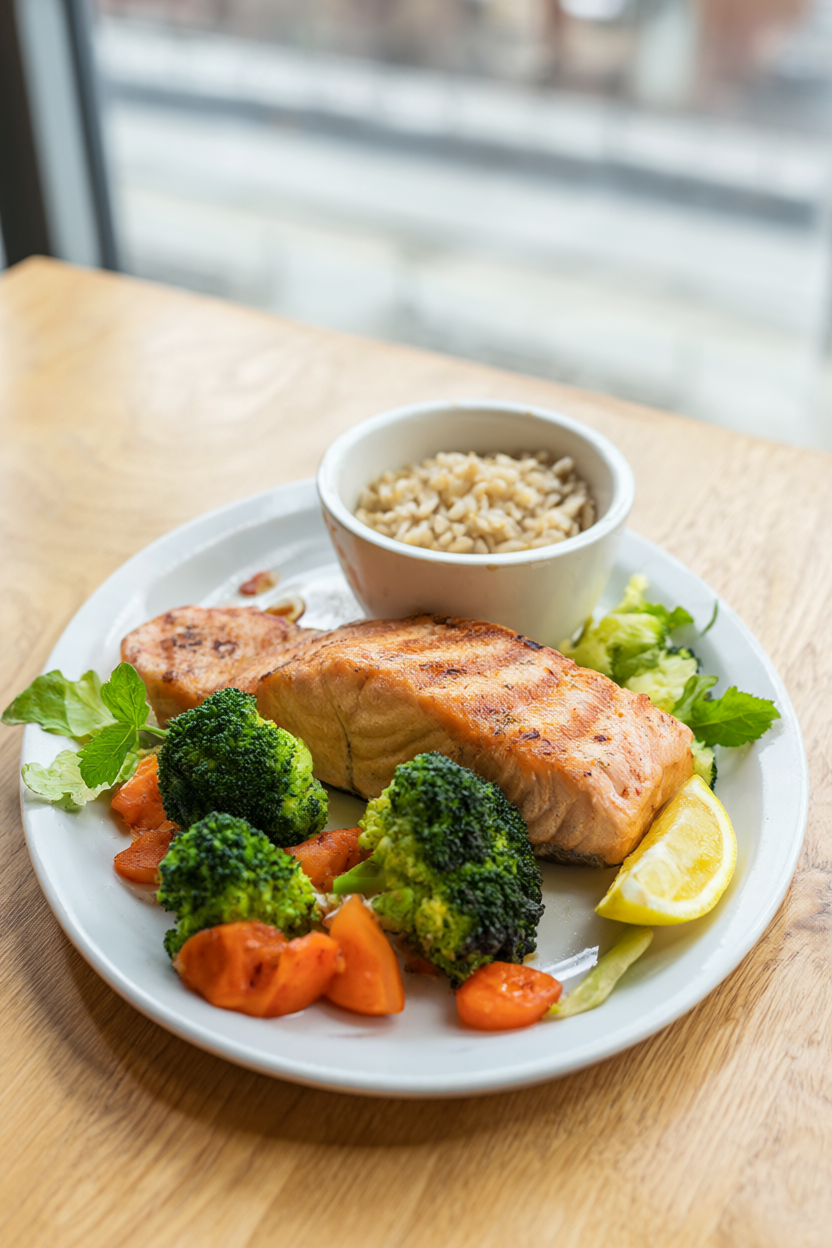
Protein first. A portion of cooked meat, fish, or tofu about the size and thickness of your palm lands near 3 to 4 ounces — roughly the size of a deck of cards. That’s a solid serving of protein for most adults at a meal, and it’s easy to check without a scale. If you’re cooking for a crowd, it also makes shopping simpler: one palm-sized piece per person is a handy rule of thumb and keeps you from overbuying. Vegetables next. One fist is a handy stand-in for about 1 cup of cooked vegetables or fruit, so two fists at a meal is a strong vegetable serving. Fill that part of the plate first and the rest tends to fall into place.
A Cupped Hand of Grains, a Thumb of Fats
Grains and starches get a cupped hand. One cupped hand holds about 1/2 cup of cooked rice, pasta, or potatoes — enough to round out a meal without letting the starch take over. Fats are smaller still. Your thumb is about 1 tablespoon of oil, butter, or nut butter, and a thumb tip is about 1 teaspoon. That’s a useful shortcut because fats are calorie-dense and easy to pour generously. A thumb of peanut butter on toast or a thumb of olive oil in the pan adds up quickly, which is exactly why the measure helps. Measure oil with your thumb, not your heart, and you’ll land in a reasonable place.
- Palm — 3 to 4 ounces of cooked meat, fish, or tofu
- Fist — about 1 cup of cooked vegetables or fruit
- Cupped hand — about 1/2 cup of cooked grains or potatoes
- Thumb — about 1 tablespoon of oil, butter, or nut butter
Why Hand Portions Work, and Why You Should Plate First
Here’s the clever part: hand size scales roughly with body size, so the same guide fits a small adult and a tall one. It also travels — to restaurants, potlucks, and parties where scales and cups do not. The second half of the habit is plating before you eat. Portion onto a plate instead of eating from a bag or serving dish, and reach for a smaller plate so a sensible portion looks full rather than skimpy. A smaller plate isn’t a trick; it’s a cue. The same scoop of rice looks generous on a salad plate and lonely on a dinner platter. You eat with your eyes first, and a full-looking plate is more satisfying than a sparse one.
None of this requires perfection. Some nights your palm is bigger, some days you want more rice, and that’s fine. The point is to build a rough habit you can repeat anywhere. Pair it with a glass of water, sit down, and give the meal your attention. After a week or two, the hand measures stop feeling like rules and start feeling like second nature. It’s a habit, not a diet, and habits are supposed to flex with real life.