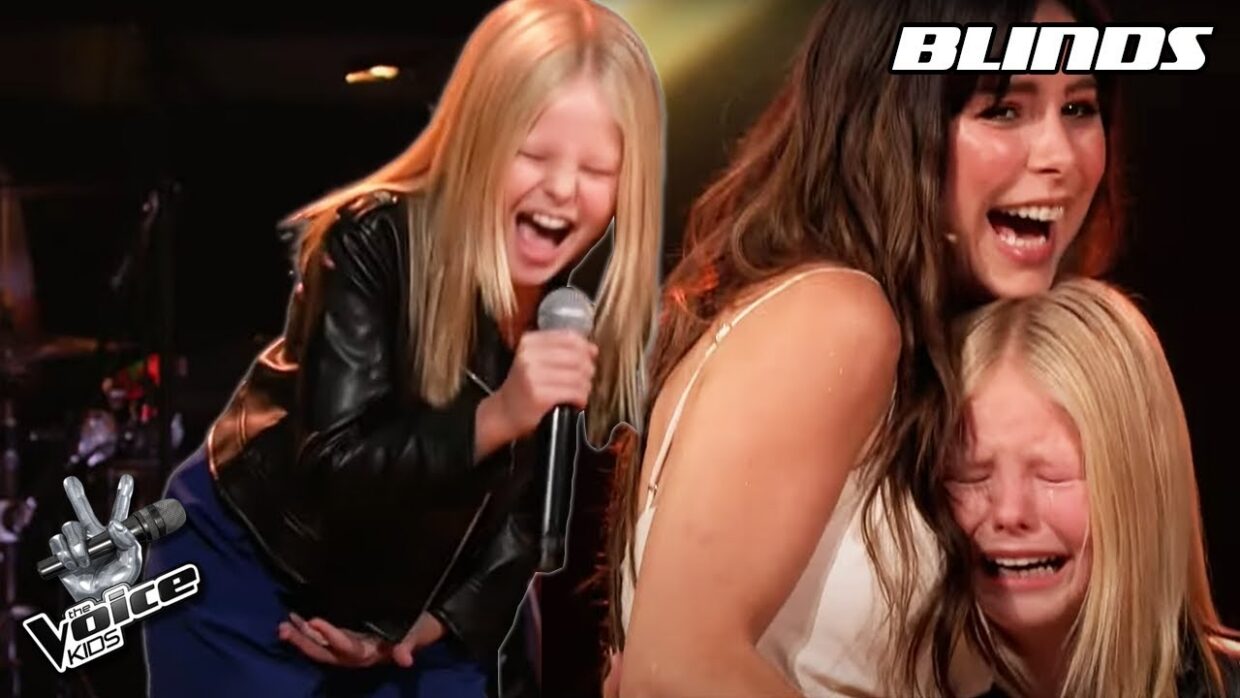
Some Blind Auditions begin with a hush. This one begins with a question. “Are you ready, Bailey?” A voice answers “Yeah!” and the room is already with her. That is the first clue that eleven-year-old Lara H. has not come to The Voice Kids simply to sing Taylor Swift’s “Shake It Off.” She has come to turn the song into a conversation with everyone in it.
A first chorus that lands like a shout
The opening is all momentum. Lara calls out, the crowd answers, and the first “Shake it off!” arrives with the kind of lift that makes a Blind Audition feel less like a test and more like a release. The response swells around that opening burst, and the song’s famous advice becomes a shared instruction rather than a solo line.
What follows is a run through the song’s biggest hooks. The chorus repeats, and the first performance lands on a celebratory “Congratulations!” It is the sound of a room deciding that it wants more.
The second run: “Should we do it again?”
Plenty of auditions end on the first burst of applause. This one does not. After the opening performance, the room goes back in. The exchange is quick and infectious: “Should we do it again?” “Together?” “Should we do it again?” “The last chorus?” Then the plan grows: “Let’s do the whole thing.”
And so the call-and-response returns. “Are you ready, Bailey?” “Yeah!” “Let’s shake it off!” “Let’s try!” The second pass is not a victory lap so much as a refusal to let a good moment end. It also gives Lara another chance to show the details that made the coaches turn: the same energy, the same clear English, the same invitation to join in.
By the time the second chorus arrives, the audition has become a group celebration. The song is still Taylor Swift’s, but the performance belongs to the room.
Czechia, the USA, and a very clear language choice
When the music stops, the questions begin. Her name brings a huge round of applause. Then comes where she is from. Her answer is Czechia. She has also lived in the USA for seven years. Asked whether she understands German or prefers English, her reply is instant: “English, please.”
The answer explains a lot about the performance. The English in the song does not sound like a recitation. It sounds lived-in. One coach later calls it “straight from Hollywood.” That compliment is not just about pronunciation. It is about style, delivery, and the confidence to make a borrowed song feel like her own.
What the coaches saw
The feedback after the performance is warm and specific. One coach calls it “absolutely awesome” and adds, “I loved your performance, it was so much fun.” The same voice praises her singing and her presence: “You sang so good, you look beautiful.” Then comes the line that captures the audition’s emotional center:
“The best part of it was when we turned around. To see your reaction, like you started crying. You were so, so happy.”
That is the trade at the heart of a Blind Audition. The coaches cannot see the performer before they turn. When they do turn, they get the reaction as much as the voice. Here, the reaction includes tears. The coach’s description makes the moment feel bigger than a successful cover: it is a young singer realizing that the risk has paid off.
The praise takes a theatrical turn. “Shame on you!” comes the opening line, before the accusation flips: “Actually, it’s not okay, shame on me. Because I had so much fun on stage with you there.” The mock outrage continues: “And it was so great that we did it together. That was an incredible moment for me. I love you.” The words “I love you” are met with “I love you too.” The exchange is warm enough that the coach can joke about the competition: “Even if we’re not as lovely as Alvaro. Please always remember who turned first.” Lara says she will.
Then the tone shifts to craft. “You’re making such a professional impression to me. The style, the dance and also the song. And then the English on top of it sounds like straight from Hollywood.” The question that follows is almost a review in itself: “Since when are you singing?” The question hangs there, flattering and curious at once.
The choice, and a painting
The final pitches are competitive but friendly. One coach says, “I really want you in my team so bad.” Then the decision is placed where it belongs: with Lara. “It’s your choice.” “Make a good one.” Her answer is immediate: “I choose you, Lena.”
That could be the ending. Instead, there is one more surprise. An astonished “What?” gives way to a simple explanation: “I painted it for you.” The gift is a handmade painting, and it turns the final seconds into something more personal than a team selection. The moment ends with a quick inventory: “She gave me this one. And this picture.”
“I’m so happy to have you in my team,” her new coach tells her. The painting is a small gesture with a big effect. It closes the audition not with a score or a ranking, but with proof that the connection went both ways.
Why the moment stays
The audition works because it keeps escalating in the right direction. It starts with a shout, becomes a singalong, turns into a coaching decision, and ends with a gift. Each beat is small on its own. Together, they create a portrait of a performer who is generous with the room and a set of coaches who are happy to be part of the fun.
The best moments are already there: the opening call, the first chorus, the repeat, the tears, the praise, the choice, the painting. None of them needs embellishment. What makes the audition memorable is the way Lara keeps inviting other people into her performance — first the crowd, then the coaches, then the audience watching the choice unfold.
For Lara, the result is a place on Lena’s team and a coach who is clearly moved. For the audience, it is a reminder that “Shake It Off” can be more than a catchy chorus. In this performance, it becomes a permission slip: to be loud, to be happy, to start again, and to hand a coach a painting when the song is over.
“Shake it off! Shake it off!”
Sometimes that is all a stage needs.
Source: The Voice Kids on YouTube