There is something about a small animal meeting snow for the first time that makes even the most serious among us stop scrolling and smile. It might be the wobble, the wide eyes, or the way each little one tests this strange white world one paw at a time. Whatever it is, we cannot get enough.
This gallery gathers ten of those first-snow moments, from a polar bear cub rolling in powder to a ptarmigan chick tucked among willow twigs. Each photo comes with a small fact about the species you may not know, the kind of detail that makes the next walk in winter feel a little more magical.
All photos in this gallery are AI-generated illustrations.
1. The Cub Who Found The Powder
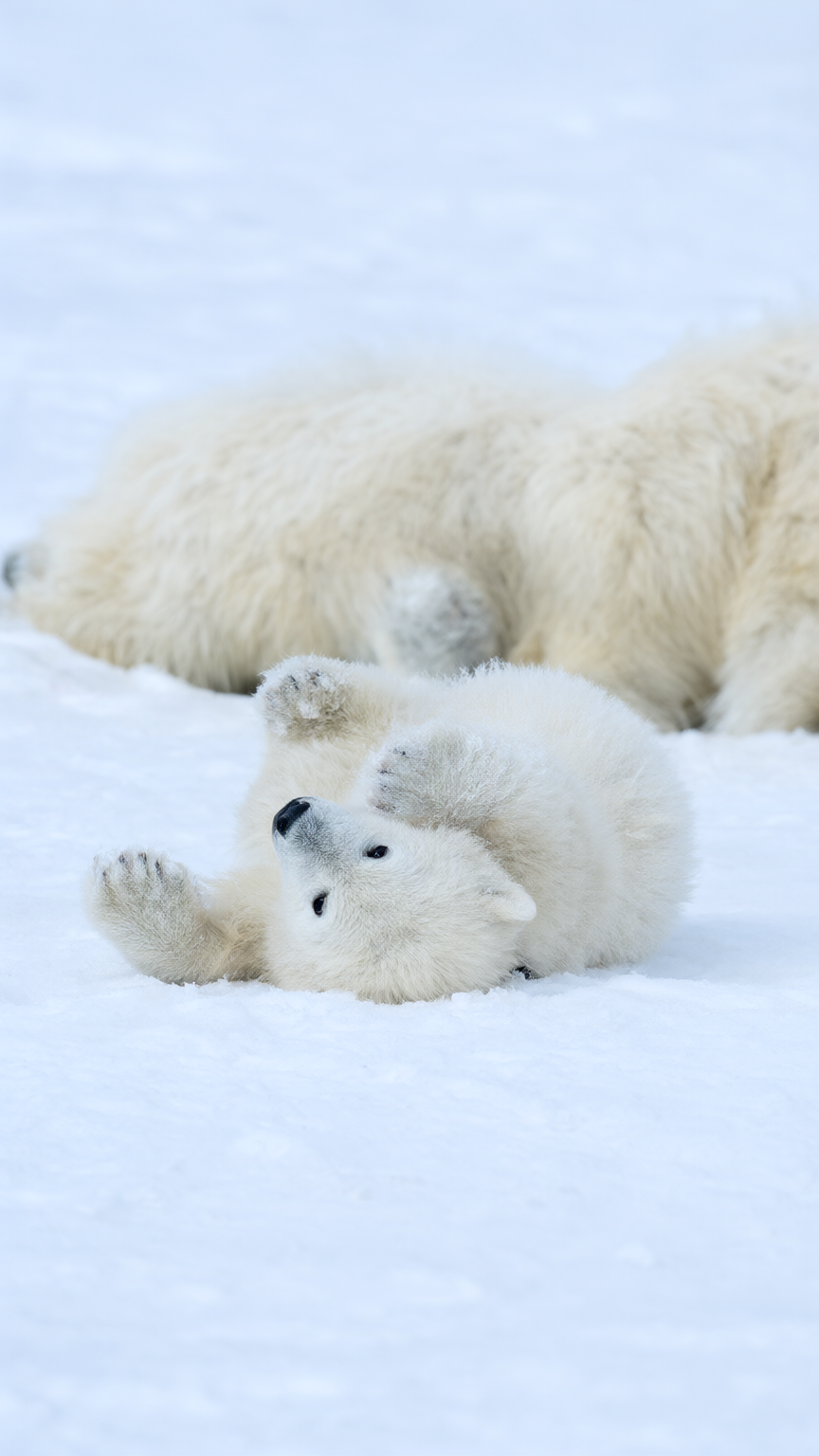
This little cub has decided snow is not something to fear but something to wrestle. Flat on its back with all four paws in the air, it looks like it is trying to hug the whole white world at once while its mother rests blurred behind it.
Polar bear cubs are born in a snow den and first step outside while still small enough to fit in a human hand. Under that creamy fur their skin is black, and each hair is hollow, which helps trap warmth. So when this one rolls, it is not just playing, it is learning the coldest place on Earth.
2. Standing Tall On The Tundra
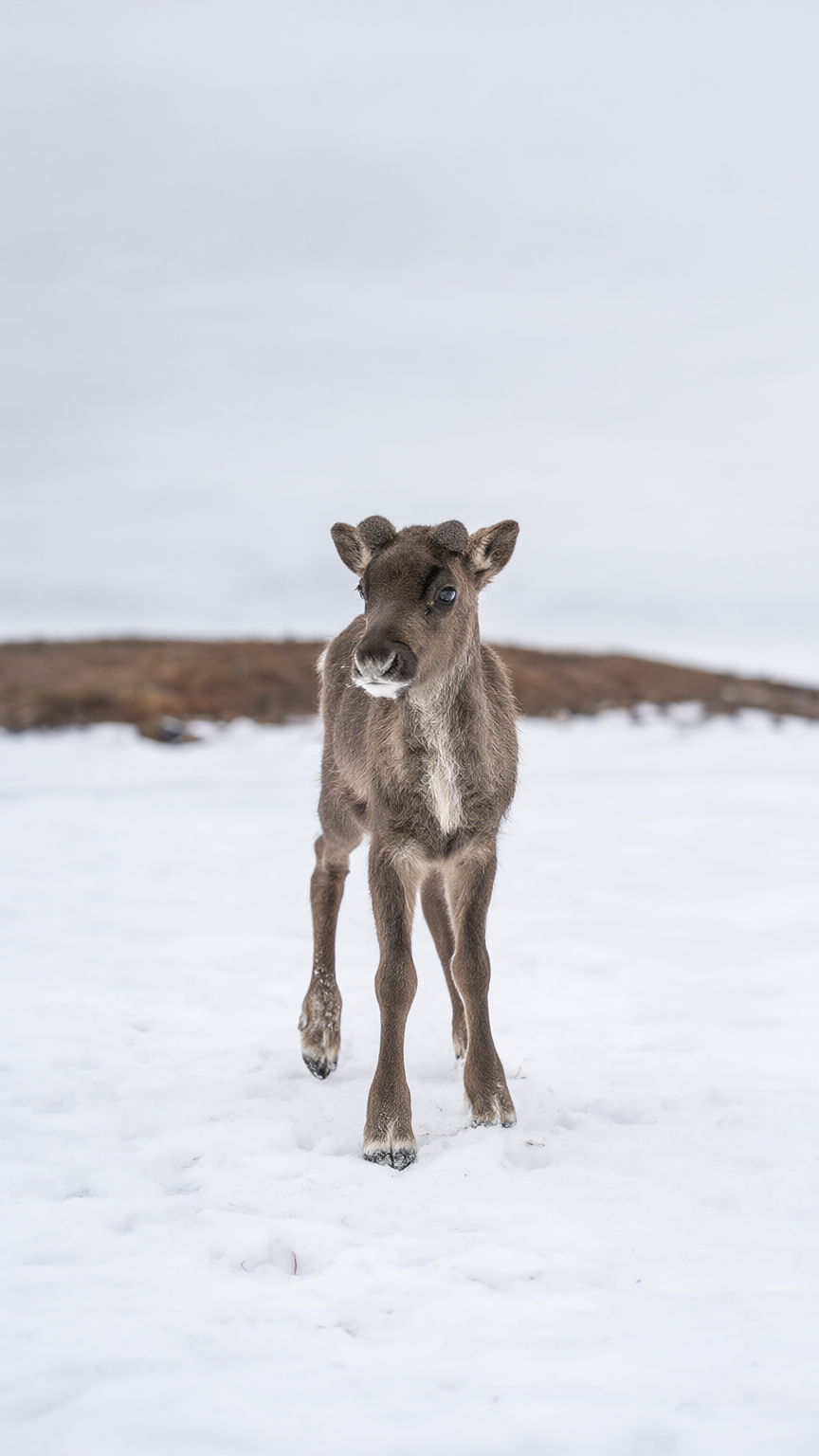
This young reindeer stands in the thin first snow as if posing for a portrait, its head turned politely toward us and its tiny velvet antler buds barely begun. There is a calm about it that feels older than its short life, and the wide empty tundra behind makes the little animal look brave and curious all at once.
Reindeer are the only deer in which both males and females grow antlers, and calves start sprouting theirs within weeks of birth. That early headgear helps them hold their own in the herd. The velvet covering is soft and full of blood vessels while the antlers grow, which is why it looks so gentle on a face this small.
3. A Hare Under The Spruce
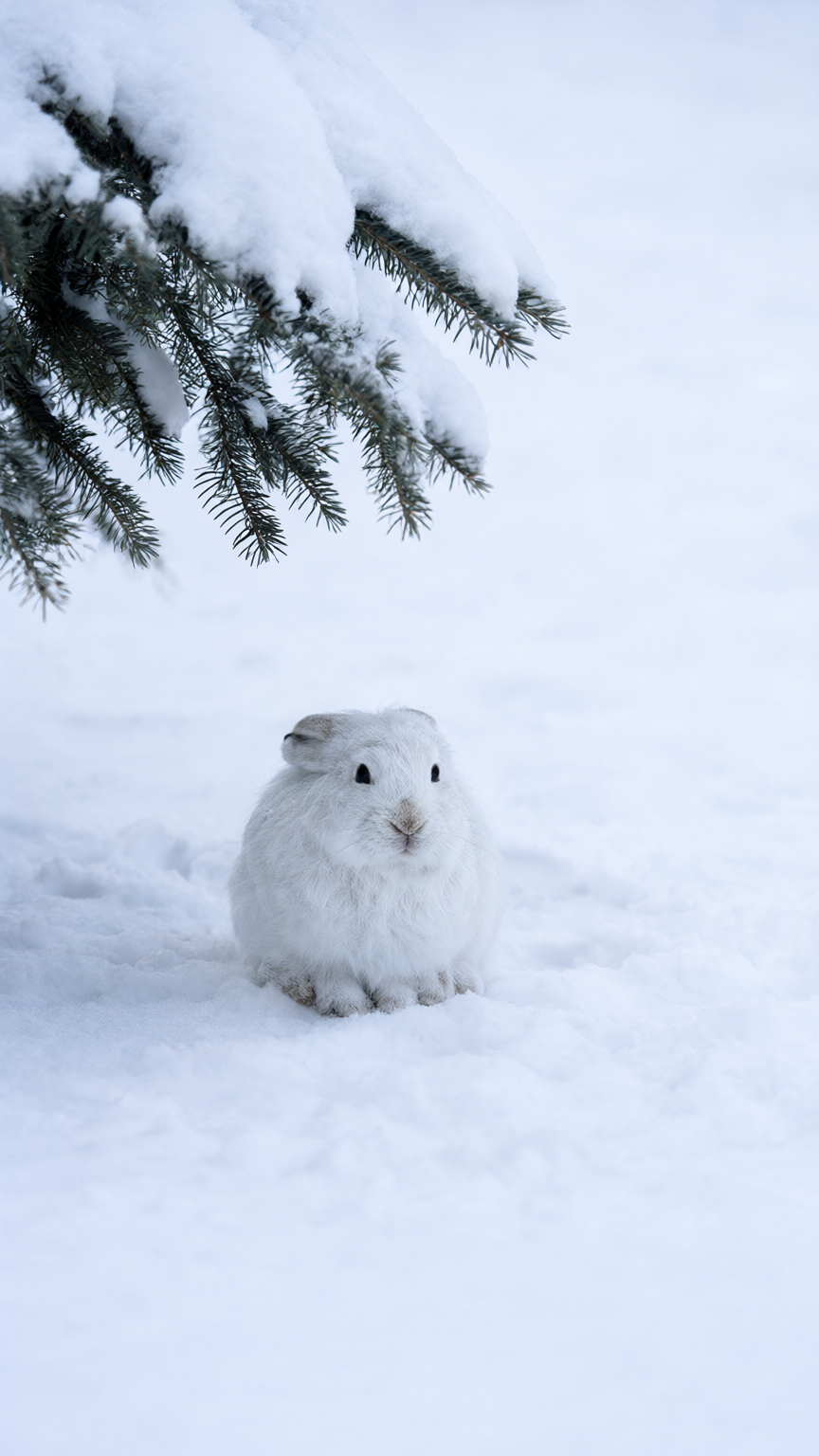
Tucked beneath a low spruce bough, this leveret has gone almost completely white, and the effect is uncanny: a round snowball with two dark eyes and a twitching nose. It is holding perfectly still, ears flat, trusting that stillness to keep it hidden in a world that has also turned white.
The snowshoe hare earns its name from its hind feet, which are far larger than those of other hares and spread wide like natural snowshoes, keeping it on top of deep powder. Its coat swaps brown for white in winter, a change triggered by shortening daylight rather than by the first snowfall. That small mismatch is why an early winter can leave it briefly visible.
4. Hello From The Snowbank
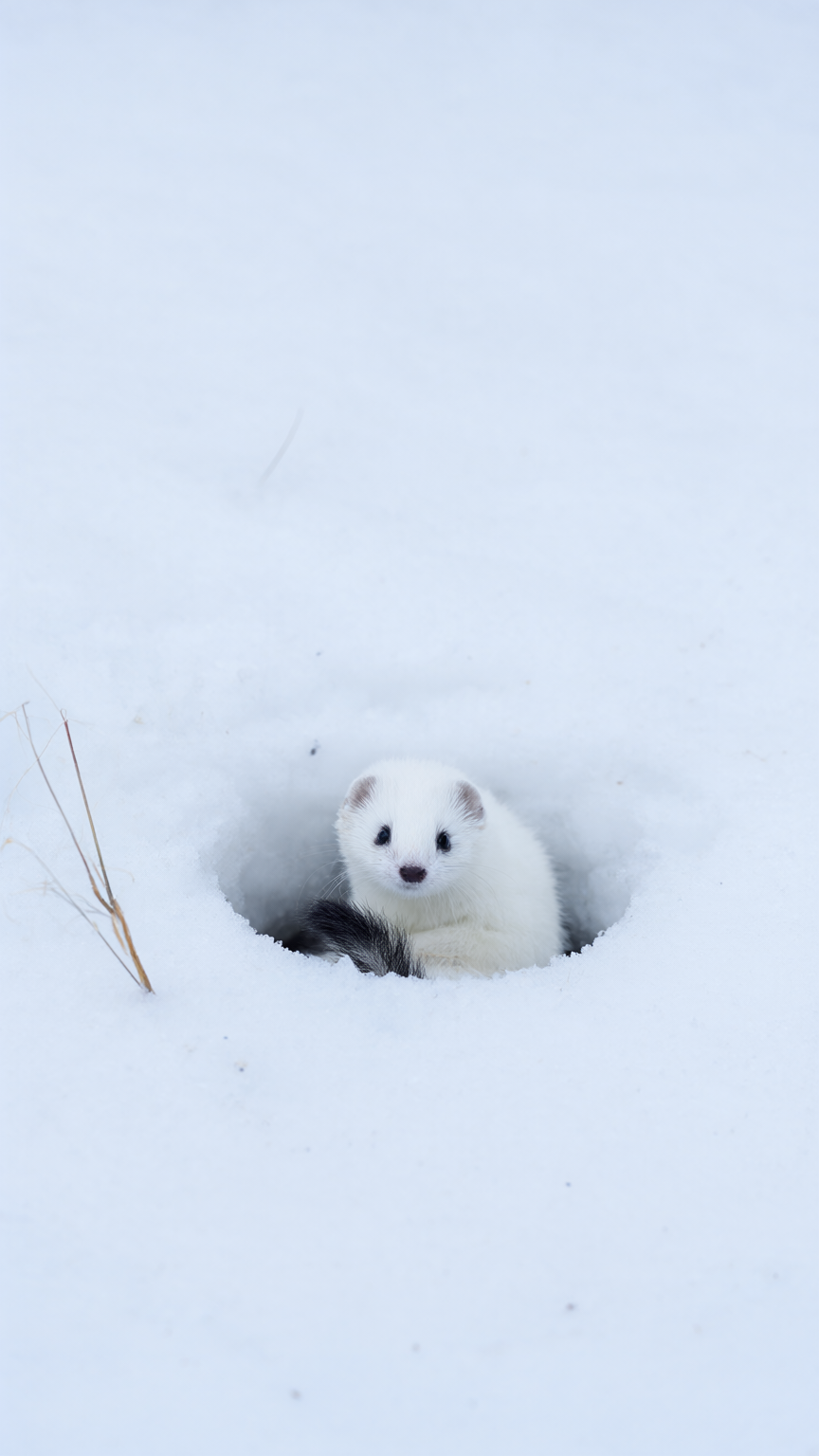
A small white face appears from a perfect round hole in the snowbank, whiskers first, as if the snow itself had grown eyes. The ermine kit seems to be checking whether the coast is clear before committing the rest of its long body to the open, and the single black tip of its tail curls at the edge like a comma.
Ermine, also called stoats, wear brown in summer and white in winter, but the very tip of the tail stays black all year. That little mark is thought to distract predators and to help the animal follow its own kind through tall grass. A winter ermine is so well matched to snow that a whole animal can vanish in plain sight.
5. The Kid On The Ledge
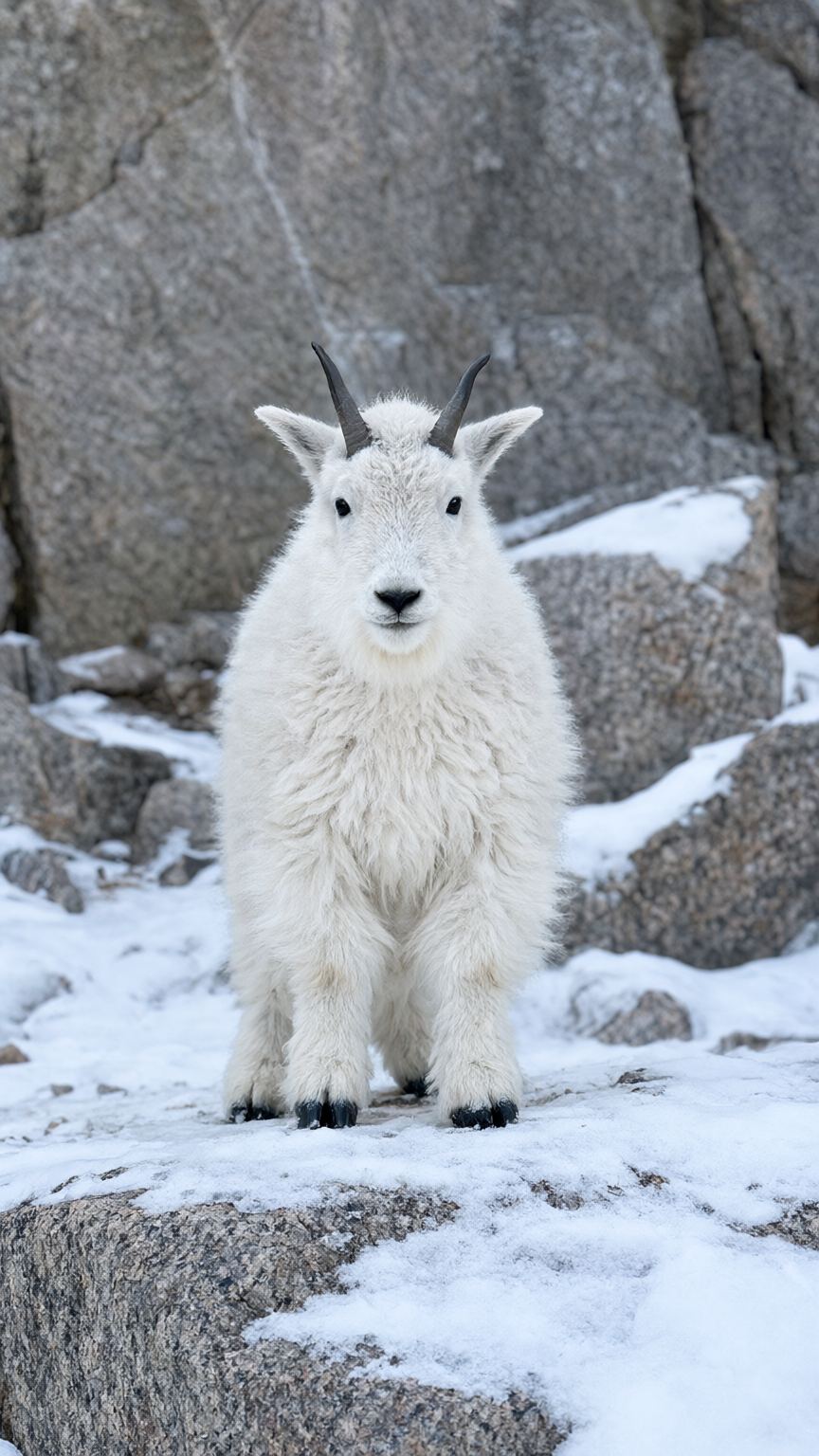
Perched on a snowy ledge, this kid looks less like an animal and more like a small cloud that decided to climb. Its tiny black horns and glossy hooves stand out against all that white, and it stands with the unhurried confidence of someone who has never once worried about the drop behind it.
Mountain goats are not true goats at all; they belong to a family of goat-antelopes. Their hooves are built for cliffs, with a hard outer edge for grip and a soft, rubbery inner pad that molds to rock. That is how a kid can stand calmly on a surface where most of us would not dare to kneel.
6. A Chick Among The Pebbles
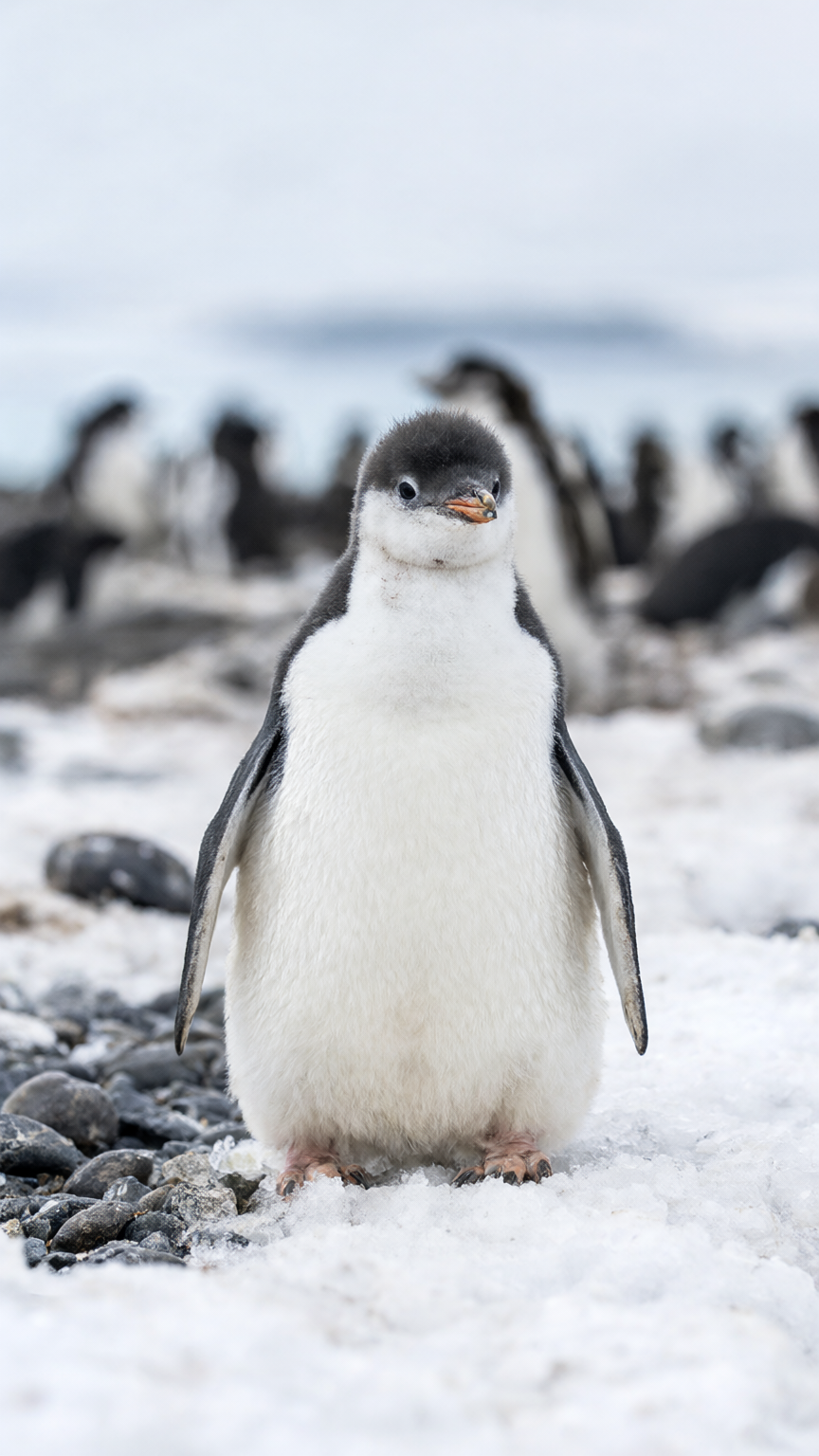
This gray, fluffy chick stands among dark pebbles as if it has just been introduced to the world and is not entirely sure about it. Its white belly is already neat, its flippers held slightly out, and behind it the blurred shapes of the colony suggest a whole noisy nursery going about its business.
Gentoo chicks are famously patient at mealtimes, waiting for a parent to return from the sea with a belly full of food to share. When gentoo penguins swim, they are the fastest of all penguin species underwater, using their stiff flippers like wings. On land, though, this little one is still learning what its feet are for.
7. Eyes Between The Birches
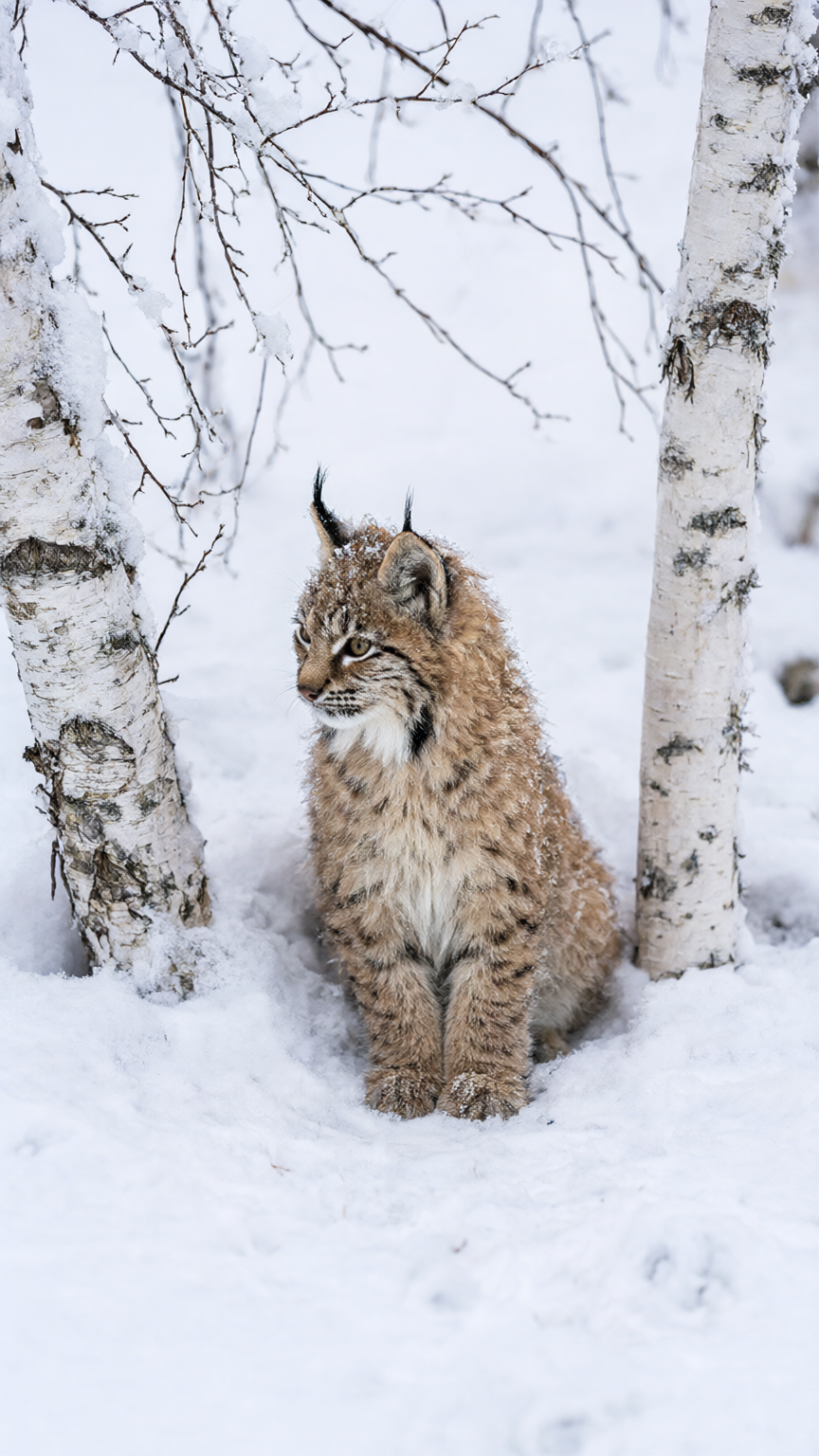
Sitting between two white birch trunks, this lynx kitten seems to blend into the winter itself. Its ear tufts rise like tiny dark flames, and its pale spotted coat picks up the gray light so well that for a moment the whole scene looks like a single soft sketch. Then it turns its head, and the eyes give it away.
Those black tufts on a lynx’s ears are not ears at all; they are long hairs, and their exact purpose is still debated, though they may help channel sound. The big, furred paws work like snowshoes, spreading the animal’s weight so it can cross deep drifts quietly. Even a kitten this small already moves with that quiet, deliberate grace.
8. Staying Close To Mom
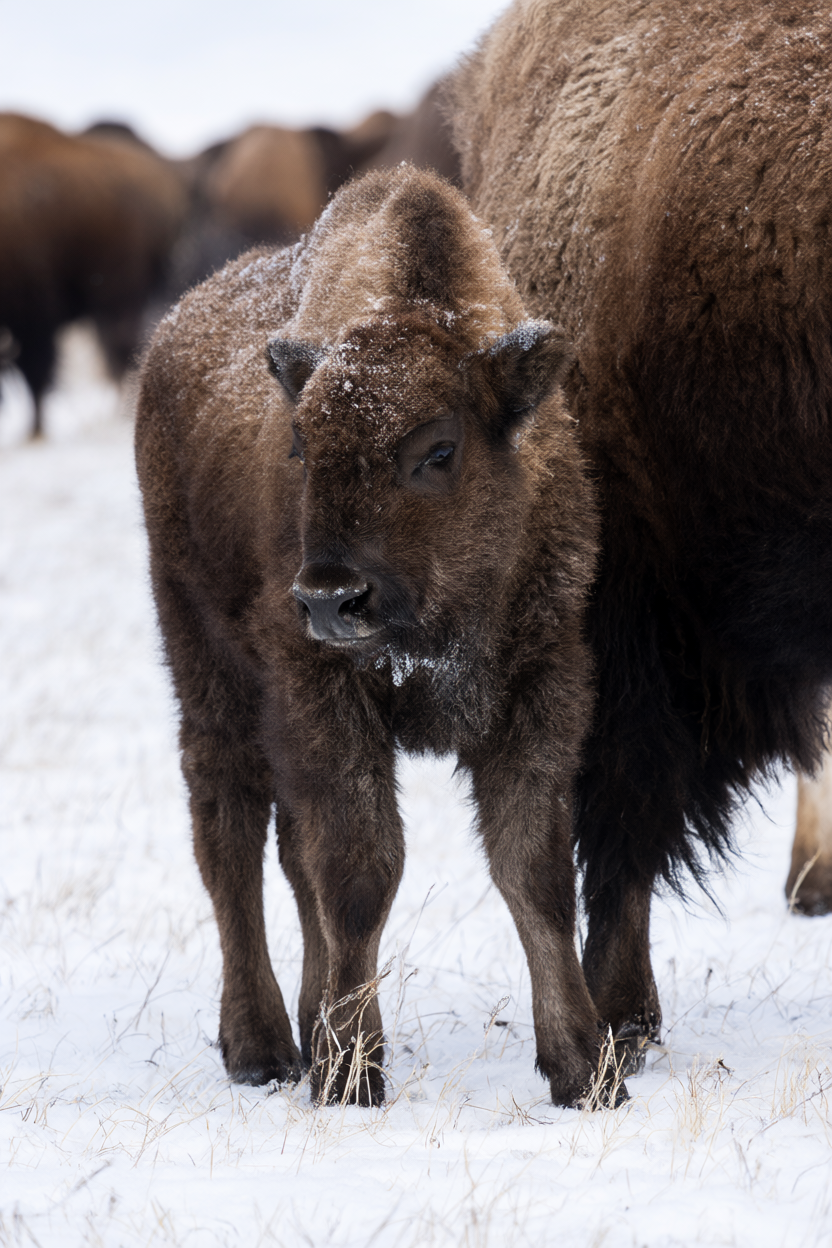
Standing shoulder to shaggy shoulder with its mother, this bison calf looks like a small dark shadow that has been given a body. Frost clings to its coat, the herd is only a smudge in the distance, and the calf presses close in that wordless way young animals do when the prairie wind picks up.
Bison are the largest land mammal in North America, and their heavy front end is built for winter: the massive shoulder hump carries muscle for sweeping snow aside to reach the grass beneath. Calves are born with a soft, reddish coat that darkens as they grow. This one already looks ready to face the cold, as long as mom is nearby.
9. The Slide Champion
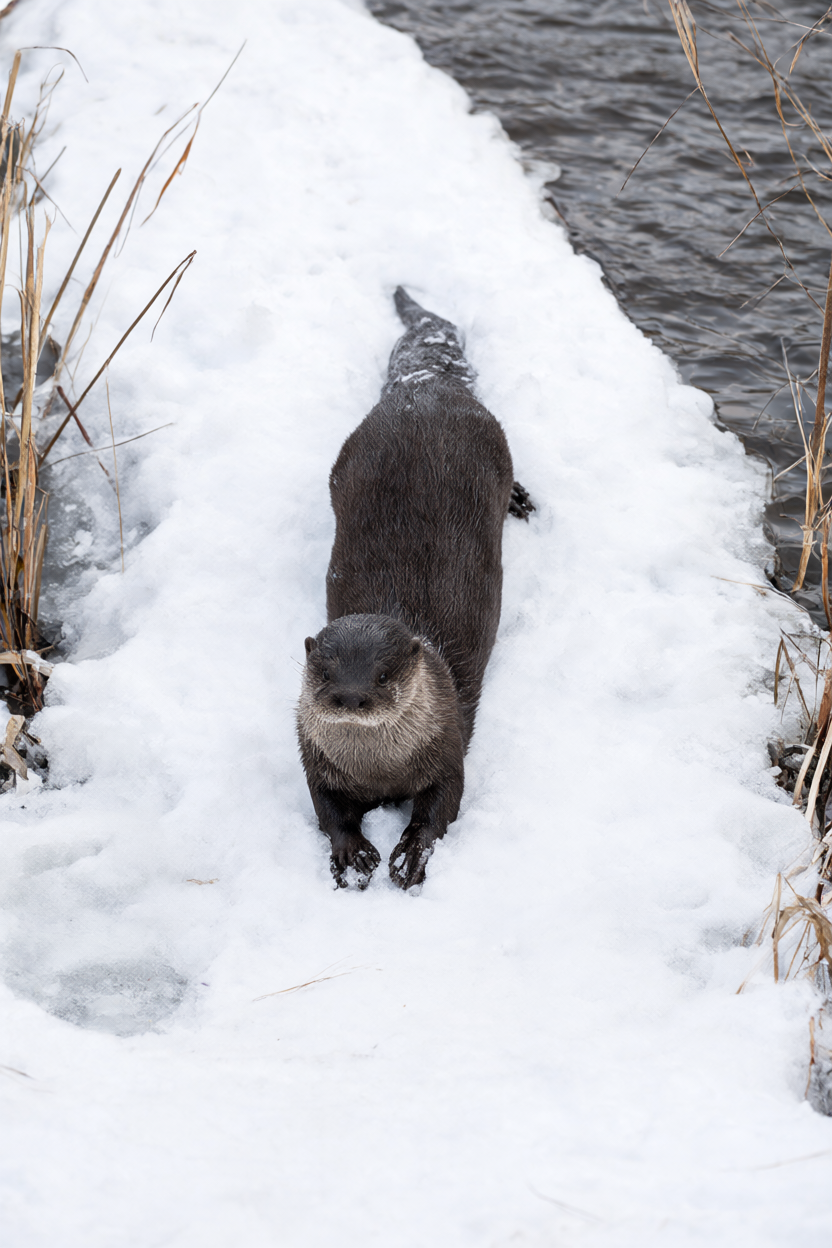
Half running, half falling, this river otter pup is doing what otters do best: turning a snowy bank into a slide. Its belly is flat on the slope, front paws stretched forward, and the open dark water waits at the top of the frame. It looks like pure mischief caught mid-motion.
River otters have webbed feet, a strong flattened tail, and fur so dense that water barely reaches the skin. They can close their ears and nostrils underwater, which makes them perfectly at home in a half-frozen stream. Sliding, it turns out, is not just fun, it is one of the fastest, most efficient ways to travel in snow.
10. Hidden In Plain Snow
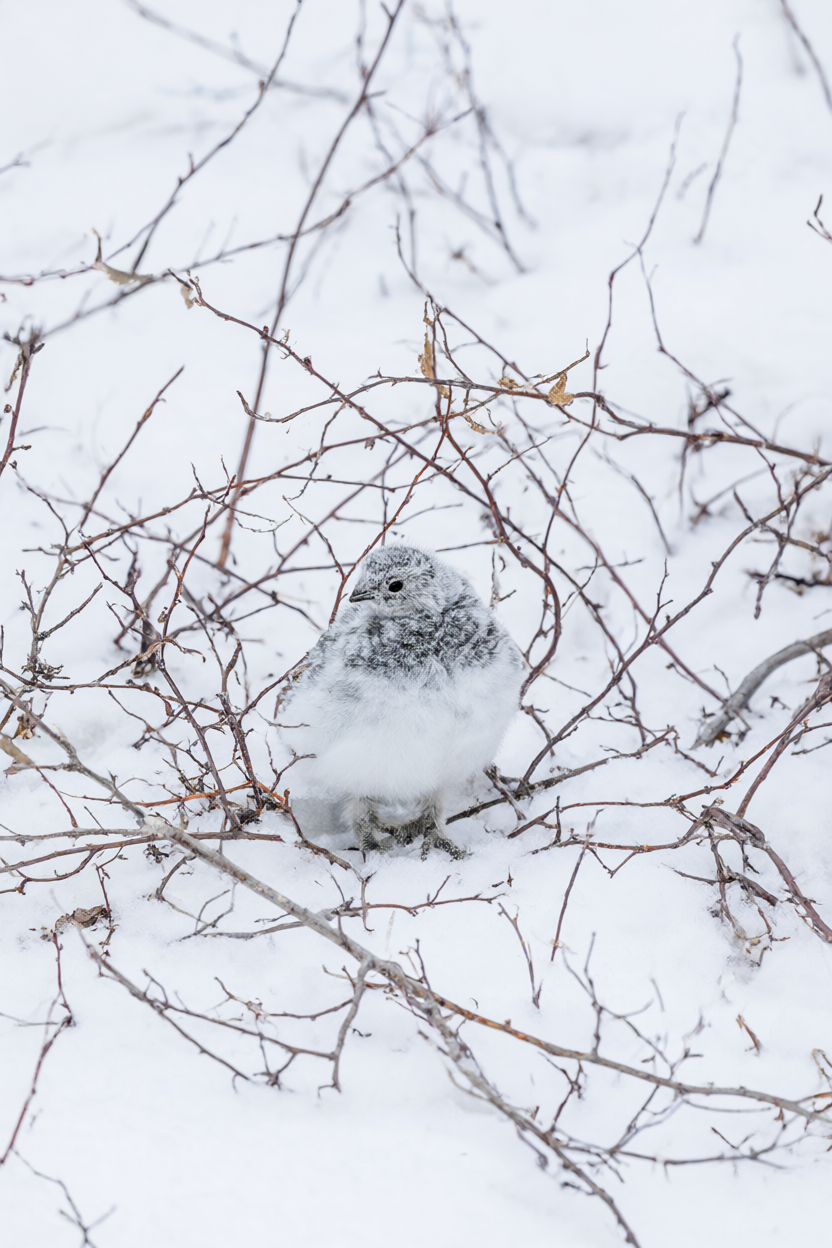
Among the thin willow twigs, this ptarmigan chick is almost a puzzle: a small round body of white and gray, one dark eye, and no clear edge where the bird ends and the snow begins. It stands very still, which is exactly the strategy that keeps it alive in a landscape of white.
Ptarmigans are the birds that change their feathers with the seasons, mottled brown in summer and white in winter, so they always match their surroundings. Their feet are feathered too, which gives them insulation and a little extra float on soft snow. A chick this small has to grow quickly before the cold deepens.
Thank you for scrolling through these first-snow moments with us. May your next snowy morning feel a little more like a discovery, and may you notice the small tracks in the fresh powder. We will be back soon with another gallery of little wonders, so until then, stay warm and keep looking closely.