Most mornings don’t leave room for a project, and breakfast shouldn’t be one. A smoothie is the rare morning meal that suits a rushed Tuesday and still feels like something you chose on purpose. Once the fruit is already in the freezer, it takes about five minutes from cupboard to glass, with no cooking and no pan to watch. What follows is a simple five-part formula, blended in the order that works: liquid, frozen fruit, a small vegetable, protein and fiber.
Liquid First, Then Frozen Fruit
The liquid goes in first. About 1 cup of unsweetened milk or a milk alternative sets the texture, and that cup is a dial rather than a rule. Use a little less and you get something spoonable that eats like a thick smoothie bowl; use a little more and you get something you can drink through a straw on the way out the door. Either way, start there, because a blender that begins with liquid never has to fight a block of frozen fruit.
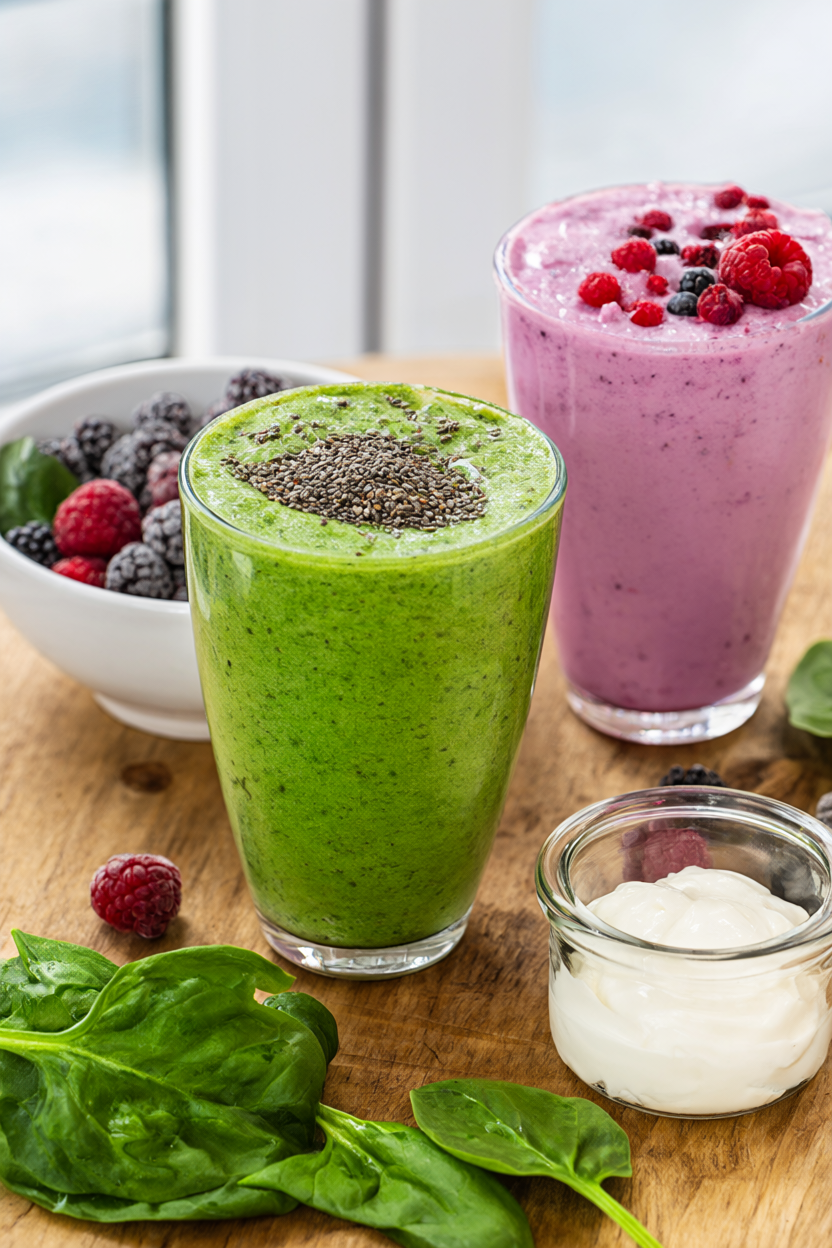
Frozen fruit comes next: 1 to 1½ cups of frozen berries, mango or banana. Frozen fruit blends thick without a single ice cube, and it keeps the flavor cold and concentrated, which is the difference between a smoothie that tastes like fruit and one that tastes like watered-down fruit. Bananas bring the soft, creamy body; berries bring the tang. Mix them if you like — half a banana and a cup of berries is a very good place to start.
One Small Vegetable, Hidden in the Green Smoothie
A packed cup of spinach or ½ cup of frozen zucchini blends smooth and nearly invisible, and the fruit does the rest of the talking. This is the step people skip, and it is the one that turns a fruit drink into a green smoothie. Spinach is the gentler option, mild enough to vanish behind mango or banana. Frozen zucchini is the quieter trick: it blends into a silky texture and takes on whatever else is in the glass. Start with a handful rather than a mountain — one cup of greens in a two-glass blend is plenty, and adding more later is easy.
Greek Yogurt, Nut Butter and a Spoon of Chia
This is the part that makes a smoothie breakfast rather than a drink. Choose one protein: ½ cup of plain Greek yogurt, 2 tablespoons of nut butter or a scoop of protein powder. Greek yogurt gives a creamy, lightly tangy base that loves berries; nut butter turns a banana smoothie into something that tastes like dessert. Then add fiber: 1 to 2 tablespoons of chia seeds or ground flax, or ¼ cup of rolled oats. They thicken the blend and add fiber, and oats stretch a light smoothie into something more substantial. Add the fiber before the frozen fruit so it has a moment to soften against the liquid.
Blend Order, and Five Minutes Well Spent
Load the blender in layers: liquid and soft ingredients first, then the yogurt or nut butter, then the fiber, with frozen fruit last. That order keeps the blades from stalling on frozen berries and gives you a smoother blend without stopping to scrape down the sides. Blend for 45 to 60 seconds, until there are no dark green flecks and no whole berries left.
A little planning makes the five minutes shorter still. Portion the frozen fruit, spinach and chia into freezer bags on a quiet afternoon; in the morning, tip one bag into the blender, add the liquid and yogurt, and blend. Drink it within 24 hours, and shake or stir before serving, because a smoothie separates as it sits — a quick shake brings it back together. Ice is not needed when the fruit is frozen, but if you like a colder glass, add a few ice cubes and blend a little longer.
There is no wrong fruit and no single right answer here. The formula holds: liquid, frozen fruit, a small vegetable, protein and fiber. Change the fruit with the season, swap yogurt for nut butter when you want something richer, and keep a bag of spinach within reach. Five minutes, one glass, and the morning starts on your terms instead of the clock’s.