Some nights call for a dinner that looks like you fussed, when really you just turned on the oven. This maple Dijon salmon sheet pan is that dinner: four glazed fillets and a pile of broccoli, roasted side by side and ready in about thirty minutes. The glaze takes two minutes to whisk, the oven does the rest, and the pan arrives at the table looking like a holiday centerpiece — even on a Tuesday.
Why Maple Dijon Salmon Works on a Sheet Pan
Salmon and broccoli are made for each other in a hot oven. The broccoli gets an eight-minute head start, so it comes out tender at the stem with a little char on the edges, while the salmon roasts just long enough to stay juicy. One temperature, one pan, no juggling.
The glaze is the quiet genius here. Dijon mustard brings sharpness, pure maple syrup brings a mellow sweetness, and fresh lemon keeps the whole thing from tipping too far either way. Salmon is a rich fish, and the mustard cuts right through that richness. Meanwhile the glaze that slips off the fillets lands on the broccoli and seasons it for free.
It also happens to be a genuinely easy way to feed four people. Everything roasts unattended, which means you can set the table, pour something cold, and still sit down with your guests instead of hovering over the stove.
Salmon, Broccoli and the Swaps That Still Work
Use skin-on salmon fillets about an inch thick if you can. The skin holds the fish together and keeps the bottom from drying out, and it lifts away easily once cooked. If your market only has thinner fillets, keep an eye on them — they will finish a few minutes sooner.
For the glaze, real maple syrup matters. Pancake syrup is mostly corn syrup and will taste flat. Smooth Dijon gives you a silky glaze; whole-grain gives you little pops of mustard seed and a bit more texture. Either is right.
Out of broccoli? Broccolini, cauliflower florets or green beans all work. Give cauliflower a couple of extra minutes at the start, and add green beans at the same time as the salmon. No lemon? A splash of apple cider vinegar will do in a pinch. And if you would rather skip the fish, thick pork chops or chicken thighs take well to the same glaze — just extend the roasting time until they are cooked through.
Tips for Better Maple Dijon Salmon
- Pat the fillets completely dry before they go in. A dry surface is what lets the glaze cling and caramelize instead of sliding off.
- Give the broccoli room. Spread it in a single layer with a little space between florets; crowded vegetables steam instead of roast.
- Reserve half the glaze before it ever touches the fish. Spoon that clean portion over the salmon at the end — it is the brightest-tasting part.
- Start checking at twelve minutes. Salmon is done at 145°F and should flake with a fork but still look glossy in the center.
- Let the pan rest for a minute out of the oven. The fish firms up slightly and the glaze sets, which makes serving much tidier.
Storing and Serving Maple Dijon Salmon
Leftovers keep well. Cool them, tuck everything into an airtight container, and refrigerate for up to three days. Reheat gently at 300°F, covered, just until warm — high heat will dry the salmon out. Cold leftovers are excellent flaked over greens with a squeeze of lemon.
For serving, keep it simple: steamed rice, buttered couscous, or a hunk of crusty bread to catch the glaze. A scatter of parsley and a few lemon wedges on the pan make it look finished. This is the kind of dinner that works for a weeknight and still earns a spot on a holiday table.
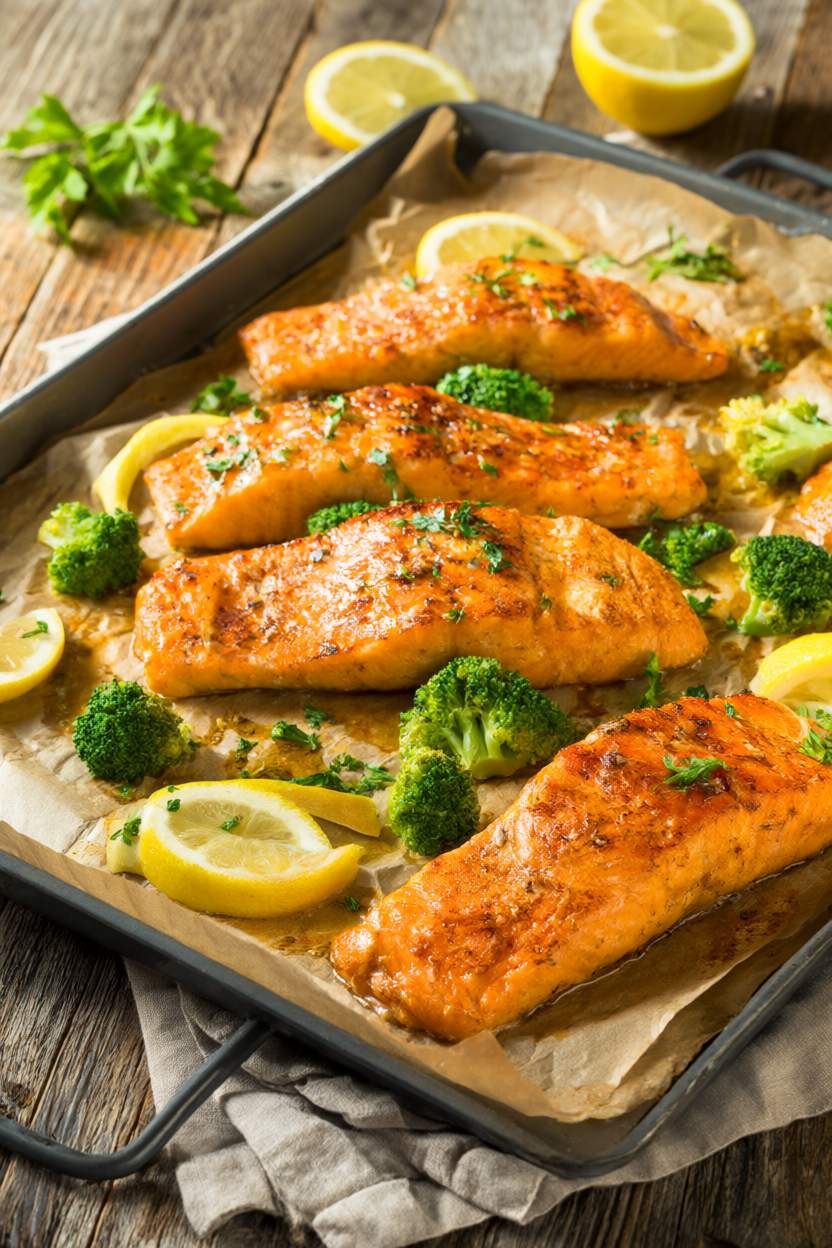
Maple Dijon Salmon Sheet Pan: 30-Minute One-Pan Meal
Ingredients
Method
- Heat oven to 425°F and line a rimmed sheet pan with parchment.
- Whisk the Dijon, maple syrup, lemon juice, garlic, 1/4 tsp salt and pepper in a small bowl.
- Toss broccoli with olive oil and the remaining 1/4 tsp salt, spread in an even layer and roast 8 minutes.
- Pat salmon dry, nestle among the broccoli, and spoon half the glaze over the fillets; keep the rest untouched for serving.
- Roast 12-14 minutes, until the salmon reaches 145°F and flakes easily.
- Drizzle the reserved glaze over the salmon and serve.
That is the whole trick: one pan, one glaze, and a dinner that tastes like more effort than it took. If you make this maple Dijon salmon sheet pan, keep the glaze close — it is just as good on chicken, pork and roasted vegetables.