A small, clearly defined goal can make everyday practice easier to explain and easier to notice. This reward chart for kids includes a free printable with a planning page and ten success spaces, so you and your child can agree on one action and celebrate progress together.
What’s inside the printable
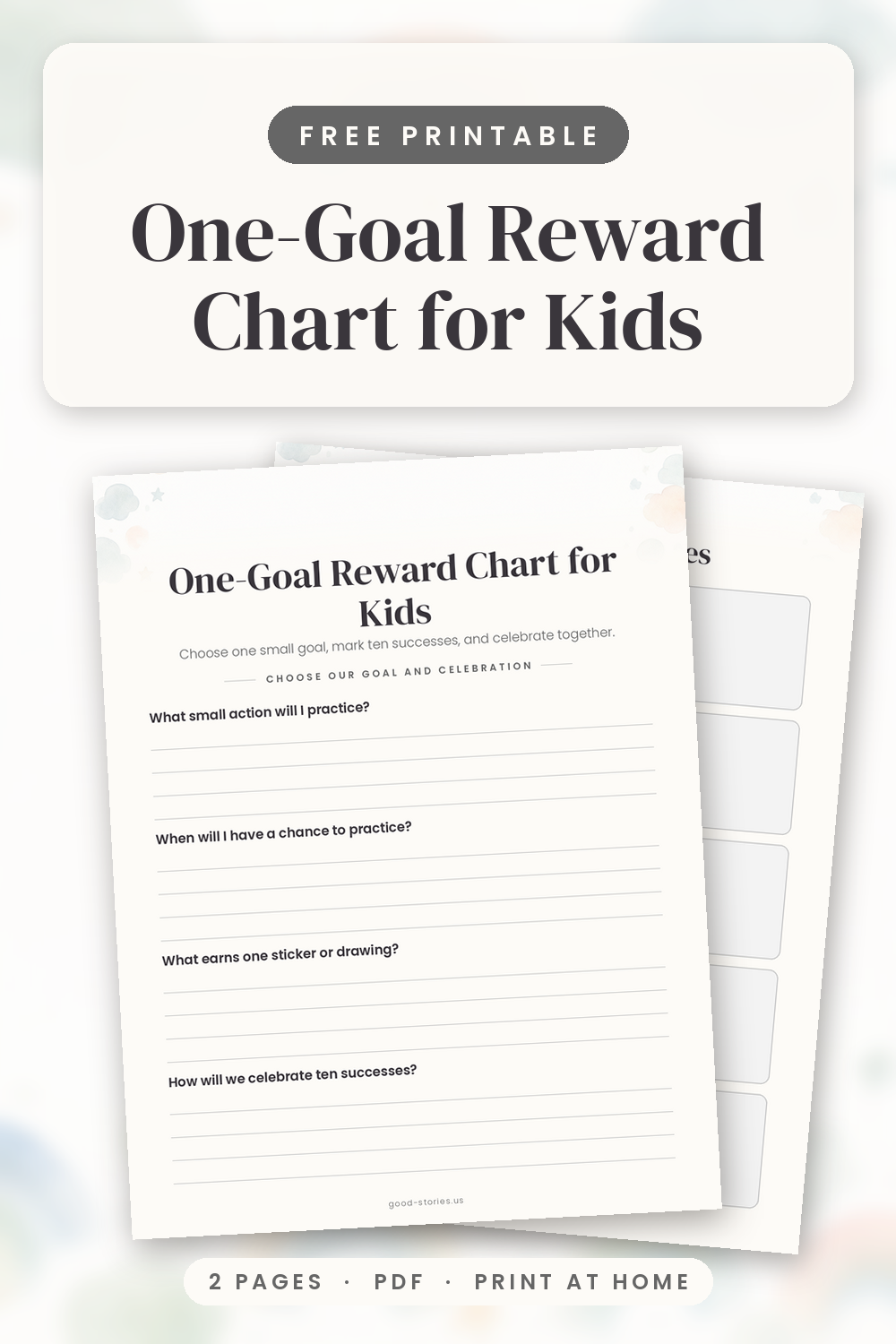
This two-page reward chart printable keeps the agreement separate from the sticker spaces. You can fill in the first page together, then keep both pages nearby so everyone remembers what counts as a success.
- Page 1: Choose Our Goal and Celebration — four writing prompts to agree on one action, a practice opportunity, the sticker rule, and a celebration.
- Page 2: My Ten Success Spaces — ten numbered, unlined boxes for stickers or drawings, marking ten successes at the child’s pace.
Choose one clear action your child can practice
Start with one action you can both recognize when it happens. A broad request such as “be tidier” leaves plenty of room for different interpretations. “Put the books on the shelf after reading” gives your child a clear finish line and gives you something specific to acknowledge.
Keep the first goal small enough to practice during an ordinary day. If putting away every toy feels overwhelming, begin with returning the books after one reading session. Write the action in the first prompt on the planning page, using words your child understands. Read it aloud together before moving on.
Use the next prompt to name a natural opportunity to practice, such as after your shared reading time. The opportunity helps you remember when to offer encouragement; it does not turn the chart into a deadline. One goal is enough for this sheet, even if there are other routines you would eventually like to work on.
Agree on the sticker rule and a simple celebration
Before adding the first sticker, talk through what earns one mark. For the book example, you might agree that putting the books back after reading earns one sticker or drawing. Be clear about whether you will help with the action, and keep that agreement consistent while you use the chart.
Explain that the ten boxes stand for ten completed actions. Together, choose an achievable celebration for filling them: reading a favorite story together, choosing a family game, or enjoying a little extra craft time. Pick something you can comfortably follow through on, then write it in the celebration prompt.
Invite your child to choose between a couple of realistic options. This keeps the discussion manageable while giving them a say. If another adult will use the chart, show them the written agreement too. A shared rule makes it easier to recognize the same action without negotiating a different arrangement at every practice opportunity.
Mark ten successes at your child’s pace
Use the boxes on the second page in numbered order, adding one sticker or drawing for each completed action. Let your child place the sticker or make the mark when possible. A star, a small circle, or a quick pencil picture can work if you do not have stickers handy.
These spaces represent successes rather than dates. There is no need to fill a box every day, catch up on empty spaces, or finish within a particular week. If the action happens once on one day and again several days later, the next success still belongs in the next available box.
Keep the sticker reward chart somewhere connected to the action, where you can look at it together. For a book goal, that might be beside the bookshelf. After each mark, briefly point out what happened: “You put the books back after we read.” Then carry on with your day.
Encourage effort and adjust an oversized goal
Keep your encouragement connected to the action and the effort involved. “You carried those books back even when you wanted to start playing” tells your child exactly what you noticed. The chart gives you a place to record progress, while your words make the moment personal.
When a practice opportunity passes without the action being completed, leave the next space blank. Keep earlier successes on the page. You can calmly return to the agreement at the next opportunity without treating the empty box as a failure or making the chart a record of mistakes.
If the goal repeatedly proves too difficult, revisit it together. Perhaps the action needs fewer steps or more help from you. Write a smaller, clearer agreement on the planning page before continuing, including any change to the sticker rule. The point is to make practice understandable and achievable, rather than keep repeating a goal that is not working.
Download the two-page PDF and check print size
The free PDF includes the goal-and-celebration planning page and the ten-space chart described above. Download it with either button in this article, then open the PDF’s print preview. Both pages are designed for US Letter paper, so choose US Letter and print at actual size when using that paper.
How to use your printable
If you are printing on A4, choose “Fit to page” and check the preview so the edges stay inside the printable area. Ordinary printer paper is enough for pencil drawings and stickers. Print both pages, complete the agreement together, and place the success sheet where it will be easy to reach.
Keep stickers or a pencil nearby so marking a completed action stays simple. When all ten spaces are filled, enjoy the celebration you agreed on. Then talk about whether to keep practicing the same action or choose another small goal with a fresh copy.
Start with one action, one shared agreement, and room for ten small successes. Your simple reward chart can be a friendly reminder to notice progress together, at a pace that fits your child.