The teacher tossed his homemade lunch into the trash… But when she unfolded the note, her hands started shaking.
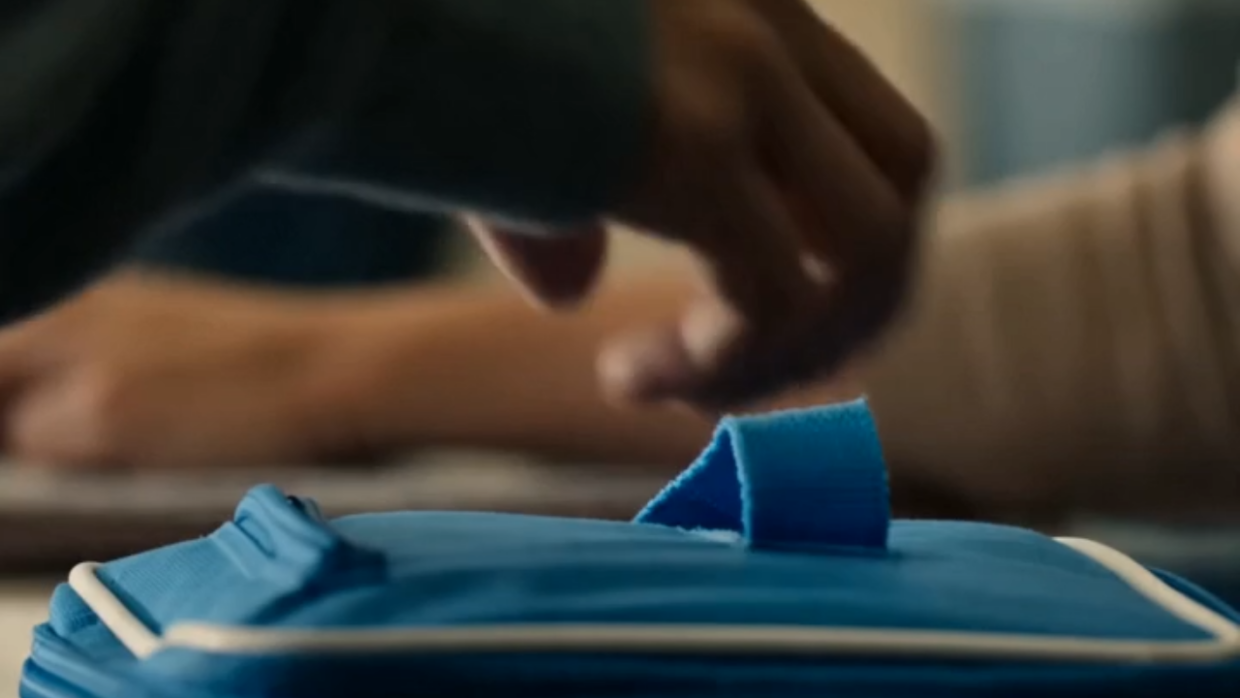
Marcus Hayes sat in the back corner of Mrs. Patterson’s fifth-grade classroom, his blue lunchbox tucked under his desk like a secret. It was 11:15 AM on a Wednesday, fifteen minutes before lunch period, and he could already feel his stomach twisting into knots.
The lunchbox was old, scratched, with a faded superhero sticker his sister Emma had put on it three years ago. Inside was a peanut butter sandwich, apple slices, and a small bag of pretzels. Emma had packed it at 5:30 that morning before her shift at the diner started at six.
Mrs. Patterson stood at the front of the classroom, reviewing the new school policy that had gone into effect two weeks ago. All students were required to purchase lunch from the cafeteria. No outside food allowed. The policy was designed to increase participation in the federally funded lunch program and ensure all students received “nutritionally balanced meals.”
Marcus had read the letter that went home to parents. Emma had read it too, her jaw tightening as she folded it and set it on their kitchen counter without a word.
“Marcus, I can see that lunchbox under your desk,” Mrs. Patterson said sharply.
The classroom went quiet. Twenty-three pairs of eyes turned toward Marcus.
He didn’t move.
“Bring it here, please.”
Marcus stood slowly, his hands trembling slightly as he picked up the lunchbox. He walked to the front of the classroom, each step feeling like it took an hour. Behind him, he heard whispers. Giggles.
Mrs. Patterson held out her hand. “You know the policy. This is the third time this week.”
“I know,” Marcus said quietly.
“Then why do you keep bringing food from home?”
Marcus didn’t answer. He just stared at the floor.
Mrs. Patterson sighed, the kind of sigh that said she was tired of repeating herself. She took the lunchbox from his hands, walked to the trash can beside her desk, and dropped it in. The sound of it hitting the bottom of the plastic bin echoed through the silent classroom.
“Rules are rules, Marcus. Everyone else manages to follow them.”
Marcus stood there for a moment, staring at the trash can. Then he reached into his pocket and pulled out a folded piece of notebook paper. His hand shook as he held it out to her.
“My sister told me to give you this,” he said, his voice barely above a whisper.
Mrs. Patterson frowned. She took the note, unfolded it, and began to read.
The handwriting was neat but hurried, written in blue pen.
*Dear Mrs. Patterson,*
*My name is Emma Hayes. I’m Marcus’s sister and legal guardian. Our parents passed away in a car accident fourteen months ago. I’m 19 years old, and I work two jobs to keep us in our apartment.*
*I pack Marcus’s lunch every morning because I can’t afford the cafeteria fees. I make $11 an hour at the diner and $13 an hour stocking shelves at the grocery store at night. After rent, utilities, and Marcus’s asthma medication, I have about $40 a week for food for both of us.*
*The cafeteria charges $4.50 per meal. That’s $22.50 a week, almost half of our food budget. If Marcus eats cafeteria food, we don’t eat dinner most nights.*
*I know there’s a free lunch program, but when I applied, they said we make too much money to qualify. I guess two jobs is too much income, even if it’s barely enough to survive.*
*I wake up at 5 AM to make Marcus’s lunch before my shift starts at 6. I make sure he has protein, fruit, and something filling. It’s not fancy, but it’s all I can do.*
*Please don’t throw his food away. It’s all he has.*
*Emma Hayes*
Mrs. Patterson’s face went pale. Her hands were shaking by the time she finished reading. She looked up at Marcus, who was still standing in front of her desk, his eyes fixed on the floor.
“Marcus, I—”
“Can I go sit down now?” he asked quietly.
“Wait. I didn’t… I didn’t know.”
“I know,” Marcus said. “Emma said you probably didn’t.”
Mrs. Patterson looked at the trash can, then back at Marcus. “I’m so sorry. I’ll get you lunch today. I’ll pay for it myself.”
“It’s okay,” Marcus said. “Emma packed extra snacks in my backpack just in case.”
He turned and walked back to his desk. The classroom was still silent. No one was whispering anymore.
Mrs. Patterson stood there holding the note, her throat tight. She had enforced the policy three times this week. Three times she had thrown away food that a nineteen-year-old girl had woken up before dawn to prepare.
She folded the note carefully and set it on her desk. Then she walked to the trash can, pulled out Marcus’s lunchbox, and wiped it clean with a tissue.
“Marcus,” she said.
He looked up.
“I’m sorry. This was wrong. You can eat your lunch.”
Marcus didn’t smile. He just nodded.
At 11:30, the bell rang for lunch period. Mrs. Patterson watched as Marcus opened his lunchbox and carefully unwrapped his sandwich. He ate slowly, methodically, like someone who knew exactly how much food he had and how long it needed to last.
She sat at her desk and opened her laptop. She pulled up the school district’s free lunch application portal and read through the income eligibility requirements. Then she opened her email and typed a message to Principal Davison.
*Subject: Policy Exception Request – Student 11826*
*I need to discuss an urgent situation regarding the cafeteria-only policy.*
She hit send.
That afternoon, after the final bell rang and the students filed out, Mrs. Patterson stayed late. She printed out resources for legal guardians, information about food assistance programs, and a list of local organizations that helped families in crisis.
She put everything in a folder and wrote Emma’s name on it.
The next morning, Marcus arrived at school with his lunchbox again. Mrs. Patterson saw it immediately.
“Good morning, Marcus,” she said.
“Good morning, Mrs. Patterson.”
“I spoke with Principal Davison yesterday. You’re exempt from the cafeteria policy. You can bring lunch from home.”
Marcus looked up at her, surprise flickering across his face. “Really?”
“Really. And I have some information I’d like you to give to your sister. Resources that might help.”
She handed him the folder. Marcus took it carefully, like it might break.
“Thank you,” he said.
“Thank you for being brave enough to give me that note.”
Marcus nodded and walked to his desk.
At lunch, he ate his sandwich in peace. No whispers. No stares. Just a quiet boy eating food his sister had made with love at 5:30 in the morning.
That evening, Mrs. Patterson’s phone rang. It was a number she didn’t recognize.
“Hello?”
“Mrs. Patterson? This is Emma Hayes. Marcus gave me the folder you sent.”
Mrs. Patterson sat up straighter. “Emma. I’m so glad you called. I want to apologize—”
“You don’t have to apologize,” Emma said, her voice tired but steady. “You didn’t know. I should have sent the note sooner, but I didn’t want to make things harder for Marcus. He already stands out enough.”
“He’s a good kid. One of the best students I’ve ever had.”
“He works really hard,” Emma said quietly. “He wants to make our parents proud.”
Mrs. Patterson felt her throat tighten. “I looked into the free lunch program requirements. There’s a provision for legal guardians under twenty-one. I think you might actually qualify under a different category. I included the paperwork in the folder.”
There was a long pause.
“I’ll look at it,” Emma said. “Thank you.”
“There’s also information about a local nonprofit that helps families with emergency expenses. They have a fund specifically for kids who’ve lost parents. It’s not much, but it might help with groceries or medication costs.”
Emma’s voice cracked slightly. “I didn’t know that existed.”
“I didn’t either until yesterday. I spent three hours researching.”
“Why would you do that?”
Mrs. Patterson looked at the note, still sitting on her desk. “Because I threw away your brother’s lunch three times this week. And because you wake up at 5 AM to take care of him. That’s why.”
Emma was quiet for a moment. When she spoke again, her voice was steadier. “Marcus really likes your class. He talks about you at dinner.”
“He’s welcome in my class anytime. With or without a lunchbox.”
“Thank you, Mrs. Patterson.”
“Call me Sarah.”
Two weeks later, Marcus arrived at school with a new lunchbox. This one was green, with no stickers, and inside was the same careful arrangement: sandwich, fruit, pretzels.
But this time, there was also a small note tucked inside, written on a pink Post-it.
*Have a great day. Love you. – Emma*
Mrs. Patterson saw it when Marcus opened his lunchbox at lunch. He read the note, smiled slightly, and tucked it into his pocket.
She didn’t say anything. She just watched him eat, grateful that she’d been given the chance to make things right.
A month later, Principal Davison called Mrs. Patterson into his office.
“I wanted to update you on the Hayes situation,” he said.
Mrs. Patterson sat down. “Is everything okay?”
“More than okay. Emma Hayes qualified for the alternative lunch program. Marcus will have free lunch for the rest of the school year. And the nonprofit you referred her to approved a one-time grant for $1,200. She used it to pay down medical debt from Marcus’s asthma treatments.”
Mrs. Patterson felt relief wash over her. “That’s wonderful.”
“She also enrolled in night classes at the community college. She’s studying to become a nurse.”
“That’s amazing.”
Principal Davison leaned back in his chair. “I’ve been thinking about the cafeteria policy. I think we need to build in exceptions for cases like this. I don’t want another teacher in the position you were in.”
“I think that’s a good idea.”
“I’m forming a committee to review the policy. I’d like you to be on it.”
Mrs. Patterson nodded. “I’d be honored.”
That afternoon, she saw Marcus in the hallway. He was carrying his green lunchbox, walking with a little more confidence than he had a month ago.
“Marcus,” she called.
He turned. “Yes, Mrs. Patterson?”
“How’s your sister doing?”
“She’s good. She’s taking college classes now.”
“I heard. That’s wonderful.”
Marcus smiled, a real smile this time. “She says she’s going to be a nurse so she can help people like you helped us.”
Mrs. Patterson felt her eyes sting. “You tell her I’m proud of her.”
“I will.”
Marcus walked away, his lunchbox swinging slightly at his side.
Mrs. Patterson stood in the hallway for a moment, watching him go. She thought about the note, the trash can, the moment she’d almost missed entirely.
She thought about a nineteen-year-old girl waking up at 5 AM every morning to pack a lunch for her little brother.
And she thought about how close she’d come to never knowing any of it.
She pulled out her phone and sent a text to Principal Davison.
*I’m in for the committee. Let’s make sure this never happens to another kid.*
Three months later, the school district revised its cafeteria policy. Exceptions were now allowed for financial hardship, medical needs, and family circumstances. Teachers were required to check with the front office before enforcing the policy, and a confidential reporting system was put in place for families who needed help.
The policy was renamed the “Hayes Provision.”
Emma found out about it when Marcus brought home a letter from the principal. She read it twice, her hands shaking, then folded it carefully and put it in a drawer next to the letter from their parents’ lawyer, the custody paperwork, and the hospital bills she was still paying off.
That night, she made Marcus’s lunch for the next day: turkey sandwich, grapes, a granola bar, and a juice box.
And on a pink Post-it note, she wrote:
*You’re going to do amazing things. I love you. – Emma*
Marcus read the note the next day at lunch, sitting in the cafeteria with his green lunchbox open in front of him.
He smiled, tucked the note into his pocket with all the others, and took a bite of his sandwich.
It tasted like home.