The night the kids ran the room
Every so often, a talent show episode tilts on its axis. Adults set the rules, but the kids show up and rewrite them with rhythm, nerve, and a sense of play that makes television feel alive again. This is one of those nights. A stream of young dancers—some tiny and trembling, some tiny and fearless—take the floor, tug on the sleeves of the judges, and then take the stage out from under them.
They do it with jokes, with jaw-dropping tricks, and sometimes with hard truths spoken straight. Along the way, a judge changes his mind in public, a mother gets something off her chest, and a child redefines what winning a million dollars could mean. The stories arrive one after another, but together they form a single arc: a celebration of kids who move like lightning and think like grown-ups.
Noah, age 11: one boy, one spotlight
The stage looks largest when it’s empty. An 11-year-old named Noah steps into that space with a shrug of courage. He tells the panel, “My name is Noah. I’m 11, and I will be dancing today.” When asked how long he’s been at it, the answer lands with modest certainty: “Four to five years.”
There’s a familiar warning in the air about how solo dancers can get swallowed by a big room. Once the music starts, the warning dissolves. Noah’s lines are clean and quick; the pauses are even better. He threads his way across the boards with a story you can follow even if you can’t name a single move.
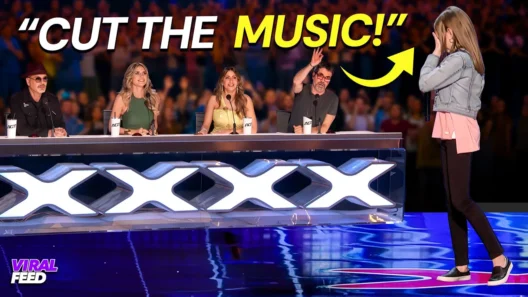
“I think that I was wrong. You did command the stage.”
Another judge translates his praise into the language of youth:
“What you just did was lit.”
There is talk of presence. There is talk of fire. One judge beams, “Apart from your talent, I love the fact that you managed to tell a story… You’ve got fire in your eyes.” Then the room does the thing it was built for. “I’m gonna start the voting off with your first yes,” comes the verdict. It sounds less like permission than like a promise: go be great.
Two kids, one history lesson—and a reckoning on live TV
Michael and Angelina are brother and sister—eight and six—bearing tiny tuxedo smiles and a memory they can’t quite carry alone. Their big brother once danced here, they explain, and the day ended with a red buzzer from Howie. A judge’s decision is a judging decision. But the way a child remembers it is something else.
Before they dance, their mother walks out and faces the man who pushed that button. She keeps her voice level and her words plain:
“You are actually really, really rude.”
She describes a little kid “dancing his heart out,” and how hard it was to watch. The room goes very still. This isn’t showboating; it’s parenting. It’s the moment when a grown-up has to meet the gaze of a family that was watching at home.
And then the kids dance. They are crisp, they are sweet, and they are more than a backstory. When the music stops, the panel can only coo. One judge says, “I loved it… All these cute little things that you guys are doing. Perfection.” Another adds, “You guys were great, adorable… You look like you’re enjoying yourselves. I love it.” The man in the center sums it up cleanly: “I have nothing negative to say. It was just brilliant.”
Before the vote, the apology comes. It is simple, personal, and public:
“I don’t mean ever to hurt anybody’s feelings. I’d like to personally apologize to you and your son. I am so sorry. Please accept my apology, please.”
From the wings, a dry reply—half forgiveness, half dagger—floats back:
“You don’t have to.”
And then, because this is still a talent show and not a courtroom, she seals the moment with a smile and a line that makes everyone exhale:
“Everybody makes mistakes, but he makes a lot of them. I’m just gonna say yes.”
It’s the rarest of televised things, a real-time reckoning that ends not with a rift but with a dance and a deal to do better.
From studio secret to stage lights: Skylar’s surprise
Another story begins away from the set, in a bright studio where a little girl named Skylar drills her basics without a camera in sight. A friendly face steps in: “Little birdie tells me that you are an amazing dancer… and that it’s always been a dream of yours to perform on Britain’s Got Talent. Is that right? So I’m here to invite you on the show.”
Shock turns to a grin, and the studio trip turns into a stage walk in an instant. On the night, the crowd quiets when they hear her age.
“How old are you, Skylar?” “Seven.”
Seven. And yet she moves with the sort of stillness no one can teach. The routine is pure poise punctured by speed, a thread of story running through every reach. Judges who have watched ten thousand auditions sit up straight.
“Incredible.”
“The whole routine was just immaculate.”
What is often said of first-timers feels different here: that she’s “so graceful and so expressive,” that she has so much more to show. When the panel delivers the only decision that makes sense, a host blurts the count like a proud cousin at graduation:
“Four yeses.”
“Do do do do do”: a seven-year-old explains why she can’t stop moving
Some kids talk as if they’ve been waiting years to be asked. A little dancer named Yessenia—cheeks like sunrise and posture like a ballerina—starts by introducing herself and her age. She gives a tiny shrug when someone asks for a story.
“When I was little, I sit in baby car and I hear, do do do do do. And I… I can’t move my leg. I can’t move my head. Do do do do.”
It’s comic and somehow profound—the first biography to use a drumbeat as a plot twist. She points toward the wings when they ask who’s with her. “Mommy and daddy.” Then there’s a question about a stuffed friend. “It’s my dog,” she clarifies, turning the toy in her hands. What’s her name? The child blinks with fierce accuracy: “Linda. Her name. It’s a girl. Yes.”
And then she lights up the floor with speed and face-play that would make a mime jealous. When she’s done, a judge answers with the kind of praise that pairs delight with respect.
“I think you are incredible. I love your dance. I love your tricks. What I love the most are your face expressions.”
There is even a tiny chant of commitment from the desk: “We’re giving 100%.” The math is very simple. So is the joy.
From Assam, with fire and grace
Her name is Benita Chewe… a quick breath, and then the rest, steady as a count-in: she’s eight and she’s from Assam, India. She calls this platform her “dream stage,” and when the panel asks what she’d do if she won, she names the most eight-year-old purchase possible and makes it feel like a pledge:
“I would like to buy a pink princess house.”
When the music starts, the dream turns iron. She threads classical shapes through contemporary attack. You can see the training, but you can also see the dare. The judges search for animal metaphors because human ones are too small.
“You are the strength of a tiger… like a python on stage.”
“I love the mix of contemporary dance with a kind of Indian touch. So strong, so little, so powerful.”
“You were doing moves that I’ve never seen before… You are sensational. I love you.”
The votes pile up like petals. It’s not just approval; it’s a kind of welcome. A little dancer from Assam arrives, plants a flag, and is told to bring more.
Best friends, big feelings
Some duets are built on chemistry; Izzy and Easton have that and more. She’s 11, he’s 14. They describe each other in the way teammates do when the work is hard and the trust is easy. “We’re best friends who dance together,” they say, and then a confession that makes them even more human: “We don’t only love dance, we love food too.”
Their story for the night is a small war of the heart. He’s the soldier. She’s the kid sister who doesn’t want him to go. The steps are a language of reaching and resisting. Right before they start, someone from the desk lobs a wry grenade at the word “contemporary.”
“Does anybody like contemporary dance?”
A hand goes up, then another, and the quip boomerangs back—“Me… Everyone.”—like a schoolyard joke. Then the lights fall, the music starts, and the room gets quiet. Whatever the verdicts, they dance like the story is theirs to tell, and that’s what we remember.
Broadway dreams and fast‑forward feet
Brody shows up in a jacket loud enough to count as a costume change and a grin wide enough to be a warm-up. He is eight, from San Diego, and he already talks like a veteran of this place. He was here once before, he explains, the season fifteen year—“I came here on season fifteen… I fell asleep. And then we went home.”
This time, he arrives with a plan and a cause. When a judge asks what he’d do with the million-dollar prize, the answer jumps past toys and into testimony.
“I’ll give it to kids who can’t afford dance because when my mom was a little girl, her mom can’t afford dance.”
It is a sentence that seems to widen the room. Then the beat hits. Brody explodes across the stage to Queen, totalling more steps in a chorus than most people manage in a month. His face would earn him a line in a silent film.
“Brody, you are absolutely incredible… I mean, you used that whole big stage all for yourself.”
“I feel like you were not only dancing. You were doing also, like, gymnastics. And a little bit of comedy with your face.”
“You chose a Queen song, and the lead singer of Queen was Freddie Mercury… one of the best showmen on the planet… You’ve got that amazing showmanship and confidence.”
One judge tries to describe his speed and resorts to VCR metaphors—“like when you press fast forward.” Asked if he was nervous, Brody blinks like the question is in a foreign language: “No.” The panel lays out the path ahead in short sentences: yes, yes, yes. The kid who once fell asleep before his turn now dances like he could keep the lights on by himself.
The power of little voices
What connects these small storms isn’t just the talent. It’s the way these children carry the weight and wonder of live television as if it were a prop they can set down between counts. Noah takes on the big stage and wins. Michael and Angelina carry a family memory into a room that actually listens. Skylar turns a studio surprise into a four-yes triumph. Yessenia jokes her way into a perfect audition. Benita threads her culture into contemporary form and makes a panel reach for bigger words. Izzy and Easton show how friendship can hold a story. Brody dances like Broadway is already calling, then offers his prize to kids he hasn’t met yet.
The adults, to their credit, bend with the moment. There is humility: “I think that I was wrong.” There is generosity: “Your presence… I wanna see you dance in a moment.” There is the understanding that show business is still a business of people: the apology that begins with “I don’t mean ever to hurt anybody’s feelings” and ends with the kind of forgiveness a mother gives when the cameras are rolling and the point has already been made.
When the judges talk about what they see, they keep coming back to story. A boy doesn’t just kick and spin. He “managed to tell a story.” A seven-year-old isn’t just graceful; she’s “so expressive.” An eight-year-old from Assam isn’t only powerful; she’s “doing moves that I’ve never seen before.” The message is clear: the steps matter, but what you say with them matters more.
And then there’s the heart that sneaks up on you. A child wants a pink princess house. Another names her toy dog Linda and clarifies, correctly, that Linda is a girl. A boy, eyes bright under stage lights, says out loud that a million-dollar prize might not be his to keep. Together, these little declarations make the night feel bigger than its sets and its ratings. They make it feel like a place where kids can set the tone—and the terms.
What happens after the music stops
It’s easy to forget, amid all the confetti and cuts to commercial, that live shows like this are built on quick decisions, slower consequences, and the strange intimacy of being judged by strangers. The mother who confronted a judge didn’t break the spell; she deepened it. She shifted the power for a minute and asked for something the room could actually give: attention, accountability, and then simple kindness for two tiny dancers waiting with their shoulders back.
Those dancers got it, as did the rest of the kids who crossed the stage this night. Praise arrived as poetry—“lit,” “immaculate,” “sensational.” So did the promises: first yeses, second yeses, a row of four. The applause felt like more than sound; it felt like an agreement to keep watching as these kids grow into their own names.
For all the talk about trends and flavors of the month, one thing remains constant: children on a big stage tell the truth faster than adults. They tell it in the way a heel hits wood, in the clean line of a cartwheel, in the grin that bursts forth after a wobble, and in the little sentences that stop a room. The night is full of those. It’s full of moments that ask us to be bigger, gentler, louder in our cheering, and quicker to hand the mic to the next small voice with something to say.
And if you’re keeping track of what a stage can do in under two minutes, here’s a shortlist: it can make a skeptic admit he was wrong; it can carry an apology all the way to the wings; it can give a seven-year-old four neat bridges to the next round; it can show a room that the line between humor and heart is thinner than anyone thinks; it can turn a kid from San Diego into a showman with Freddie Mercury’s swagger jogging at his side.
Why you’ll want to watch
These auditions don’t just showcase talent. They capture the messy, magnetic exchange between children who know exactly why they’re here and adults who are reminded, again and again, what a big stage is for. You’ll hear a judge say a solo was “lit.” You’ll watch a mother call out a red buzzer and a judge ask for forgiveness. You’ll see a studio surprise ripen into “Four yeses.” You’ll learn why a toy dog is named Linda. You’ll meet a girl who wants a princess house, a pair of best friends who love dance and food in equal measure, and a boy who wants to buy someone else a chance to move.
Most of all, you’ll see how kids take a phrase like “big stage” and turn it into a playground, a pulpit, and a promise. Watch the video for the full rush of it—the turns that come out of nowhere, the faces that tell the story without words, and the little voices that land like thunder.