The night memories became magic
America’s Got Talent is a show about possibility as much as performance. When a magician steps into that spotlight, the room holds its breath. The video at hand brings together five modern performers who know how to turn stage lights into stories, and surprise into laughter. At its heart is a simple idea: we don’t just watch magic, we feel it. We match it to our own memories, and we make new ones while the trick unfolds in front of us.
Kevin Lee says as much the moment he appears. He is 25, from Los Angeles, nervous and steady, and he frames his entire act around the way we hold on to life. “It’s thought that we each have a set of core memories that define who we are,” he says to the theater, to the judges, to his younger self. “I grew up watching this show with my family, and it helped bond us. It helped connect us. And I hope I can share the same joy with other families watching.”
What follows, across this video’s tight sequence of performances, is a tour through the many faces of magic on the AGT stage: heartfelt storytelling laced with sleight-of-hand, a kid who mashes up ventriloquism and mind reading, and a British comic who treats a book test like a roast. It’s a sampler of the season’s shocks—funny shocks, warm shocks, the kind that make you clap your hand over your mouth and then clap for real.
The memory-maker: Kevin Lee
Kevin walks in with photographs of the judges—Simon Cowell, Heidi Klum, Sofía Vergara, Howie Mandel—and host Terry Crews. He starts light, and then pulls everyone into his frame. “Judges, I have a few photos of us here,” he says, handing out small, glossy squares. “To help take a mental snapshot of this moment right here.” It sounds like patter until he asks Heidi Klum to hold up a finger. He closes his eyes as she shows the photo to the world. Then he leans into sensation: “I’m seeing a screen, not a small screen like a phone. This is larger. I’m smelling something buttery.” He pauses and goes for it: “Are you all eating popcorn at the movie theater?”
On paper, that’s only a guess; on stage, it’s a path. He has Sofía “pretend” to place a popcorn kernel on his hand. “Watch closely,” he says. “Don’t blink.” He opens a small box for Simon—empty—and then drops the kernel inside to “heat it up a bit.” The tension is playful, a magic trick told as a memory of going to the movies. Then it gets weird in the way AGT fans love: during the routine, a kernel seems to come out of his eye. You can feel the room recoil and lean forward at once.
“I love your magic. I love your magic. I love you,” Heidi bursts afterward, laughing. “But I have to say, my favorite was when this kernel was coming out of your eyeball. I mean, it was… kind of disgusting, but it was so cool.”
Kevin doesn’t stop at theater tricks. He swings his act back to childhood, projecting baby photos of the judges. “Woah. It’s us,” he says. “Look how cute you all are. Even Simon.” The joke lands, but the point is tender. “This memory we’ve made here tonight will forever be a part of us,” he tells them, “and I am just grateful.”
“You’re just good, and you’re cool, and you’re different,” Simon says. “We’ve seen a lot of magic over the years, but you did something different… you’re slick, and you’re Vegas, and you’re very us.”
Howie steps back and summarizes the night Kevin created: “The story that you tell, the image of a little boy sitting in his home with his family and his parents watching America’s Got Talent, and then years later, not only being on that spot that you watched, but rising to the occasion and rising above that occasion. I think you just had a career and life changing performance.”
Four yeses follow—as inevitable as applause after a pop. But the real win is feeling the room land on the same memory at the same time.
The kid who chose mind games: Bryn Cummings
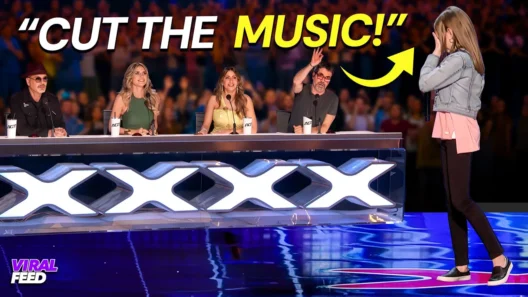
The smallest frame in the video belongs to 12-year-old Bryn Cummings from Paw Paw, Michigan. She’s a ventriloquist who adores Darcy Lynne—“that inspired me,” she says—and she walks out with a plan most kids would not dare. When her puppet Penelope announces, “I don’t wanna sing anymore,” the crowd laughs. Bryn doesn’t blink. Penelope suggests a pivot: “Mentalism.” Bryn repeats it like a question, then decides to trust the bit and the voice on her arm. “Take me down to the judges,” Penelope insists. “Is that allowed?” Bryn asks. The panel grins. It is now.
Up close, Bryn’s control is the trick. She hands a deck to Heidi to cut and tells Howie to take the top card. Bryn turns away, eyes shut tight behind her bangs. The puppet “transmits” to her. “What comes to mind?” Penelope prods. “A migraine,” Bryn deadpans. It’s a small joke that makes a big promise: this kid can talk and think at the same time under pressure, and she’s got timing. Moments later, Bryn calls it—“I think it’s black… It’s a club… Is it the seven of clubs?”—and she opens her eyes into the judges’ shock.
Then she scales it up. She asks Sofía to reach into her purse and hide any item. She asks Simon to forage in the audience and borrow any object. Terry Crews brings out a blindfold and holds it to the lights to prove it’s opaque. They wrap Bryn’s eyes. The room goes quiet.
Penelope narrates the impressions as Bryn “sees” without seeing. “I see it’s a food. It has some sugar in it… Maybe you leave it when Santa comes,” Bryn says, reaching, and she lands on the plain truth: “Is it a cookie?” Sofía smiles and lifts it high—a cookie, yes, oatmeal. Next, Bryn frames Simon’s borrowed object: “It’s an accessory… You wear it on your wrist… Is it an Apple Watch?” And that’s it. A puppet, a blindfold, a watch, a theater in disbelief.
“This is the season of mashups,” Howie tells her. “The fact that you did magic or mentalism and ventriloquism at the same time—you’re amazing.”
Heidi nods to craft as well as charm: “You really figured out, like, a perfect little act for yourself. You’re part comedian too. I thought it was a lot of fun.”
Simon adds what every young act wants to hear: “You are so talented, so charming. People are gonna root for you. You did something we’ve never seen before… you wanna see it better or different, and that’s what you did.”
Four yeses again. Backstage emotion spills out of her words. Asked what she’s feeling, Bryn doesn’t dress it up: “This is the best moment of my life.” It feels true because we watched her choose a harder road on live TV and make it look easy.
A dictionary of mischief: Mandy Muden
Comedy magician Mandy Muden steps out with big hair, a bright smile, and the sort of dry British line that wins the room in three seconds. “I’m 29,” she declares, then cracks at herself, “It’s been a rough couple of years.” A beat later, she delivers a classic late-night confession with a wink: “Being British… I love America. Also, I owe money and had to get out of the UK.” You know within a minute you’re about to be fooled and roasted at once.
Mandy builds a maze. She hands Heidi a bag “full of letters,” asking her to pull a few to check that they’re all different—“It’s very difficult with the gloves on, isn’t it, if you just committed a crime and hoped to get away with it?”—and she makes Howie and Sofía draw letters too. Simon gets a book and a saucy double entendre. “I’m gonna riffle through my book. Could you just stick anything in you like?” she asks. “Finger,” he mutters. “Yes, a finger would be lovely, Simon.” She has him look at the page number and the first word on that page and write them down.
Then she yanks the emergency brake and shifts the whole moment sideways. Heidi opens a package to reveal a copy of Fifty Shades of Grey, and Mandy moves into a full-on “trance,” pretending to read Simon’s mind.
“Does your word begin with an F?” she asks. Simon says yes. “Now, spirits are telling me that this word ends in I… N… G.” She cocks an eyebrow at him. “Have you done this word today?” Another beat. “Yes,” he says. Mandy pounces. “Is your word by any chance, is it fantasizing?”
In a single line, she swerves from mind reading into late-night comedy, and then she pulls back before she overstays the joke. The room is hers. She points Sofía to page 17, and Howie to a dictionary on page 330, down seven word entries. “What’s the word?” she asks. “Loony,” he replies, the kind of planted absurdity that sounds accidental. The kicker comes when she asks Simon to say his thought-of word out loud. “Eat,” he answers, and she turns back to the letters the judges have been holding since the top of the act. Howie raises an E. Heidi raises an A. Another letter waits in a third hand. By the time she’s done, the letter choices circle back to Simon’s thought, the lines between prediction and punchline fully blurred.
“Mandy, that was quite a surprise,” one judge tells her. “You’re so funny, and I didn’t expect to have so much fun.”
Howie goes further: “You’re a very good magician. You’re funny. I love you. I’m a huge fan of yours. You are the epitome of somebody that deserves to have their own show. I would go see just you in Las Vegas.”
Simon lists her skills the way a producer does: “We saw everything, didn’t we? I mean, you were mind reading. You were funny. You’re very naughty. I really like you.”
She earns four yeses. Backstage, she’s as human as she was sharp on stage. “I’m absolutely in shock,” she says, still processing it. “I couldn’t believe what Howie said… he’s such a hero of mine.” The thrill for the audience is double: the tricks were tight, but it was the energy—the nimble, cheeky rhythm—that made the routine feel fresh.
The ten-year-old with a stage-sized grin: Ryland
Not every magic story needs a finished bow to be compelling. Sometimes the promise is the point. Ryland, a bright-eyed 10-year-old from England, walks on and does what seasoned performers sometimes forget: he makes friends with the room first. “I’m 10 years old,” he says. “I’m from England.” When asked how long he’s been doing magic, he hits a line that gets a laugh without trying to be clever. “Since I was two,” he says, so matter-of-fact it disarms everyone. “I was born with magical powers,” he adds, teeing up a thought about his dad before the conversation flows on.
Ryland represents the youngest strand of AGT’s magic DNA—the child who learned a move, then a second, then a stage voice, and pulled the courage to test them in front of millions. Even in his brief introduction, you can hear the makings of a performer: clean answers, a sense of play, and that careful way kids tell the truth. There’s a reason acts like Bryn and Ryland resonate so quickly. The moment they say their names, the story becomes a family story—parents and practice and the surprise of a child who wants to work at wonder.
Why these five landed
Across these performances, five qualities repeat: clarity, craft, surprise, connection, and control. Kevin leads with clarity—he tells the audience exactly what story they’re in, and he uses that story to pull off something that would be gross if it weren’t so precisely staged. Bryn blends craft with surprise. Her ventriloquism gives her mouth cover while her mind does the work, and the tension of a blindfolded child calmly calling out an Apple Watch hits the room like a bell. Mandy runs a different race entirely. She wins on connection and control—every beat of her routine is calibrated for a laugh, and every laugh is timed to help a method land without anyone catching it.
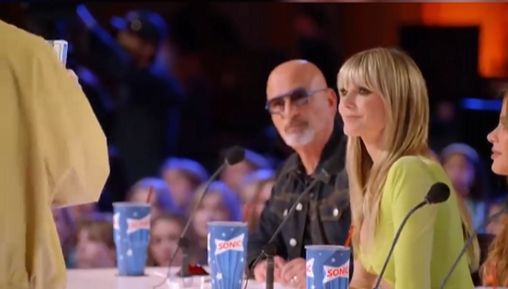
Even the judges, so often mirrors of the audience, carve out roles in these magic moments. Heidi’s taste shapes the way we watch Kevin—she admires beauty in weirdness, and she points us right at the part of the routine that’s both. Sofía notices presence: “You looked like you were, like, so present,” she tells Kevin, an insight that could double as advice to any act teetering on the edge of nerves. Simon names lanes—“you’re Vegas, and you’re very us” is both compliment and career projection. And Howie takes the long view. “This is the season of mashups,” he says to Bryn, placing her in a wider context. Later, with Kevin, he zooms out further, tying a single audition to a story that millions of families could recognize in their own living rooms.
There’s a stillness that happens in these routines—when a photo becomes a portal, when a puppet outthinks a grown-up, when a dictionary entry hits the ear like a dare. The camera finds the judges because the audience looks to them for permission to gasp, but the gasps always come one beat ahead of the panel. Magic, when it works on AGT, isn’t a matter of “how.” It’s a matter of “why now.” Why this story, why this tone, why this mix of heart and hustle. The best acts in this video answer that as they go.
Comedy, risk, and the quiet pivot
Each of these magicians takes a real risk. Kevin risks sincerity—he ties his bag of moves to childhood and family, and if his tricks wobble even a little, the whole thing sags. Instead, the narrative props the magic up. By the time a kernel appears where it should not, we’re already with him. Bryn risks the mashup. She could have delivered a standard ventriloquism set, cute and tuneful. Instead, she lets a puppet drag her into mind reading, and she sticks the landing twice, once with a playing card and then with a watch. Mandy risks tone. Any line about “F” words teeters on a cheap laugh, but she rides the edge with such grace that the audience leans toward her rather than away.
And then there’s the quiet pivot—the tiny moment when an act changes shape without warning. With Kevin, it’s the slide from a photo trick into a memory of the movies. With Bryn, it’s the shift from a song we never hear to a blindfold we can’t stop staring at. With Mandy, it’s the hop from props to persona, from bags and books to a sentence that turns Simon into the punchline of his own thought. Those pivots are where great AGT magic lives. They’re small notes that build the big chord.
What the judges actually said—and what it means
It’s easy to remember the applause and forget the words. But the spoken reactions are often the most useful map for why a performance clicks.
Heidi’s take on Kevin—“kind of disgusting, but it was so cool”—isn’t just a quip. It describes a whole sliver of modern magic that thrives on cognitive dissonance. The move is odd; the execution is elegant. You recoil, then you admire. That whiplash is a design choice, not an accident.
Sofía’s compliment—“you were so in control… you looked like you were, like, so present”—points to a quality magicians sometimes miss while chasing harder methods: composure sells a trick. If you look like you don’t need the next beat to work, the audience believes it already has.
Simon’s comments across the video double as creative notes. “You’re different,” he says. “You’re Vegas. You’re very us.” Translation: you fit this stage and this audience, and you might fit the next one too. When he tells Bryn, “You did something we’ve never seen before,” he’s talking less about methods and more about a new blend of known forms.
Howie’s “season of mashups” line names a truth beyond any single act. The most arresting moments this year tend to mix disciplines—music and magic, jokes and jeopardy—and let each component raise the stakes for the other. Later, when he frames Kevin’s journey as “career and life changing,” he is not being loose with words. The audience can hear when someone is cashing in on preparation rather than luck.
What lingers after the lights
Watch this video, and you’ll notice what people talk about once the trick is over. It’s rarely the move. It’s the feeling. The little boy on the couch becomes a man on a stage. A kid with a puppet decides to think bigger and trusts her hands to say the words. A comic folds a room into a joke so deftly that a dictionary seems like a co-conspirator. Even a ten-year-old’s hello can land like a promise.
There’s also the matter of stakes. Bryn, in her own way, raises them by refusing to do the safe thing. Kevin raises them by putting his heart in his script. Mandy raises them by riding right up to the line and then winking. The audience responds to that courage without needing it explained. They feel it in the room, and they talk about it on the way out. You don’t need to know how any of these feats worked to know they worked.
That’s the task for every magician who steps onto a TV stage now. It’s not enough to fool a camera. You have to design a moment that feels right in the room and translates at home. You have to make the judges part of the mechanism and the misdirection. And you have to leave space for people to breathe at the exact second they want to hold their breath.
Watch the wonder unfold
Five magicians walk onto AGT and do what they came to do. One turns a photo into a portal and a kernel into a scream-laugh. One fuses ventriloquism with mind reading and calls an Apple Watch while blindfolded. One turns letters and novels into a personality test and turns that test into a punchline. One ten-year-old steps forward and reminds everyone why the show is built around “yes.”
If you love the art form, you’ll spot touches of the classics and signs of what comes next. If you’re new to it, you’ll find yourself pulled along by the rhythms of astonishment, humor, and heart. Most of all, you’ll see what happens when performers seize the chance to make a room theirs. Press play, and watch how quickly the night takes shape—one memory at a time.