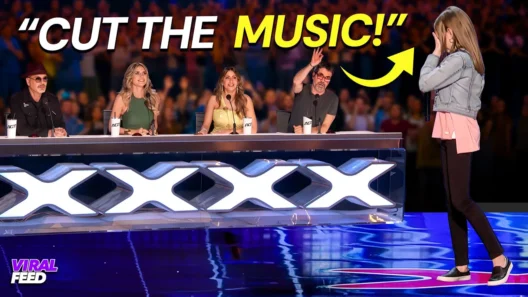
Even before the kitten appears, you can feel the room lean forward. A man in a dark suit strolls into the spotlight and introduces himself with a voice that aims straight for the center of your attention: “My name is Colin Cloud, and I have just turned 30.” He promises not card tricks, not smoke and mirrors, but deduction. “Today,” he says, “I’m gonna show the world the closest thing to a real life Sherlock Holmes.” It sounds like theater. Then he starts proving it.
The profiler in the spotlight
Cloud frames his work with a simple claim: he reads the tiny signals people give off without knowing it. “My background genuinely is in criminal profiling, specifically detecting when people are lying,” he tells the audience. His demonstration begins with a coin and a set of eyes trained on the judges. He hands Howie Mandel a coin and asks him to hide it behind his back, then extend both fists forward and answer “yes” to two questions, no matter what.
“Is the coin in this hand? Yes. Is the coin in this hand? Yes.” Colin watches Howie’s face like a security camera with a soul. “Now when he said yes for real, when he meant it, his eyebrows raised slightly,” he explains, noting a tell so small it might as well be myth. He points to the correct fist. The coin is there.
He moves down the desk, turning the small game into a gallery tour of microexpressions. Mel B plays. Heidi Klum plays. The audience doesn’t just watch; they participate. When he asks the crowd on one side to think of a “simple color” and the middle to think of “any animal,” he maps their voices to Mel’s hidden coin. “If the coin’s in this hand, think white. If it’s in this hand, think blue,” he says, pivoting smoothly. “You are thinking, cat,” he tells Heidi with a grin. “The coin is here.” It is.
Simon Cowell is last. The names people call out are ordinary enough—“Charlie or Oscar”—but the approach is not. Cloud splits the possibilities across Simon’s hands, reads his face, and declares, “You are thinking Oscar. The coin’s here.” The judge opens his palm. Another direct hit.
Open the box
Colin has set a longer fuse. Before he walked onstage, he placed a scroll in a glass jar and handed it to Tyra Banks, who sat on a stool and guarded it like a museum attendant. Now he asks her to stand. “You guys could have shouted anything,” he reminds everyone. The scroll directs Tyra to open a nearby box and “tell everyone what’s inside.” She balks—“I’m scared”—but flips the lid anyway.
Out comes a white kitten. The theater erupts. Tyra holds the little cat up for the camera, and Colin invites a closer look. The collar tag reads a single name. It reads “Oscar.” Moments earlier, Simon had chosen Oscar as the imagined name in his hand. Now he is literally petting Oscar—the cat who, by all logic, shouldn’t exist in that moment to match the crowd’s color, the judges’ animal, and his name.
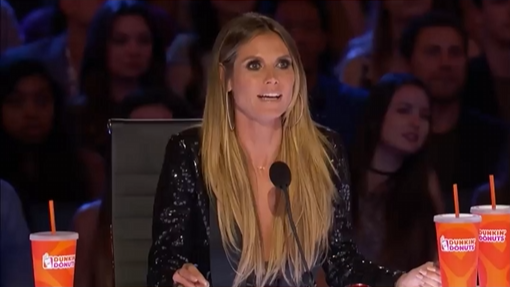
“I don’t know if you’re a psychic. I don’t know if you’re a profiler. I don’t know what it is, but I am mesmerized,” one judge says afterward. Heidi beams: “I absolutely love you. I think you’re fantastic.” Then, still stroking the kitten, she deadpans the kind of line you only get when a white cat is actually on your lap: “We can take over the world.” Four yes votes follow, a unanimous green light to return.
“Closest thing to a real life Sherlock Holmes”
Between performances, Cloud explains where this comes from. “It looks like mind reading, but I’ve been described as the closest thing to a real life Sherlock Holmes,” he says in a backstage segment. He talks about being shy and introverted as a child, about devouring books, about training his attention on people. “I first started observing people when I was eight years old,” he says. “I got accepted to study forensic investigation when I was 15.” Over time, he realized he could “pick up on their deepest, darkest secrets, their worries, even their wildest fantasies.”
He offers no talk of tarot or spirits. “You know, I’m not a magician. I’m not psychic,” he says flatly. What he is, at least onstage, is a narrator of human behavior who turns observation into inevitability.
A taste for detail
Back onstage, Cloud says he wants to share “the most difficult things that I can do,” and the tone tilts from charming to unnerving. He faces Mel B, asks her to close her eyes, and, in a move that detonates the room, leans in and licks her outstretched hand.
“Did you just lick my hands?” she fires back. He nods, totally unapologetic, and offers a disinfecting wipe. “Just from the taste alone,” he says, “recently, have you been eating eggs and the potato chips as well? Am I right?” She groans and laughs at the same time. “Yes.” It’s absurd. It’s also the exact kind of physical detail he promised to catch.
Next, he flips the script. He takes his own iPhone, turns to Howie Mandel, and says: your turn to deduce. The phone is locked by a six-digit passcode. The judges each guess a digit—Simon offers “1,” Heidi says “9,” then another “1”—and Cloud tells Howie he must find the remaining three by intuition. “The last three digits, look at me, are gonna pop into your head,” he says. “This is one in a million. So if he unlocks this, he’s done it.” Howie taps. The phone opens. For a long second, no one says anything. Then Cloud breaks the spell with a grin: “Let’s hear it from the world’s newest mind reader.”
It’s a theatrical inversion, but the point lands: Cloud knows how to guide a mind to a specific outcome without telegraphing the route. To underscore it, he leans to Mel and whispers a private secret he says he will never reveal aloud. “Mel, is that true?” he asks into the mic. “Yes,” she says, startled, a hand to her chest.
Finally, he returns to a promise. Before the show, he placed letters with random audience members. “You thought of a word,” he reminds Mel; she hasn’t spoken it. He has the card holders stand and turn around to display the hidden letters, then asks Mel to name her word aloud. “Goddess,” she says. The letters already spell the same word. “GODDESS.” The crowd goes up a notch again.
On the panel, the tone has shifted from delighted to uneasy-wowed. “What you do is extraordinary,” Simon says. “I mean, it’s more than magic. It’s having special powers. It was spooky, fantastic. I’m gonna remember it, Colin.” Even a judge wary of all that hand-licking concedes the point: it’s a great talent, if a little too close for comfort.
“Solving the murder of Simon Cowell”
For his next turn, Cloud takes a risk on both tone and title. “Now, Simon, you’re probably wondering why I haven’t invited you onto the stage tonight,” he begins. “You see tonight, Simon, I would love to share with America the most dangerous thing that I can do, solving the murder of Simon Cowell right before it happened.” The line lands as a half-joke carried by dead-serious showmanship. He enlists Mel B to point out a random audience member—“anybody at all in the room that you don’t know”—and a woman on the second tier makes her way down to the stage.
Cloud gives the volunteer a task on a slip of paper and has her turn away to complete it in private. While she writes, he seeds the theater with a different kind of challenge: memory. “I need to ask the rest of you in the audience to think for me of any naughty or guilty memory of yours,” he says. “Think of it in as much detail as you possibly can, and hold that memory right at the very front of your mind.”
He scans the seats and asks Simon to say “stop” at any time, then lands on a blonde woman. “We don’t know each other. Are you thinking of something right now?” he asks. She nods. He fires off a quick series of checks. “This is something that happened when you were younger. This is something you were outside. Does that make sense? And other people have seen this happen and they’ve laughed at you.” He waits, watching. “There’s an animal involved. Does that make sense? And you’re camping. Is that what you’re thinking?” The woman gasps and laughs. He pushes the last detail. “Am I correct in saying that you’re thinking whilst you were camping, this dog has bitten you on your butt?” She can only say “Yes.”
The room laughs with her—then laughs again when he catches a man nearby thinking of the same thing and gently tells him to let the woman have her moment. The gag is funny. The technique is not; it’s unnerving, because it feels like he’s rummaging through fleeting mental images you don’t expect to be legible to anyone else.
Names, knives, and a story that writes itself
Back at center stage, the original volunteer is ready. Cloud doesn’t open her paper. Instead, he works from his own questions. He asks her name. He offers a guess that lands with the dull thud of inevitability: “Your name is… Kirsty.” Then he offers her a choice among murder weapons presented onstage—there is a showman’s collection—and instructs her to pick one in secret and hide it. He reminds the audience this is theater, not instruction. “Kids at home, do not play with knives,” he adds, drawing a necessary boundary between spectacle and sense.
When the time comes to reveal her hidden choice, the volunteer produces a white knife. Cloud has prepared for this with a lattice of predictions that feel less like backups and more like an architect’s blueprints. A sign he placed, a headline he holds, and a plaque he unveils converge into a single, winking narrative. He displays a newspaper with the headline “COLIN CLOUD SOLVES THE MURDER OF SIMON COWELL.” He leads the audience to a memorial bench: “In Loving Memory Of SIMON COWELL …killed because he stole their entire collection of Justin Bieber CDs.” Somewhere in there is the color and the weapon, anchored visually and comedically to the exact choice the volunteer made.
The whole sequence is less grisly than it sounds and more precise than it should be. The shock isn’t the idea of a “murder,” but the way every joke clicks into a detail that was supposedly up for grabs a moment earlier.
Free choices that weren’t
Cloud then scales the prediction upward. He disperses the power to choose across the judging desk and the theater, letting numbers and preferences flow back to the stage like tributaries merging into a river. He asks for numbers. He corrals gut picks. He treats the jumble not as chaos but as a cipher.
When he’s ready, he turns to a large board that has been in view and flips it. What looked like decorative noise resolves into three clean words, the answer to a riddle the audience didn’t know they were solving: CHEESE, ROME, ELLEN. The choices land with a thud of recognition because they match the independent selections that have just been made. Then, because this is a show built on receipts, he layers in proof no one expects.
On the big screen, a prerecorded video appears. It’s Cloud, backstage, earlier. He holds up a sign that reads, “I know you’ll pick… CHEESE ROME ELLEN.” He reinforces the improbability with playful field work: a neon sign glimpsed at a restaurant—“ELLEN BURGER EXTRA CHEESE MADE IN ROME”—a selfie in disguise with Howie Mandel and a stranger, and a flipboard that carries the same three choices like a refrain. He underlines the principle in plain language: “I filmed this before you ever chose.”
Whether you read this as mentalism, behavioral influence, or meticulous planning is up to you. The craft is in how casual it feels, how conversational, even as it compresses dozens of decisions into a single, inevitable endpoint.
What the judges saw—and felt
“It’s actually scary,” a judge says at one point, trying to laugh it off. “I wouldn’t wanna be on that stage.” Others keep circling the same mystery. “I don’t know how you know things. I don’t know how you do it. I don’t wanna know,” one admits. After the “goddess” reveal, after the iPhone unlock, after the staged “murder,” the appraisal keeps hitting the same word: extraordinary. “I’m gonna remember it, Colin,” Simon says.
There is a telling moment after that first kitten reveal when everything softens. Simon cradles the cat, and Heidi strokes its back, and a talent show built on buzzer shocks makes room for a purr. That sweetness is a kind of misdirection too, because while everyone coos, the larger story has already turned. For the rest of the night, people will try to decide which feels stranger: that he knew the kitten would match the crowd’s color, the judges’ animal, and the judge’s name, or that he made them all feel like they chose freely anyway.
The method inside the mystery
Cloud tells you the secret without telling you the method. “It looks like mind reading,” he says, “but I’ve been described as the closest thing to a real life Sherlock Holmes.” He boasts no aura of the supernatural, and yet he lets people call it that. The trick, if that’s even the right word, is the marriage of forensic attention to theatrical rhythm. He watches you say “yes” twice and hears the truth in one of them. He hears a room yell “white” and maps it onto a hidden coin. He turns a bag of numbers into letters that spell out a path he filmed earlier, as if he were both detective and author of his own mystery.
When he leans in to tell Mel a secret no one else hears, the room erupts without having learned a thing. That’s another part of the craft: understanding that audience reaction is part of the reveal. A person says “Yes” into a microphone, and the honesty in that word—its surprise, its embarrassment, its delight—becomes the strongest proof you could ask for.
It helps that he knows where the line is. He jokes big, but he puts bumpers on the lane. “Kids at home, do not play with knives,” he warns mid-routine, resetting tone. He teases Simon with a mock obituary but wraps it in jokes about stolen pop CDs. He licks Mel’s hand and then immediately offers a wipe. The discomfort is part of the design, but so is the release.
Why it sticks with Simon
There’s a reason the idea of Simon’s “murder” ends up carrying the headline. It is an audacious frame on a family TV stage, and it’s built to haunt in the way good theater does. It puts a beloved judge in a story he can’t control and then shows him that the ending was printed long before he made any choice. For someone famous for control, famous for calling shots on live television, that loss of control is a shock—a safe, stylish, camera-ready shock that lingers.
But the piece that really burrows in is quieter. It’s the camping memory no one should be able to see. It’s the word “goddess” forming on cards before a woman says it out loud. It’s a cat named Oscar curled in the crook of an arm, while the man who arranged it stands there smiling like he’s just pointed out something hiding in plain sight.
The case file, still open
Colin Cloud’s performances work because they give you a ladder for your doubt. If you need an explanation, he gives you one: microexpressions, forensic training, profiling. If you want magic, he lets you have that too. The staging is clean. The rhythm is relentless. And the confidence is absolute. “I know things about people that I shouldn’t know,” he says in a quiet aside. On this stage, that line sounds less like a boast and more like a diagnosis.
By the time the judges deliver their verdicts—“I’m saying yes,” “Yes,” “I’m gonna say yes”—the suspense has changed shape. It’s no longer Will this work? It’s How much further can this go? Cloud seems eager to answer. He keeps upping the complexity, adding layers, inviting more people into the process, and then snapping the net closed at the last second with a reveal that feels obvious only in hindsight.
Maybe that’s why the performances feel like they “haunt” the judges after the lights go out. Not because they can’t imagine how it was done, but because they can imagine too many ways at once: a choreographed dance of choices, a courtroom of tells, a novelist’s outline tucked into the lining of a suit jacket. As with all great mysteries, the explanation is less satisfying than the experience of not needing one.
So if you want to see what makes a hard-nosed panel call something “spooky” and “extraordinary,” if you want to watch a coin, a cat, a phone, a whispered secret, and a faux-crime scene snap into a single story, you should watch the video. The case is open. The evidence is right there in front of you. And somewhere, Simon Cowell is still smiling, still a little unnerved, still wondering how on earth a white cat named Oscar ended up in his lap.