The Night America’s Got Talent Went Full Menagerie
Some nights on America’s Got Talent, the stage feels like a circus. This one plays more like a love letter to the animal kingdom.
It opens with a confession from a trainer that lands somewhere between a warning and a promise:
“We train cats.”
“Cats?”
“Yes. Cats.”
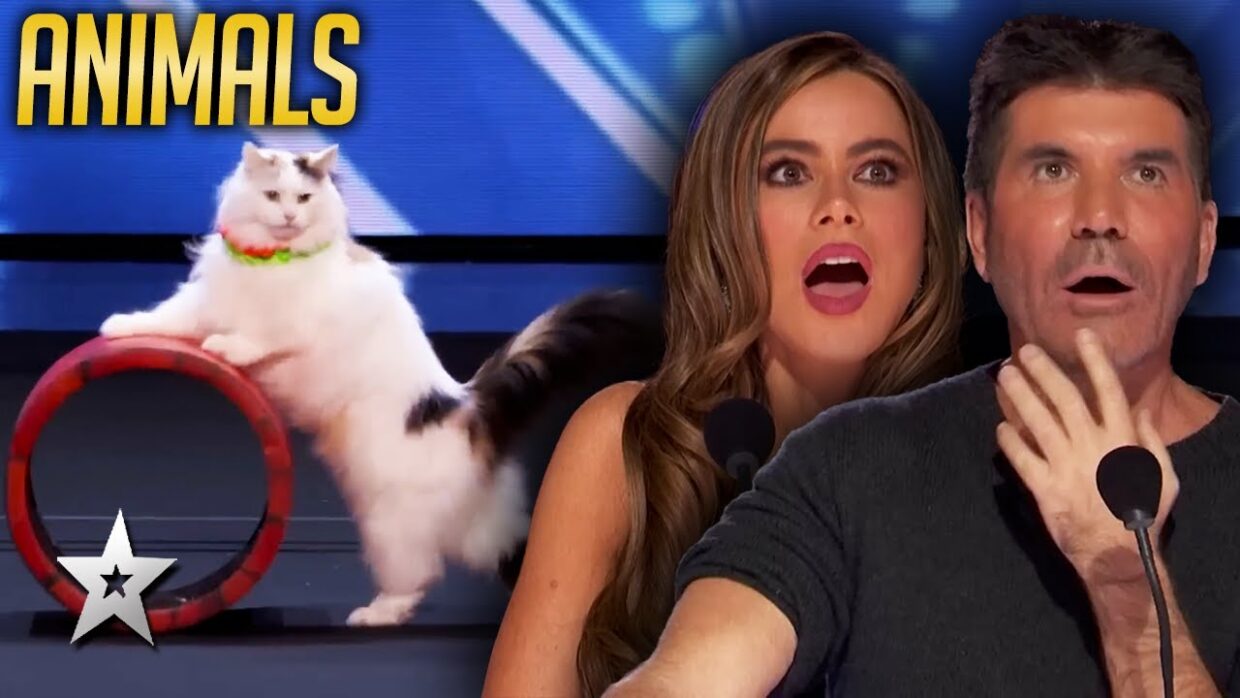
The panel laughs, a mixture of curiosity and dread washing over the judges, who know what the rest of us do: cats answer to no one. As the host teases, “Yep. They do what they want, those cats.”
It sets the tone: talent meets temperament, and anything can happen.
Across this spirited showcase, animals don’t just perform; they reveal. They expose quirks in the judges, patience in their handlers, and a deep well of devotion that lingers long after the final bow. Every act doubles as a portrait of a relationship, rendered in paw prints, talons, and—at one point—a beak tapping into something like mind reading.
Binnie the Bunny Makes His Case for Respect
Shai arrives from Los Angeles by way of Israel with Binnie the Bunny and a simple mission: to win hearts and reset expectations.
“We want to make people understand that rabbits are amazing and intelligent,” he says, “and they deserve more respect.”
Then he raises the stakes with a promise: “I know that Binnie is going to win AGT.”
This rabbit is a charmer—part athlete, part artist, and part stubborn star. Shai calls him “my supernatural rabbit” and invites Binnie to “turn around” for the crowd.
The routine is a carousel of tiny spectacles that add up. Binnie nudges a bowling ball and nearly scores a strike. He noses at a guitar and earnestly contemplates a miniature piano. A planned slam dunk pauses and then returns later—that familiar pet-performer dance in which timing is secondary to the bond.
Is every note perfect? No.
Is it unforgettable? Yes.
It’s the warm chaos of real training: requests, repeated attempts, and the small victory that means everything. In between, Shai keeps the comedy alive. Binnie, he says, wants to be a judge and can even take notes like Simon.
When the rabbit hesitates, the audience leans closer, the way you lean toward a friend who’s searching for a word.
It’s funny. It’s tender. It’s the point.
The Chicken Who Read Simon Cowell’s Mind
Then comes the act that turns disbelief into applause: a hen named Curry, a handler with steady hands, and four judges willing to put their fears on paper.
The premise sounds ridiculous—until it doesn’t.
Curry “likes to come closer,” the handler explains, before asking each judge to write down a fear. The papers go to Simon, who mixes them up. The room tightens with anticipation.
First, Curry sizes up Cowell. The handler asks Simon to focus, then soften, and not think too strongly. The chicken bobs, tilts her head, and seems to choose.
The prediction lands: “Giant spiders.”
“She’s pointing to giant spiders. Was this your fear, Simon?”
“Yes.”
It would be easy to stop there, but Curry isn’t done.
Sofia Vergara mixes the papers face down. Again, the chicken pecks toward a single choice.
“Dark oceans,” the handler announces.
Sofia nods, her eyes wide.
Finally, there’s the twist: the egg.
Howie Mandel cracks it open at Curry’s urging. Inside is a slip of paper, prewritten and improbably precise.
“There’s a word in here.”
“It says drowning.”
Mandel confirms that drowning is his fear.
The panel is stunned and the audience is giddy. Heidi Klum beams. Simon, for once, seems proud to have been fooled.
One judge says the quiet part out loud: “This chicken needs to be famous.”
The votes roll in like a standing ovation turned into policy—four yeses and a legend born in feathers.
The Ballroom Belongs to Carrie
Next comes a love story with footwork.
Jose Fuentes arrives at 58 with Carrie, his four-legged dance partner dressed in a shimmering outfit. The backstory is as human as it gets.
“My ex-wife did not dance with me,” he admits.
So he found a partner who would.
Together, Jose and Carrie spin through a routine that feels like a wink at ballroom tradition—two partners mirroring, pausing, coaxing, and playing to the music.
Not everyone on the panel is convinced. One judge confesses that the routine enchanted them “for the first fifteen seconds,” but then began to drift.
The room, however, is smitten, and enough judges agree to move them forward.
It’s hard to resist the joy: a dog who genuinely seems to want to dance and a man who dared to ask for a second chance at partnership—and found it.
Alexandra and Tesla: Grief, Grit, and Grace
From Quebec, Canada, Alexandra steps onto the stage with Tesla, hoping to open a dog-training center one day.
Her story blooms through a few simple sentences.
She was shy, she says, until she met Gizmo, her first dog. They performed together, and the stage steadied her. Then Gizmo died at the age of eight, and the floor fell out beneath her.
“Gizmo gave me confidence,” she says. “My life would have been so different if I hadn’t met him.”
Now there is Tesla.
Their partnership is quieter than the crowd, but no less compelling. When the routine begins, it feels like a continuation rather than a debut—precise movements, playful cues, and the small nods that say, “Trust me.”
When it ends, you see it clearly: the act is not merely a showcase of tricks. It’s a promise kept to a first friend and a new one.
Mudslinger, the Multi-Sport Pig
Perhaps the most charming whiplash of the night arrives with John Vincent and a porcine prodigy named Mudslinger.
The setup is irresistible.
“I’m actually an aerospace engineer by day and a pig trainer by night,” Vincent says, moments after explaining that he’s been doing this for twenty-two years.
He’s working on a NASA project, and he’s also teaching a pig to golf, dribble, and—first things first—raise a flag.
He cues the patriotic prelude.
“Mudslinger, would you do the honors?”
The pig obliges.
Then there’s a chip from the tee, a soccer weave through cones, and a shot into the net that turns the panel into fans. One judge even leans in for a smooch.
It’s showmanship, yes, but it’s also a masterclass in patience—small tasks stacked into a narrative, trust rewarded, and a belly rub earned.
What These Animals Reveal About Us
There’s a reason animal acts keep returning to America’s Got Talent.
They are unpredictable, which means they are honest. They rarely fake it, so when a moment lands, it lands hard.
Binnie’s almost-strike. Curry’s uncanny choices. Carrie’s prancing figure eights. Tesla’s poised focus. Mudslinger’s goal.
These moments stitch together into a larger story about care—hours of attention quietly woven into minutes onstage.
They also draw something different out of the judges.
When you watch Simon Cowell smile as a rabbit thinks about playing a piano, or see Heidi Klum soften in front of a soccer-playing pig, you discover the show’s secret: these auditions aren’t really about polish. They’re about possibility.
As one judge put it, “I think young and old alike will like this.”
And the humor is a feature, not a bug.
At one point, a wisecrack floats down the judges’ desk: “Even dog Simon is mean.”
It’s a wink at the show’s mythology—mocking Cowell, children whispering to their pets at home, and the entire theater joining in on the joke.
Moments later, the same table is stunned into silence by a word pulled from an egg.
Laughter, awe, repeat.
That’s the rhythm.
The Training Behind the Wonder
Anyone who’s tried to teach an animal to sit or spin knows that the hardest part isn’t the cue—it’s the relationship.
These acts run on trust earned in living rooms and backyards, where a misstep means trying again instead of giving up.
You can hear it in the way the handlers speak.
The rabbit trainer repeats himself calmly, gives Binnie “a second,” and pivots with humor. The chicken handler sets boundaries and watches for tiny signs. Jose counts beats with Carrie like a ballroom coach who understands the value of a reset.
It’s also why near misses feel triumphant.
A wobble at the keyboard becomes a flourish because the animal comes back and tries again. A soccer-playing pig misses the first angle, then corrects himself.
The audience doesn’t just cheer for skill; it cheers for persistence.
Beyond the Spotlight
There’s a thread of healing running through the hour, too.
Alexandra speaks softly about shyness and grief—about how a dog first pulled her onto a stage and then helped pull her through a loss.
Even the comic moments conceal earnest truths: a man whose marriage couldn’t find its rhythm builds a new language of movement with a dog, while a scientist who helps send rockets into space comes home and finds wonder in a pig’s careful tap on a ball.
By the time the lights come down, you’ve seen a parade: cats with minds of their own, a rabbit who bowls and might one day dunk, a chicken that seems to read minds, a dog in a dress who can truly dance, a Canadian handler transformed by love, and a pig that raises a flag before scoring a goal.
Somewhere offstage, a talkative parrot eyes a spaceship prop, while a tortoise waits patiently for the kind of punchline only a tortoise can deliver.
Why You’ll Want to See It Yourself
Animal auditions remind us that awe lives in the ordinary.
It’s a nose touching the keys, a paw meeting the floor, or a beak nudging an answer no one expects.
Watch for the laughter, but stay for the hush that follows a perfect moment.
And when a judge leans into the microphone to say, “Make that four yeses,” take it as your cue.
Press play, meet these unlikely stars, and let them surprise you—over and over again.