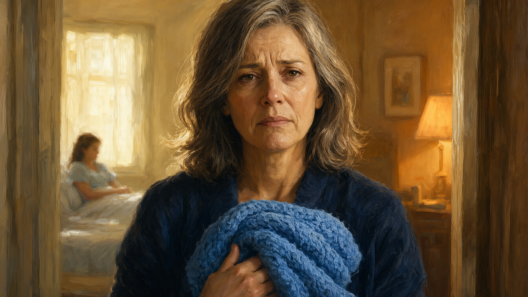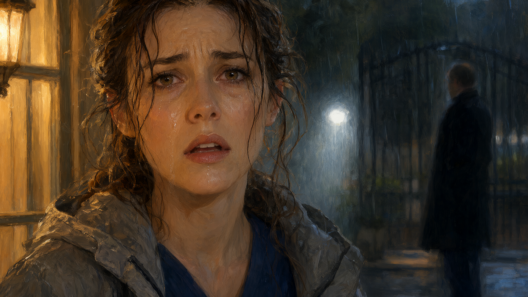
He looked up at me — fevered, bleeding, in front of his mother, his bride, every wolf of Coldbrook — and said: “I yield to you, Sadie Hollis. Take all of it.”
So I took it. The fever and the silver burned a line up my arm. Tommy next — he gave it to me the way a brother does. Then Ben, who had come through the gate with a cub under each arm and a fresh bite on his ribs.
The pack did not run. Two hundred wolves howled my name while I carried stilling after stilling, because that is the rest of the law: alone, a Warden burns at one; held by her pack, she carries three.
Half-blind, I walked up the ridge to the oldest ironwood — half-cut before the rogues struck. I opened my palm on the axe scar and pressed my blood into the trunk.
The Hush lit like poured moonlight, tree to tree, down the ridge.
Gerald Kingsley ran to me. “Please. My son’s turning.”
“Then here is the price. The Kingsley Group voids the ridge lease tonight and pays the Coldbrook note. In full. By morning.”
“Agreed. Whatever you want. Agreed.”
I stilled Miles. Four, by the time I was done. Past three, the silver stays. Then the ground came up to meet me, and the last thing I heard was Bill, from the lodge steps: “Before this wedding goes any further, the trust lawyer will read from page nine.”
I woke three days later with a line of silver up my forearm that never went away. I would pay it again.
Here is what the reading did. Alan Reyes read the lease. Bill read from the pack’s ledger, page 212 — the night Ansel Thorne died. “The Luna refused the second stilling. Mrs. Hollis said he needed one more night. Mrs. Thorne said she’d burn her before she let her touch him again. He died at dawn.”
Two hundred wolves heard what Cade had never known: his mother buried his father with her pride. “You were my mother,” he told her, arm in a sling. “Hand the trust to the council.”
Verity denied it, then bargained, then begged him not to leave her with nothing. Too late: the council stripped her seat, moved her out of the lodge, and gave her the broken cabin on the north road. She kept her life. Nothing else.
The Kingsleys left that night. Paige dropped her ring in the snow and told Verity, “We don’t marry lies.” The lease died. The note was paid by morning.
The council gave me the ring my grandmother’s name was on: Warden of Coldbrook, seat, house, and line. The fall’s two fever-cubs were whole by spring. Tommy shifted on the first warm moon, out where the new ironwoods were ankle-high — a gray-brown thing the size of a pony, running the line like he’d been born to it. He had.
Cade came up the ridge that evening, arm in the sling. He had done the things that go in writing — the ridge deeded to the Warden’s keeping, his mother’s name off the trust. He had taken one step toward me that night, he said. He should have taken the second. He was taking it now.
“What do you want, Cade?”
“You.” Plain. No moon in it. “Not a bond. Not fate. The moon took that from me, and it should have. I want you to choose me with nothing pulling you. And if you don’t, I’ll hold this line beside you until I’m old.”
I looked at my palm. The brand had faded to a thin silver line. A scar now. Not a sentence. The moon never wrote our names again, and that was the point: what I had with Cade was mine, chosen every morning.
“One rule,” I said. “No decision for this pack you wouldn’t say out loud in front of me and every wolf in it.”
“Done,” he said. “I’ll say that one twice.”
Tommy raced past us down the new line, toward the safe valley. At the edge of the spring circle, a woman in a borrowed coat watched the seat that used to be hers. Nobody made room. She left before the fire was lit, and nobody watched her go.
The pack calls me Warden now. The man who called me nothing stands beside me on the ridge in the evenings, under no moon at all — because I chose him. Because I said so.