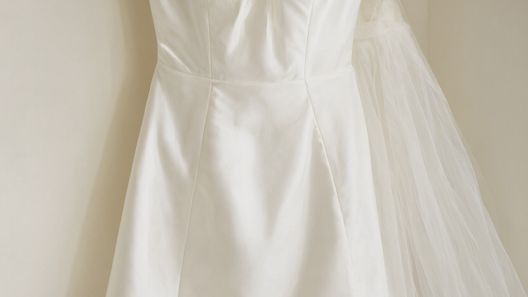
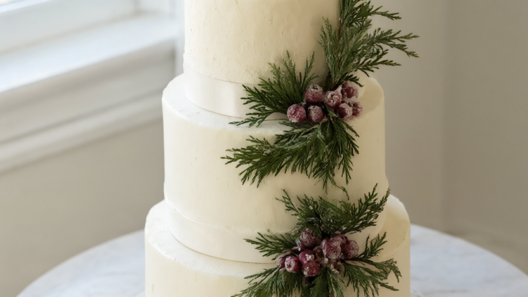
A winter wedding asks a bouquet to do two jobs at once: look alive against bare branches and hold up through cold air, low light and a long day of photographs. The six arrangements below lean on white blooms, evergreen foliage, silver texture and a single cool blue accent, so they read as seasonal without tipping into holiday decorating. None of them needs an exotic flower list; most rely on stems a good florist can order in November or January, and each one is written so you can describe it in a single sentence. That sentence is usually the difference between the bouquet you pictured and the one that arrives on the morning.
1. Snowberry and White Ranunculus
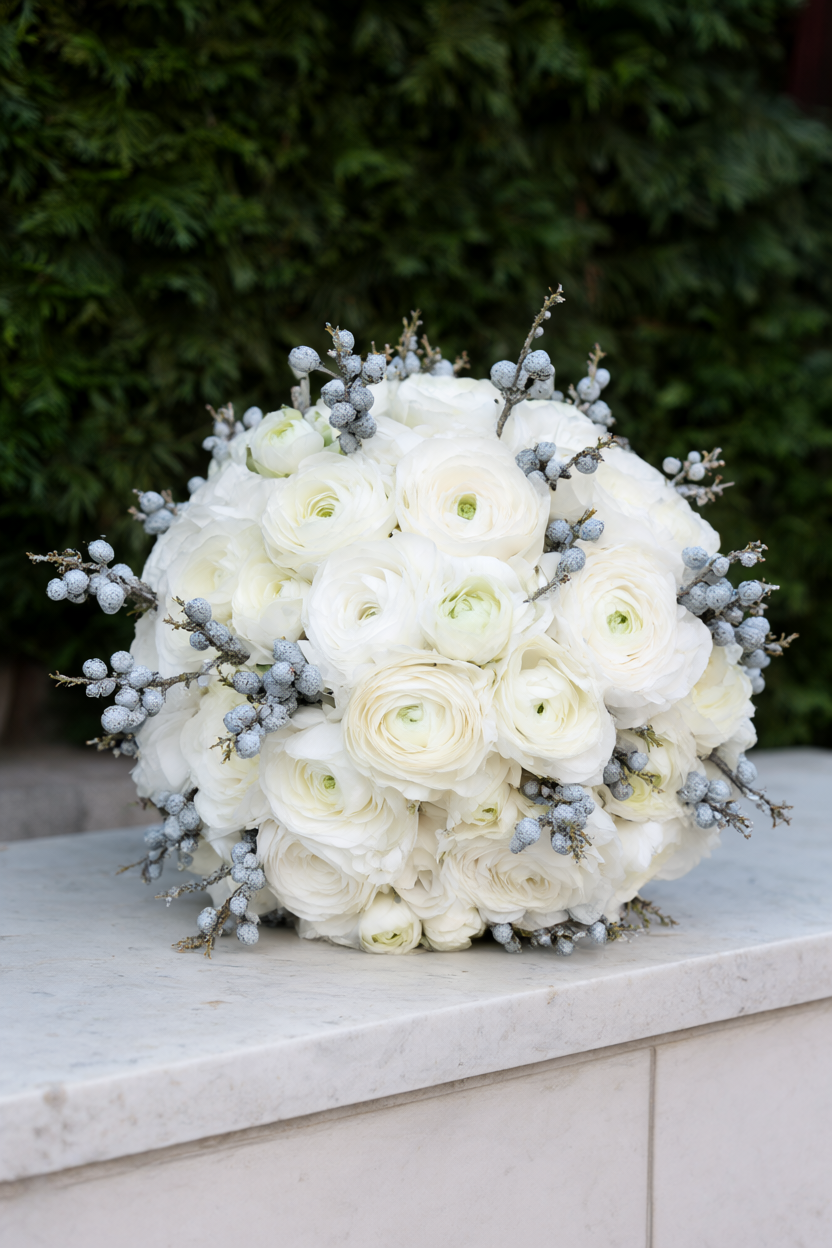
Ask for a compact, rounded bouquet with short stems and a binding kept low, so the white ranunculus sits in a tight dome rather than stretching upward, and have the florist tuck snowberry branches in small clusters at the edge so the silver-grey berries show between the blooms. A few stems of brunia add a soft metallic finish, and the whole thing reads crisp against a dark coat or a plain white dress, which is why it suits small venues and close-up photographs. Condition the ranunculus in cool water overnight, keep the finished bouquet away from radiators and direct sun, and ask for the stems to be trimmed only on the morning of the wedding.
2. Evergreen and White Amaryllis
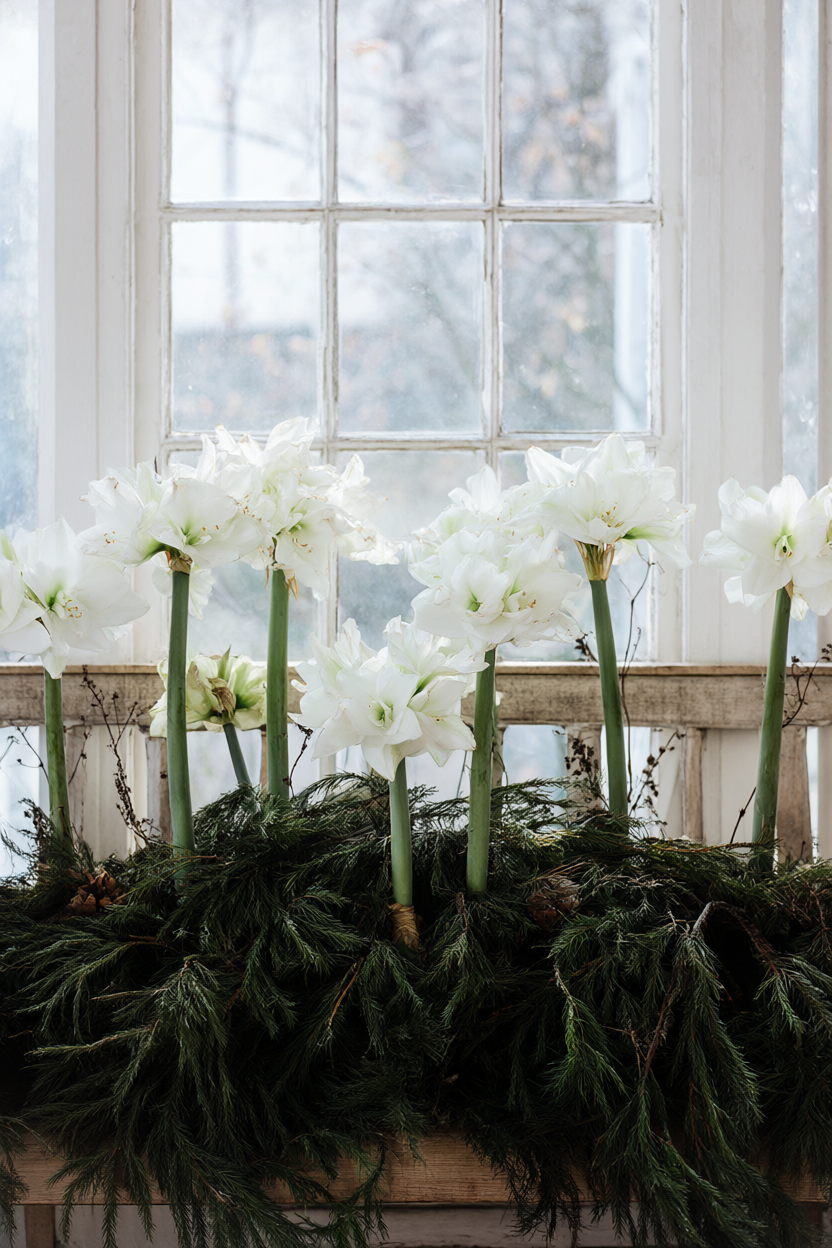
Leave the amaryllis stems long so the white blooms sit above the greenery instead of being swallowed by it, and ask for a mix of cedar, pine and magnolia leaves to give the base weight, scent and a little movement. Keep the palette strictly green and white; a coloured ribbon or a cluster of red berries will pull the arrangement toward Christmas rather than winter. Have the florist remove the yellow anthers from each amaryllis as it opens, because the pollen stains white petals and fabric, and expect the buds to open further across the day, which is part of the charm.
3. Hellebore and Trailing Ivy
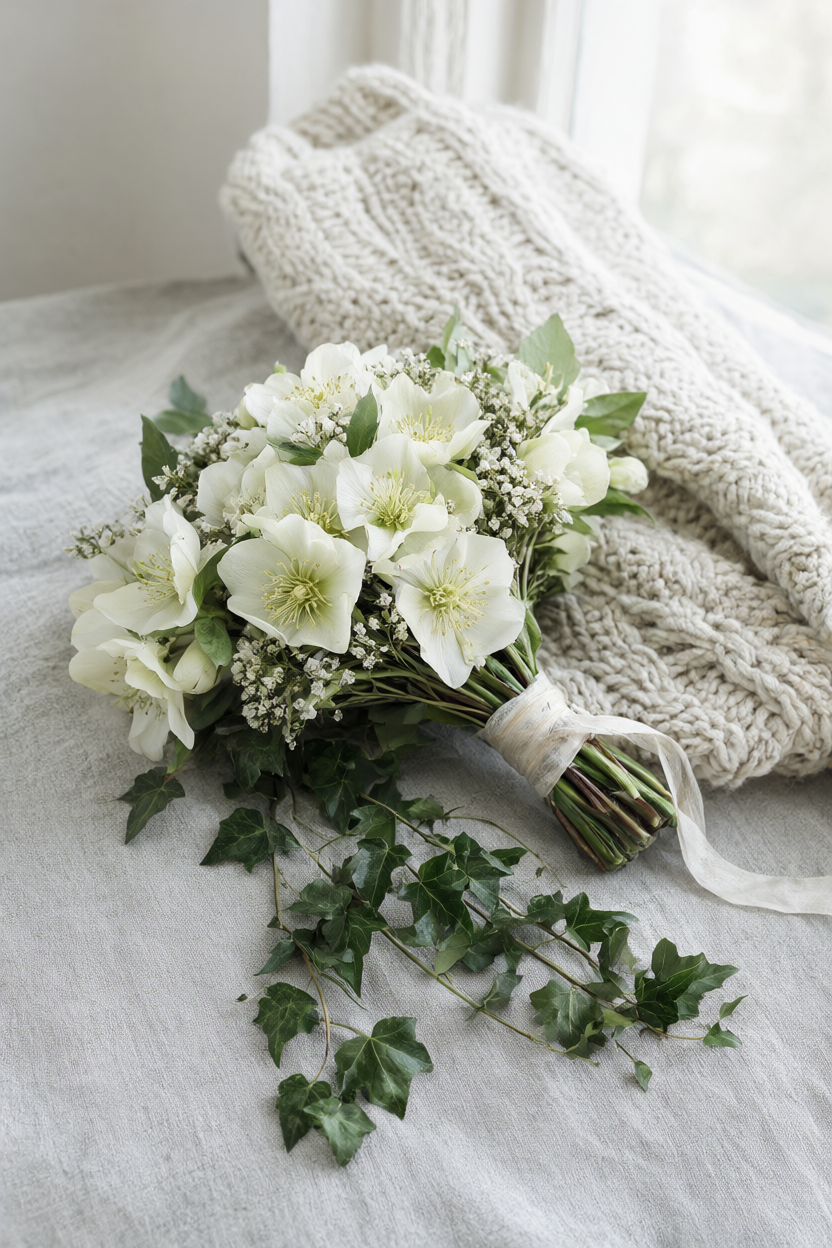
Ask for a loose, just-picked shape with ivy falling past the binding on one side, so the bouquet looks garden-grown rather than wired into a ball, and keep the hellebores slightly uneven in height for the same reason. Hellebores are thirsty and fade quickly out of water, so have the florist keep them in a bucket until the last moment and wrap the stems in damp cloth for the journey to the venue. A few jasmine vines can be tucked among the ivy for scent, but check that any trailing ends are sealed or wired so they do not bruise against the dress.
4. Blue Thistle and Garden Roses
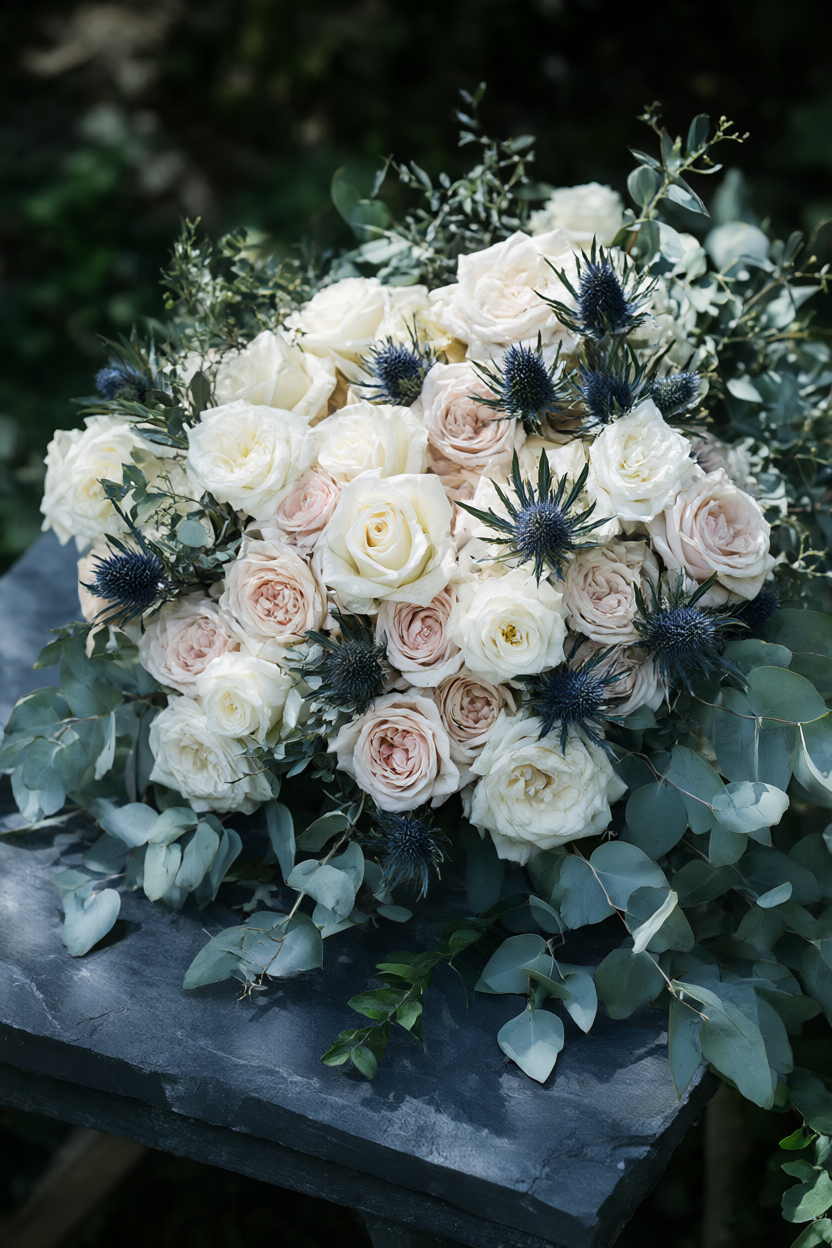
Use three or four steel-blue eryngium heads at most, set among white and blush garden roses and a little dusty miller, so the blue stays an accent rather than the whole story. The colour comes from the plant itself, which gives you a cold-weather note without dye that can rub off on hands, petals or a white dress. Ask the florist to trim the thistle spines and wire the rose heads if the bouquet will be carried through a long ceremony, and pair the result with a blue-grey suit or a silver dress rather than warm tones.
5. Silver Foliage and Ivory Ribbon
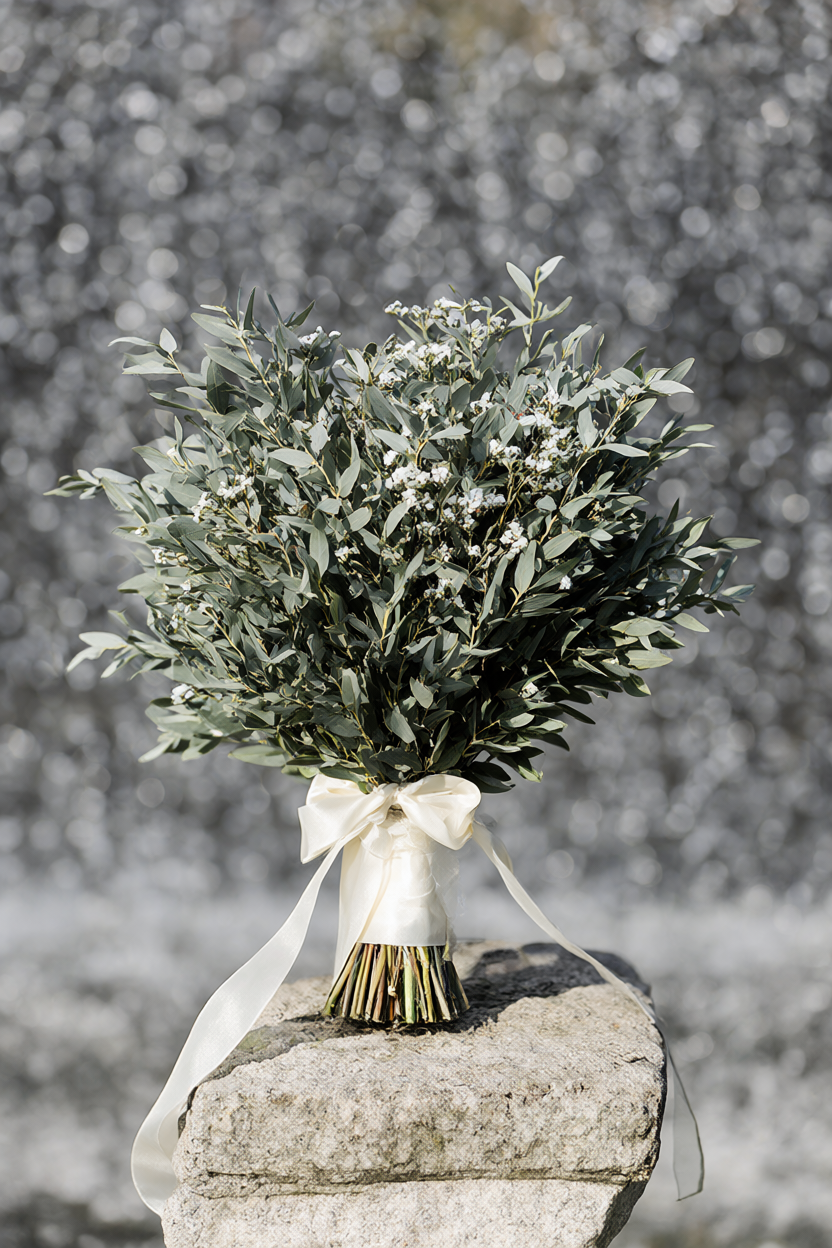
Build the bouquet almost entirely from silver brunia, dusty miller, eucalyptus and olive foliage, then tuck in just a few ivory spray roses so the texture does the work and the flowers stay a quiet detail. Bind it with a wide ivory silk ribbon, leave the ends long and soft, and skip the tight bow, which reads formal where a simple wrap keeps the shape modern. This is the one to choose when the dress is beaded, embroidered or heavily textured, because a busier bouquet would compete with the fabric instead of finishing it.
6. Frosted Berry and Magnolia
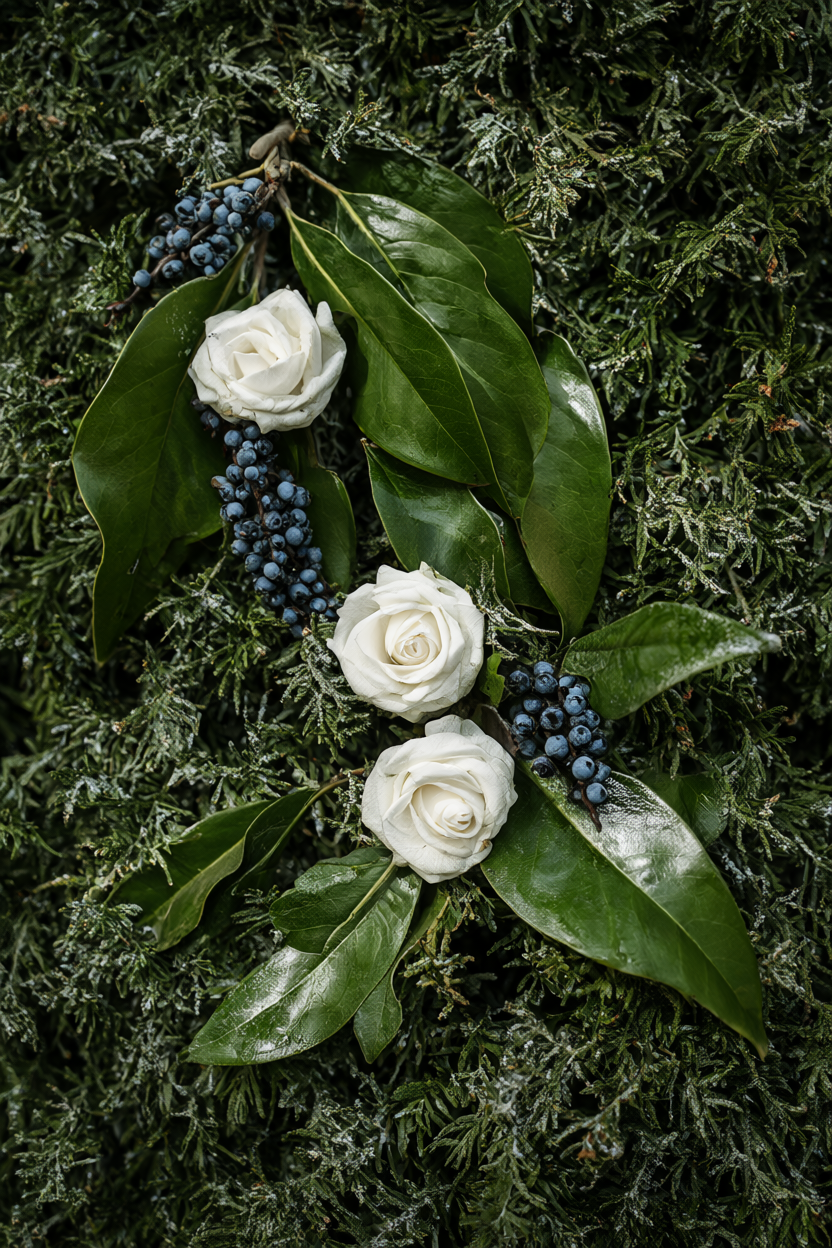
Combine glossy magnolia leaves, white spray roses and a few clusters of blue-black privet berries, keeping the berries sparse so the shine of the leaves stays the main event and the bouquet still reads green rather than festive. Too many berries tip the look toward holiday decorating, so treat them as punctuation rather than filler, ask the florist to wire each cluster so it holds its position, and check that the stems are conditioned so the leaves keep their gloss through a cold ceremony. A short, hand-tied shape works best with a fitted sleeve or a cape, and it keeps the weight close to the hand for a long day.
A winter bouquet works best when it looks like it grew in the season rather than borrowed its colours from a greeting card. Bring two or three of these references to your florist, talk about the dress fabric and the light in the venue, and let the stems stay simple. If you are marrying in a room with dark wood or candlelight, choose the silver-heavy bouquet; in a bright space, the white-and-green amaryllis will hold its own. The right cold-weather bouquet is the one you can describe in a sentence and still recognise on the morning.