There is a particular kind of light in these rooms: a lamp on in the corner while the sky outside goes dark, the carpet warm under bare feet, the television humming before anyone has said a word. They are the living rooms of the 1970s and 1980s, and if you grew up then, your body probably remembers them before your mind does.
Scroll slowly and count how many of these stood in your own house. The console television on the shag carpet, the phone with the cord that lived in a tangle, the coffee table with the tape and the rescue pencil. Some of us had all ten. Some had one and borrowed the rest from a neighbor or a grandmother. Either way, the rooms on this list were built to be lived in, and they still look like a Saturday evening at home.
All photos in this gallery are AI-generated illustrations.
1. The TV That Ran The Whole House
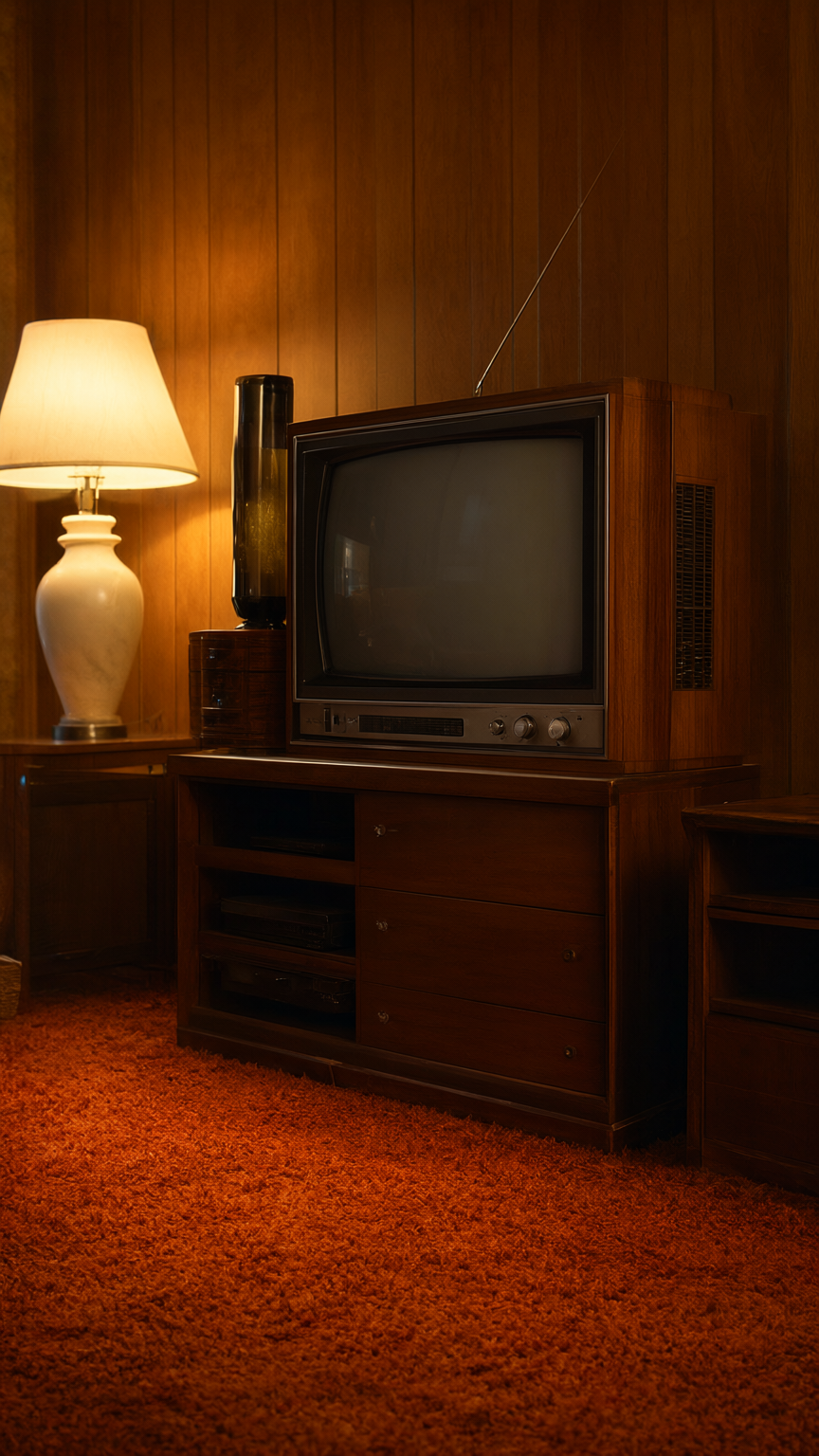
The television was less a screen than a piece of furniture, and the whole evening orbited it. You can probably still hear the click of the dial going around, feel the deep hum that started before the picture arrived, and smell the warm dust that collected around the back of the cabinet. At our house the rule was simple: the person nearest the set got up to change the channel, and nobody was allowed to touch the antenna once Dad had the picture straight.
Those sets worked with a cathode-ray tube, which is why the cabinet was so deep and why the picture took a moment to bloom across the glass. If the antenna was bumped, the image rolled and everyone shouted at once. Did your family make someone stand there holding the antenna too?
2. The Cord That Reached Every Room
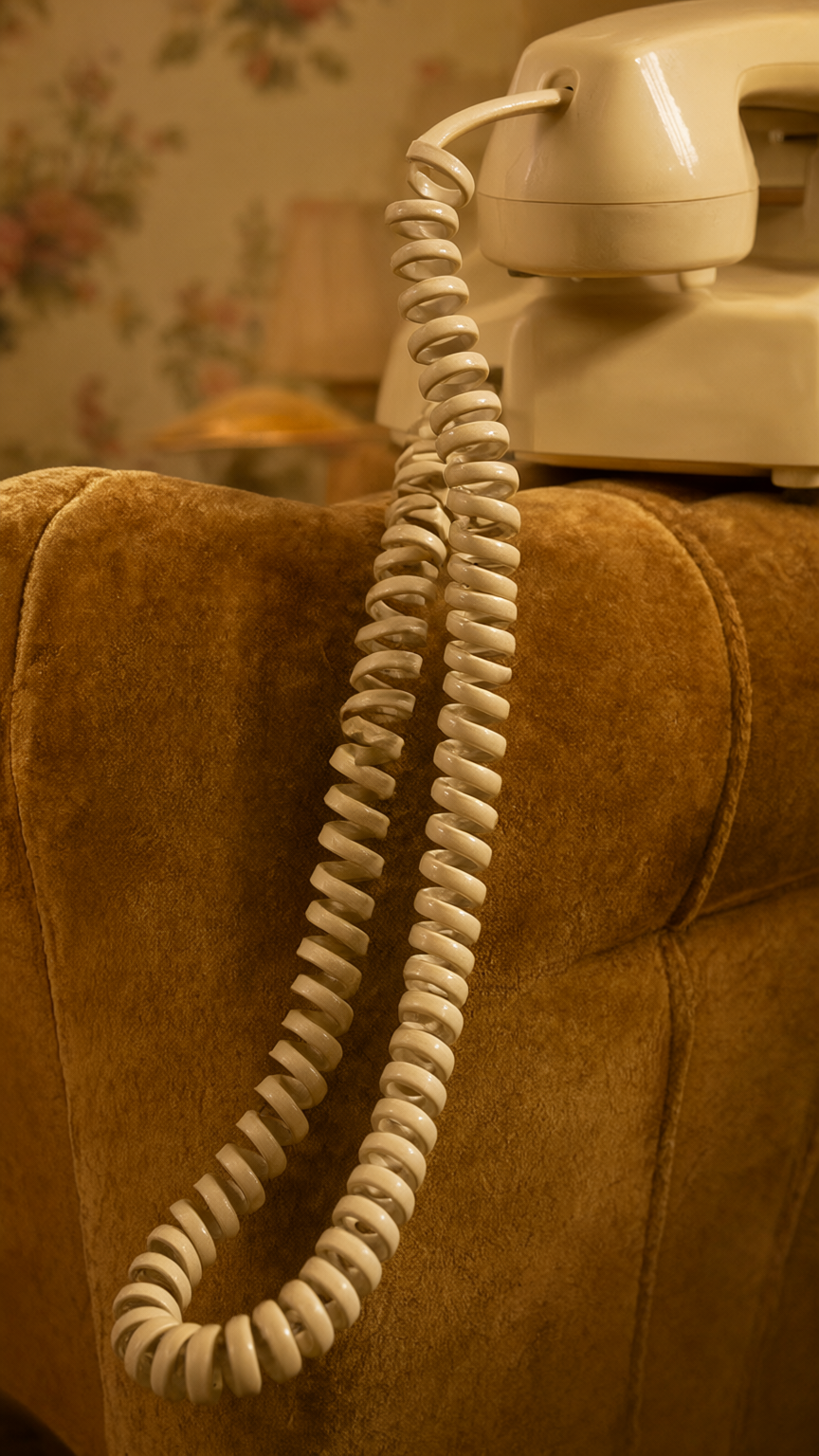
That coiled cord was a kind of border, and everyone knew exactly where it stopped. You could stretch it from the hallway table into the kitchen doorway, maybe one room further if you leaned, but the moment you stepped past that the handset was dragged back with a wooden clunk. The plastic smelled faintly of dust and warmth, the dial clicked and whirred back after every number, and the rule at home was that long calls waited until after supper, when the rates dropped.
Those phones sent pulses down the line instead of tones, one click for each number as the dial spun home, which is exactly the sound you remember. A shared party line meant a neighbor might already be talking when you lifted the receiver. Did your house have a rule about keeping calls short too?
3. Two Tapes And A Rescue Pencil
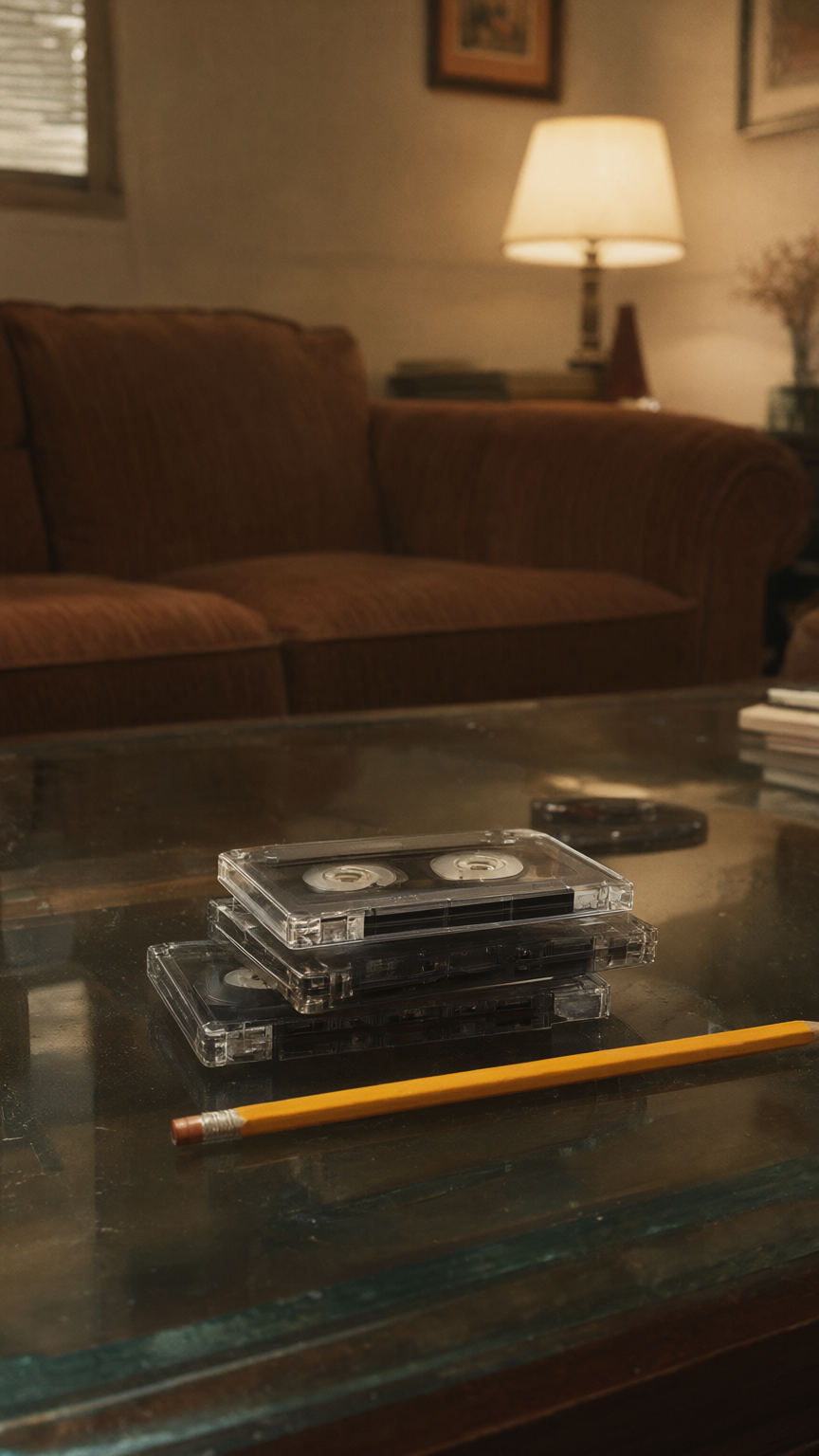
The tape went in with a soft snap and a hiss that lasted a second before the music started, and the plastic case always smelled a little like the inside of the glove box. If the ribbon spilled out, somebody reached for a pencil, pushed it through the hub and wound the tape back by hand while everyone waited. The rule at home was that tapes never stayed on the dashboard, because the sun would cook them into a warped, wobbling mess.
The pencil works because it fits the center hole and its flat sides grip the hub, which is why every car seemed to carry one. Cassettes store sound as a magnetic pattern on thin tape, so a stretched ribbon really does change the song. Did you keep a pencil in the glove box for exactly this?
4. An Owl Watching Over The Couch
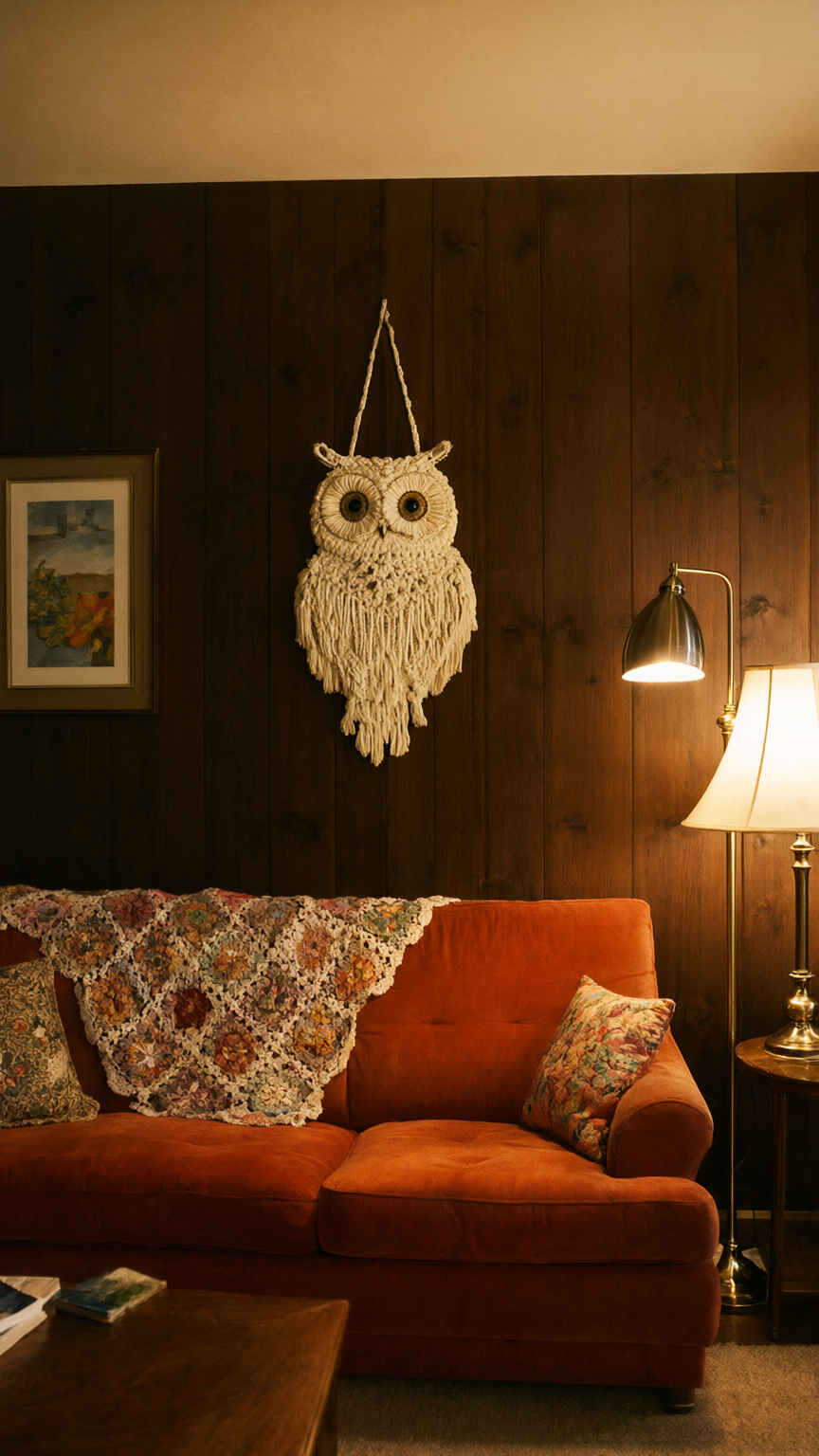
The owl hung above the sofa like a small guardian, all cream knots and long fringe, and it collected dust in a way that made the whole room smell like wool when the heat came on. The afghan underneath was crocheted in squares of orange, brown and gold, and the rule at home was that nobody dragged it onto the floor. You could sit under it, but the fringe had to stay off the carpet.
Macramé is made entirely of knots, worked by hand with no needles or loom, which is why the owl had such a heavy, satisfying texture. Owls were everywhere in 1970s wall decor, usually watching over a sofa just like this one. Was there an owl in your house too?
5. The Lamp That Made Its Own Weather
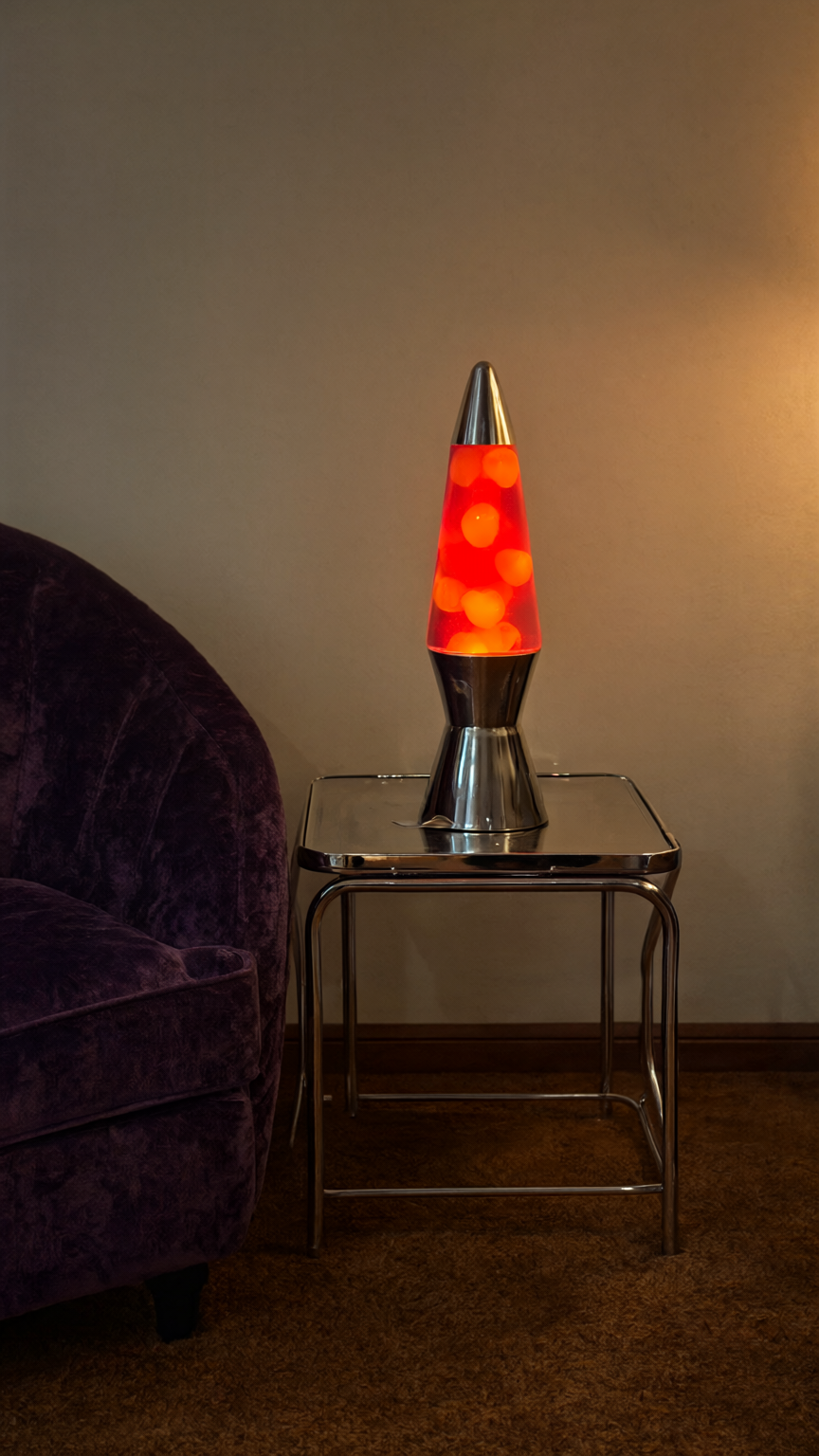
The lamp sat on its chrome table like a small private planet, and the red wax inside rose and fell so slowly that you could lose a whole television commercial watching it. The bulb underneath threw off real heat, the glass was always warm to the touch, and the rule at home was that nobody shook it, no matter how tempting the blobs looked. At night it painted a soft red circle on the wall.
The trick is simple physics: the bulb warms the wax at the bottom until it floats up, and it sinks again as it cools near the top. The liquid around it is chosen to match that dance. Did yours get left on all night?
6. The Corner Where Every Party Started
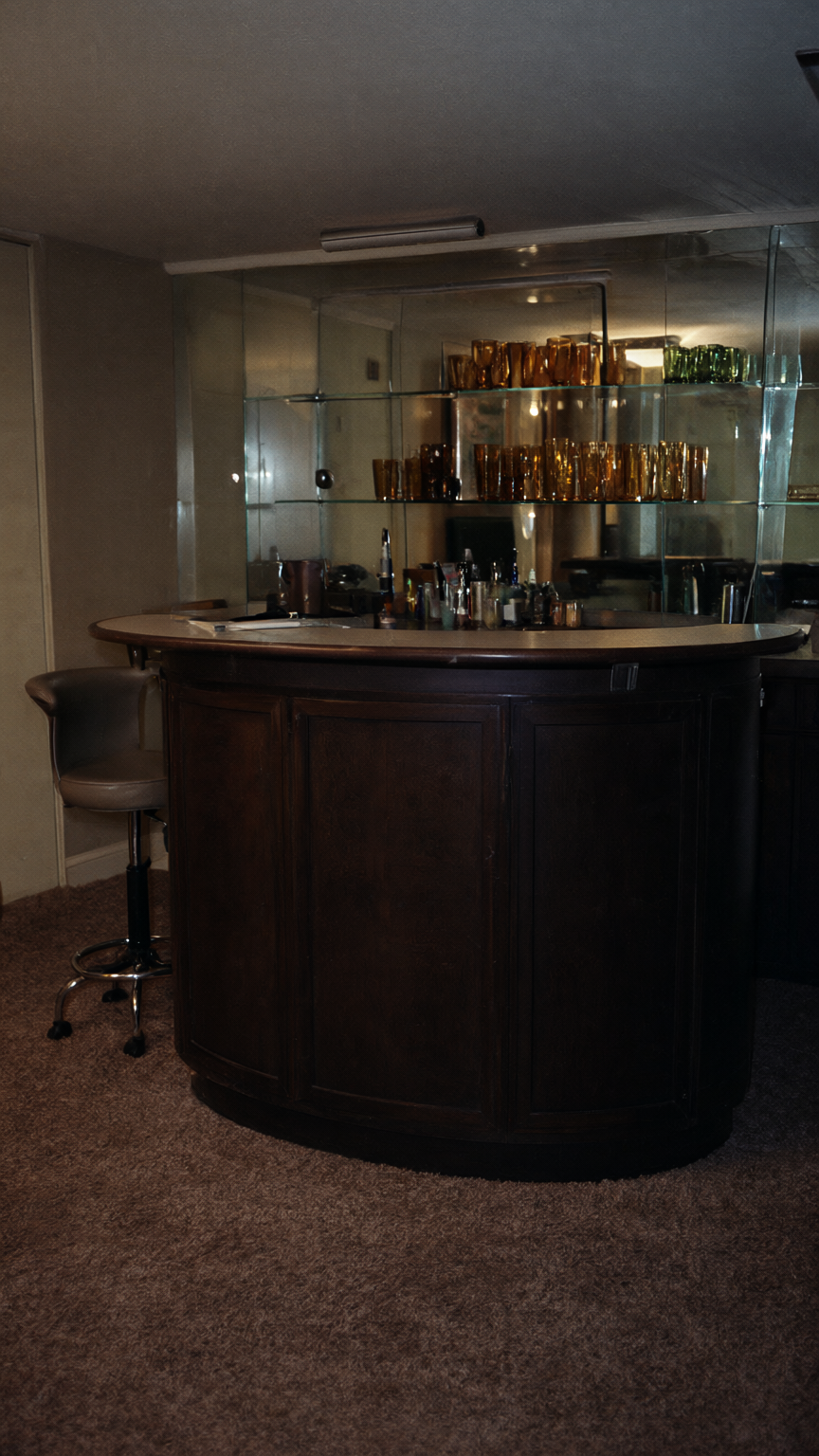
The bar lived in the basement, where the carpet was thicker and the light was always a little dim, and the padded front was perfect for leaning an elbow while you talked. Behind it, the mirror doubled the shelves of amber and green glasses and made the corner feel twice as big. The smell was carpet, cold glass and whatever had been poured last. The rule at home was that the kids got ginger ale with a cherry and felt very grown up about it.
A mirror behind a bar does more than decorate; it bounces the lamplight around and makes a small room read as a larger one. That is why so many basement bars of the era were built against one. Did your basement have a corner like this?
7. Where The Records Lived
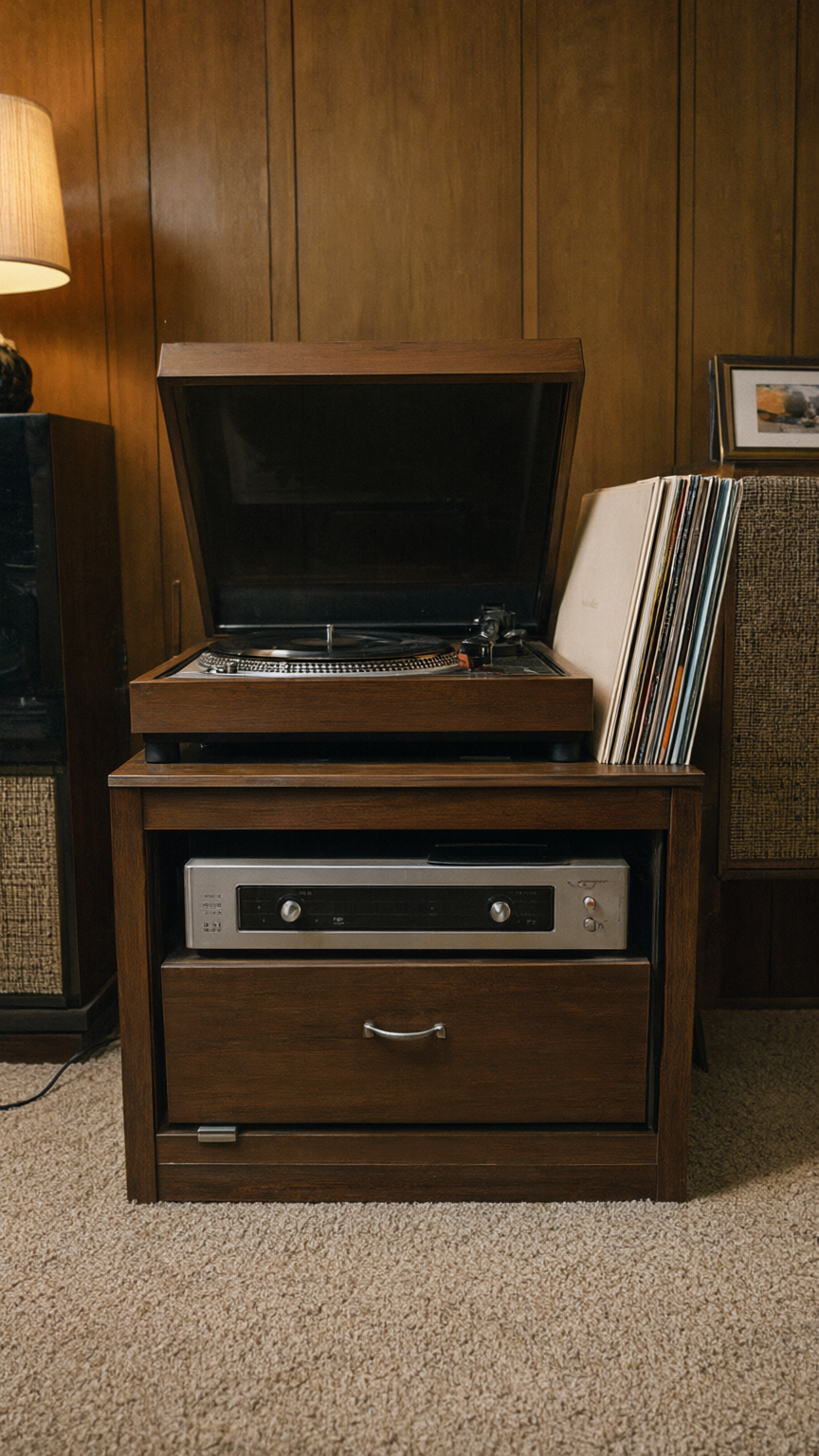
Lifting the lid of the console was its own small ceremony. The turntable waited inside, the arm rested in its clip, and the whole cabinet smelled of dust, warm wood and the paper sleeves of the records stacked beside it. You put the needle down carefully, waited through the crackle, and then the room filled up. The rule at home was that nobody touched the arm but Dad, and nobody breathed too hard while the record was playing.
A console stereo packed a turntable, a radio and speakers into one piece of wooden furniture, which is why it took up half a wall. The needle is really a tiny stylus that rides the grooves and turns their shape into sound. Did you have one record you were allowed to play yourself?
8. Dinner On A Folding Table
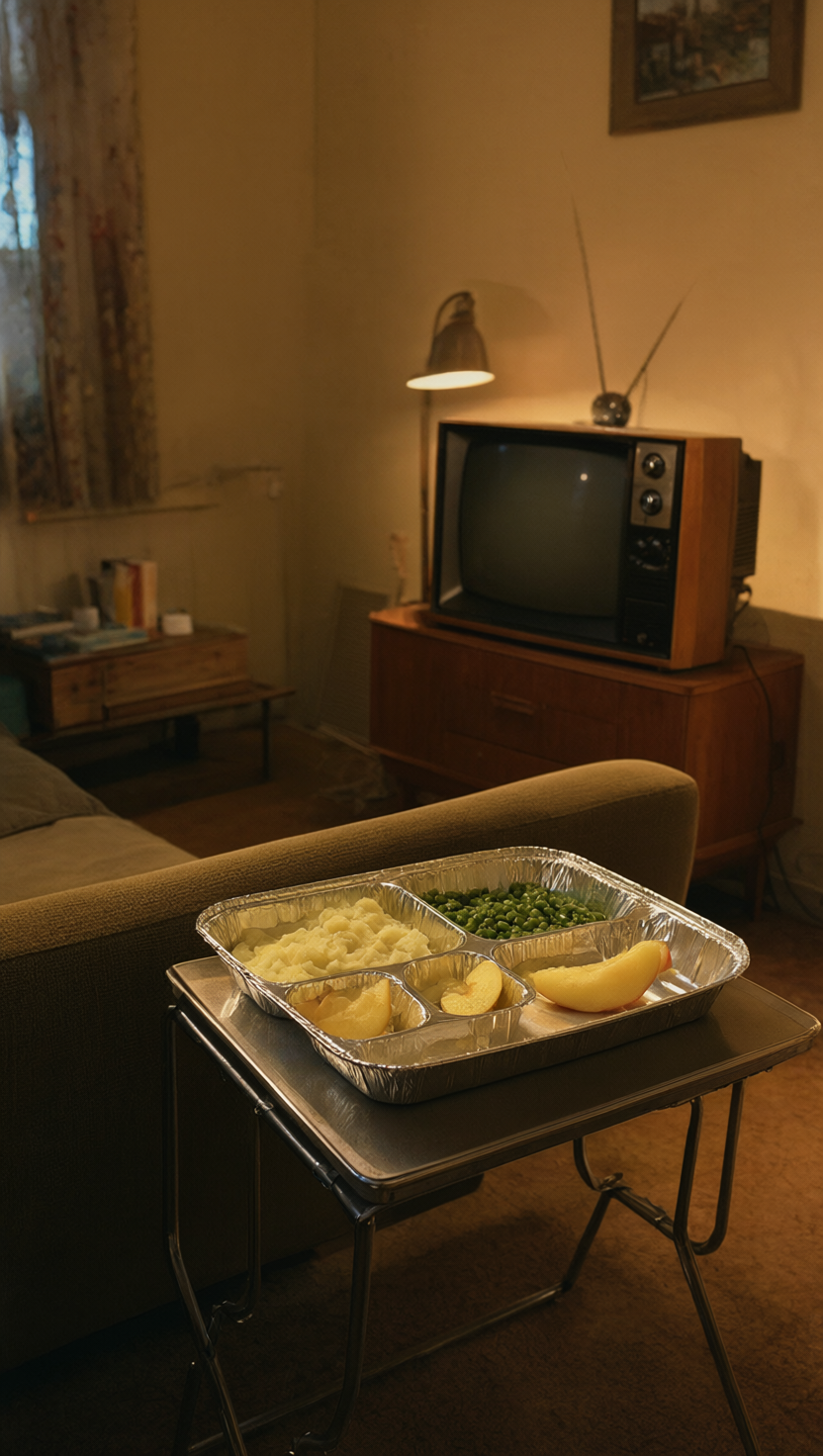
The tray table came out of the closet with a metal clack, and the foil dinner went straight from the oven to the folding top, steaming so hard that the little compartments fogged over. Peas rolled into the potatoes, the apple slices stayed suspiciously cold in the corner, and the whole meal tasted faintly of foil. The rule at home was that eating in front of the television was for special nights only, which made the plastic tray feel like an event.
TV dinners got their name from the new habit of eating while the set was on, and the compartment tray itself came from airline food service. One foil pan, three sections, no dishes to wash afterward. Which compartment did you always save for last?
9. The Mantel That Held Every Sweet
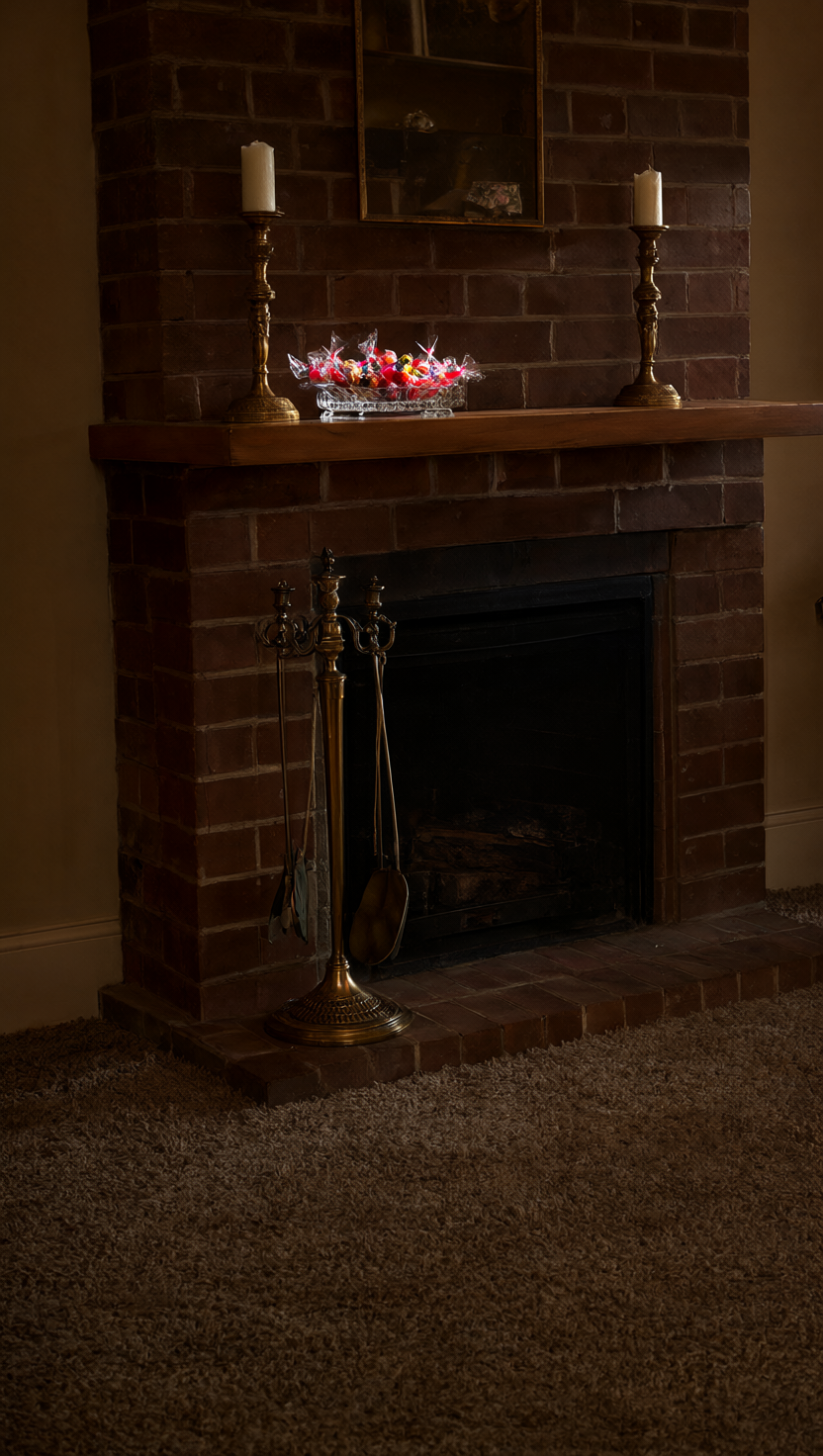
The candy dish sat on the mantel between the candlesticks, and the wrapped sweets inside slowly stuck together until you had to pry one loose. The room smelled of cold brick, wood smoke and the faint sweetness of cellophane, and the brass tools by the hearth were strictly for looking, never for playing. The rule at home was that you asked before you took a candy, and you never took the last one.
Brick is heavy and dense, so a fireplace like this keeps heat long after the flames die and gives it back to the room slowly. That is one reason old brick hearths feel so warm even when they are cold. Was there a candy in that dish you always picked first?
10. The Couch That Sat Down First
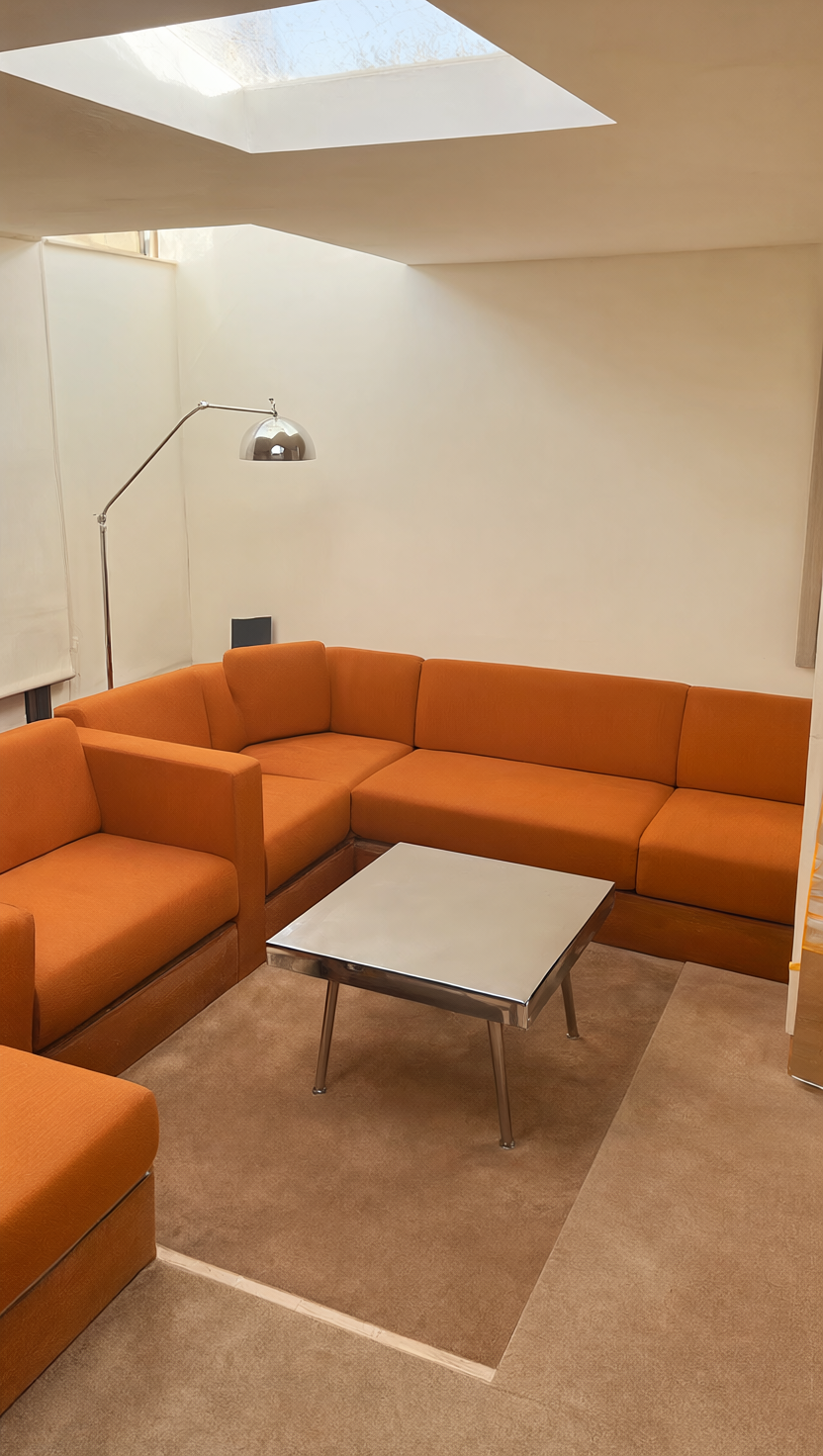
You stepped down into the pit and the rest of the house disappeared, which was the whole point. The seating was built in, the cushions were low, and the chrome table sat at the bottom like a small stage. Daylight came from the skylight above, so the orange fabric glowed in the afternoon and the corners stayed cool. The rule at home would have been no shoes on the cushions, and probably no jumping off the top step either.
A conversation pit lowers the seating below the floor, so it makes a separate room without a single wall. The idea was popular in mid-century design because it turned a big open space into somewhere intimate. Would you have wanted one in your house?
Somewhere on this list there is one room that took you straight back, and you probably knew which one before you finished scrolling. Perhaps it was the lamp, or the tray, or the phone with its stubborn cord. Keep that one. These rooms are gone from most houses now, but they are not gone from us.