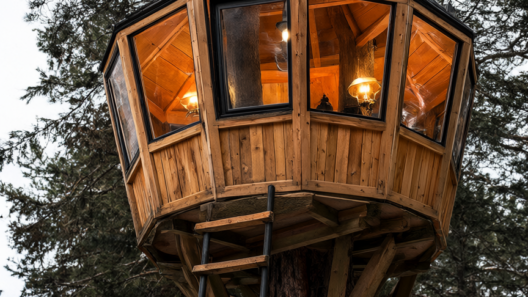
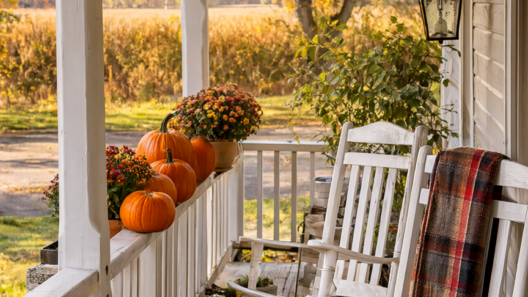
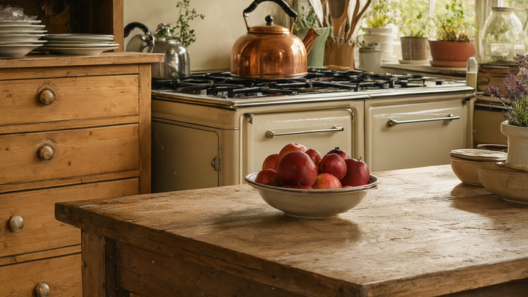
There is a particular feeling that comes with stepping into a room built around a fire. The air is warmer near the hearth, the light moves, and the rest of the house seems to slow down. These twenty rooms travel from a whitewashed cottage to a cave house, and each one holds the cold at bay in its own way.
Take your time with them. Notice what each room does with color, texture and light, and let one idea follow you home: a blanket draped where you can reach it, a lamp placed lower than you expected, a chair turned toward the fire instead of the television.
Nothing here is a rule. It is a gallery of small suggestions, and the best one is whichever makes you want to stay a little longer.
All photos in this gallery are AI-generated illustrations.
1. The Doorway That Pulls You In
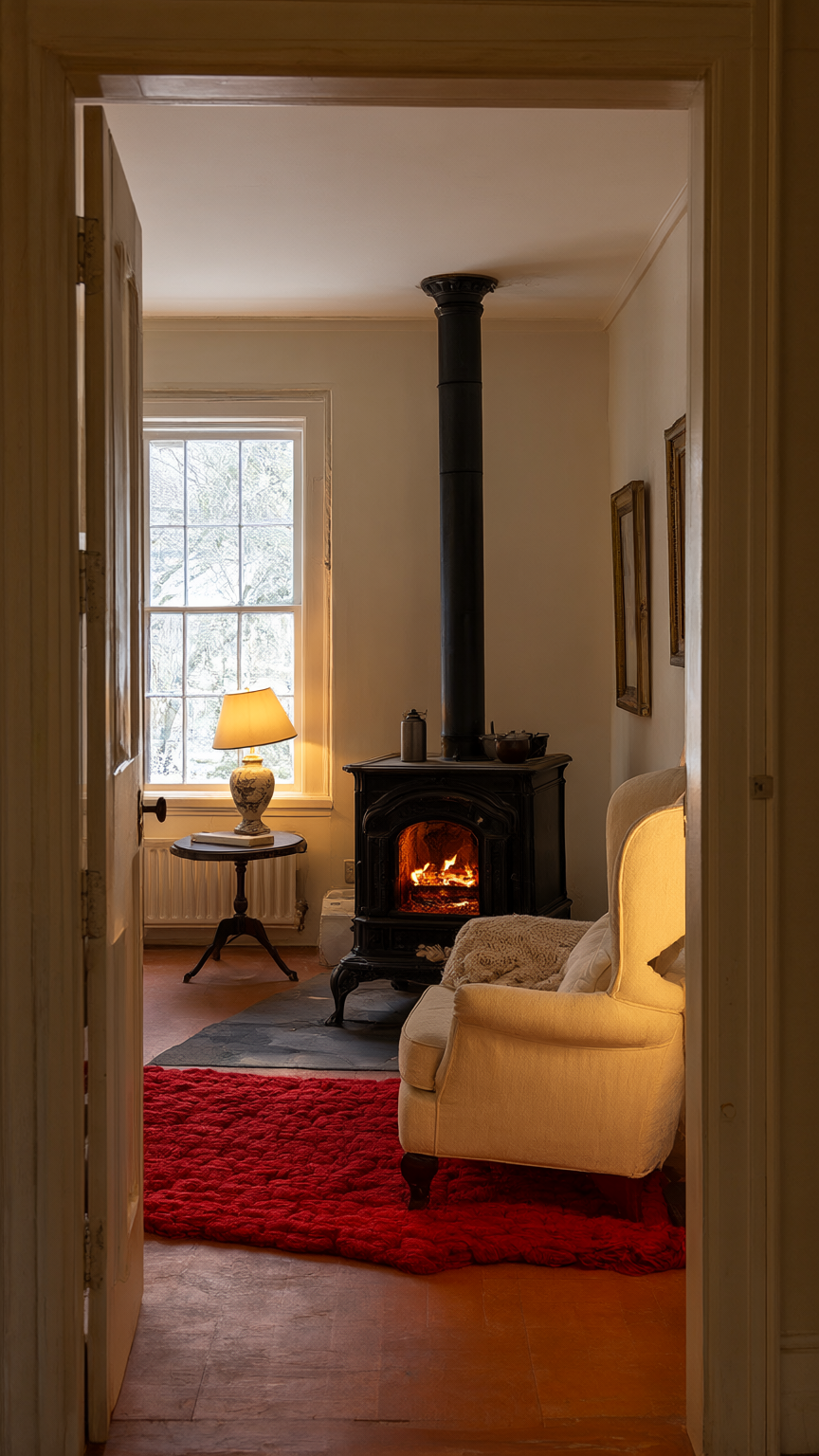
You come down a dim hallway and the room ahead does the inviting. A black stove ticks, its door glowing at the edges, and the red braided rug gathers the warmth. The cream wing chair is angled toward the fire, as if someone has just risen. Snow presses at the window, and the air smells of woodsmoke and old wool.
The idea to borrow is the framed view. Keep one sightline from a hallway or kitchen deliberately clear, and let the warmest corner be what you see first. A single chair, a small rug and one low lamp can do the work of a whole redesign.
2. White Walls, Black Stove
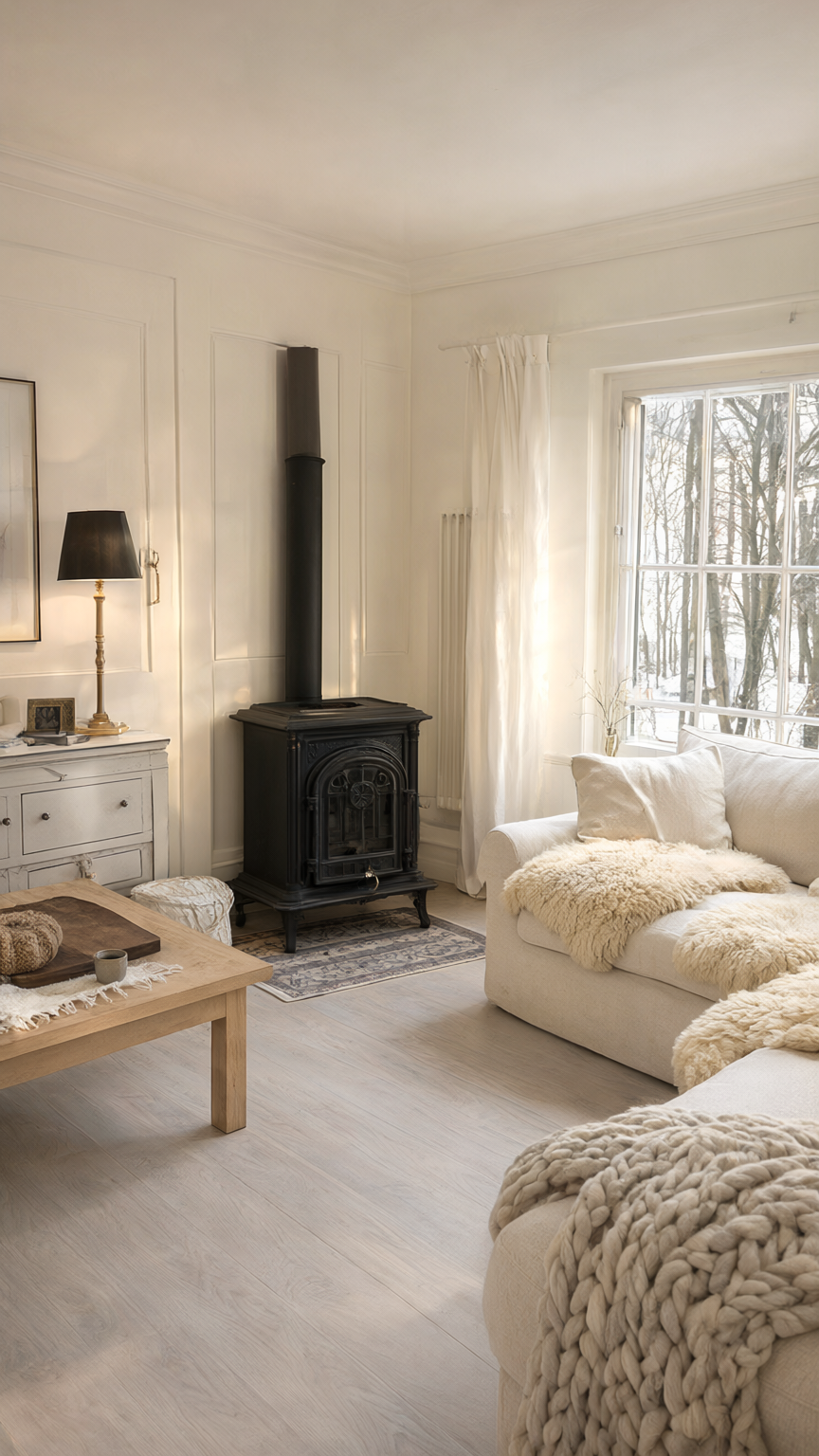
The first thing you notice is how quiet white can be. A black stove sits like a full stop in the room, and the linen sofa, sheepskin and chunky throws soften every edge. Outside, snow holds the birches in a pale hush; inside, the fire makes the only sound.
Borrow the discipline of one dark anchor. Pick a single strong object — a stove, a black chair, a deep-toned cabinet — and let everything around it stay light and textural. Then add layers you can touch: a wool throw folded where you sit, a sheepskin over the arm, a cushion that invites you to sink in. The contrast does the decorating, and the softness does the living.
3. Orange Sofas, Walnut Walls
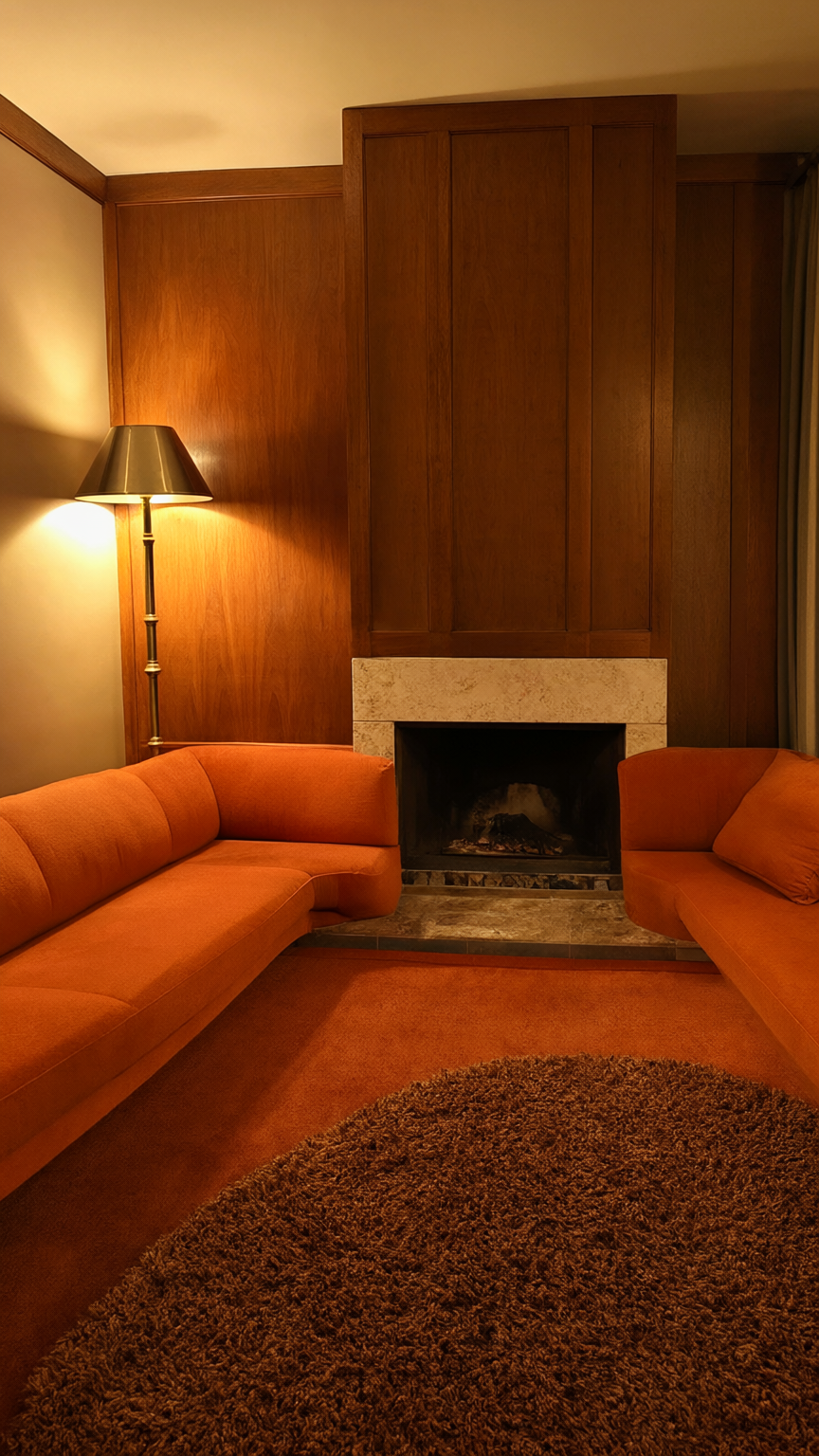
This room smells faintly of warm wood and something sweet left on a side table. Two burnt-orange sofas face a stone fireplace, and the walnut paneling makes the lamplight turn amber. The brown shag rug is deep enough to hide your feet, and the brass lamp leans over it all like an old friend.
Borrow the courage to repeat one color. Choose a shade you love, then let it appear three times — on a sofa, a cushion, a lampshade — so the eye can travel around the room and come back. Keep the wood warm and the lighting low. Repetition makes a strong color feel intentional, and it gives a modern room the same easy confidence.
4. Emerald Cushions and Blue Tile

Cool air moves through the arch from the fountain, carrying the mineral smell of wet tile. Emerald velvet banquettes wrap the walls, and a carved brass table sits low in the middle, catching light from the pierced lanterns. Blue tile climbs the walls in patterns that seem to shift as you look.
Borrow the low, sociable center. Instead of pointing furniture at a screen, arrange seating in a loose ring around a low table, close enough that people can reach the teapot without getting up. Add one patterned surface — a tray, a tile-topped table, a textile — and keep the rest calm. The circle changes the conversation; the pattern gives it somewhere to rest.
5. Turf Smoke and China Blue
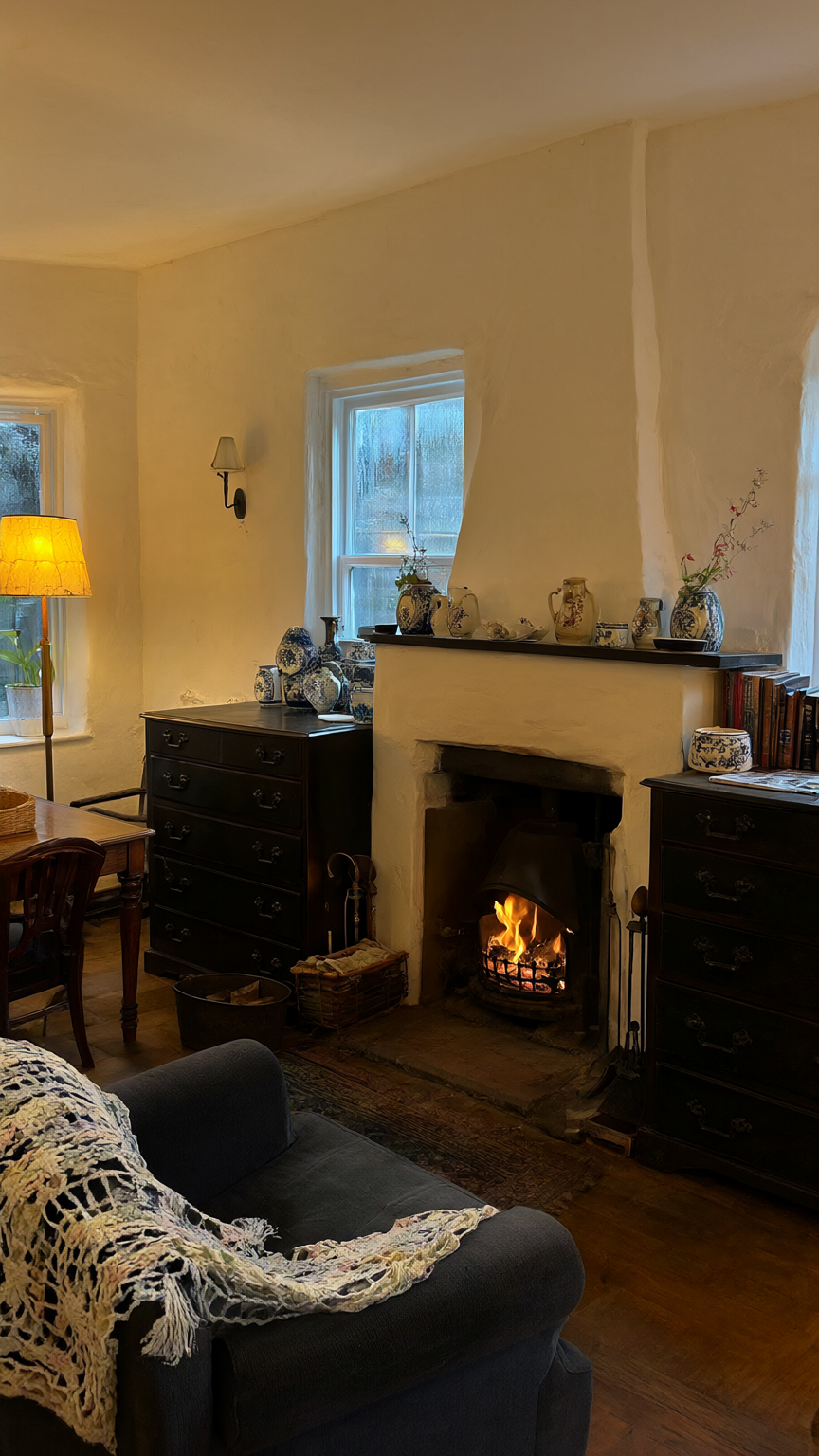
The turf fire gives off a dry, earthy smell that settles into the walls. A blue-and-white china dresser stands against the whitewashed hearth, every plate in its place, and a crocheted throw is folded over a deep armchair. Rain moves down the window in slow lines. You can almost hear a kettle starting to whisper.
Borrow the open dresser. Give your everyday dishes a proper stage instead of hiding them behind cabinet doors: a shelf, a hook, a row of mugs in plain view. It turns useful things into decoration and makes the room feel lived in rather than staged. Keep the background pale and let the blue and white do the talking.
6. Under the Kotatsu Quilt
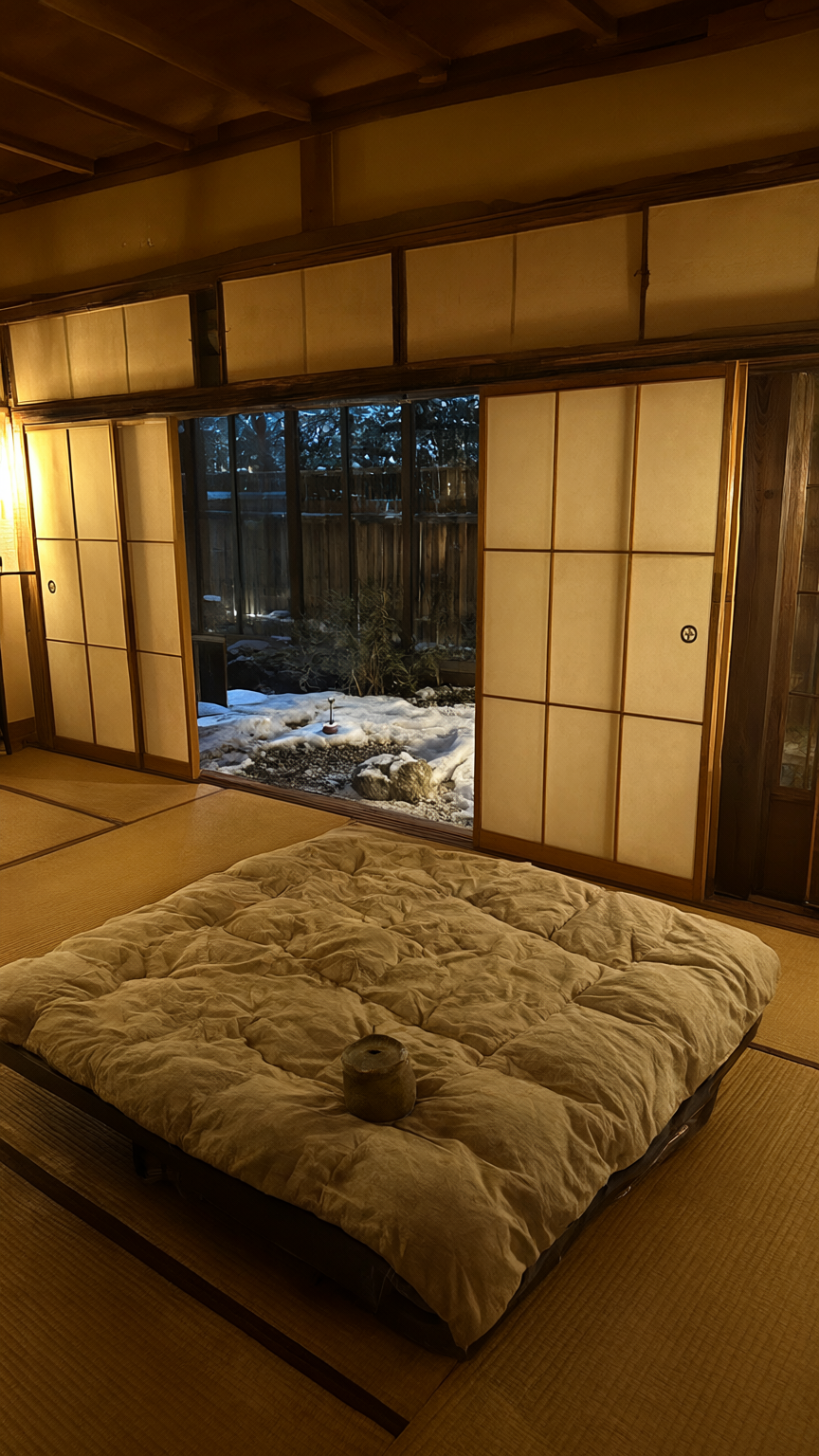
The room asks you to sit on the floor, and that is the whole point. A thick quilted kotatsu fills the center, a teapot resting on top, and the shoji screens glow like paper lanterns. Beyond them, snow sits on the stone garden in perfect silence. The tatami smells of dry grass, and the warmth gathers around your knees.
Borrow the low table with a place for your legs. A simple coffee table and a floor cushion can create the same gravitational pull, especially if you give it its own light — a lamp on the floor, a candle, a paper shade. Clear the surface except for one useful, beautiful thing. Make a small island where people naturally gather and stay.
7. Cypress Trees Through the Arch
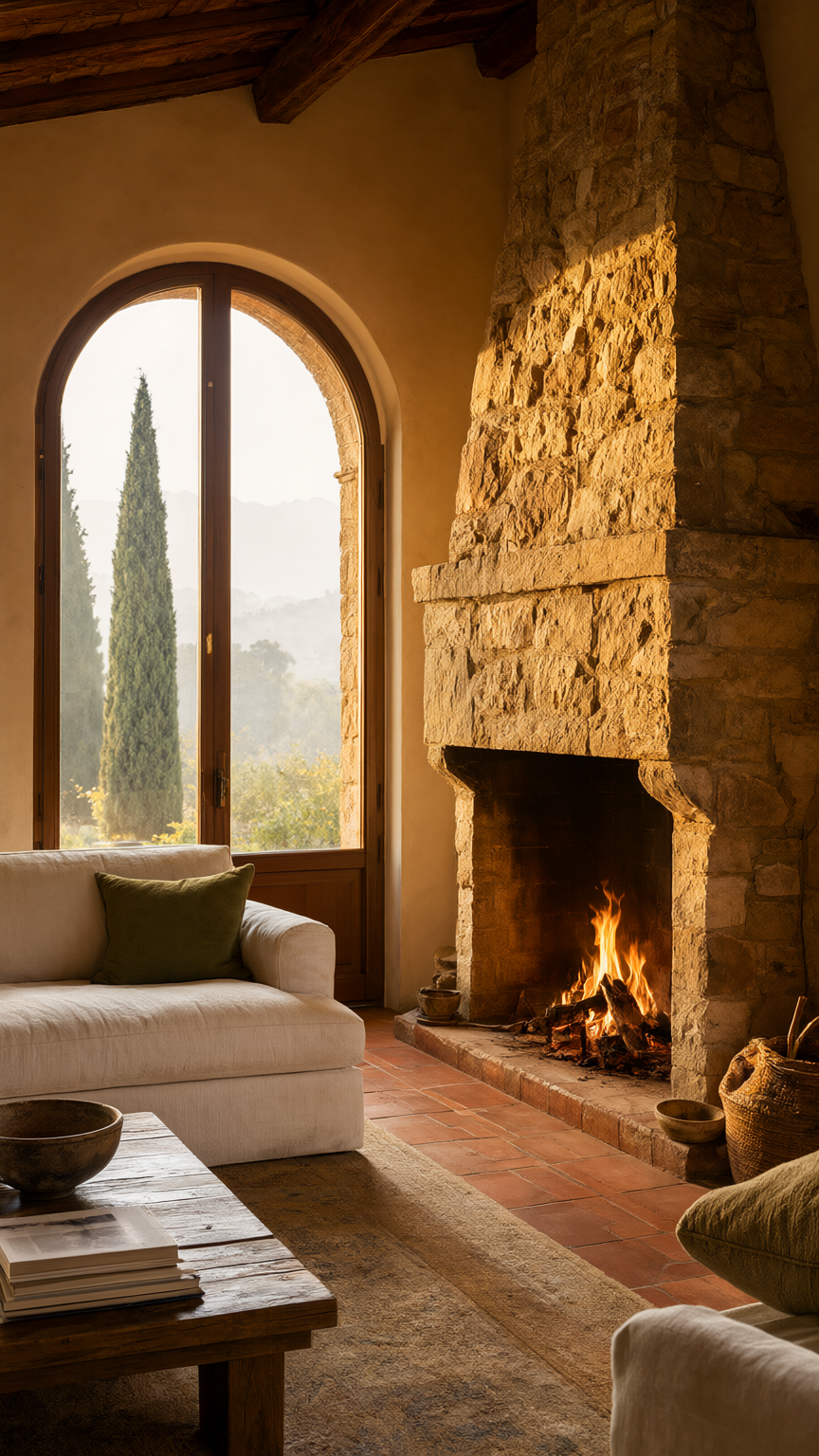
The fire has been burning long enough to warm the stone. A cream sofa and olive cushion sit across from the tall hearth, and the terracotta floor glows in the late light. Through the arched window, cypress trees stand against misty hills, their shapes almost painted. The room smells of woodsmoke and something herbal.
Borrow the arch as a frame. You do not need a stone farmhouse to use it: hang a curtain to soften a rectangular doorway, or place a mirror so it catches the view from the next room. Keep the colors around it earthy — cream, olive, clay — and let one green plant echo what is outside. Framing a view makes a room feel connected to something larger.
8. Green Velvet and Old Books
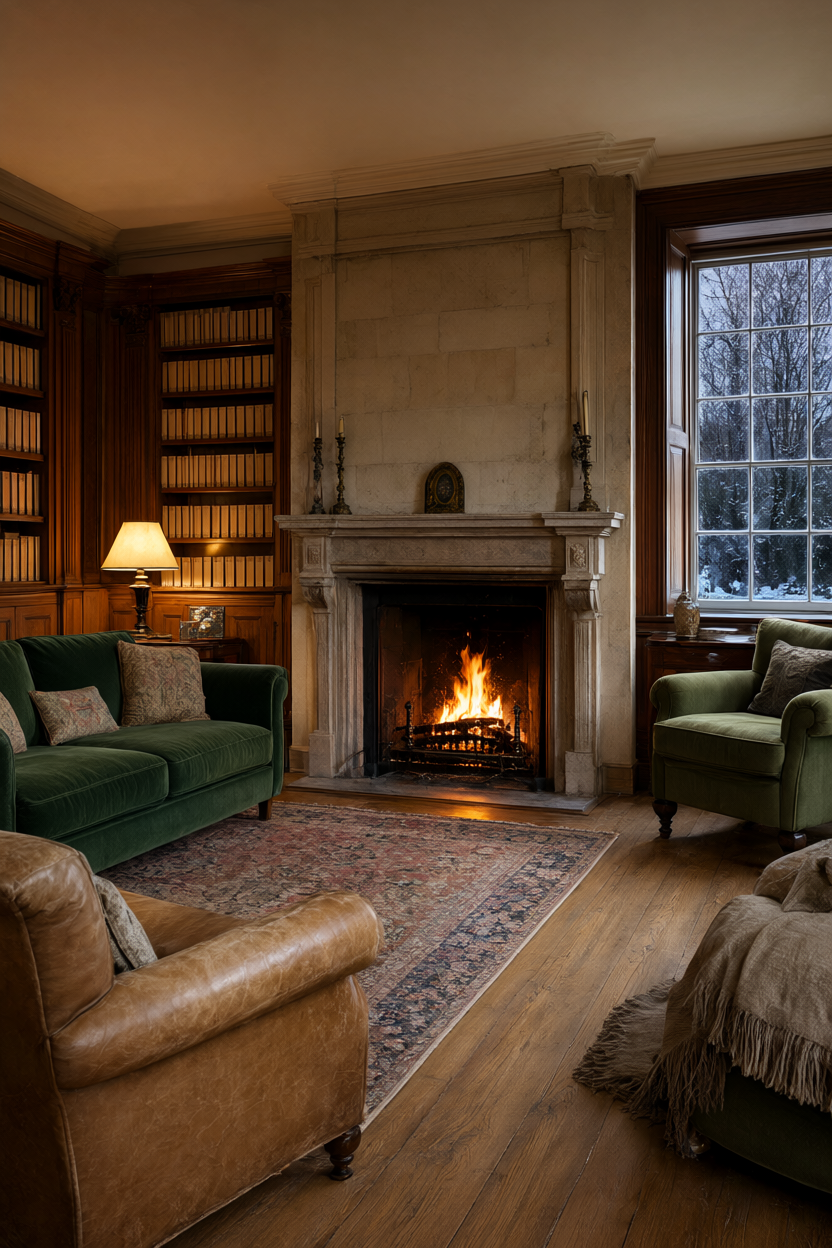
This is a room that smells of beeswax, paper and a fire that has been lit all afternoon. A green velvet sofa and a worn leather armchair face the stone fireplace, and the bookcases climb past the frosty window. Nothing matches exactly, and that is why it works. It feels added to, year after year.
Borrow the reading chair that is nobody’s overflow. Give one chair a small table, a lamp within reach and a shelf or basket for books, and treat that corner as a destination rather than a place to pile laundry. The room does not need more furniture; it needs one spot that is obviously for sitting. A mismatched chair with good light will be used.
9. Checked Blankets at Blue Dusk
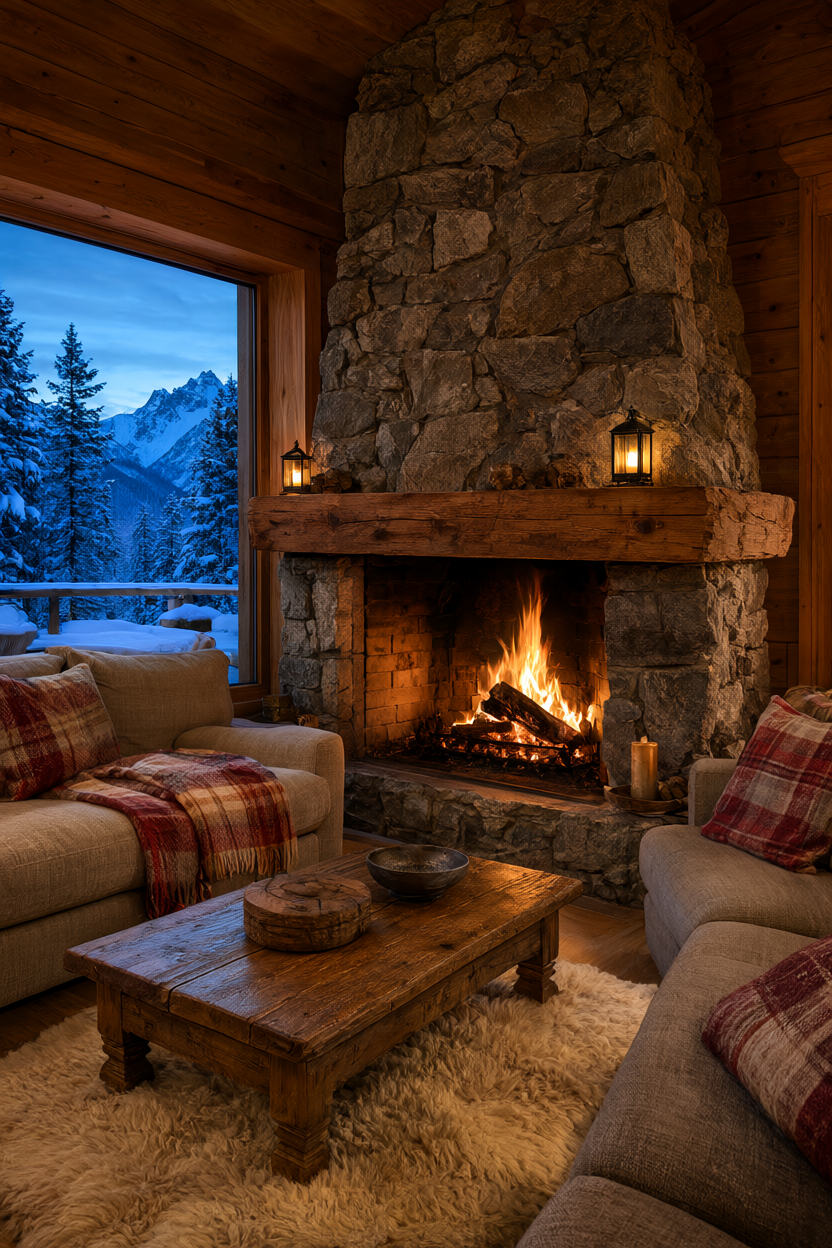
At blue dusk the snow outside turns the color of deep water. Inside, the rough stone chimney holds a bright fire, and checked blankets are folded over linen sofas. The air is cool near the windows and warm near the hearth, and the pines stand black against the last light. You reach for a blanket before you have decided to sit down.
Borrow the basket of blankets by the door. A single deep basket filled with clean, warm throws does more for a room than a dozen decorative cushions: it invites people to stay, and it gives the eye a soft, useful shape. Keep the blankets where the cold enters, not tucked away in a closet. The gesture is small and immediately felt.
10. A White Hearth by the Grey Sea
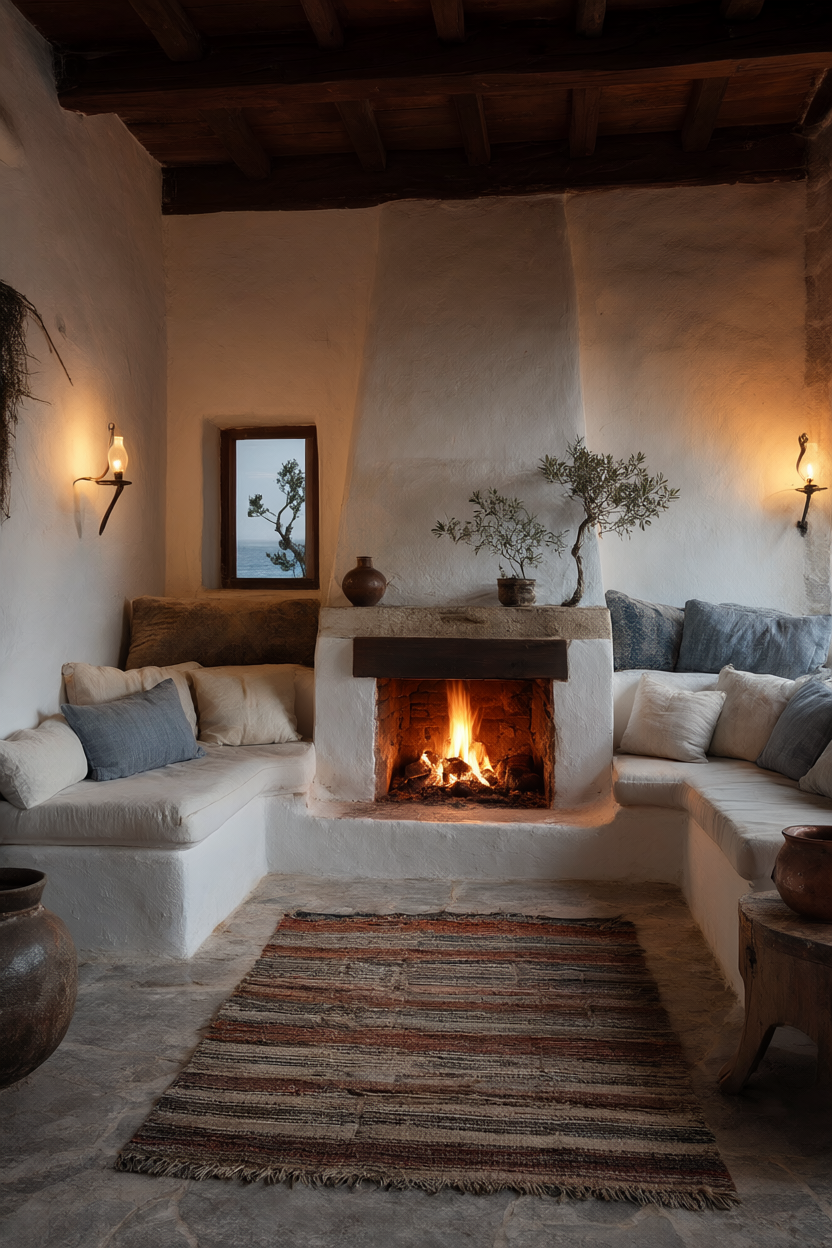
The walls are thick and whitewashed, the hearth is small, and the fire holds the room together. Blue cushions sit on plaster banquettes, a kilim rug covers the stone floor, and the window gives you a slice of grey sea. It is simple to the point of severity, but the light and the fire make it feel generous.
Borrow the built-in seat. If you have a window with a view, place a bench or a long cushion beneath it and let that be the room’s best seat. Add a few cushions, a small rug and a reading lamp, and you have a place to watch the weather without leaving the house. Simplicity lasts longer than trend-driven decorating.
11. Storm Outside, Blue Couch Inside
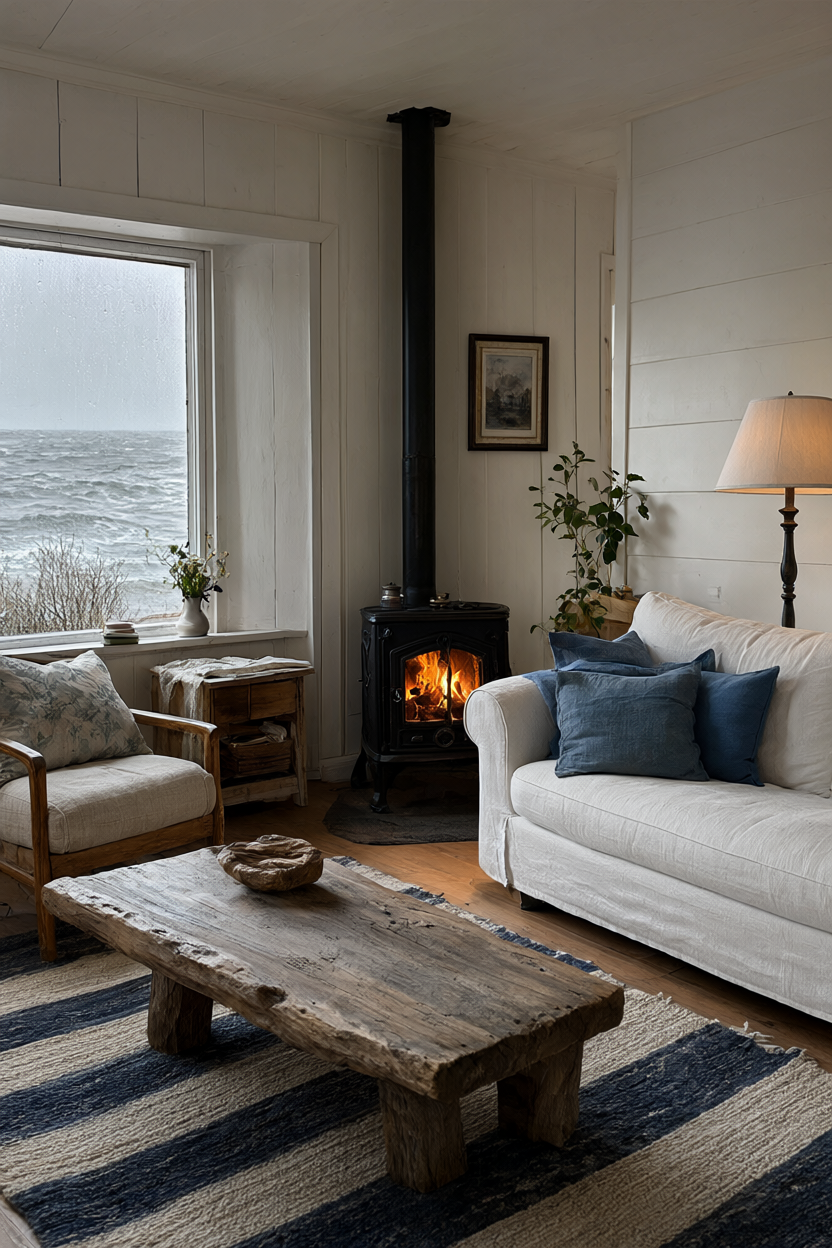
Rain streaks the window and the sea beyond is the color of slate. The little wood stove is doing its best, and the white slipcovered sofa with blue cushions looks soft enough to fall into. A driftwood table holds a mug, and the striped rug keeps the floor from feeling cold. The storm makes the room feel smaller and safer.
Borrow the washable white sofa. If a pale couch feels too precious, choose a slipcover you can launder and stop guarding it. The room becomes easier to live in the moment you stop worrying about it. Add one strong blue note, a basket for wet things by the door, and a lamp that comes on before dark. Comfort you can clean is comfort you can enjoy.
12. Stone, Copper, and Morning Fog
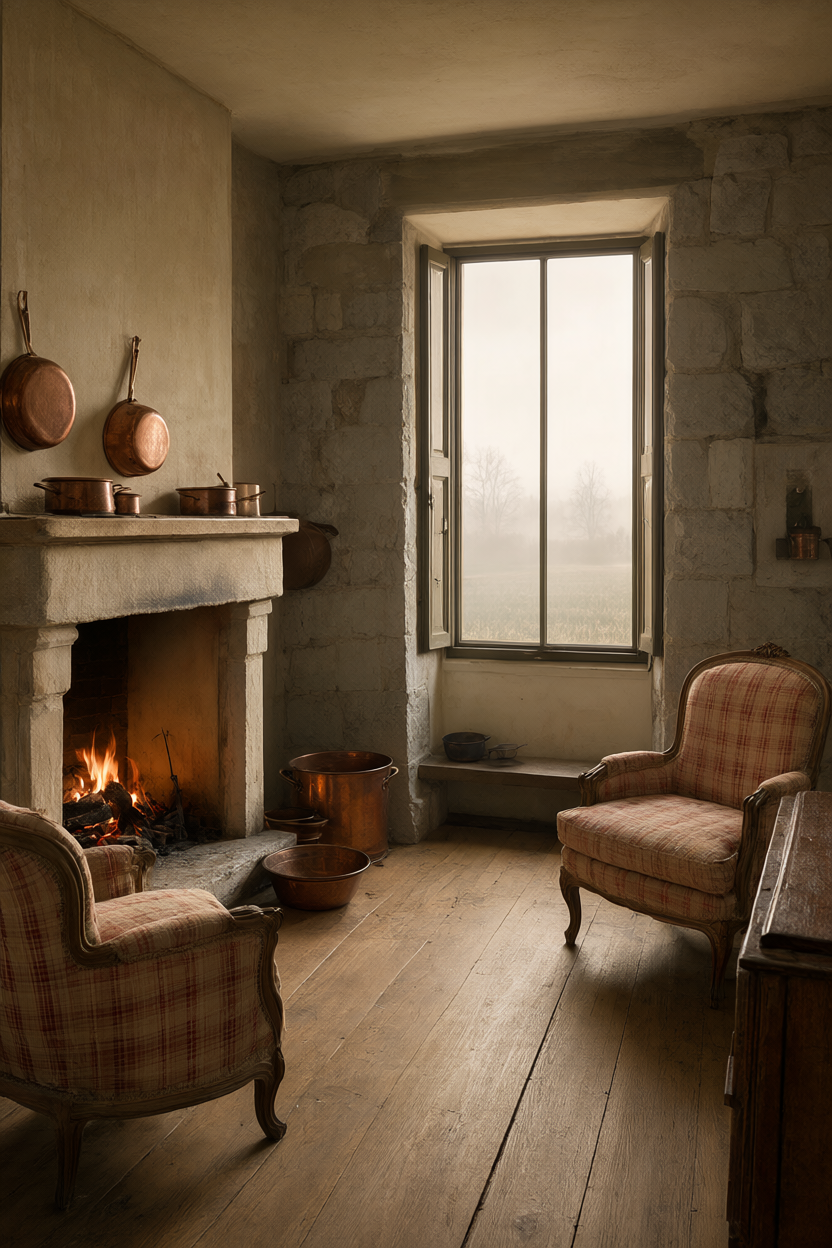
Fog presses soft and grey against the tall window, and the fields beyond have disappeared. Inside, a low fire moves in the stone hearth, and copper pots on the mantel catch the first weak light. The checked armchairs are faded where people always sit, and the stone walls hold the cool air away from the fire.
Borrow the copper that earns its place. Hang the pans you actually use within reach of the stove, or set a single copper pot on a shelf where its warmth can be seen. Useful objects with a bit of shine give a plain room a focal point without adding clutter. Keep the rest of the mantel almost bare.
13. Plum Velvet by the Marble Mantel
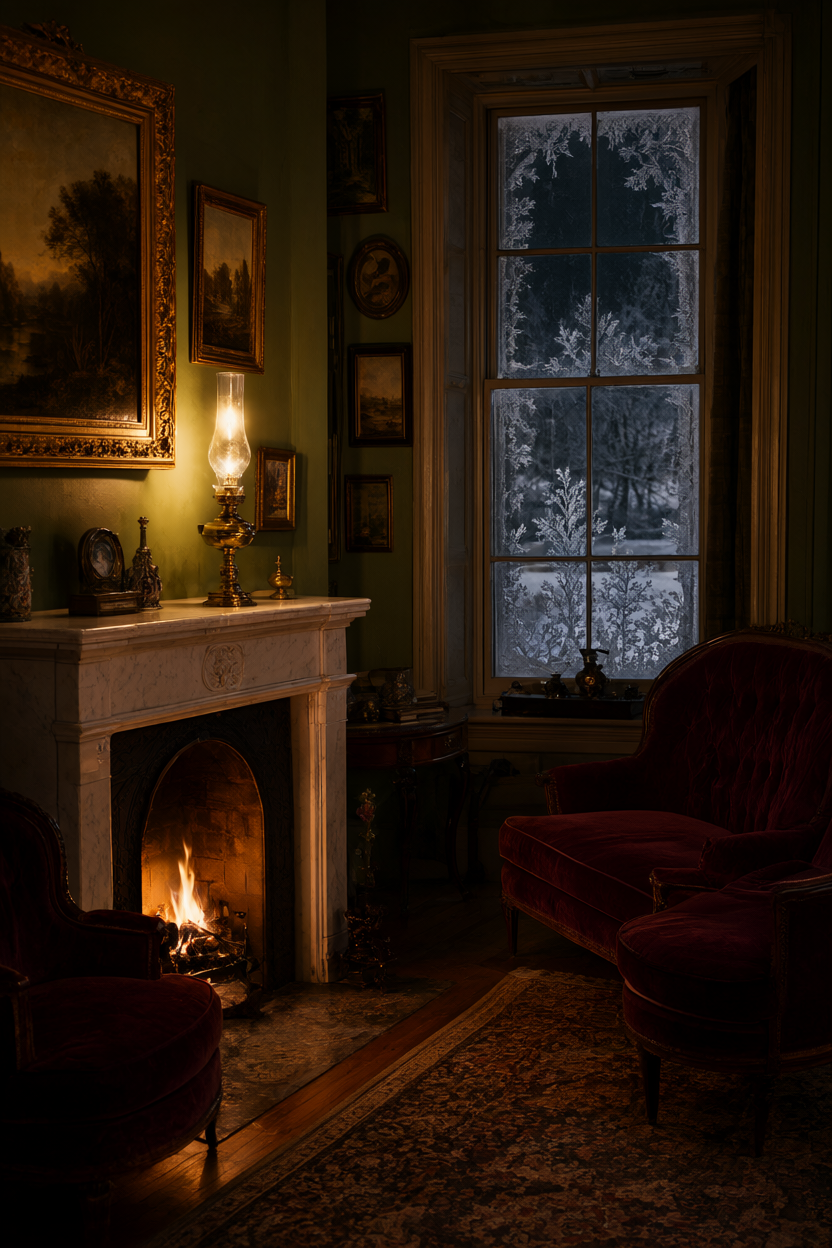
The lamps are lit early and the room turns inward. A coal fire burns low in the marble mantel, and the plum velvet settee and armchair hold the light in their folds. Gold-framed landscapes hang in the shadows, and frost has drawn its own patterns on the bay window. The Persian rug softens every footstep.
Borrow the pool of lamplight. Instead of lighting the whole room evenly, place one warm lamp beside the chair where you actually sit and leave the corners dim. The room immediately feels more intimate, and the eye knows where to go. A dark, rich fabric on one seat and a patterned rug will carry the mood without a renovation.
14. Red Sofas Around a White Hearth
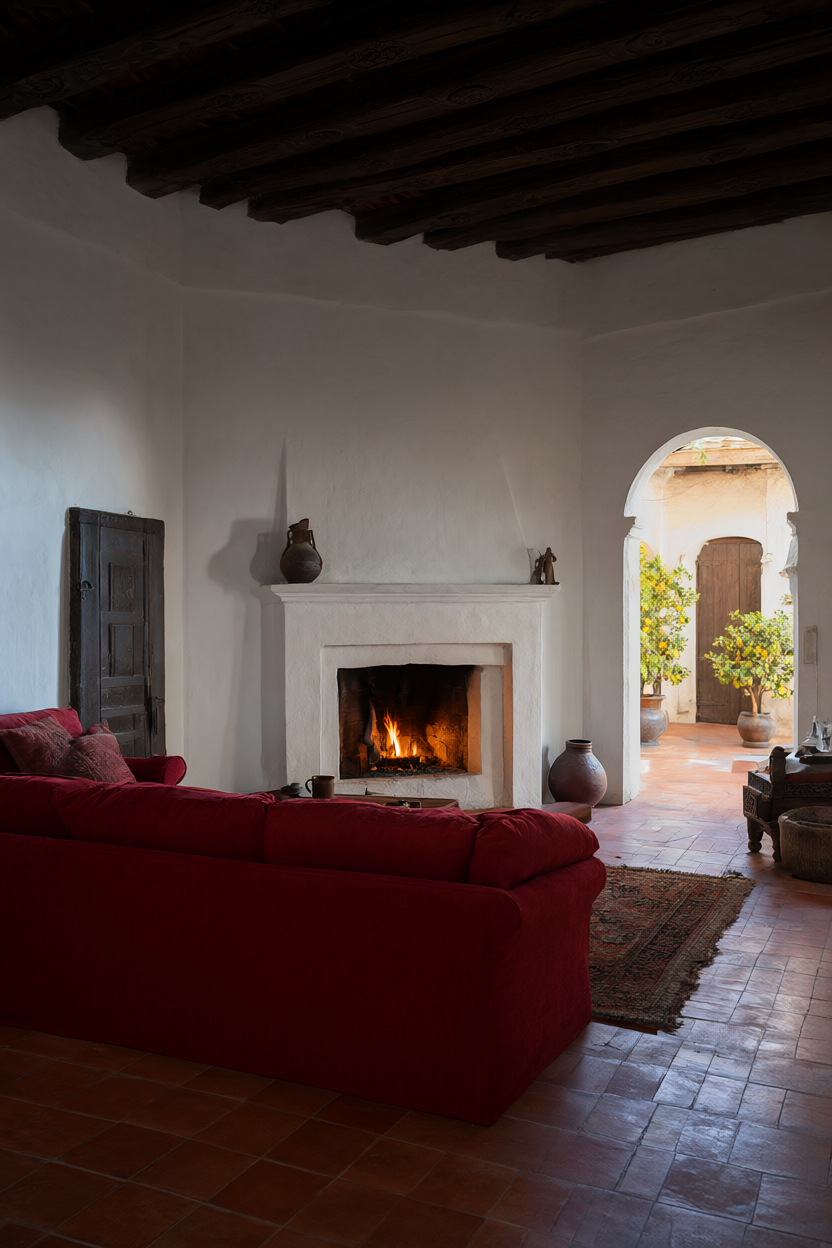
Afternoon shade keeps the room cool while the courtyard beyond the arch is full of sun. A deep red sofa faces the white stucco fireplace, and the dark ceiling beams make the white walls look even brighter. Through the doorway you can see orange trees and terracotta tiles. The room feels open to the outside, yet private.
Borrow the doorway that frames the outdoors. Even a small window can act like this arch if you clear the sill and keep the frame simple. Place the seating so it faces both the fire and the view, and use one strong color — red, clay, ochre — to anchor the pale walls. The room feels larger without a wall coming down.
15. The Chimney You Can See From Outside
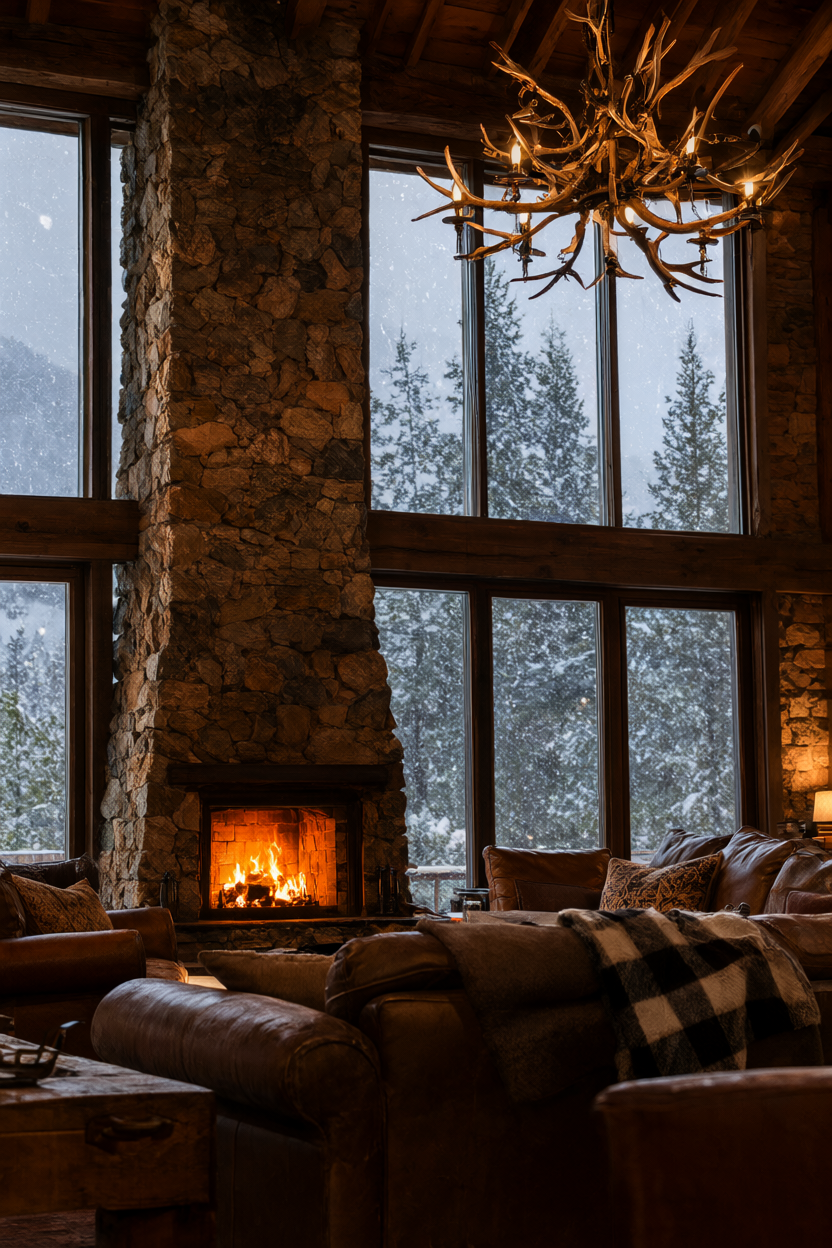
Snow is falling past the tall windows, and the two-story stone chimney is the room’s whole spine. Cracked leather sofas face the fire, buffalo-check blankets are folded over the arms, and the antler chandelier throws a warm, branching light. The air smells of pine and woodsmoke. It is a room built for weather.
Borrow the idea of a room within a room. You do not need a stone chimney: define a cozy zone with a rug, two facing seats and a light source lower than eye level. Let the rest of the space stay simpler. When the furniture makes a clear circle around the warmth, the room tells everyone where to gather without a word.
16. Rain on the Rooftops Below
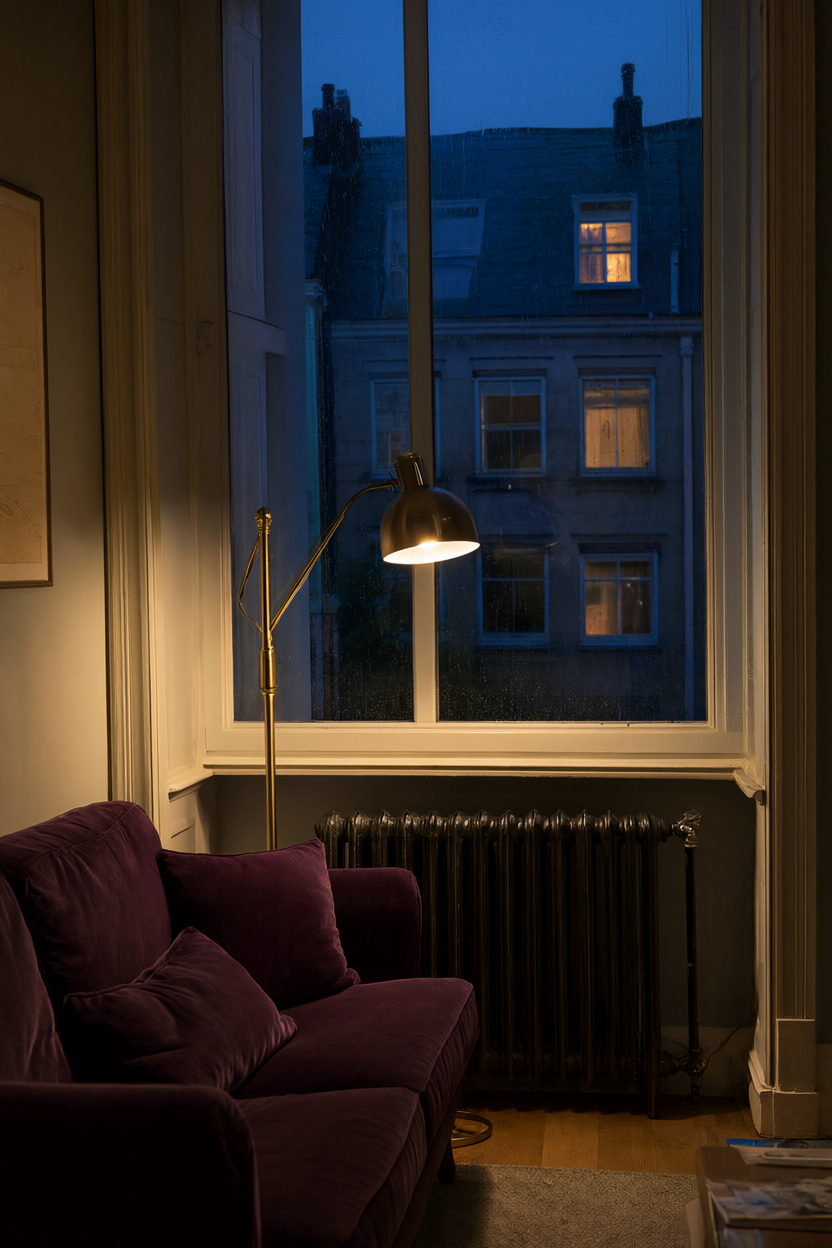
Rain moves across the window and the rooftops below are a field of wet, lit squares. Inside, the plum velvet sofa and brass floor lamp make a small, warm island. The cast-iron radiator ticks under the window, and the blue dusk outside makes the lamplight look golden. It is a room for a rainy evening and no reason to go out.
Borrow one generous lamp. In a small room, a single tall lamp with a warm shade can replace the overhead light and change the whole atmosphere. Put it beside the sofa, add a small table for a cup, and keep the windowsill clear so the view gets a frame. You cannot control the weather, but you can decide how the room welcomes you in.
17. A Stove in a Painted Wagon
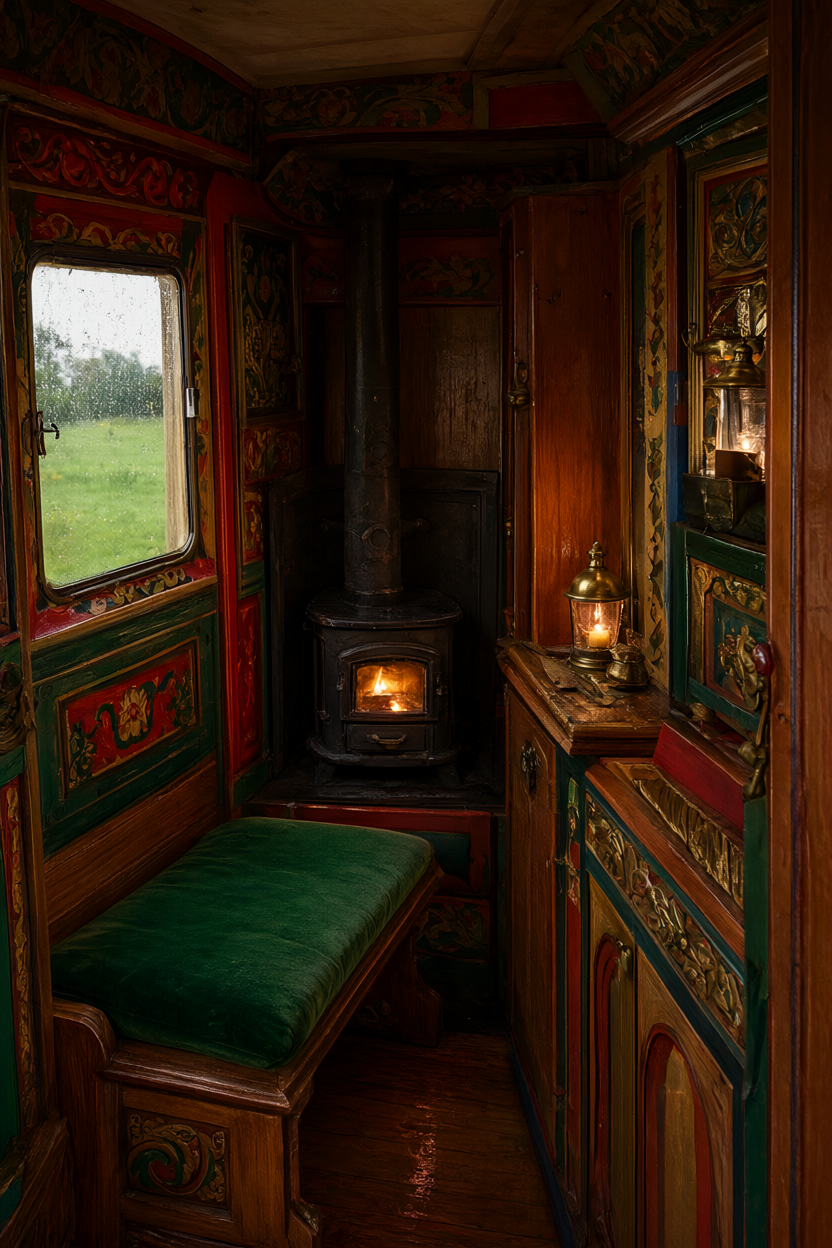
The space is tiny, and every inch is doing something. A little iron stove glows at the center, emerald velvet cushions line the narrow bench, and carved red and gold panels catch the candlelight. Rain taps on the small window, where a meadow has gone soft and grey. It feels like a wooden jewel box on wheels.
Borrow the rule of one beautiful small thing. In a compact room, choose a single object that makes you happy — a colored cushion, a small lamp, a patterned tin — and give it clear space around it. Clutter hides charm; breathing room reveals it. Then use your smallest corner for something you actually do: read, drink tea, watch the rain.
18. Oars on the Wall, Lake at the Door
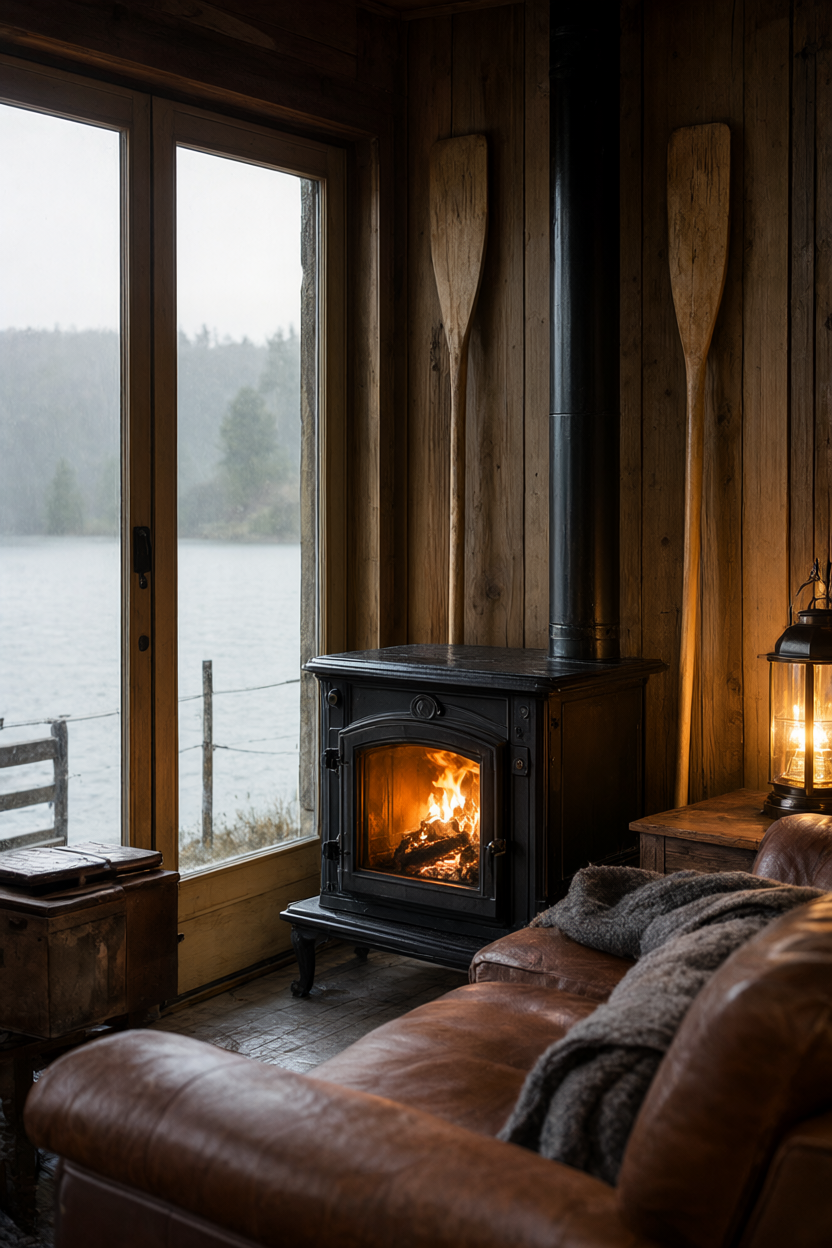
The lake is grey and quiet beyond the glass doors, and rain films the surface. Inside, a black wood stove throws a warm circle, and two plain wooden oars hang on the plank wall like a promise of summer. A worn leather sofa holds a grey wool blanket, and the lantern light is soft. The room smells of damp wood and smoke.
Borrow the wall that tells you where you are. Hang one or two useful objects that belong to the setting — oars, a hat, a basket, a map — instead of generic art. Keep the arrangement simple and leave space around it. A room that names its landscape feels grounded, and the objects become more interesting than anything you could buy to match the sofa.
19. Candles in a Stone Ceiling
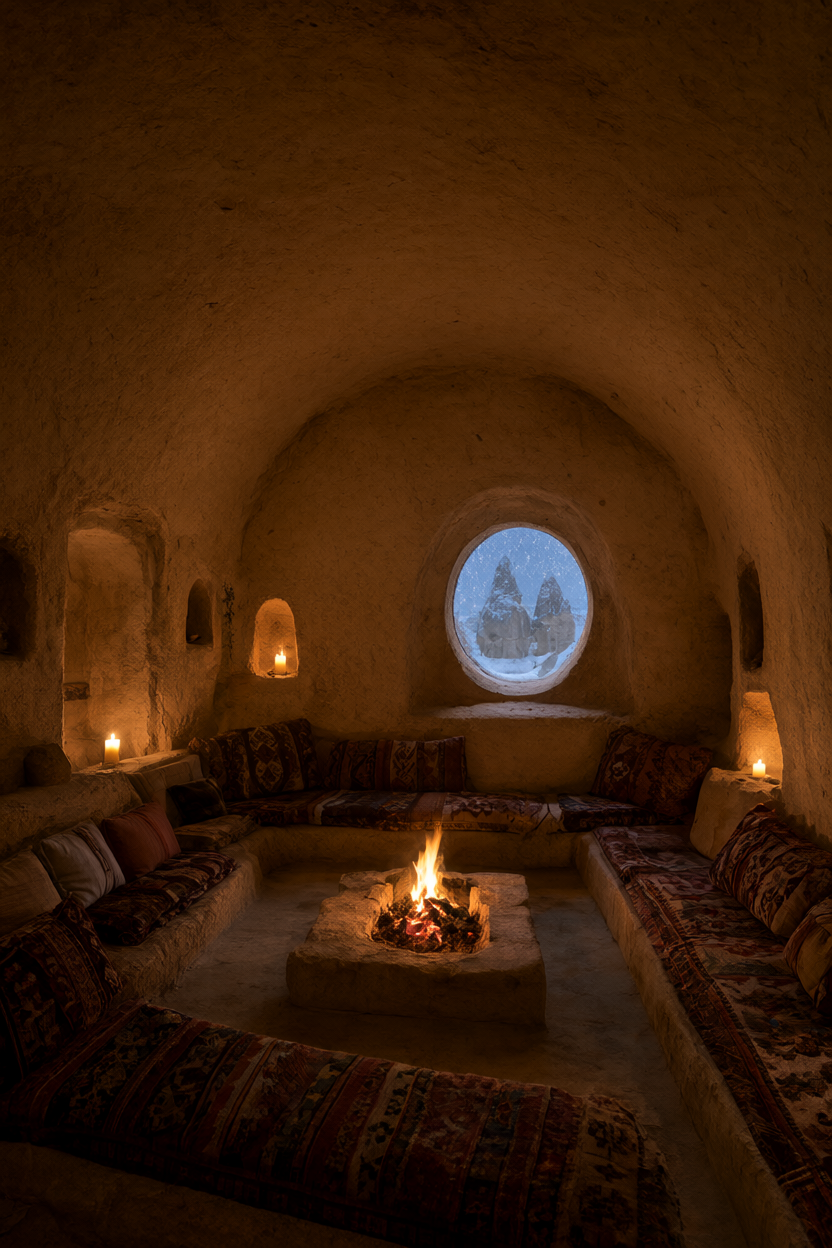
The stone ceiling curves low overhead, and candle niches turn the rough walls into a constellation. A low hearth glows at the center, deep sofas are piled with kilim cushions, and the round window shows snow settling over the fairy chimneys. The air is dry and warm, and sound stays close. It feels ancient and protected.
Borrow the low light. Turn off the overhead bulb after dinner and use two or three small sources instead — a candle, a lantern, a lamp on the floor. The room will feel smaller in the best way, and everyone in it will speak a little more softly. Keep the surfaces around those lights clear, and let the shadows decorate.
20. Beams, Linen, and Frosted Fields
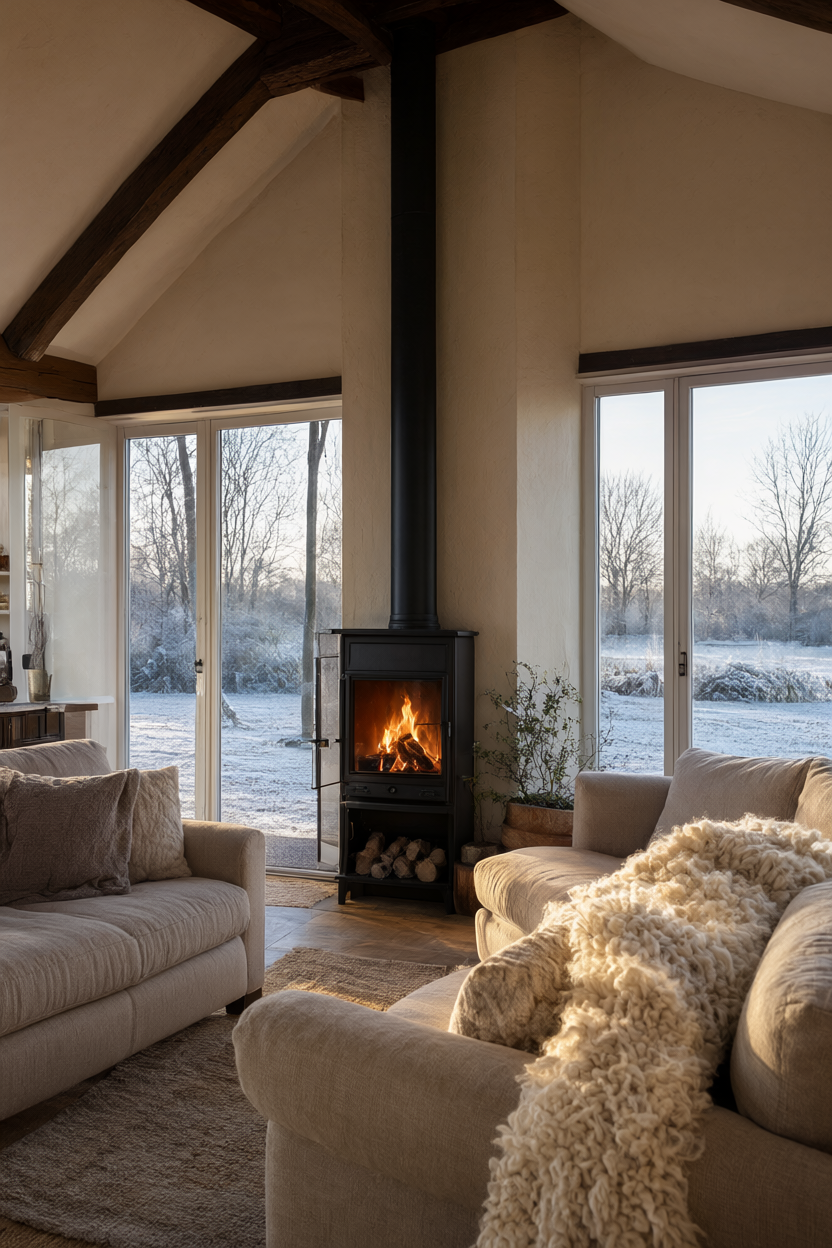
Frost has silvered the field beyond the glass doors, and the morning light is thin and clean. A log burner glows at the center, the whitewashed vaulted walls rise into dark beams, and deep linen sofas hold a chunky wool throw. The room feels like a deep breath: spacious above, soft below, with the fire making the only warm color.
Borrow the tall room’s low furniture. In a space with height, keep the seating low and the colors quiet so the architecture can do the talking. Add one rough, touchable layer — a wool throw, a woven basket, a linen cushion — and let the fire or a low lamp be the brightest thing. Height feels generous when everyday things stay within reach.
Some rooms are for showing and some are for living. These are the second kind. Pick the one you would move into, then borrow a single idea from it — the low lamp, the framed doorway, the basket of blankets — and try it this week.
Winter is long, and a warm corner is a small, practical kind of happiness.