Some weeks feel calmer when you have a simple rhythm to return to. This moon phase planner is an undated worksheet that walks you through one lunar month in eight gentle steps, with room for one small focus at a time and a short reflection at the end. The free printable is included below, and you can start it in any month of the year.
What’s inside the printable
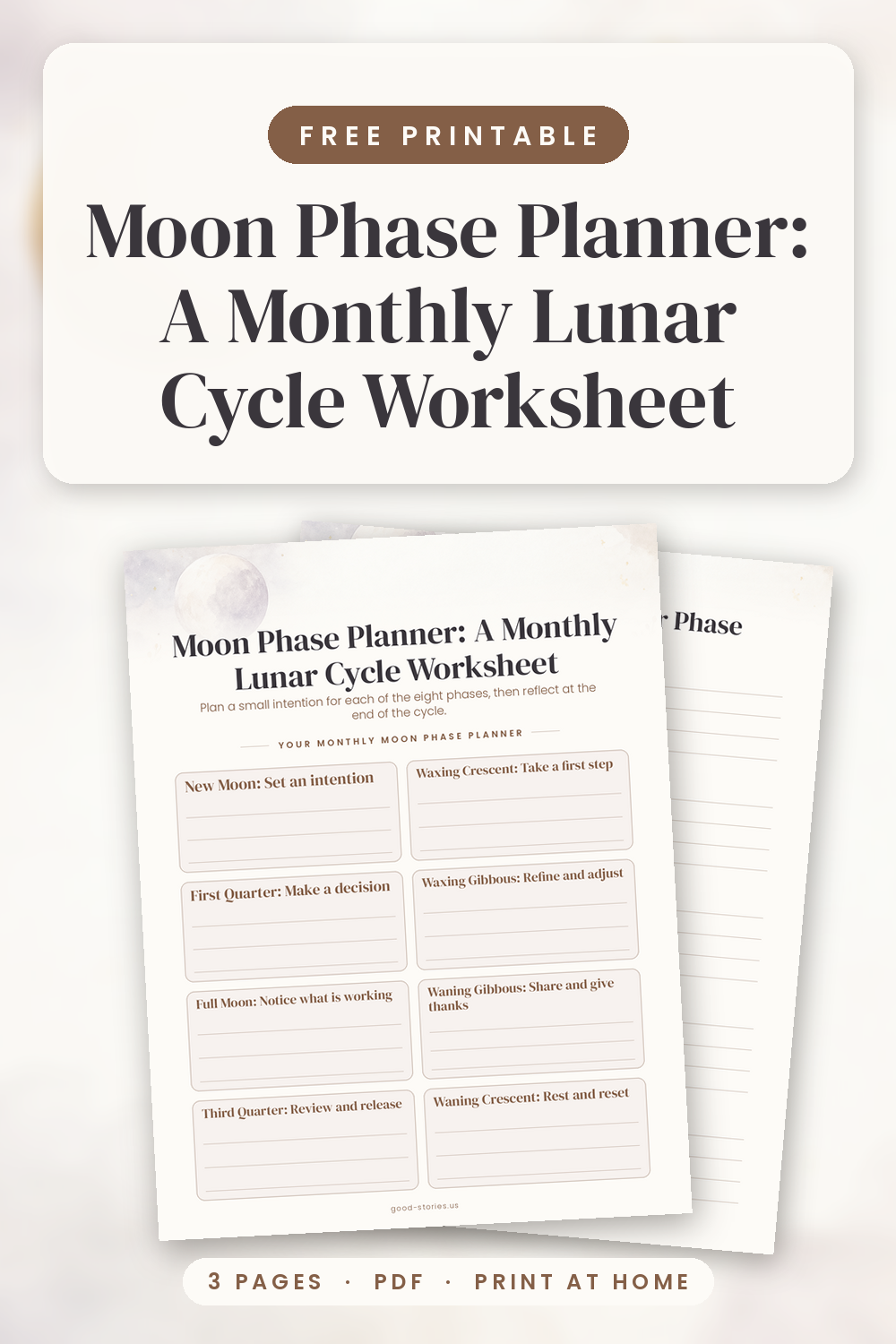
The PDF is three pages, and each one has a different job.
- Page 1: eight boxes, one per moon phase in order, with writing lines to note a small focus for each phase.
- Page 2: five planning prompts with writing lines for intentions, first steps, release and rest.
- Page 3: three end-of-cycle reflection prompts with writing lines to review the month.
An Undated Worksheet for One Lunar Month
The planner maps a lunar month of about 29.5 days across the eight phases in order: new moon, waxing crescent, first quarter, waxing gibbous, full moon, waning gibbous, third quarter and waning crescent. Page one gives each phase its own box, so the whole cycle sits on a single sheet instead of in your head. Nothing on the pages is dated, and that is deliberate. The dates of the phases shift from month to month, while an undated page keeps working whenever you begin.
How the Lunar Cycle Works
A lunar month runs from one new moon to the next and takes roughly 29.5 days. Because calendar months are a little longer or shorter, the new and full moon land on different dates each month. The eight boxes describe the order of the phases, not fixed days. If you like lining your page up with the sky, look up the new and full moon dates for your area on any calendar or almanac and jot them in the margin of your sheet.
If you would rather not track dates at all, use the pages as a simple four-week rhythm: begin with the new moon box, work through the phases in order, and let the full moon box fall wherever it lands in your month. Neither approach is more correct. The worksheet is a framework, not a schedule.
What Each Phase Is Traditionally Associated With
Many people who work with moon phases use them as a gentle structure for self-reflection. In that tradition, the cycle is often described this way: the new moon is associated with setting intentions, the waxing crescent with taking a first step, the first quarter with making a decision, the waxing gibbous with refining and adjusting, the full moon with noticing what is working, the waning gibbous with sharing and giving thanks, the third quarter with reviewing and releasing, and the waning crescent with rest and resetting.
These are associations, not rules. The moon does not schedule your week, and this planner does not predict anything. What the eight phases offer is a memorable sequence — begin, act, decide, adjust, notice, share, review, rest — that happens to describe how many projects and intentions actually unfold. If a theme does not fit your month, leave that box empty and move on.
Using the Three Pages Together
The pages are designed to be filled in order, though each one also works on its own. Start with page one, the eight-phase map, and write one small focus beside each box. Choose something you could actually do in a few days rather than a whole life overhaul. A line like “send one email about the course” is a better entry than “change my career.” One line per phase is plenty.
Page two holds five planning prompts: what you want to begin this cycle, which small step you can take this week, what you are ready to release, where you need more rest, and what would make the month feel gentle. Answer them briefly and honestly. You are not writing a plan for anyone else to review.
At the end of the cycle, turn to page three. Three reflection prompts ask what felt easier than last cycle, what you learned about your energy, and what you want to carry into the next one. Keep the finished pages if you like. A folder of completed cycles becomes a quiet record of how your months actually go, which is more useful than any forecast.
Gentle Ways to Begin
- Start with one phase. Choose the new moon box, write a single intention, and stop there. Return to the next box when you are ready.
- Skip anything that does not fit your week. A busy month might only fill three boxes, and that still counts as a complete month.
- Keep expectations small. One intention per phase, one or two sentences per prompt, and a short review at the end are enough to make the worksheet useful.
- Treat the planner as a reflection tool, not a forecast. Nothing on the page tells you what will happen; it only asks what you notice. That modest framing is what makes it easy to return to every cycle.
How to use your printable
Print the pages on US Letter paper for the layout shown in the photos. If you are printing on A4, choose “Fit to page” in your print settings so the boxes and writing lines stay inside the margins. Black-and-white printing works well and saves ink, because the pages are designed to stay readable without color.
A few ways to use the sheets through the month:
- Print one copy per cycle and keep the finished pages in a folder or binder.
- Print page one alone and keep it on a clipboard near your desk.
- Slide a page into a dry-erase sleeve, write with a marker, and wipe it clean for the next cycle.
- Use the prompts on page two as journaling starters even if you never fill in the phase boxes.
- Print a second copy for a friend and work through the cycle together.
However you use it, the aim is the same: a calmer, more deliberate month with room to notice what is working. Download the planner, print the three pages, and begin with whichever phase your month is in.
This printable is not a substitute for professional help.