Choosing your first crystals can feel like standing in front of a wall of pretty stones with no idea where to start. This guide walks you through building a small, thoughtful starter kit you will actually use, and it includes a free printable checklist to take shopping and to fill in at home.
This printable is not a substitute for professional help.
What’s inside the printable
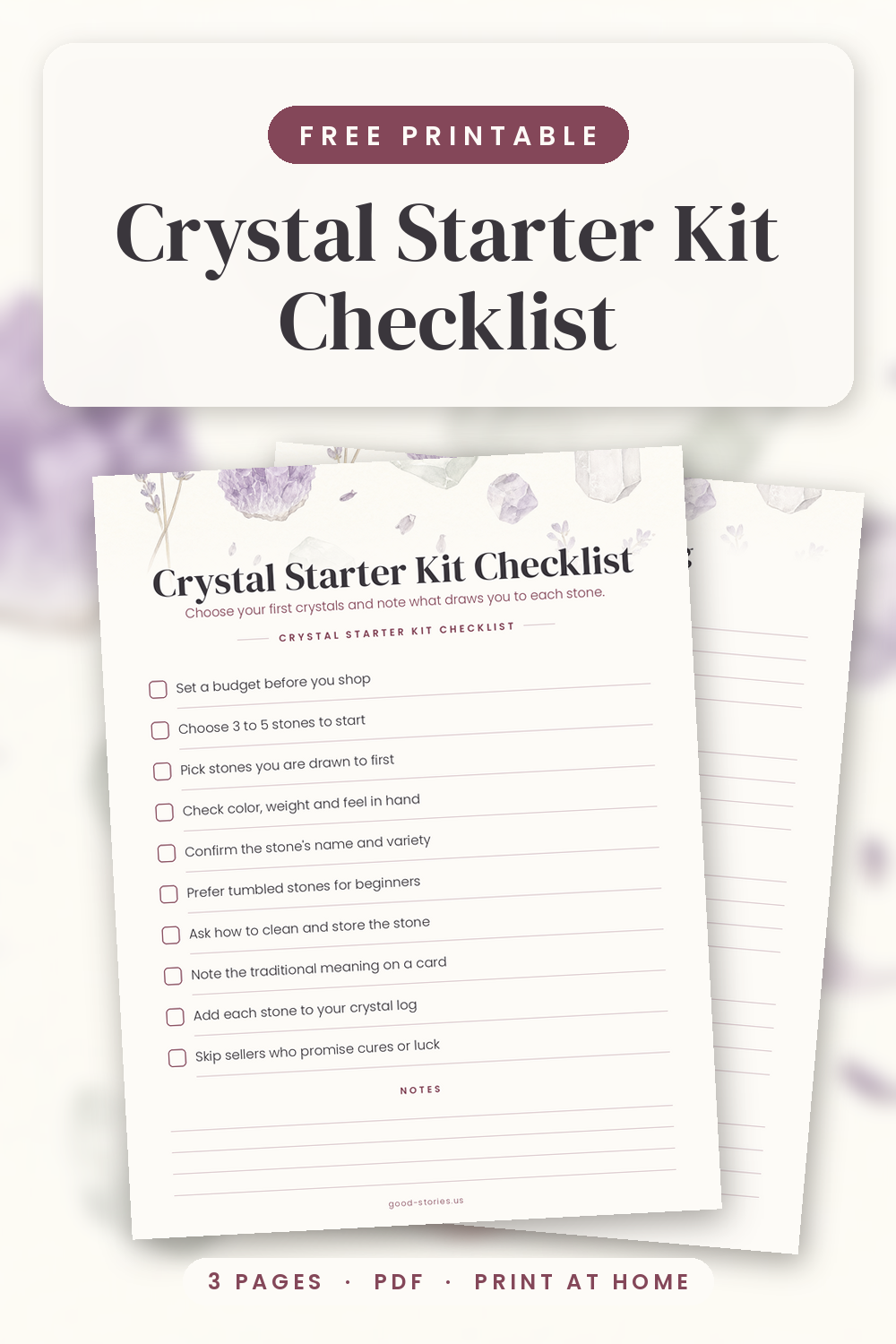
The printable keeps everything on three short pages.
- Page 1: A ten-row shopping and choosing checklist for your first crystal kit.
- Page 2: Five lined prompts to log the first stones you chose and their traditional meanings.
- Page 3: A 7-day tracker with five simple rows for a week of starter-kit practice.
Start Small: A Starter Kit Is Three to Five Stones
A starter kit is not a collection. It is a small group of stones you chose on purpose, and three to five is plenty to begin with. When you limit yourself, you learn each stone’s name, shape, and story instead of losing track of a drawer full of strangers. Crystals are traditionally used as self-reflection tools — a way to slow down, notice a feeling, and keep a small reminder nearby. They are never cures, and they do not replace medical or mental health care. Think of your kit as a set of gentle prompts you can hold in your hand. Start with stones that fit your budget and your space, then let the kit grow only when a new stone has a real reason to join it.
Choose by Draw, Then by Tradition
Start with what your eye lands on. Pick up a few stones and notice which one you keep returning to; that pull is the fun part of choosing, and it is a perfectly good reason to begin. If you want a little context, look at the traditional associations people have attached to common beginner stones:
- Clear quartz for clarity
- Amethyst for calm and a quiet mind
- Rose quartz for compassion and self-kindness
- Citrine for optimism
- Black tourmaline for grounding
Keep these as traditions and poetic prompts, not promises. A stone does not create calm or luck; it can simply remind you to pause, breathe, and check in with yourself. Write the association you like on the back of your log page so you remember why you chose that stone.
Shapes, Buying Basics, and Red Flags to Skip
Stones come in a few beginner-friendly shapes. Tumbled stones are smooth, affordable, and easy to carry. Raw points have a natural, unpolished look and often stand upright on a shelf. Palm stones are flat and fit comfortably in your hand, which makes them nice for quiet moments. Whichever shape you choose, check the color, weight, and feel in person when you can. A good stone should feel solid and pleasant to hold. Ask for the variety name, too: amethyst and citrine are quartz varieties, and rose quartz is a pink quartz, so a label that says only “pink stone” tells you very little. Set a budget before you shop, and remember that a smaller kit chosen with care will serve you better than a bargain bag of mystery stones. Skip sellers who promise cures, luck, or guaranteed outcomes; those claims are not honest, and a good shop will simply tell you what the stone is.
Clean, Store, and Log Your Stones
Keep your stones clean and simple. Dust them with a soft, dry cloth, and avoid harsh cleaners or long soaks that can damage a finish. Keep amethyst out of long periods of direct sun, because its color can fade over time. Store stones separately in small pouches or compartments so they do not scratch each other. Then log them. Write down the stone’s name, the date you got it, where it came from, and the traditional meaning you are using. The second page of the printable gives you five lined prompts for exactly this, so your first stones do not blur together after a few months.
A Simple Reflection Practice With Your Stones
The easiest practice is one stone and one question a day. Choose a stone from your kit, hold it for a minute, and answer a single journal question in one or two lines. You might ask, “What do I need to notice today?” or “Where can I be kinder to myself?” Some people also enjoy a quiet symbolic ritual, like setting a stone on the windowsill at sunset, as a pause rather than a promise. Use the shopping checklist, the first-stone log, and the seven-day tracker as reflection tools that help you pay attention. Nothing in the printable makes a health or medical claim, and none of it is a substitute for care from a qualified professional.
How to use your printable
Print the checklist on US Letter paper for the most predictable margins. If you use A4, choose “Fit to page” in your printer settings so nothing gets clipped at the edges. Take page one to the shop and tick items off as you compare stones. Fill in the log page after each purchase, and keep the tracker somewhere you will see it, like a fridge or a desk corner. A few ideas: print one copy per shopping trip, clip the pages into a small binder, or fold the checklist into your wallet so it is ready when you find a shop. Use a pencil if you like to change your notes, and keep the pages together so your kit’s story stays in one place.
Building a starter kit should feel calm, not complicated. Choose a few stones you genuinely like, learn their names, and give them a simple place in your week. Download the free printable, take it with you, and let your first crystal kit begin with curiosity rather than a long shopping list.