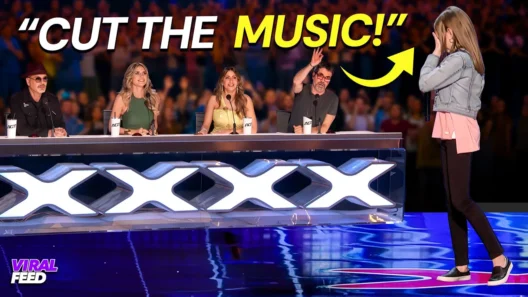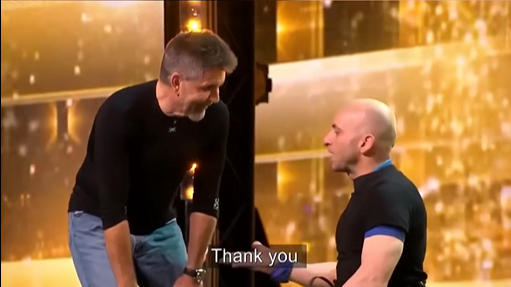
Britain’s Got Talent is built on a simple promise: ordinary people step out, and something extraordinary might happen. In this jam-packed showcase of thirty auditions from the 2026 season, that promise holds—again and again. The night swings from delicate to dangerous, heartfelt to hilarious, with the judges careening between laughter, terror, and tears. Most shows hope for one goosebump moment. This one stacks them until you forget to count.
The shy singer who stepped into her power
It begins with nerves. “I’m Christelle Herrera, and I’m from Halifax, West Yorkshire,” the first performer says softly, introducing herself with a tremor of honesty. Asked about the big dream, she’s just as plainspoken: “My biggest dream is to perform in front of the king.” So much of talent TV is theater, but this moment isn’t. When someone asks how it feels to wake up knowing it’s a big day, she barely breathes the word: “Scared.”
Then she sings—and something flips. The panel can hardly reconcile the person they met with the voice that fills the room. One judge, grinning at the transformation, says what everyone’s thinking:
“I am blown away by that entire performance. And what I’m finding extraordinary is how sort of little and shrunk you are. And when you sang, you turned into a complete diva, baby.”
Another breaks it down technically:
“The way you go from head voice to chest voice so effortlessly is unbelievable.”
By the time the panel moves to vote, the momentum feels inevitable.
“It’s a massive yes from me.”
“Yes from me.” And then, crisply:
“I’m saying yes. That’s four yeses you’re going for.”
It’s a familiar BGT archetype, the modest powerhouse who floors the room. But the details make this one pop: a whispered confession of fear, the almost offhand dream of singing for a monarch, the sudden bloom of stage command. Everyone in the room can feel the aftershock.
The viral sax, the sparkly shoes, and a knowing wink
Next, the atmosphere changes—equal parts confusion and curiosity. “My name is Sergei Stepanov, and I come from beautiful country of Moldova,” says a man in dazzling shoes. The panel teases him, but they also know something is up. “Very best of luck, Sergio,” someone smiles. Another can’t resist a kicker: “Wow. Look at his shoes. Dazzling.”
What follows is a swirl of danceable brass and self-aware, internet-age charm. At first, even the panel is puzzled. But as the act leans into its own meme mythology, the room catches up. When it’s time to decide, the mood is unanimous.
“I have no idea what you were actually going to do or who you were or what you were or anything. But you were so funny, great energy. It’s a yes for me.”
Another judge tosses their vote over with a laugh:
“The easiest yes for me, you absolute legend.”
And the skeptic finally caves with a grin:
“I thought the song was horrific when it first came in. But you can play, though, and I’ve never seen you so happy, so I am gonna say yes.”
Then comes the twist that makes the room explode. The ringleader leans forward:
“How about for the next round, I’ll perform with him?”
It’s equal parts dare and delight—the kind of promise that makes live TV crackle. The panel seals it: “You’re through.” And if you can hear anything over the applause, it’s a thousand viewers whispering, wait until next time.
Two dancers, six legs
There’s an immediate hush when a woman accents her introduction with a wagging tail. “Hi. My name is Anastasia. I’m 35 years old, and I’m from from France. And this is my best friend, Salsa.” The explanation is simple, and radical in its own way:
“I think it’s very special because I’m not just doing tricks. I’m going to dance with her.”
When the music starts, the dog looks not merely trained, but attuned—matching steps, timing, even attitude with her partner.
By the end, skepticism melts into joy.
“That was really beautiful. Salsa is super talented.”
Another adds, almost in wonder:
“That dog actually likes to dance.”
The performance spreads a kind of warmth that turns even the wittiest judges earnest.
“That was such a loving performance,”
one says, calling it “just beautifully presented.” The panel can’t help a bit of banter either. As dog envy ripples across the table, someone urges a fellow judge:
“It makes me wanna have a dog. Yes. Get one. Oh, you gotta get a dog. Get a dog.”
The riposte lands with a smile:
“Get a dog, KSI. I’ve got two cats, and there’s just nothing like that.”
To which another deadpans, guarding feline pride:
“Don’t move my cat.”
Then come the votes.
“One of a kind act. Well done. I loved it.”
“I’m gonna start by saying yes.” “It’s a yes for me.” And finally, chorus-like:
“Four yeses.”
Anastasia beams, Salsa beams harder, and for a moment, the most technical show on earth yields to love and timing—and the way a border collie sets a stage alight.
Choir as lifeline
“Hi. Who are you?” asks the panel, and a woman answers without preamble: “I’m Katrina, and Jeremy Clarkson did a thing. And that thing is the Hawkstone Farmers Guards.” There’s laughter, but the story that follows is anything but a stunt. “Are you all farmers?” the panel asks. “Yeah,” she nods. “Every single one of us is in agriculture in some way or another. This isn’t our day job, so we’re usually out in the fields.” Why sing? The answer hits like a plainspoken hymn:
“We work by ourselves day in, day out, sometimes sixteen, seventeen hours a day, and this has brought us together.”
When they sing, the hall becomes a barn-turned-chapel, all timber and tenderness. A judge confesses through a wobbly smile:
“As soon as you started, I completely welled up. I felt so much power.”
Another reflects on community, calling music “so powerful,” adding simply,
“It’s like therapy.”
The point of a choir, someone explains, is space—
“It’s such an incredible space to release and just letting it go.”
Then comes the payoff, announced in the same breathless, practical tone that farmers use for weather:
“You absolutely smashed it, and I can’t wait to see what you’re gonna do. In the semi finals, congratulations.”
The choir members glance at one another with a look that farmers know well—pride wrapped in relief. It’s not a harvest, not exactly. But it feels like one.
The kid who didn’t sing—she thundered
All signs point to a ballad. A 12-year-old named Nancy steps up to the mic, rises on her toes, and seems, for a split second, so small. “My name’s Nancy,” she says. “I’m from Scarborough.” She’s polite, affable, steady. Then the curtain lifts and the audience realizes Nancy doesn’t sing. She drums—and how.
The sticks are a blur. The beat is crisp, loud enough to jolt the backrow to attention and nuanced enough to make musicians listen. A judge, caught between shock and joy, blurts:
“You are standing there like butter wouldn’t melt. I’m thinking, oh, you’re gonna sing a lovely song from Frozen. And then you did that. You went nuts behind there.”
Another glances at her dad, who is losing it in the seats. The verdict:
“You brought the house down. Well done. It’s a yes for me.”
On the panel, encouragement turns into a kind of proud coaching. One judge asks her age again, as if to square the sound with the number. Nancy answers, matter-of-factly, and someone marvels:
“Incredible, man. Incredible. You should be so happy and proud of yourself.”
The compliments keep coming. “You’re like a professional up there,” says another. “It was such a good audition.” Then, with that distinctive BGT mix of wit and warmth, the toughest voice in the room concedes:
“I thought she was gonna sing, like, a really sweet song or something. And I’m gonna have to pretend I like it. And, actually, you’re really, really good.”
She is. The votes confirm it: another sweep of yeses. For the drummers in garages and the quiet kids in school bands, this is the kind of moment you tuck away as proof.
A marriage of nerve and aim
Then the lights sharpen, and the air tightens. Alfredo Silva returns to the franchise he credits with changing his life, this time with his wife, Coral Gonzalez. They are charming, disarming—until the props roll out. The warnings are clear and repeated.
“Please don’t try this at home as it’s very dangerous.”
What unfolds is part circus, part trust exercise, and part daredevil mathematics. Blades thud, lines slice air, and in the middle of it all, there’s artistry: care, count, breath. The panel watches through fingers. When it’s over, a judge exhales a single headline:
“You are the best. You know that? In the world. What you do, Jason. Seriously. Wow.”
Another praises the theater of it all—
“those little details of drama that you give with your hotness”
—and then pivots to awe. A third laughs in relief:
“I was so nervous watching that, and you two together are the most striking, powerful couple. You’d be nothing without each other, I’m gonna say that.”
Even the unflappable chair at the center has to admit he’s seen something truly new.
“I’ve never seen anyone try to do any of those moves. I mean, I think you’re both absolutely insane.”
And then, the line every returning act hopes for:
“Every time, you genuinely raise the bar and certainly the best we’ve had this year by Mark. Brilliant. No one’s come close.”
The yeses come fast. It’s the kind of audition that leaves you buzzing and a little grateful that TV can deliver adrenaline with your cuppa.
When gravity blinks
“Who are you?” the panel asks a group whose costumes and stance suggest a different kind of threat, the artistic kind. The answer is simple, the accent carrying what feels like a national weight:
“We’re an anti gravity show from Ukraine.”
What follows is hard to describe without reaching for superlatives. Bodies arc, suspend, and appear to disobey logic; scenes fold into each other with a sense of scale that belongs in an arena—and yet we’re close enough to see hands tremble and steady.
By the end, the panel sounds almost giddy to have language again.
“That was spectacular.”
Another pushes it further:
“That was unbelievable. That’s one of the best things I’ve ever seen on this show.”
The verdict, boiled down by a judge who likes his adjectives plain:
“I think that was the coolest thing I’ve seen on BGT.”
Another caps it with sci‑fi wonder:
“That was absolutely out of this world’s brilliance.”
And one voice, calm and certain:
“That was epic.”
Then chaos of the wonderful kind: a scramble at the desk, laughter, a tug-of-war between hands reaching for the same buzzer. One judge confesses, half‑sheepish and half‑proud:
“I had to dive on that to protect it.”
Then, turning to the troupe with a gleam:
“I’m so thrilled for you. Very excited to see you in the live shows. Very well deserved. You could win. Can’t wait to see what you do next.”
There’s banter about who got there first, the panelists jostling as if the button were a bouquet. Offstage, the artists try to corral their emotions. Asked how they feel, one beams:
“Incredible. It’s crazy. Actually, we were dreaming about that… and now we got it.”
There’s a reason that moment still jolts a crowd. It’s not only the confetti, or the shortcut to the live shows. It’s that feeling—a collision of recognition and risk—that says, yes, you belong, and we want more.
A small-stage voice with big-room sway
Then comes a study in contrast: the next singer introduces himself with a whisper of nerves and a solid backbone. “What’s your name?” the panel asks. “My name is Finley, and I’m from York, and I’m 20 years old.” He laughs at himself for feeling it.
“I’m not gonna lie to you guys. I am nervous.”
The panel nods, kindly.
“It means you care.”
There’s more at stake than a single song. Asked what he would do with the prize, he looks up and says without showmanship:
“I’m gonna give half of it to my mom and dad. They’re the reason I’m here today. They put a lot of sacrifice in for me today.”
It’s the sort of line that could be a strategy—in this case, it rings true, almost offhand. Then he sings, and the room shifts. Post‑performance, someone gasps:
“Where did that come from?”
Another, still blinking, tries to place the melody.
“I’m guessing that’s an original song.”
“No. It’s not,” comes the answer through a grin. “It’s Elvis Burnley. Kidding. It’s a twist.”
What matters most, a judge explains, is how he gathered himself in real time.
“What I love most about that audition was how you responded. When you saw the audience get behind you. Your confidence grew.”
That growth is the whole show distilled: stranger walks in, artist walks out, and a hall full of people leaves believing in both.
What the night adds up to
By now, you understand the rhythm of this compilation. Surprises don’t cancel each other out; they stack, building a ladder of expectations that later acts must climb. A meme-savvy sax player clears the way for a dancing dog who knows how to hit her marks. A farmers’ choir reminds a flashbulb world of the power in steady lives and shared breath. A 12‑year‑old who looks like a ballad scrawls her name across a drum kit. A husband and wife turn danger into choreography. An entire troupe erases gravity and starts an arm‑wrestle at the judging desk.
Threaded through is the liturgy of BGT—tiny phrases that carry weight when said at the right time.
“Good luck.”
“Wow.”
“You’re through.”
And the ones that make a season feel like a season:
“Four yeses.”
“Very excited to see you in the live shows.”
Even the ribbing belongs. Cats versus dogs. Shoes that dazzle. A pretend fight over a button that everyone in the room knows is not pretend at all.
What gives this showcase heft is not only the variety of acts, but the variety of ways people rise. The shy singer who admits, simply, “Scared,” before blooming in place. The border collie whose joy is unmistakable, and whose discipline is too. The choir that is less about notes than about being less alone. The drummer who reminds us that talent can look like thunder. The couple who thread a needle under pressure—together. The troupe that makes you doubt your eyes and then believe them anyway. The young man who chooses to count his parents’ sacrifices out loud, then earns the right to make them proud.
The judges, for their part, spend the night oscillating between evaluators and fans. They diagnose technique—
“The way you go from head voice to chest voice so effortlessly is unbelievable.”
—and then they throw the rulebook into the air, lunging for a golden decision in an unguarded burst of delight. They are alternately stern and silly, fellow travelers and hard stops. And it’s their job to signal the stakes, which they do with a few well‑placed lines:
“You could win.”
“Can’t wait to see what you do next.”
It’s easy, sometimes, to forget why talent shows move people. Maybe it’s because they’re messy: different genres, different life stories, different kinds of courage. This compilation lays it out plainly. You see nerves transmute into poise. You see team efforts—choirs, troupes—turn the solitary act of practicing into something communal. You see passion show up dressed as discipline. And you see the delightful chaos of live judgement, where a button becomes a battleground and a laugh line turns into a promise.
And then there are the small glints that make this particular night stick. A border collie’s gaze fixed on her partner’s hip. A judge breaking character to admit he hated the song—and then changing his mind in front of everyone. Another judge told to “get a dog,” because cats, lovely as they are, can’t dance. A young drummer’s father visibly short‑circuiting into giddy pride. A room full of people who work sixteen hours alone in fields, finding, for three minutes, a sound that belongs to all of them.
Across thirty auditions, there’s no single formula for triumph—only signs. Honesty helps. So does humor. Timing is everything, whether you’re catching a beat, a blade, or a buzzing chance at the live shows. What turns moments into memories, though, is the way performers meet the room head‑on. They show up with what they’ve built in private—then choose, in public, to risk it. That decision is the quiet engine of the series and the loud heartbeat of this episode.
There will be more to come—more builds, more reveals, more leaps that shouldn’t be possible and yet are. The promises made here send ripples forward: a star turn that must be topped, a collaboration teased on air, a choir with a date in the semi‑finals, a golden confetti wish fulfilled. If this is how the season sets the table, the main course should be unforgettable.
So settle in and watch the video. Let the shocks pile up and the applause bounce off your walls. Count the yeses if you must, but don’t be surprised if you lose track. There’s a reason the judges kept saying they couldn’t wait to see what happens next. After this lineup, neither can we.