On an ordinary night, America’s Got Talent is a carousel of hope and spectacle. On this one, it felt like the stage had slipped a key under the door for fear. The show opened not with a flourish, but with a whisper: a childlike voice that asked the room to look at the microphone. Then came the introduction—plain, unnerving, and unforgettable. “My name is Olive. I’m invisible. You can’t see me, but I can see you.”
What followed wasn’t pyrotechnics or power ballads. It was suggestion, silence, and smoke. Olive asked one judge to draw a slip from a box and hold it. Then the attention turned to another: “Sofia, look in the smoke. And tell Simon what you see.” The answer arrived in fragments—“I see a house. A ghost is inside. The doors keep moving. The family’s afraid.” When the slip was finally opened, the words on paper echoed the fog: “the family’s afraid because ghosts in their house moving the doors.” Someone blurted what the room was thinking: “How is that even possible?” Olive’s goodbye landed like a fingerprint on glass. “I have to go now. Please remember me.”
A child arrives sweet—and leaves as a nightmare you can’t shake
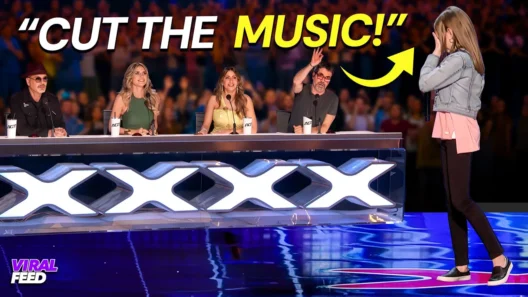
Then came a different kind of fear. A 13-year-old from Jammu and Kashmir, India, walked out with a careful politeness and a bright promise: “I am a dancer, but I don’t wanna be like others. I want to be different.” She excused herself to prepare, returned in a look no one predicted, and twisted the theater into knots. What began as a recital became a possession. In place of pirouettes came impossible contortions and a backflip that ended, shockingly, on her chest.
“When you said you were gonna leave to change, I thought you were gonna come back with a pretty dress,” one judge admitted, before calling it “the scariest, most horrific dance recital I have ever been to.” Another didn’t mince words: “We should say to little girls watching this, don’t do this in your own home without a lot of training. Never.” The compliments arrived clipped and breathless—“one of the best contortionists we’ve ever seen”—and the warning label stuck. “Everyone’s gonna be talking about you tomorrow.” Then the verdict: “We love you—four yeses.”
In the forest of haunts, luck is a thin thread
Fear next took the shape of chance. “My new friends, I want to play a game with you,” a performer announced. A parade of balloons, a rule-bound ritual, and a judge plucked from his chair. “These are my balloons… From the Forest Of Hans.” Numbers were chosen. Choices wobbled. “Do you maybe want to switch? … Actually, no.” The theater learned, in real time, how thin luck can be.
One balloon burst to reveal something that made even the professionals recoil. “What is it? Blood?” Another detonation detonated the stomach. “You can’t do that. Don’t do that. It’s a little maggot. Why are you touching it?” A judge pointed at the survivor: “That could have been in your hair.” The room sat on the edge between gag and gasp. “That was repulsive but brilliant,” came the uneasy verdict. The panel wrestled out loud—“I did not love it. I’m gonna say no.” “Okay. I’m actually gonna say yes.” With the audience half-laughing, half-hiding, the act made its case that terror, done right, is a conversation you have with your own nerves.
Names whispered in the dark
Another visitor wore silence like a cloak. A judge tried to spark a dialogue: “Remember. Sacred Rihanna. You never talk to me, do you?” A beat, and then a reveal that squeezed the room tighter: “Your first name is sacred, and your second name is Rihanna.” He looked over his shoulder. “Bob is behind me. The magic is incredible, but the horror is real.” The act played by different rules—appearing between moments, bending context—and left the unsettling impression that the show had invited something it couldn’t fully dismiss. “You want this to end right now. Me too,” someone confessed, speaking for more than one heart rate in the arena.
Hands like ice, cards that don’t match, and a threat that does
Fear changed temperature again with an encounter that began on a simple command—“Pick one. Don’t look.”—and unraveled into a stealth attack on the senses. “Her hands are ice cold,” came a judge’s aside. The search for a match turned to static: “No match… Oh, not a match.” Then the theater inhaled in unison. “I feel like I got stabbed in the back.” The performer gathered ashes as if coaxing a message from them. “He’s gone for now, but he already knows your name,” she said—followed by a chill that cut through chatter: “Do you… did you guys hear that? There’s a voice saying Howie.”
The camera found empty space. “Where’d she go?” And then the line—printed, whispered, echoing?—that turned spectacle into omen: “I’m coming for you, Howie.” One judge tried to push the show forward, the spell half-broken. “Is that judging? Have we done what we’re to do? Yes. Yes. Very good. Well, good. Let’s move on with the show then… something that’ll get rid of the juju vibe.” Easier said than done.
Do not ring the bell. Ever.
If the night had a thesis, it arrived in six words: “Do not ring the bell at all.” A candle was lit. “Terry, take this bell in your right hand… and for Sofia’s safety, do not ring the bell at all.” Flame tested resolve: “Put your hand over the candle… how long can you keep it above the flame before burning yourself?” Then the voice wrapped the room in a story. “There are two types of pain—pain that hurts and pain that changes you forever.”
The tale dragged time into the present: “The people I’m about to introduce to you are united by one important factor. They all perished in a horrifying hotel fire precisely one hundred ten years ago.” A book of faces flipped past as Sofia stopped on a number. “However, you did not freely choose this number. I believe the number chose you. It’s precisely the number of the room where the devastating fire initially began.” She slid a picture free. “Her name was Lucy, and she was the only one who did not die in the blaze… Because she was never a victim. She was the arsonist.”
Somewhere in that revelation, the forbidden sound arrived. A bell chimed. “No. I didn’t ring it. I’m not ringing. I didn’t do that.” The claim that followed tightened every shoulder in frame: “She’s here.” The act left a question that had been circling all night like smoke under a doorframe: “Ghosts from our past—regrets, grief, or secrets buried deep within. So what haunts you?”
“It’s dangerous. It’s wrong.” And it wins anyway.
Just when the theater begged for relief, danger returned in its simplest, sharpest form: metal and flesh. “Please be done,” someone pleaded, as the performer carried on. “Man, you scare me.” After a sequence that redefined proximity to pain, the critique came out half-joke, half-warning: “What do you think, Howie? It’s amazing. It’s crazy. It’s dangerous. It’s wrong. You should change your name to Shishka Bob.” A check-in from the far side of the stage—“Are you okay?”—reminded everyone that fear is physical before it’s philosophical.
Even so, admiration cut through. “I have mixed feelings,” one judge admitted. “This is very disturbing and fun at the same time. It’s like I like you, and I don’t like you at the same time.” Another widened the frame: “We’ve seen this kind of act before, but the stuff I’ve seen before like this is tame in compare in my opinion. If anything, the act was too short.” Then the votes fell like dominos: “It’s a yes for me… I wanna say no, but I have to say yes… Yes… You’ve got four—We’ll see you again.”
Why fear works on a talent stage
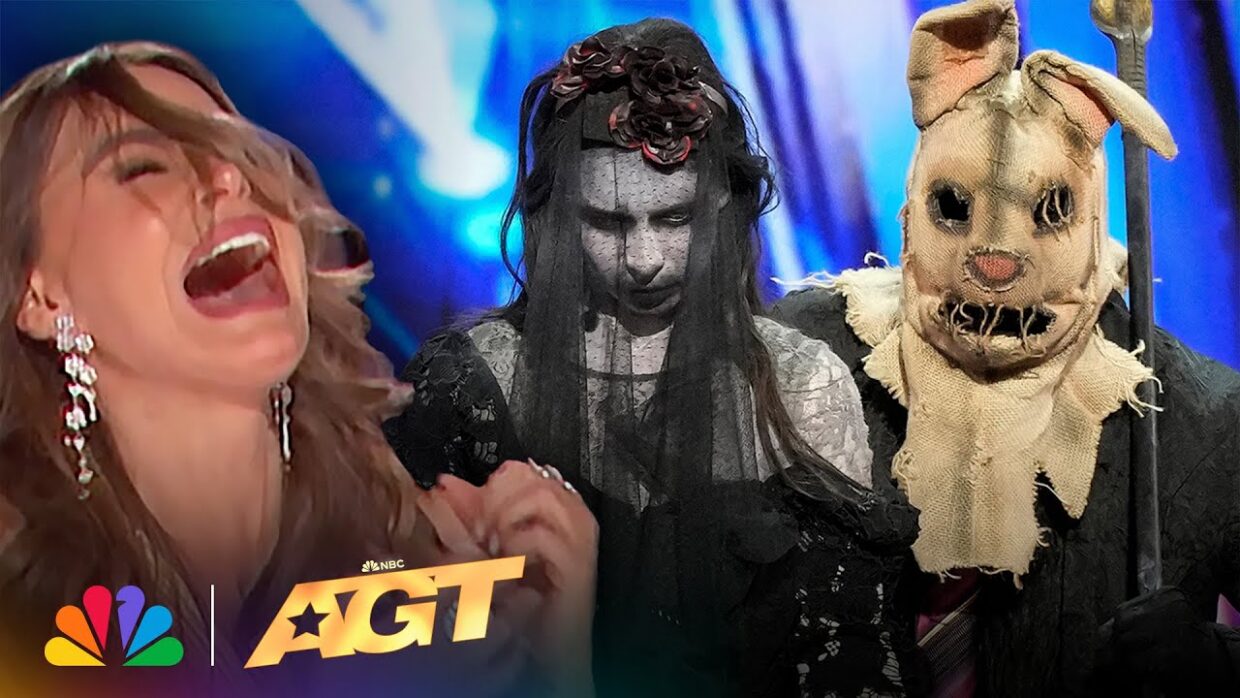
Across the night, the pattern wasn’t just shrieks and jumps. It was control. The invisible voice that slipped a thought into smoke and made paper agree. A teen who reframed dance as dread and carved an image into the collective mind. Game masters who made choice feel fragile and consequence feel crawlingly real. A bell that rang itself only after a century-old story named its villain. And a steel-stomached stunt that forced the room to confront the limits of comfort in real time.
Judges groped for the right words and sometimes found the right contradictions. “Repulsive but brilliant.” “Horrific… and brilliant.” “Disturbing and fun at the same time.” The best of these acts knew that fear is a prism—part suspense, part surprise, part surrender—and that in the space of a few minutes it can turn the biggest stage in the world into the smallest room in a haunted house. As one judge said to the 13-year-old who owned her minutes, “That’s what you gotta do with your two or three minutes you have. Everyone’s gonna be talking about you tomorrow.”
There were moments of levity—someone dubbing a daredevil “Shishka Bob,” another saying “I don’t wanna see you again, and I can’t wait”—but even the laughter had an edge. After all, when a performer tells a judge, “He already knows your name,” or a bell tolls where no hand moved, the joke lands in your throat rather than your lungs.
AGT has always been about range: singers beside stuntmen, comedians beside conjurers. This night argued for a different kind of variety—the shades of fear. From whispers to screams, from suggestion to steel, the acts mapped out how fright can be staged without a speck of fake blood and still leave a mark. Which is maybe why one judge, shaking her head and smiling anyway, confessed the ultimate compliment: “I am definitely going to have some major, major nightmare tonight.”
If you think you’ve seen it all, you haven’t seen fear dressed this many ways on one stage. Watch the full showcase to feel the whispers, weigh the choices, track the unblinking stares of the judges, and decide, as one act demanded, what haunts you.