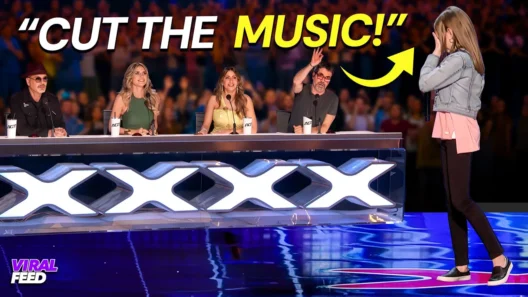
“Fais-moi rêver.” Make me dream. The request lands early, almost like a thesis statement for the night. It is at once a dare and an invitation, the line that divides trick from transport. Over nearly three quarters of an hour, France’s Got Talent 2024 answers with magicians who juggle elegance and nerve, silence and swagger, and, above all, a very French appetite for wonder.
Magic, on this stage, is not merely gadgets and misdirection. It’s the show of self. When a performer toys with balance until the audience gasps—“Il va le mettre en équilibre… ce n’est pas possible”—the reaction morphs into a collective confession. “Ça, c’est très très beau,” someone breathes. Another voice admits, “Je n’arrive pas à le croire.” The message is clear: astonishment isn’t purely about method; it’s about mood.
The quick-change that rewrites the room
She steps out with the composure of someone who has trained for this moment all her life—because she has. “Vous vous appelez Solange, c’est ça?” a judge asks, half-teasing, half-curious. “Vous venez d’une famille de magiciens?” She smiles. “Une 3e génération de magiciens.” The setup is classic quick change. The delivery is anything but. Outfits bloom in sync with a pop anthem. A final gown snaps into place with a flourish that feels like punctuation.
The panel is smitten and precise. One judge sees structural polish in the concept: “J’aime le fait que le numéro est écrit autour de la chanson de Madonna, c’était très bien pensé.” Another marvels at the staging: “Je n’ai rien trouvé… c’est un des meilleurs numéros qu’on a eu de quick change ici.” There is charm in the tiny collisions too—the fashion compliment that turns into a running joke (“vous finissez sur une robe très très jolie… qui fait très Ségara”), the irreverent banter that lightens the air without puncturing the mystery.
« C’était très réussi Solange, vraiment bravo. »
Then the seal: “Avec moi, vous avez 4 oui et vous passez à la prochaine étape.” In a season brimming with transformations, Solange’s stands out because it marries invisibility of method with theatrical inevitability. You don’t notice the work; you feel the wave.
Paper, air, and the spell of simplicity
Another artist walks on with a desk bin, sheets of white paper, and a serenity that suggests the trick is not in the hands so much as in the hush. The judges find the vocabulary instantly: “Pure poésie, mais pure poésie,” says one, singling out the way childhood and craft share the stage. Another hears the philosophy humming in the background: “C’est presque du minimalisme poétique… c’était extrêmement pur.”
They talk, beautifully, about how small things refresh our inner weather. “Un bout de papier qu’on jette dans une humble corbeille de bureau… et tout est né de là,” one rhapsodizes. And then the line that could be a manifesto for close-up magic: “Il y en a qui font des trucs avec trois bouts de ficelle, vous le voulez, vous faites avec trois bouts de papier.” By the time the paper airplanes lift and arc like quiet thoughts, the room is smiling as one. “La magie, ce n’est pas seulement la technique mais c’est l’atmosphère que vous créez,” the panel insists. “Vous apportez le bonheur… Avec vos avions en papier, vous allez faire un carton. Bravo.” The vote is a chorus: “On y va ensemble. 1, 2, 3. Oui.”
Two gentlemen and an umbrella
Not every act announces itself with gravitas. One begins in a flurry of banter that borders on self-sabotage. “Tu veux pas leur demander qui ils sont avant de débriefer?” someone finally nudges. Names are introduced with sheepish charm. “Je m’appelle Clément.” A deadpan reply lands: “Mais on s’en fout.” And then the umbrella takes flight.
The duo serves an aesthetic straight out of Hollywood tap dreams—dapper, light-footed, fed by invisible strings. “On pense à Mary Poppins,” a judge smiles. Another appreciates the way the magic refuses to brag: “On dirait que c’est facile et c’est ça qu’on aime… on est en train de le vivre avec vous.” Yet craft notes are frank. “Il faudrait que vous continuiez à bouger normalement… pour faire la différence avec cet objet de rêve,” comes the coaching on posture and control. The best detail? “C’était la toute première fois qu’on le jouait… Répétition générale,” one of them admits, flush with relief. The panel rewards boldness. “Pour moi, c’est un énorme oui… vous avez 4 oui.”
When a joke becomes the trick
A comic magician leans into cacophony. There’s a sidekick, a bit of blindfold business, a notebook of drawings, and a cadence that knowingly crosses wires. The resident magician on the panel enjoys the cleverness. “Le numéro est malin évidemment… je suis magicien donc je l’ai vu venir,” he says, grinning at the method while admiring the showmanship. But others want more shape. “Je suis restée sur ma faim,” one admits. The consensus is constructive: the “dialogue de sourds” got laughs, but the rhythm never tightened around the effect.
« 2 oui et 2 non… Le public va choisir. »
It’s a rarity: a deadlock forces the audience to decide. The lights pulse, the tension milks the silence, and then: “Ah non… Désolé.” The panel sends him off with warmth—“Vous améliorerez avec les années… Revenez nous voir”—a reminder that on this stage, failure can be a rehearsal for a better self.
The return of Nicolas: screens, cards, and nerves of steel
Some stories arrive with scars. “La magie, c’est la passion depuis que j’ai à peu près 20 ans,” Nicolas tells the judges, and then shares the hinge moment: “J’avais un accident de sport… j’étais en chaise roulante pendant 6 mois… on m’a offert un petit bouquin de magie et là je n’ai jamais lâché mon jeu de cartes.” He has been here before—“2019… je suis allé jusqu’en mi-finale”—and even took the craft abroad. “J’étais aux États-Unis… je suis en finale,” he says, almost in passing, like a magician palming a coin.
He returns with a sharpened thesis. “Sur scène, il aura trois choses. Un écran, mes mains et de la magie.” The setup is contemporary without feeling gimmicky: projection mapped to sleights, images that answer the flicks of his wrists, analog and digital whispering to each other. The panel notices the evolution. “Comme tu as bien fait de revenir, c’était surprenant et c’était très créatif,” one judge says. Another loves the density of thought: “Tu as été chercher plein d’idées.”
The praise grows more pointed. “C’était moderne,” says a third. And then a line any artist would want to bottle: “Tu es passé d’être inspiré à être inspirant.” But admiration doesn’t eclipse candor. Two judges push him to build a truer stage presence: “Tu manques de présence,” says one. “Le bon qui te reste à faire… c’est sur ton personnage,” adds another, encouraging him to aim as high in persona as in technique. The verdict is momentum. The yeses arrive. The room senses a craftsman on the cusp of authorship.
Between equilibrium and empathy
If there’s a throughline in this compilation, it’s the way the panel keeps returning to atmosphere—tone, grace, humanity—as the real engine of miracles. Early in the night, amid breathless whispers—“Arrêtez de respirer pendant 30 secondes,” someone jokes, as if holding still will help solve a secret—another judge gives the version that will outlast every reveal: “La magie ce n’est pas seulement la technique mais c’est l’atmosphère que vous créez.”
Watch the advisors toggle between delight and diagnosis. They celebrate invention without letting it float away unchallenged. With Solange, they exalt precision—“Très bien pensé… un des meilleurs”—and still find the storytelling inside the sparkle. With the paper airplanes, they call it “extrêmement pur,” then tie the purity to shared memory. With the umbrella duet, they calibrate posture to poetry, reminding us that comedy and grace can share a roof if the body learns the music. With the comic misdirectionist, they laugh, then ask for a tighter drumbeat. With Nicolas, they name the leap in creativity, then dare him to make the same leap in self.
What France’s Got Talent teaches about magic
We often talk about magic in binaries—manipulation vs. illusion, gimmick vs. skill. This season’s auditions collapse the distance. The best pieces here feel written, not just assembled, and you can hear the judges reward that authorship. “Le numéro est écrit,” they say with respect. You can also hear them lean toward performers who share more than method: the ones who risk their influences, their humor, their stories.
It’s why a minimal routine with office paper can eclipse a warehouse of props; why an old-school quick change becomes new when it fits the rhythms of a pop song and the artist’s own presence; why a digital hybrid can feel warm when the hands still do the honest work. The audience senses integrity. They sense joy. As one judge put it, watching those paper planes lift the room: “On a vu que tout le public s’est détendu… Vous apportez le bonheur.”
What’s next
Several magicians leave this round with doors thrown open—“4 oui” ringing like a bell—while others carry away notes that could harden into breakthroughs. The panel has given them a map: sharpen the writing, protect the atmosphere, and show us who you are when the method sleeps. If they follow it, the next stage won’t just be bigger. It will be brighter.
All of this lives better in motion: in the quick blink before a dress arrives, in the hush of a paper fold, in the glance between two brothers and an umbrella, in the jitter and grace of a comeback. Watch the full video to feel those beats for yourself—and to decide which magician, and which flavor of wonder, you want to see return to the stage.