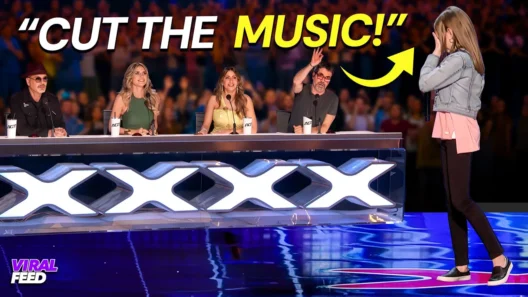
The 2024 season of Romania’s Got Talent is having a moment—the kind that makes you lean forward, hold your breath, and whisper, “Oh.” What follows that first hush is the show at its best: irreverent, inventive, and brazenly human. A cheeky “Goodbye, Damiani,” a ripple of laughter, and then the room tightens as a performer takes command of the silence with brisk, technical cues: “Left.” “Stop.” “Down.” “Slowly right.” “Stop.” You can feel the recalibration in the air, the way a theater settles right before something that shouldn’t be possible happens anyway.
The borrowed phone and a first-time dare
One magician opens not with a flourish, but with a plea to the crowd. “He wanted to be my partner. I can use your help now. Can I use your phone, please?” There’s a murmur, a hand goes up, and consent arrives with a shrug and a smile: “Is that okay? Thank you.” He turns the lens toward himself and us at once. “Selfie mode. Recording. Ready?”
The choice to shoot on an audience member’s device is a small stroke of genius—equal parts vulnerability and bravado. No backstage cutaways. No safety net. Just a promise: “This shot is gonna be the first time we ever attempted this trick, especially for all of you.” When a magician wagers novelty instead of nostalgia, the room becomes a co-conspirator. We’re not watching something polished flat by repetition; we’re witnessing a coin flip in real time.
High-speed humor: a card, a cucumber, and the bravest volunteer
Another act arrives with the swagger of a stand-up who just so happens to throw playing cards like darts. “It’s a card throwing demonstration … I can throw cards the farthest and the highest in the world and there’s no magic,” he says, smiling as he names his craft after a decade of lonely practice: “Ten years of being alone on Friday nights.” Then, with comic timing that lands as squarely as his throws, he shrugs: “Yes, ma’am. I’m still single.”
He scans the crowd for courage and crowns a volunteer. “I need the bravest person in the audience. So a huge round of … Pavel.” The premise snaps tight: “When I throw a playing card, it flies up to 150 kilometers per hour. Let’s try a digit … I’m gonna try to cut Pavel’s finger in half. Are you ready, Romania?” A beat, and mercy: “It’s a joke.” Relief detonates as laughter. The danger turns slapstick as he outfits Pavel in makeshift armor. “Hold your hand like this … and put this on for your own safety.” Then the stunt becomes oddly culinary. “It’s impossible to cut Castrovete in half, but I can try to stick one card into a cucumber. Would you like to see that?” The house answers for itself.
He never lets the crowd forget whose skin is in the game. “Now I’m not very accurate when I throw at high speed. So Pavel? Be careful.” It’s affectionate, chaotic, and exactly the sort of joyful peril audiences come for—a tumbling, bilingual patter that keeps the stakes visible and the tension buoyant.
Around the world in shuffles, then straight into the air
Cards are universal, but the hands that handle them are local. “People shuffle cards differently all around the world,” he tells Pavel, building pace. “In India, they shuffle like this. It’s called Hindu shuffle. In Las Vegas, like this. This is called Las Vegas shuffle. Taiwan. Taiwan shuffle. Iceland. Very cool. Romania.” A deck becomes a passport; the stage, a terminal.
The trick pivots from travelogue to test. “Your card is somewhere in this deck,” he says, sliding the pack into a contraption with a grin that dares failure. “Cards go here … in this gun. Hold my gun. Towards this. Don’t push it yet.” He counts them in. “On the count of three, press and hold.” A cyclone of pasteboards erupts overhead. He slices at midair randomness with a single card like a fencer. Then the gut-check: “For the first time—what was your card?” The answer, deadpan and perfect: “Two wrong.” He blinks. “Two wrong? Yes.” In that exchange, the season’s spirit is distilled: audacity meets humility, and the laugh is as earned as any gasp.
Father, son, and the world’s oldest new trick
If the card-slinger is chaos, the father–son duo is ceremony. “My son, are you ready? Let’s go,” Dad says, placing three small balls and three cups like chess pieces on a family table. “This is a special game and a test for you … This is a game using three balls.” The son—Johnny—leans in as any apprentice would. Questions flutter. “Any questions before we begin?” The answer arrives in motion.
Beneath the cups, physics bends. “That’s crazy,” someone says, and it is. Balls vanish, then return with impatient punctuality. “I do two things, Johnny. Teleportation. Number one, vanish.” It’s a lecture and a lullaby. The tempo spikes when Dad flexes. “I do the trick 10 times faster … Already happened.” Three balls reappear as if they were tired of being hidden. Johnny, emboldened, fumbles and flies. “Bring it back, Johnny. Bring it back. We need three balls.” Each near-miss becomes part of the pattern: the old school welcoming the next school.
Then comes the grin that tells you they’ve planned the chaos. “Big balls, Johnny. Big balls.” It’s silly, then somehow profound. The finale moves from sleight to statement. “Vase, big balls—vanishing a ball this size is physically Bam. Impossible. Did I fool you? … Sometimes you have to respect the old school.” The lights swell and Dad raises the stakes from trick to creed.
“Psychological damage.”
“Your time is now, so accept no limits. Believe in yourself and unleash the power within you.”
They sign off with a name that sounds like lineage and pledge in one breath: “And that’s is the Hayashi father and son cups and balls.”
The professor who moonlights in wonder
Elsewhere, a different kind of introduction slides across the mic, puncturing stereotypes with a smile. “In Germany, I am a a professor of English at the university in Mannheim.” Then a gesture toward a partner and a shrug of identity: “She magician.” The room chuckles. The gap between lecture hall and limelight collapses. It’s a reminder that magic is less a profession than a persuasion—the belief that ordinary hands can do extraordinary things, no matter where they spend their weekdays.
“Do you need us on the stage?” When the judges step closer
The night’s sharpest intake of breath arrives when the line between spectator and spectacle vanishes. “Do you need us on the stage?” a judge calls. “Yes,” the magician replies, already clearing space: “I’m over here. Into my office.” Dragos takes a spot. Another judge edges in. The props are humble; the intent is not. A deck fans. “All different. Yes.” Then the instructions become liturgy. “In a moment, I’m gonna go through the pike like this. You say stop anytime you want.”
“Stop. Right here.” A card is chosen, flashed, filed away. “Show it to the camera and show it to Dragos … Remember? Yes. You see it? Yes.” The performer ups the intimacy, handing pieces to the bench. “Can you take this? You wanna broke it? Mhmm. Good. Yes. Take it. Perfect.” There’s a hush that audiences recognize—the hush before a line gets crossed.
“Are you sure?” the magician asks, guiding a hand into place. “Stand right over here. Hold our hand like this.” Laughter curdles into adrenaline. “Oh my god,” someone whispers, then louder, “Oh my god.” Relief crashes in waves once the danger resolves, and admiration floods the gap. “I’ll do. I’m your friend. You’re friend. I like you very much,” a voice assures. The verdict is quick and warm. “From me, you have a yes.” Another adds, with a grin only live TV can summon, “I give you a cotton pass, man. Okay.” Deals, squeals, and applause. It’s the messy beauty of a talent show at full tilt.
Why this season’s magic lands
Across acts, a pattern emerges. The magicians who’re winning the room aren’t just fooling us; they’re folding us in. They ask for our phones. They hand the props to our heroes at the judges’ table. They tell us when they’re trying something “for the first time,” and when a punchline undercuts perfection—“Two wrong”—they let the laugh stand. It’s not sloppiness; it’s strategy. The distance between stage and seat shrinks, and in that closeness, astonishment feels earned rather than imposed.
There’s also a strand of generosity that threads the night. “Romania has got talent. Yes. We need to do something crazy. Even more impressive. Yes. Let’s do that.” The show is big, but the best beats are small: a borrowed device, a cucumber, a son’s startled grin when three balls reappear where they shouldn’t. Even the exits carry flair—“Bye, Chavista”—a mic-drop wink ricocheting off the rafters.
What sticks is less a single reveal than a shared tone. The card-thrower’s disclaimers, the father’s pep talk, the professor’s aside—they all teach us how to watch. They suggest that magic isn’t about hiding; it’s about framing. “Hold your hand like this.” “Don’t push it yet.” “Watch the balls.” The commands are choreography for the audience as much as for the assistants. We obey, and the impossible obliges.
So where does it go from here? The rules of the season are clear: take risks, break patterns, let the audience in on the weight of the wager, then pay it off with either thunder or laughter. If you’re ready for a roundup that captures that energy—the danger, the charm, the left turns and right feints—watch the full video. The next surprise might be your favorite kind: the kind that makes you forget to blink.