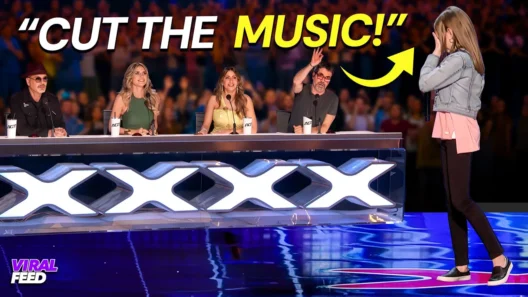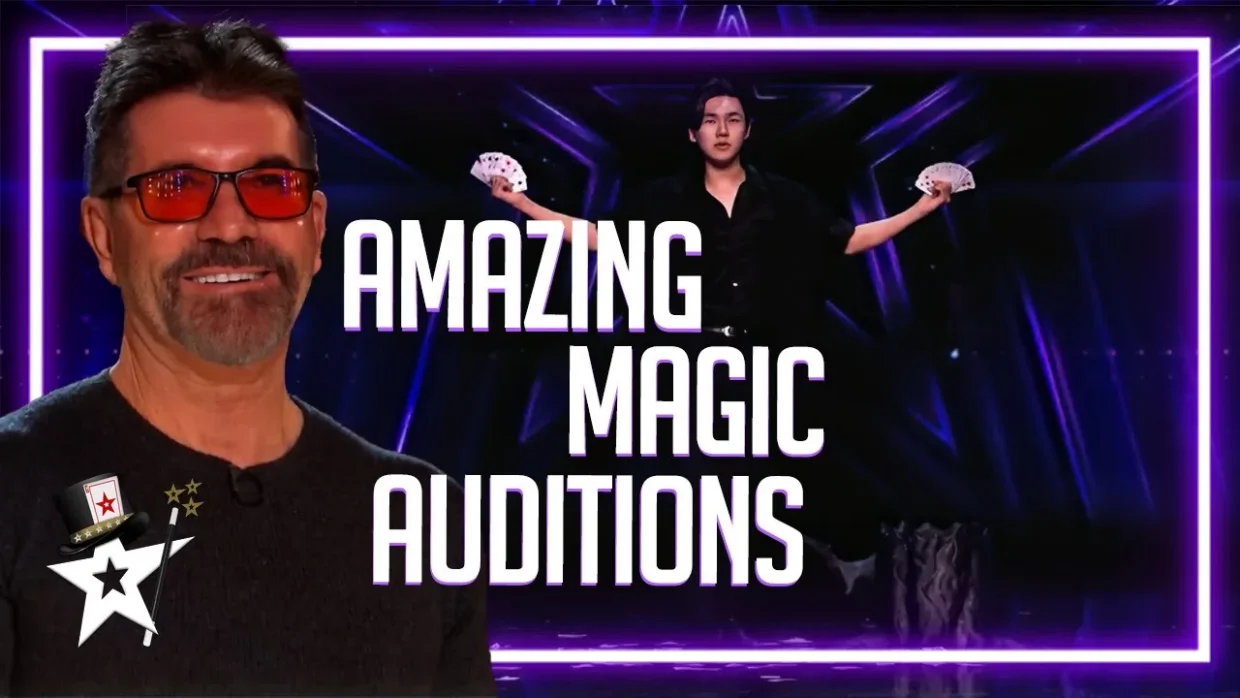
The first thing the bar magician says is the thing that matters most: “I don’t use big props. I can’t afford them.” He’s standing on the Got Talent stage with a deck of cards, a few balls, and what he calls “dazzle the world” energy. No smoke machine. No elaborate rigging. Just his hands, a six-year-old son’s influence on his trick selection, and a self-deprecating “I am ghetto” that lands somewhere between apology and badge of honor. He tells the judges that bar magic, as opposed to regular magic, has to be performed “exquisitely” because it happens close to your face. There’s no hiding behind a curtain or a spotlight. The audience can see every finger, every shuffle, every micro-movement.
He works the judges up close. He puts a ball in Heidi Klum’s palm, tells her to hold it tight, and then mentally assaults her other hand. She says “Shut up.” He makes a pen appear in his own nose. Howard, who admits he has “eagle eyes” and was watching the magician’s hand the entire time, says he has “no idea where these cards were coming out of.” The verdict: four yeses. Howard calls it “best thing all day” and says he was “not prepared for what I saw.” The magician walks off with a smoothie and a thank-you that sounds like a man who just got paid in applause.
The quick change that isn’t
Quick change is old. A hoop, a costume, a flash of light, and suddenly the outfit is different. Magicians have done it for decades. But the performer who opens this video redefines it. He calls it the “human quick change,” and the effect is so fast that Howard says, “I had to have a quick look to make sure he was still there.” A person vanishes and reappears in a different configuration, no hoop or costume swap required, and the audience has to decide whether they blinked or the universe hiccupped.
Later, another quick change artist takes the stage, and this one gets the highest praise in the room. Howard says he’s seen quick change performers on the show before and “I’ve never seen one better than you.” The outfit flies from a hanger in thin air, lands on the performer, and the presentation is what Sofia Vergara calls “world class.” Heidi, who says she loves fashion and has never had someone this good on the show, recommends the act go “straight to the live shows.” That’s a fast pass. Sofia adds that normally when they see this kind of act, there are two people in it and “the music’s terrible.” This one was a solo performance with showmanship that made the judges forget to critique.
The box that carried a man to freedom
Magical Bones walks on and says he wants to show the audience “something you’ve probably never ever seen before.” Then he tells a story. Henry Box Brown was born a slave in Virginia. In 1849, he hid in a small wooden crate and mailed himself to Philadelphia, where slavery had been abolished. He arrived free. He later traveled to England, became a magician, and described himself as an African prince. He wore a signature neckerchief in every performance. Bones holds up that neckerchief on stage and says, “We’re gonna come back to this in a moment.”
Bones uses that story as the spine of his act. He traps a woman named Lamaci inside a box surrounded by fifteen swords. No possible way out. He tells the audience, “No matter how impossible your circumstances may seem to be, there’s always hope for a better day.” The escape is the payoff, but the story is the engine. It turns a standard vanishing act into something that lands in the chest before it lands in the eyes. Henry Box Brown mailed himself across state lines in a crate. Lamaci has to get out of a box with fifteen blades around her. The parallel isn’t subtle, and it doesn’t need to be.
Tricks that unmake themselves
The perception magician does something rare on a talent show: he reveals his own method. He performs a vanishing act using stage lights to pull the audience’s attention, then says, “A magician never reveals a secret. Should I tell you I did it?” The audience says yes. He puts on a reflective jumpsuit, switches to UV lights, and shows the moving plate on the back of the chair that lets him escape at the last second. He does it again in full view, in pitch black, and says it’s “not that simple.” The trick keeps working. It just stops being a mystery. The audience gets to see the mechanism, and the mechanism is impressive enough to stand on its own.
Another magician takes a different approach to the same problem. He asks Howie to guess what’s in his hand. Howie says “nothing.” It’s a wine cork. Then he builds up three coins through pure visualization, lights them on fire one by one, and makes Howie disappear through the power of imagination. The audience spots a quark in the air. Howie says, “I made him disappear.” The magician replies, “You made Howie disappear.” The distinction is the whole point. The trick wasn’t in the magician’s hands. It was in the audience’s willingness to believe.
No cards. No ink. Just squeeze.
The final act starts with a promise: a card trick that doesn’t use any cards. The magician gets Michelle to write her name on the Queen of Spades, pushes it into the deck, and then pulls a prediction from a zippered wallet compartment. Michelle’s name is on it. She didn’t send anything up beforehand. He waves a Queen of Diamonds over Jason’s hand and claims the heat changes the ink, making it look like the Queen of Spades with Michelle’s name on it. Then he tells the audience to squeeze their hands as tight as they can, and the deck turns into a solid block. The magician who said he wasn’t using cards just made them disappear into a single object, and the only tool was pressure.
What ties these six auditions together is the hands. Every performer works with what they can hold, what they can touch, what they can make the audience believe is real for the two seconds it takes to look away. The bar magician can’t afford big props. The quick change artist doesn’t need them. The man in the box with fifteen swords needs exactly one box. On this stage, magic runs on the gap between what you saw and what you know happened, and the two seconds where you can’t close it. Watch the full auditions and see which trick makes you check your own hands.