Your brain is a prediction machine, and it fills in gaps faster than you can argue. It takes one quick look, borrows whatever it has seen before, and hands you a confident answer. That shortcut is usually a gift. It is also why a few well-aimed photos can make you stop, tilt your head and wonder what on earth you are looking at.
Every picture in this gallery lives in the tiny gap between what your eyes receive and what your mind decides. A shape lands in the wrong place, a scale cue goes missing, a pattern snaps into a face. Nothing here is hidden and nothing is faked. Your own assumptions do the heavy lifting.
Here is how to play. Take each photo on its own, guess what you see, then read the note underneath. Half the fun is catching the exact moment your first answer falls apart.
All photos in this gallery are AI-generated illustrations.
1. The Morning Commute In Motion
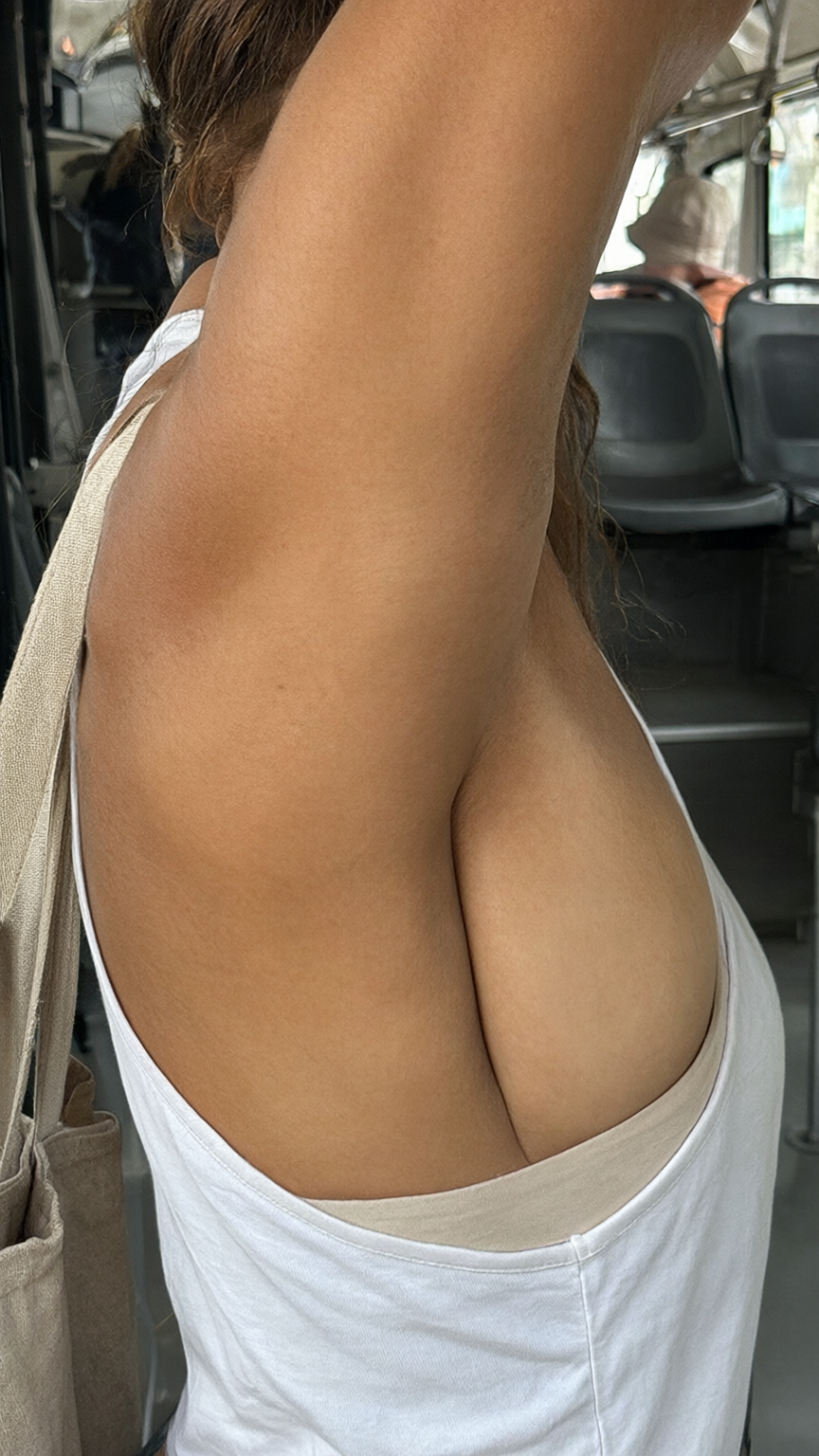
The first thing most people see is a pair of smooth curves meeting in a deep crease, and the brain, ever hopeful, offers a suggestion that has nothing to do with public transport. It happens before reasoning can arrive, because the hand is out of frame and no wide shot tells you where you are.
What you are actually looking at is a woman in a white tank top holding the overhead rail on a city bus. Follow the lines upward and they end at the metal bar. The upper curve is her shoulder, the lower one is the side of her ribs, and the crease between them is her armpit in flat grey morning light. A canvas tote sits at the left edge, and soft blurred seats place her in a commuter crowd.
The mind matches a fragment to its nearest familiar template and stops checking. Handy when you are crossing a street, less handy on a bus.
2. Road Crew, Hard At Work
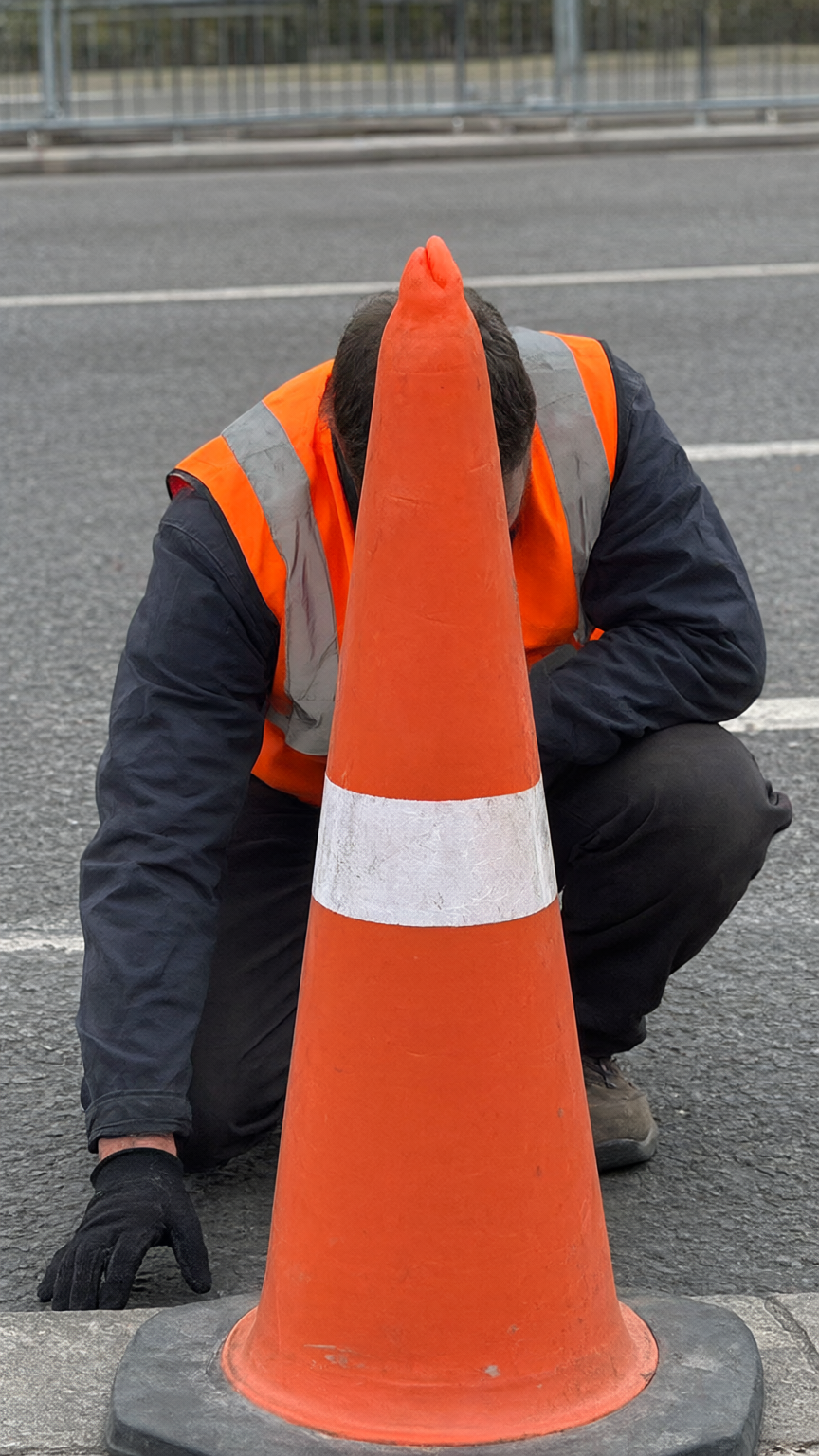
At a glance this is a very strange employee: an orange vest, a pair of knees, one gloved hand planted on the asphalt, and a long pointed head that looks like it belongs in a cartoon. The eye locks onto the shape and never asks for a face. When one is missing, the brain quietly borrows the nearest object that fits.
It is a road worker crouching behind a traffic cone. The cone stands at exactly head height and perfectly centered, so it hides his face and his hair in one clean shape. Look at the waist: the vest ends where his shoulders should be, and the cone begins right there, which is why the two read as a single body. Down at the left, a blank black glove rests on the road while a blurred barrier closes the background.
Timing and camera height did all of this. Shift three steps to the side and the man reappears, entirely ordinary.
3. The Shed At The End Of The Row
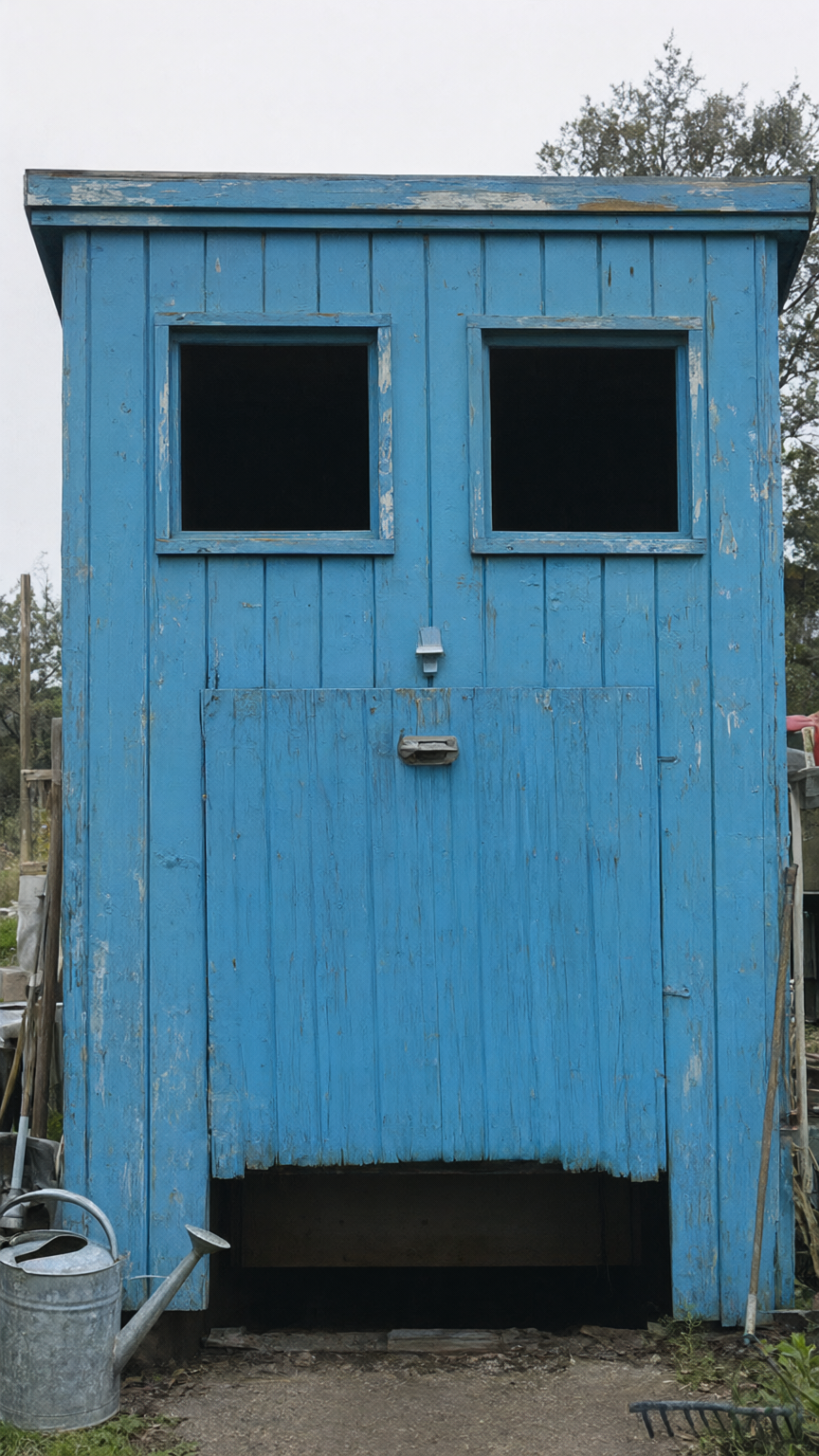
Two dark windows, a small metal latch, and a black gap under a wide door. Put them together and the shed is clearly astonished. Most people see the face before they see the building, and a few even step back. The brain has a dedicated talent for finding eyes, noses and mouths, and it will happily find them in planks.
It is a weathered blue garden shed in flat overcast light. The two square windows sit high and wide, exactly where eyes belong. The latch lands centered below them at nose height, and the shadow under the door curves into a slack, open mouth. A watering can and a rake lean at the left edge, minding their own business, while the shed keeps its expression.
Scientists call this pareidolia, and it is not a flaw. It is the same fast face-finding skill that lets you spot a friend across a crowded room. The shed just happens to be in the right mood.
4. A Warm Corner Of The Cabin
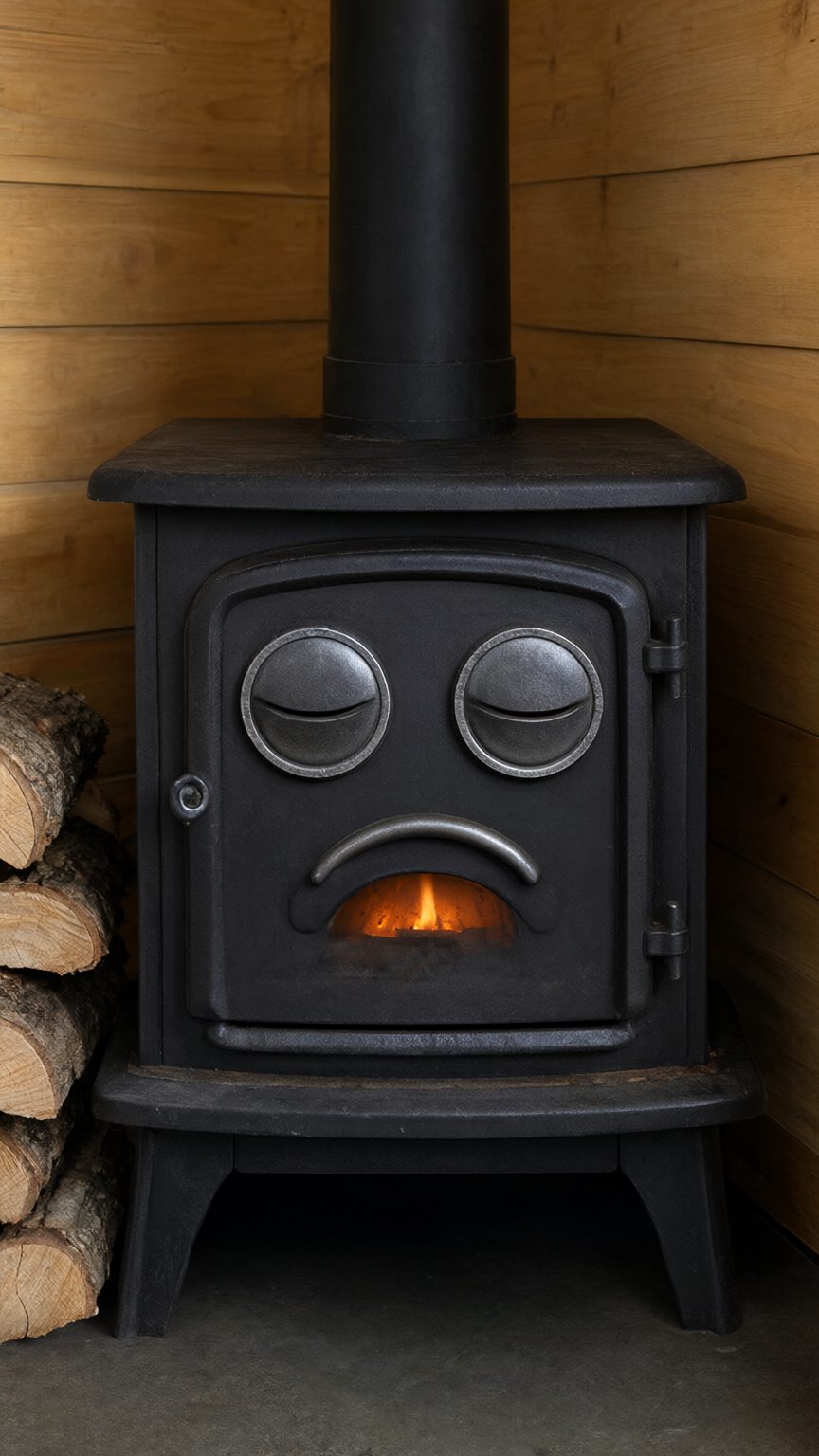
Two round dials with little lids, a curved handle below them, and a slot of orange glow. The stove looks like it has just been woken from a nap. Most people read a face here immediately, and the expression is unmistakable: eyes shut, mouth turned down, deeply unimpressed.
The dials do the eye work, one on each side, lids drooping at the same angle. The curved door handle between and below them bends exactly like a frowning mouth, and the seam of the door underneath completes the jaw. A small fire glows behind the glass, which gives the whole face a warm underside. Split logs sit at the left edge and plank walls close in behind.
Here is the useful part. That face exists only from this angle and this light. Move a foot to the right and it is a stove again, quiet and heavy, waiting for winter.
5. A Very Tall Building Indeed
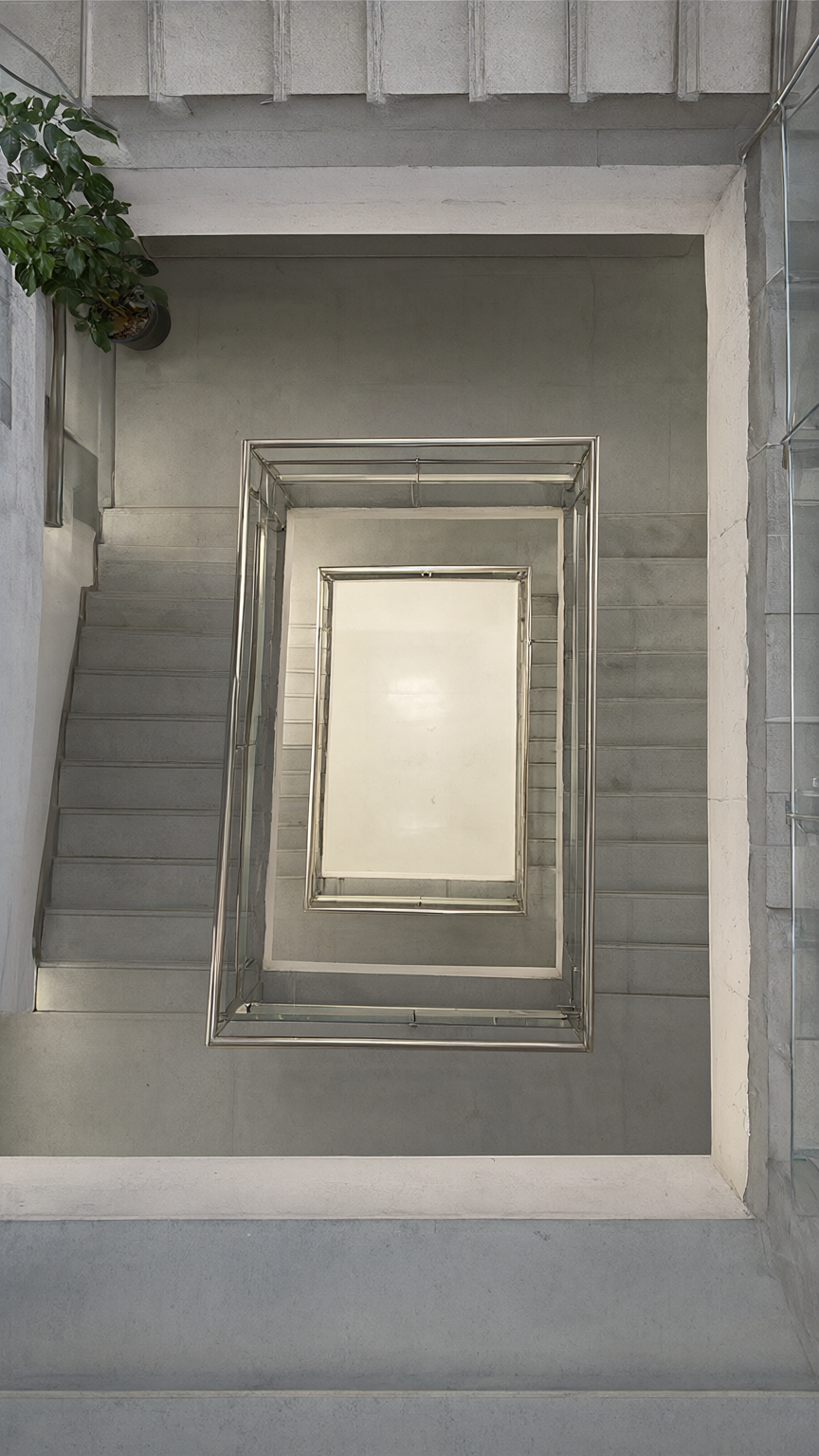
At first the picture looks like an endless building, floors stacked into a bright square far below, and your stomach may file a small complaint. The lines spiral inward, the handrails cross like scaffolding, and there is no clear top or bottom. It reads as a tower photographed from the roof.
What you are actually looking at is a stairwell seen straight down, which is the same thing turned inside out. The square of light in the center is the ground floor, not a distant atrium. Each grey slab is a landing one flight below the last. Thin metal handrails cut across the opening, and a potted ficus sits on a landing at the upper left, a small clue to scale if you spot it.
Photographers call this a forced perspective. Your brain expects a vanishing point to mean distance outward, so when it points straight down, the whole picture flips.
6. A Sunny Afternoon In The Suburbs
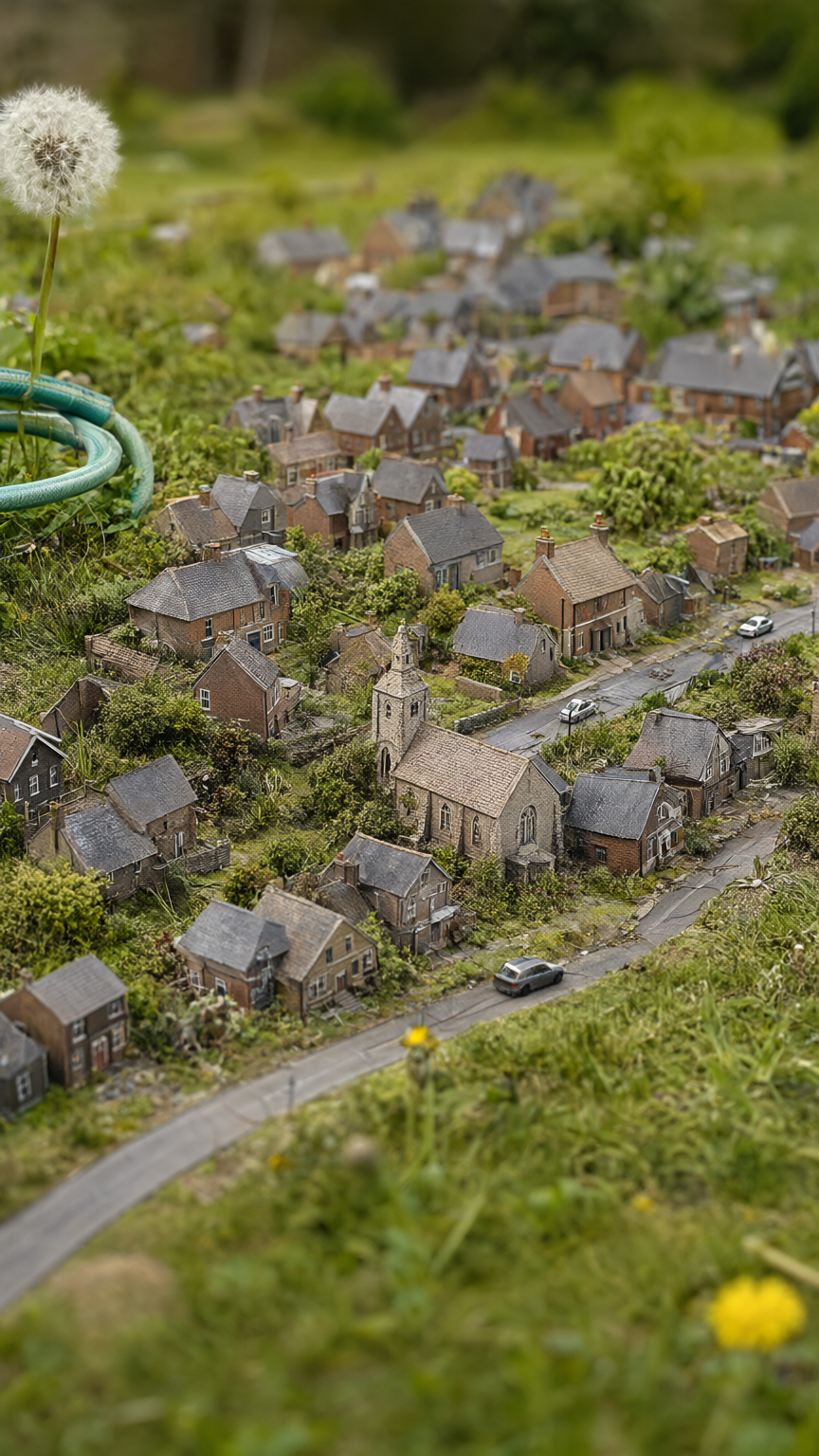
A neat row of brick houses, a stone church, quiet streets. It looks like a small town photographed from a hillside, and for a second you may wonder where the people are. Then the grass underneath registers as enormous blades, and the whole scene flips.
It is a model village set out on a backyard lawn, shot low and close so the buildings fill the frame. The giveaway sits at the top left: a coil of real garden hose and a single dandelion, both absurdly large next to the rooftops. The tiny cars have no readable plates because they have no plates at all. Once your eye accepts that scale, the church stops being a landmark and becomes something you could nudge with a shoe.
This is forced perspective working in reverse. Nothing about the model changed. Only the size of its neighbors gave it away.
So which one got you? Go back and pick the photo you answered fastest, because that is usually the one your brain was most sure about and most wrong on. That little jolt is the whole point, and there are plenty more waiting in the next gallery.