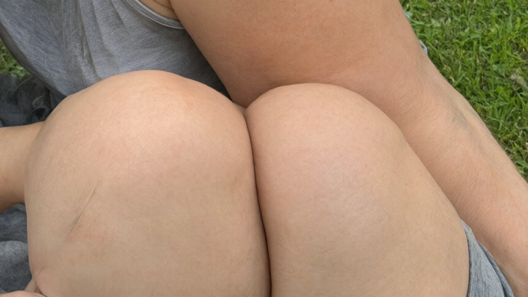
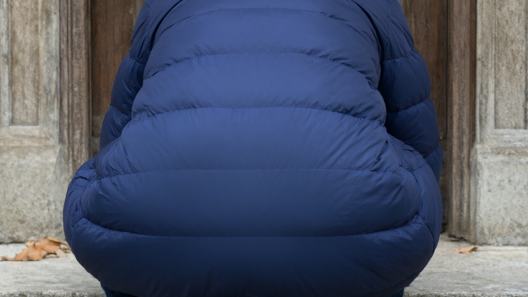
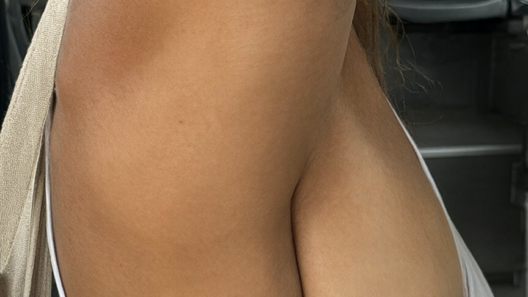
Your eyes are faster than your common sense. In a single glance, the brain grabs whatever pattern fits and hands you a confident answer: an elbow becomes a curve you recognize, a kettle becomes a face, two strangers become one body. It is a shortcut that keeps you alive in traffic and makes you laugh out loud on a coffee break.
That is the whole game here. Ten ordinary moments, caught at the exact angle where the shortcut slips. Look at each photo and guess first. Say it out loud if you like, then read the explanation underneath and watch the ordinary world settle back into place.
Some will get you instantly. One or two might hold out until you tilt your head. That is the fun: the picture never actually changed, only your reading of it.
All photos in this gallery are AI-generated illustrations.
1. The Quietest Coffee Break
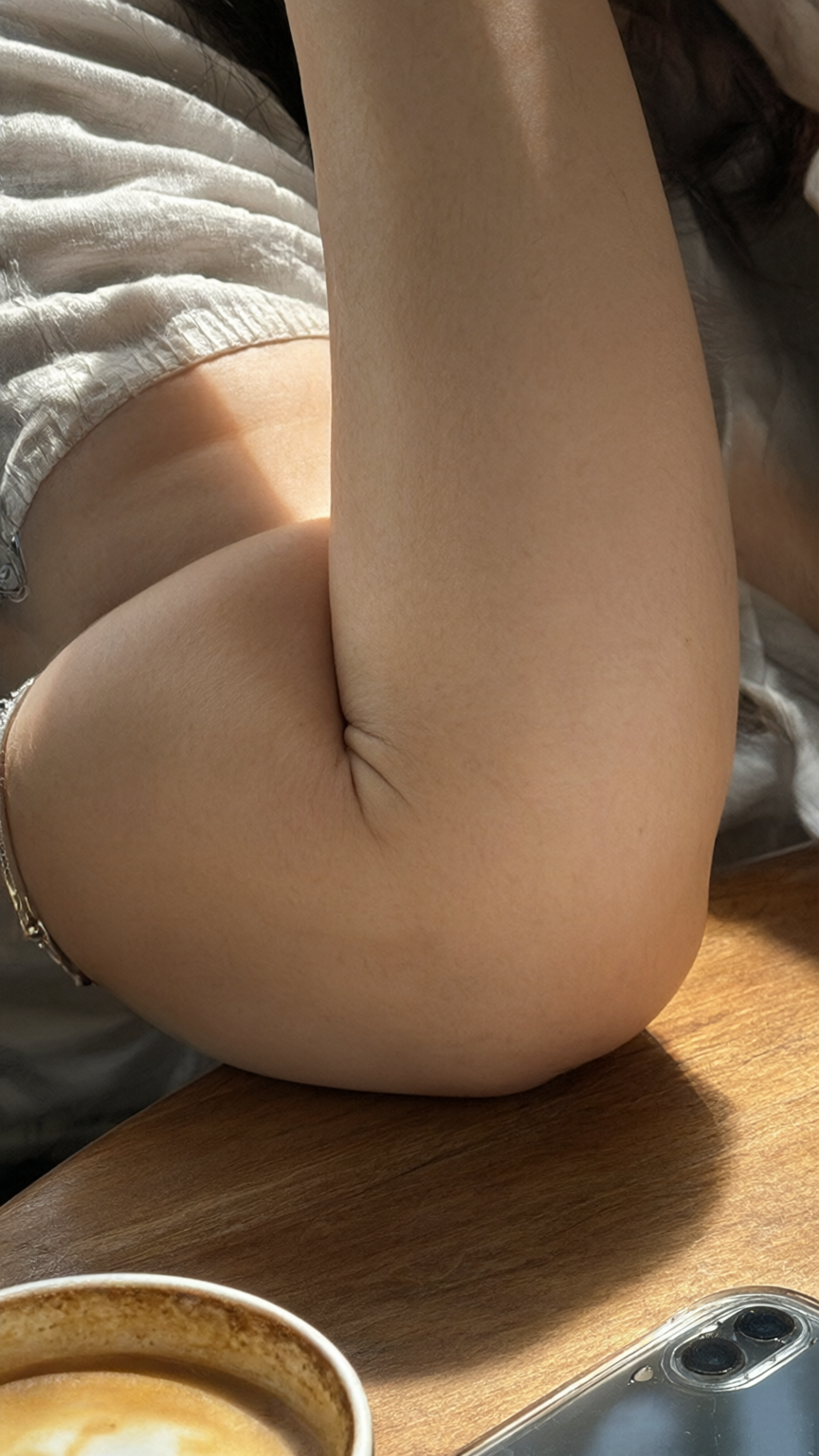
At first glance, the middle of this frame looks like something it absolutely is not. The soft roll of skin, the deep crease, the warm window light along the edge: your brain has seen that shape in a hundred beach photos and fills in the rest before you can stop it. The phone and the coffee cup only help, because they tell you a person is sitting right there, relaxed, taking a break.
Then your eye catches the thin bracelet at the left edge, and the rolled sleeve above it, and the trick collapses. This is a bent arm resting on a cafe table. The inner elbow is pressed against itself, so the fold between the two halves of the arm makes a curve that seems to belong to a different part of the body. Follow the line of the forearm up to the sleeve and the whole thing becomes an arm again in about a second.
The effect is a cousin of pareidolia, the habit that lets us see faces in clouds and plugs. The brain is a prediction machine. It would rather be quick and wrong for a moment than slow and certain, which is exactly why a quiet coffee break can make you look twice.
2. The Longest Stretch Before The Run
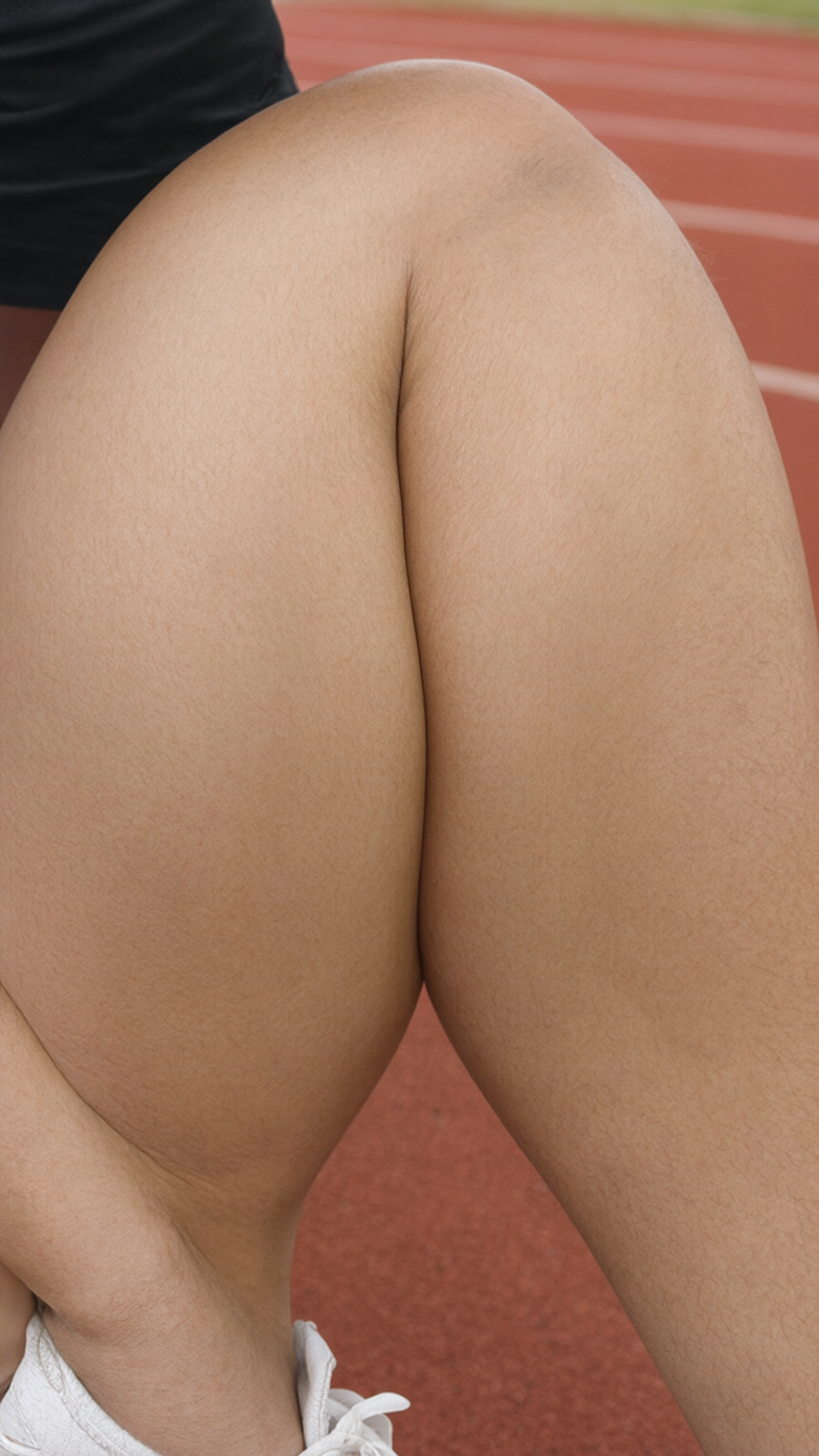
The red track, the white sneaker, the bottle cut off at the corner: everything says sport, and everything points your attention to the middle of the frame, where two rounded shapes meet in a deep crease. For one second the pose reads as something far cheekier than a warm-up, and the brain, always eager to recognize a body, takes the bait.
Look at the black fabric along the top edge, though. That is the hem of running shorts, and the rounded shape below it is a calf, not a thigh. The runner is standing on one leg with the other ankle crossed over the knee, the stretch coaches call a figure four. The cheeky curve in the middle is simply the back of a bent knee pressed into the calf.
Timing and a tight crop do the rest. Amateur phone photos are perfect for this because they leave out the context we would use to correct ourselves: the rest of the legs, the rest of the track, the rest of the person. Add them back and the joke evaporates.
3. The Last One Off The Dock
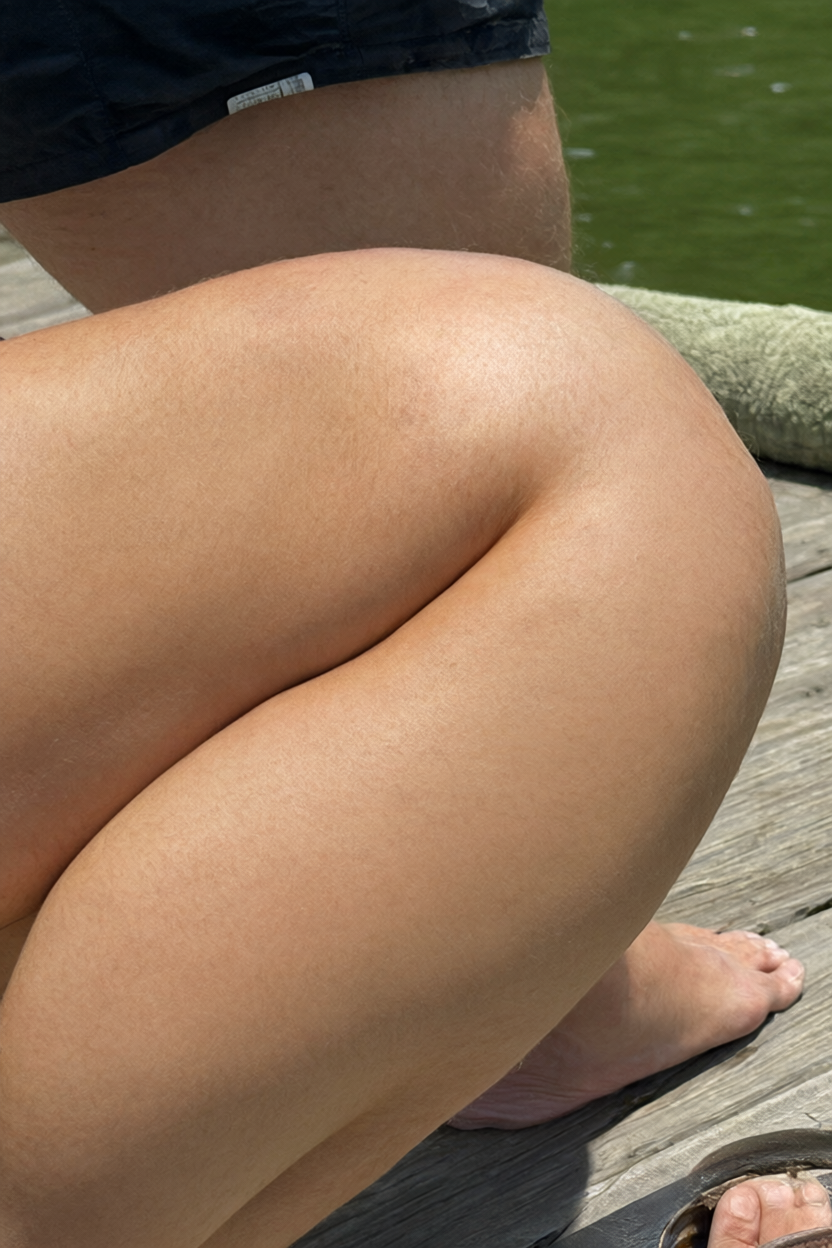
Sun on old boards, a bare foot, a flip-flop kicked off to the side: this one feels like the last warm minute of a summer afternoon. Then your eye lands in the middle, where the fold between two rounded shapes looks, for one heartbeat, like far more skin than it really is.
Take a second look and follow the line down. That is a knee, bent sharply, with the calf folded back against the thigh. The dark swim shorts at the top edge, the ankle, the relaxed foot: it is one person sitting with a leg tucked up, not a person turned away from the camera. The shape is real enough. The story you told yourself about it is not.
This is the friendly kind of illusion, the one that depends on what you expect to find. Show the same photo to someone who has spent the day stretching on a dock and they may never see the cheeky version at all. Context is the whole trick.
4. The Strangest Thing On The Lawn
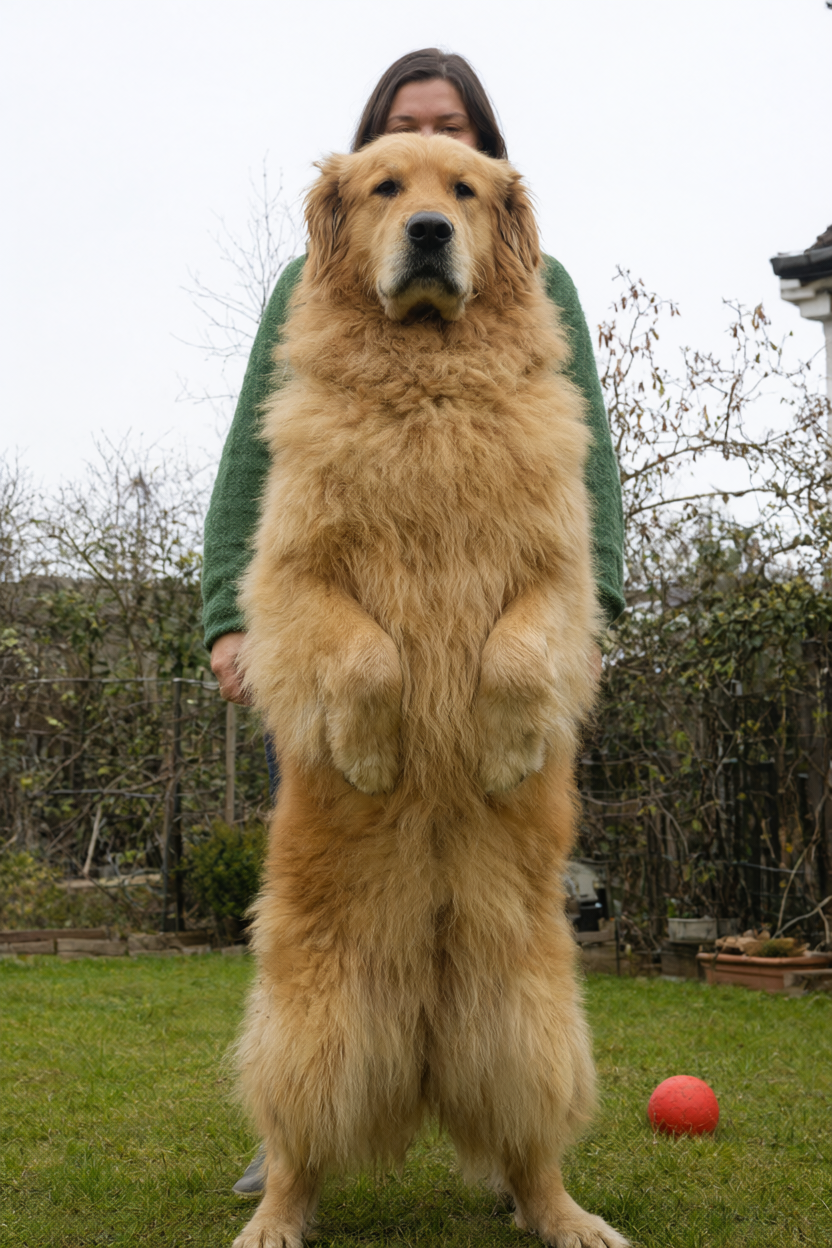
A big golden dog stands upright in a garden, and directly above its head floats a woman’s face. For a second it looks like a creature from a bedtime story, part dog and part person, waiting politely to be let inside. The green sweater sleeves and the hand at the lower right are easy to miss, because the dog takes up all the attention.
The woman is standing right behind the dog, and her body is completely hidden by its fluffy back. Only her head clears the top. That is the entire trick: two subjects lined up on the same axis, one large and one almost entirely obscured, with the camera at exactly the right height. Slide half a step to the left and the picture becomes an ordinary snapshot of a person and her dog on a Sunday afternoon.
Photographers call this forced alignment, and it works best when both subjects hold still for the half second it takes to press the shutter. It works even better when the animal looks straight down the lens.
5. Dinner Is Almost Ready
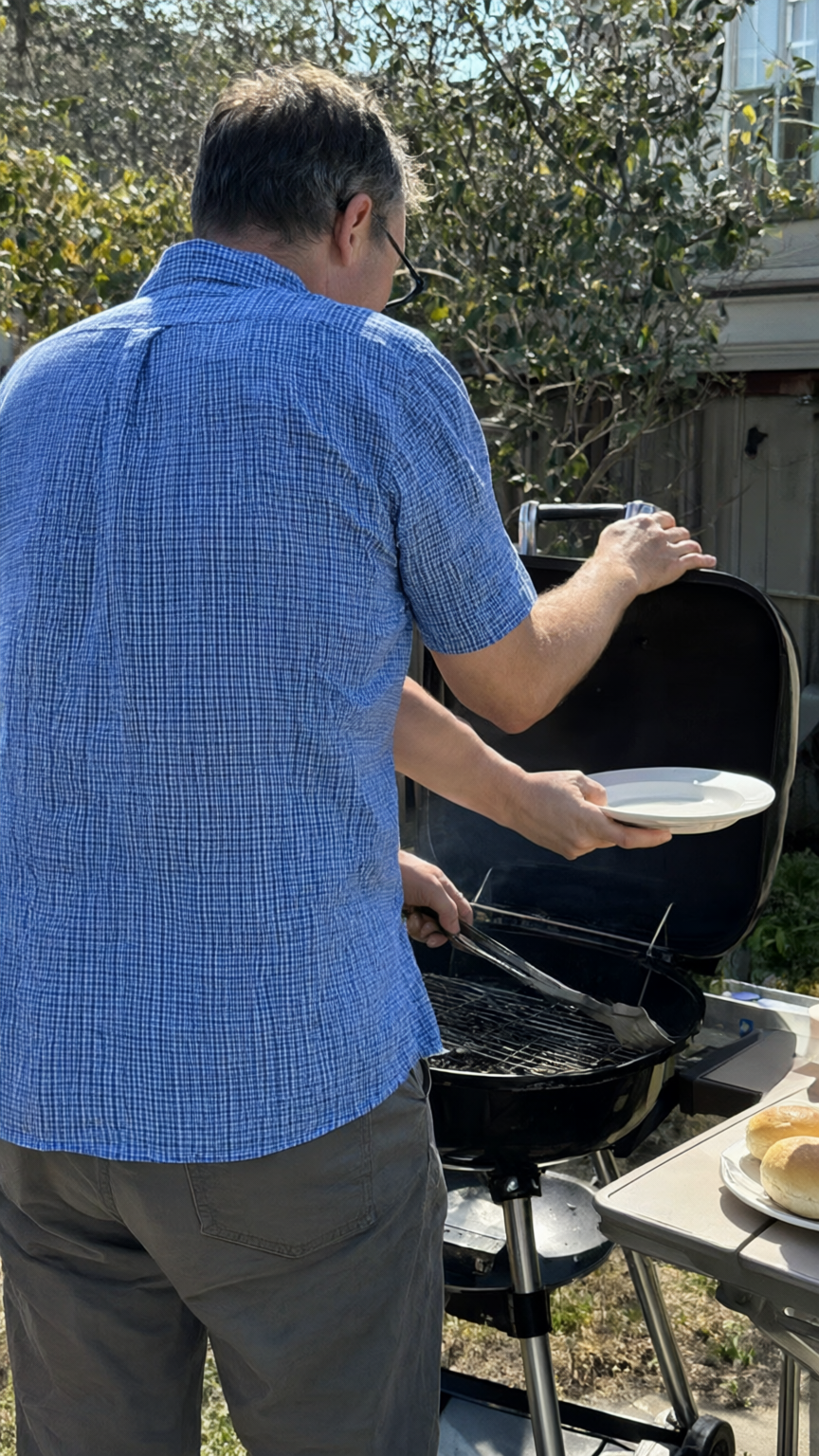
At first glance this backyard cook has three arms. His left hand rests on the grill lid, his right hand holds the tongs, and a third bare forearm appears at his waist, balancing a white plate. The brain counts what it sees and refuses to recount, because a man at a grill is such a familiar picture.
The third arm belongs to a friend standing just out of frame. Look at the shoulder line: the plate arm comes in from behind and to the side, at a lower angle than either of the cook’s own arms. The plate is level with his elbow, which is exactly where a second person would hold it while waiting for the burgers.
A small overlap is all it takes. Two people, one camera angle, and a half second when nobody moves: the eye does the rest, and the joke is entirely on the viewer.
6. The Warmest Welcome On The Porch
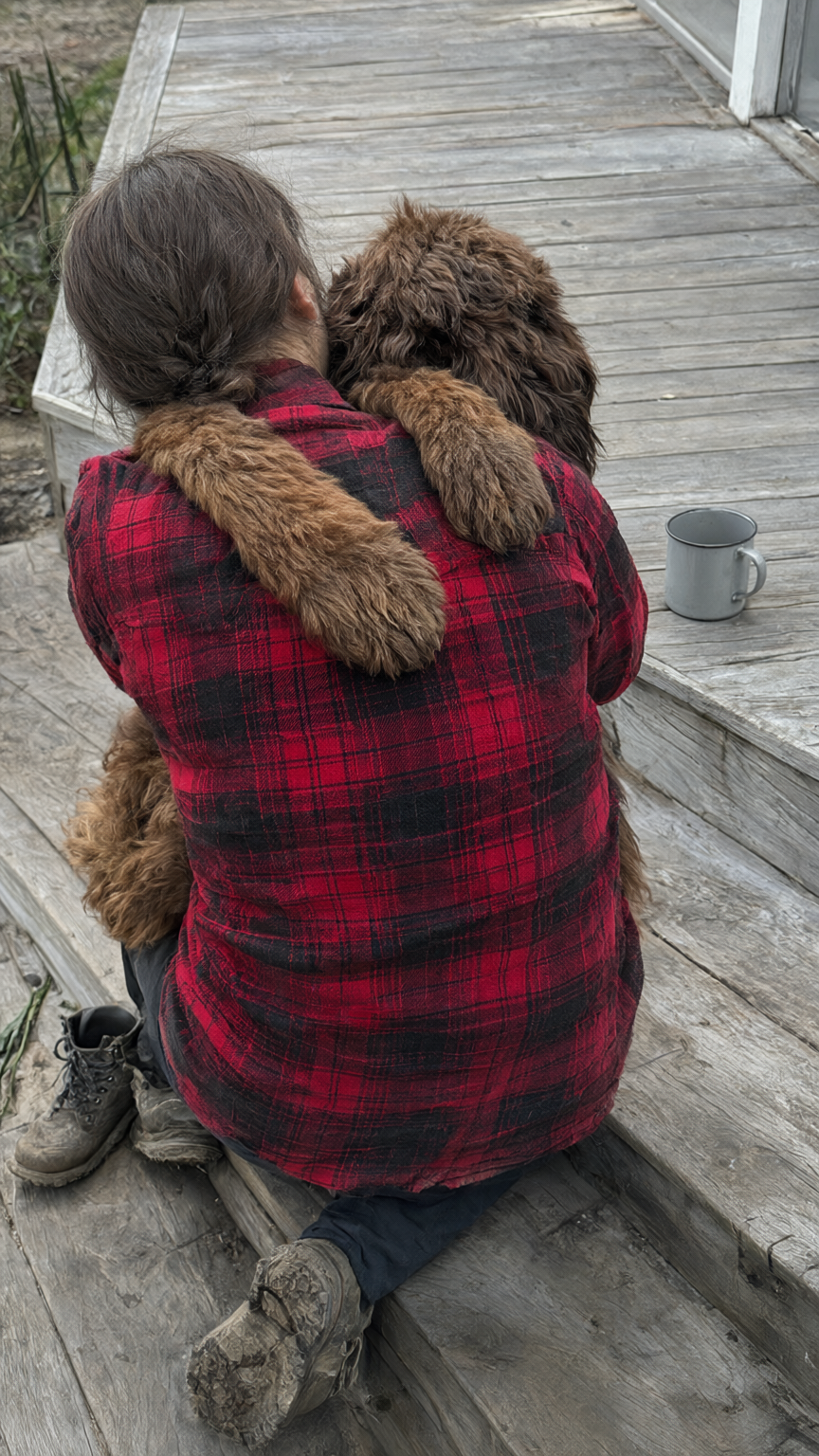
A woman kneels on worn porch boards with her back to us, and the big brown dog behind her appears to hug her, both front legs draped over her shoulders like arms. The gesture is so human that you can almost hear a greeting. Your brain reads the embrace before it reads the animal.
The dog is simply standing up on its hind legs and leaning forward. Its chest is against her back, and its front paws land where a hug would naturally land, one over each shoulder. The flattened ears and the shaggy coat do the emotional work. Nobody taught it this pose. It just wanted to be close.
We are wired to spot intention in movement, even in a still photo. A paw placed on a shoulder is enough to make us feel the welcome, and that is why this one is hard to walk past without smiling.
7. Breakfast Is Running Late
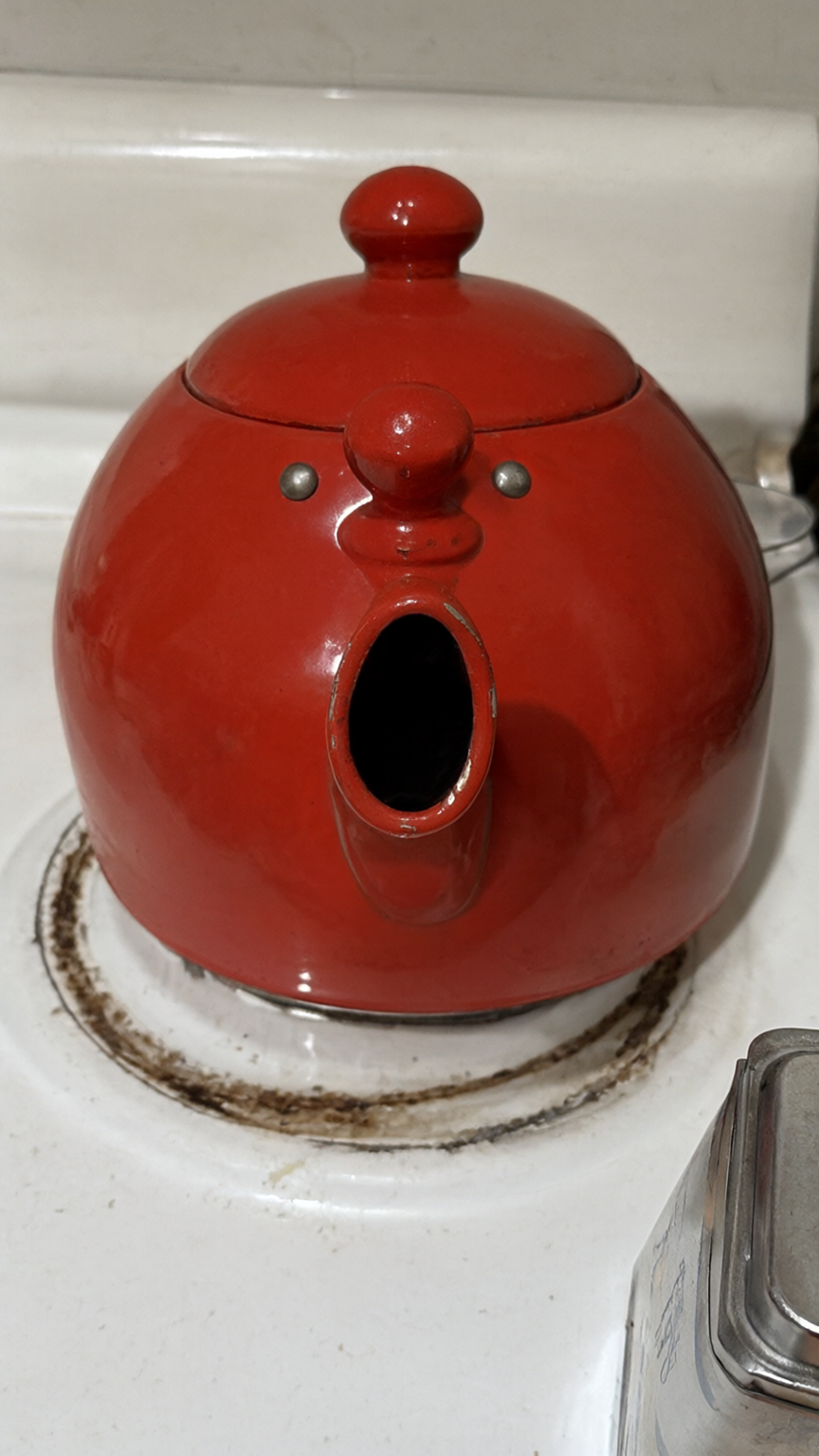
There is a face in this kitchen, and it is not happy. Two silver rivets sit high on the red kettle like wide eyes, a knob in the middle reads as a nose, and the spout’s dark oval opening is a mouth frozen mid-scream. Once you see it, the kettle becomes a character with strong opinions about your morning.
Nothing was added. The rivets hold the handle bracket, the knob lifts the lid, and the spout is simply open toward the camera. The face appears because the parts are arranged like a face, and our brains are extremely good at that arrangement, so good that we cannot switch it off once it clicks.
That is pareidolia, the same useful glitch that finds faces in clouds, toast and the fronts of cars. It probably helped our ancestors spot a hidden person in the brush. Here it just makes a quiet kitchen look like it is complaining about being awake.
8. The Postman Has Had Enough
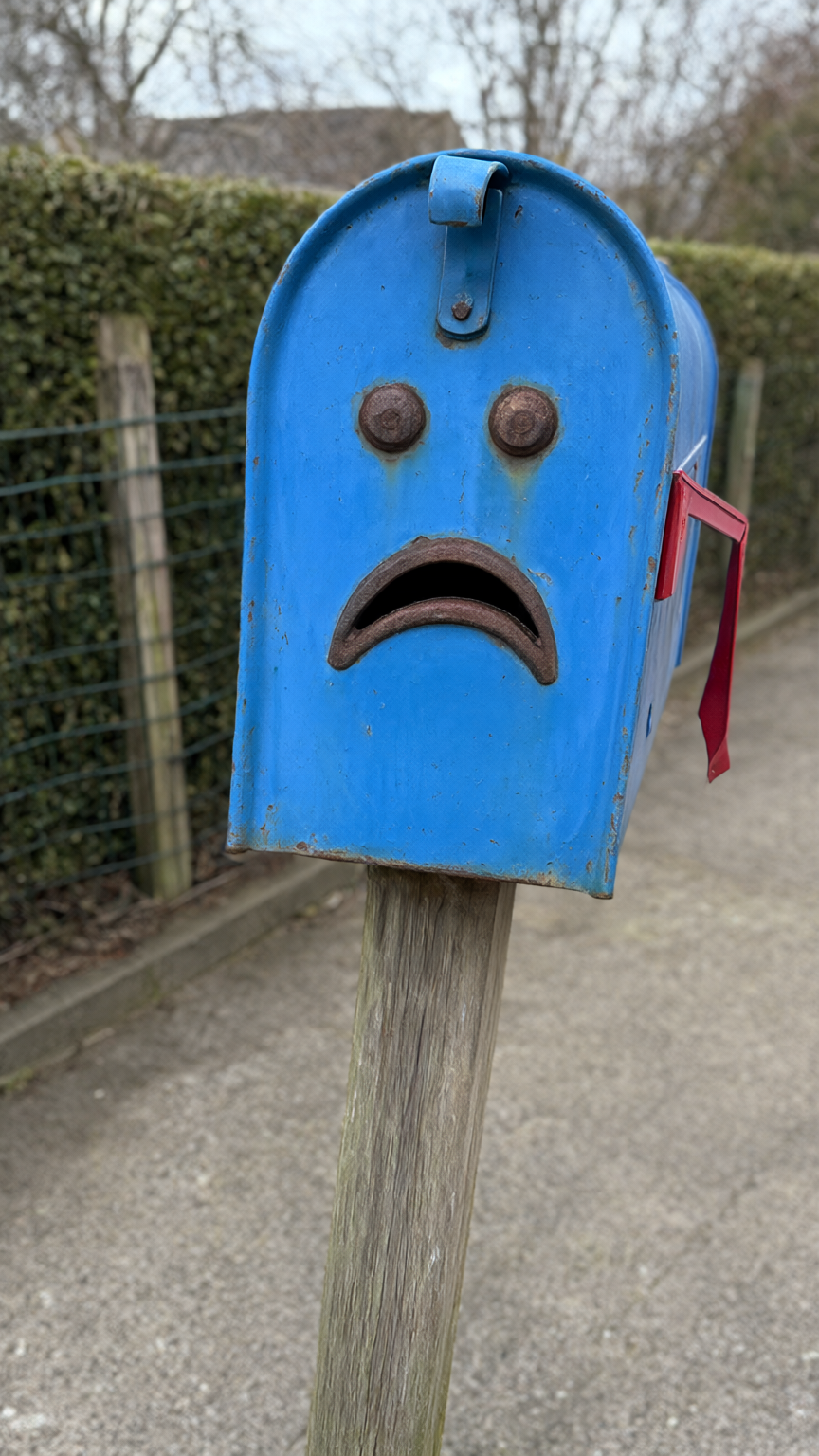
This old blue mailbox has clearly had a long week. Two rusty bolt heads sit high on the front like heavy-lidded eyes, and the curved latch beneath them droops into a perfect frown. The red flag hangs at the side like a sigh.
It is a mailbox on a leaning post, and every part of that expression is functional. The bolts hold the front panel. The latch opens the door. The rust and the tilt do the rest, pushing the eyebrows down and the mouth into a sulk. Move three feet to the left and the face disappears into a box.
Pareidolia loves a symmetrical object. Give it two round points above a horizontal line and it will build you a whole face, complete with a mood, in less time than it takes to read this sentence. The grumpiness is entirely in your head, and that is what makes it funny.
9. The Quietest Corner Of The Park
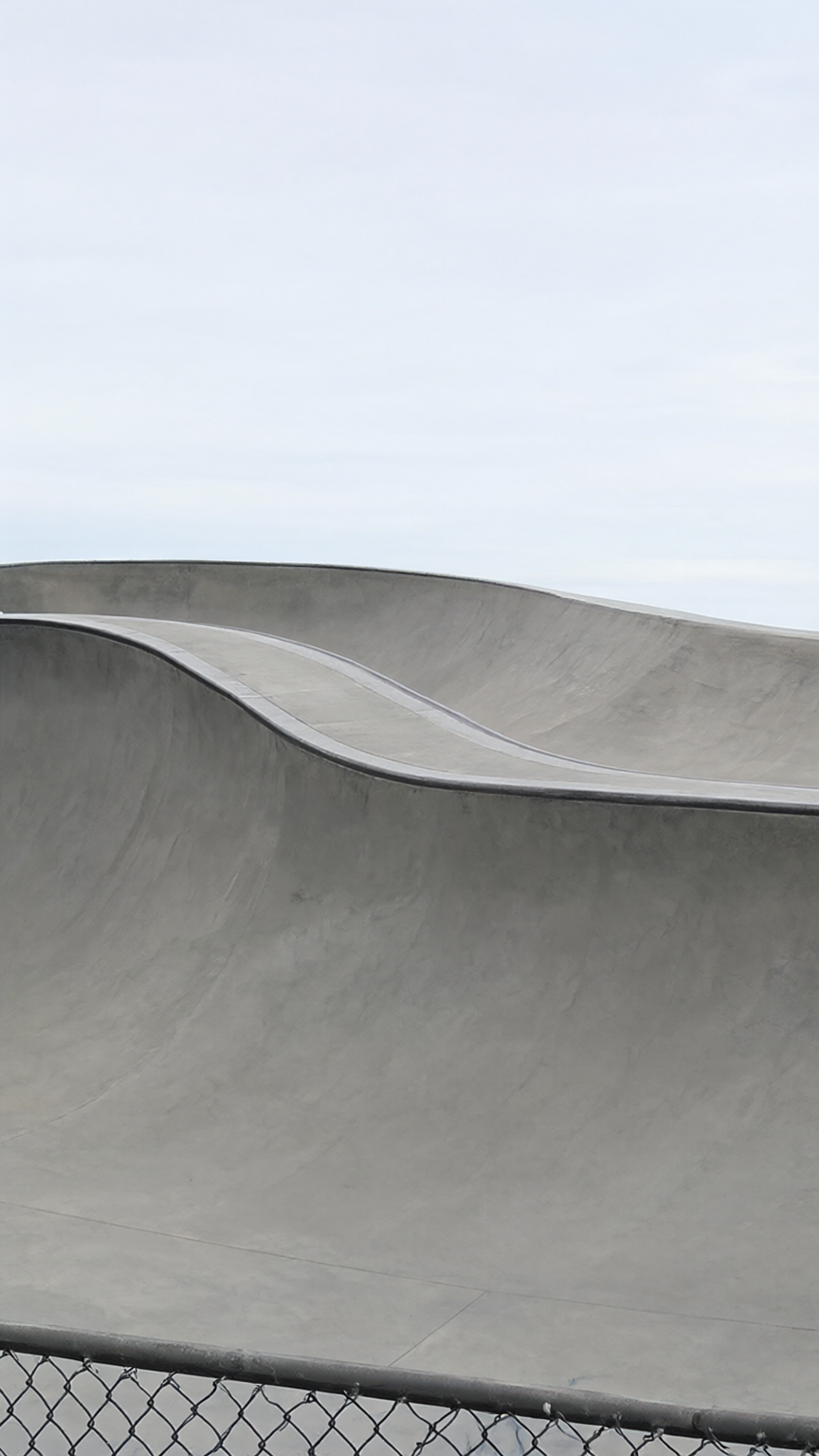
Look at the middle of the frame and you would swear an ocean wave is curling over. The edge lifts, the lip curls forward, and the pale grey surface even looks like water about to break. The chain-link fence along the bottom is the only thing that feels out of place.
It is the lip of an empty concrete skate bowl, photographed from low down inside the bowl. The curve is real. The water is not. With no people, no board and no horizon to give away the scale, the smooth concrete does the work of a wave, and the blank sky above becomes the far side of the swell.
Photographers chase this kind of confusion. Change your height by a metre and the wave turns back into a wall. It is a reminder that the camera never shows you the world, only one angle of it.
10. A Morning Walk That Goes Nowhere
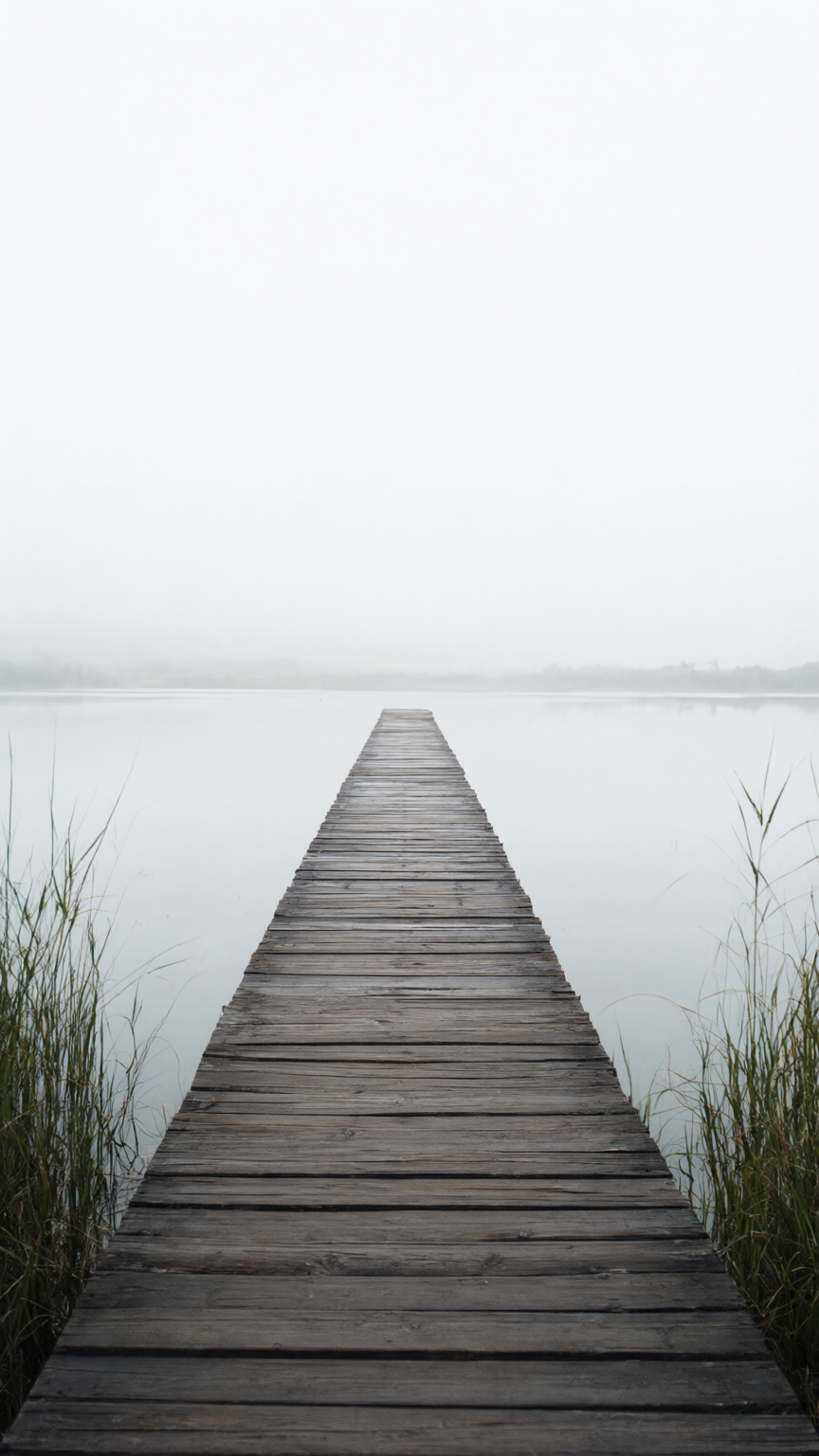
A wooden boardwalk runs straight out of the bottom of the frame and simply stops, meeting a pale surface that looks like more sky. For a second it seems to lead nowhere at all, a path into nothing, and your eye keeps searching for the end of it.
The surface is water, perfectly still, on a flat grey morning. The boardwalk ends a short way out, and the water mirrors the white sky so exactly that the planks and their reflection join in one straight line. The reeds at the lower corners are the clue: they are standing in water, not floating in air.
Still water on an overcast day is the cheapest mirror in the world. The lack of wind matters more than the camera, and flat light erases the seam between water and sky. Stand there long enough and the illusion breaks. Photograph it fast and it keeps.
One of these got you before you could argue, and you probably know which. Maybe it was the elbow, maybe the kettle, maybe the boardwalk that seemed to end in the sky. That half second of confusion is the whole pleasure, a small reminder that your eyes and your brain are still negotiating, all day long.