A fake city meeting with real consequences
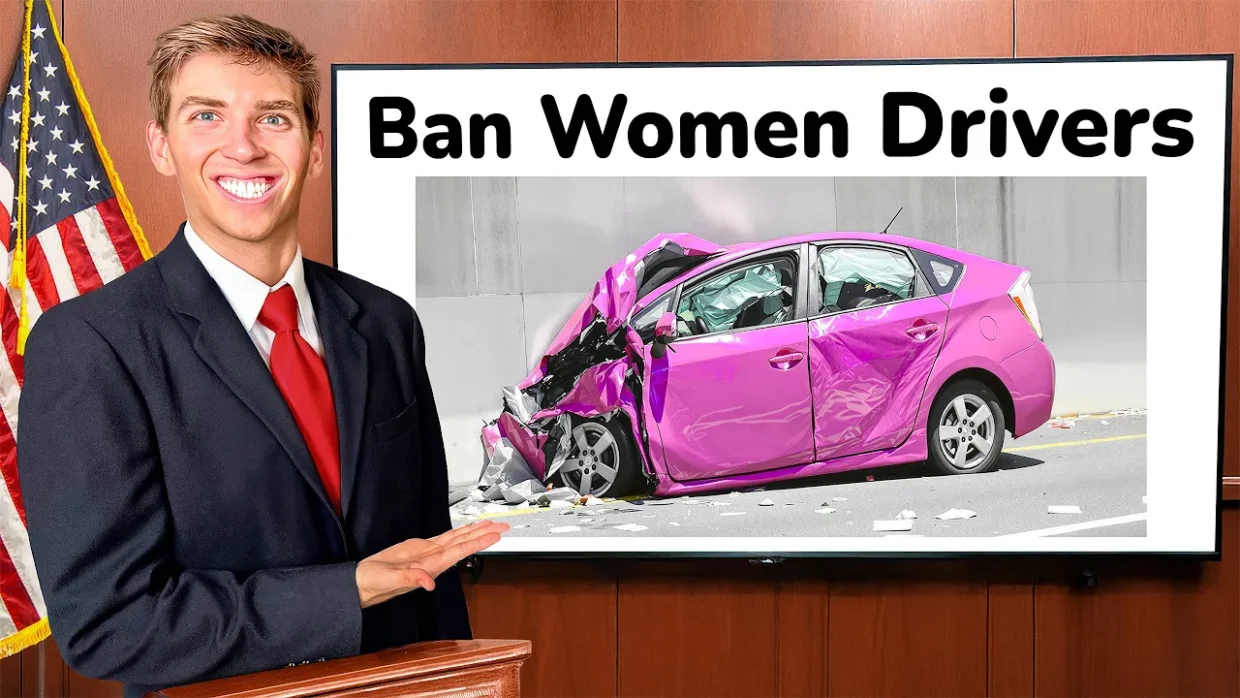
The room opens with a line that sounds like a joke until the audience reacts. “Give us feedback on our new city plans. We’re installing the world’s biggest pride flag.” A resident answers, “Hell no.” That exchange sets the tone for a long, loud, and oddly specific experiment. A group of presenters invites local residents to what looks like a real city meeting. They pose as officials. They pitch plans that are meant to be offensive. The residents are not told to hold back.
The rules are simple, the pitches are not
The setup is a game built on public discomfort. Local residents are invited to attend a meeting that appears official. The presenters claim to be part of a decision-making process. They say the residents’ voices matter. Then they present ideas that are hard to defend. A $300,000,000 nuclear power plant in the bay. A traffic czar who approves every trip before a driver leaves the driveway. Immigrants learning English in elementary schools. Homeless people sleeping on public front yards. A $500 fine for running a lemonade stand without a permit. Each pitch is delivered with the calm confidence of a city official who has already decided the plan is good.
The audience does not play along
The residents react quickly. When the presenters introduce the nuclear plant, one says, “Probably not a good idea.” Another adds, “It’ll never fly in Orange County.” The pitch is framed as economic growth and jobs, but the room hears cost, risk, and wildlife. “It costs a lot of money. You put a lot of lives in jeopardy.” The presenters move on. The traffic czar gets a harder landing. Every driver must call the czar and get approval before departing. If the trip is not important enough, the czar denies it. A resident asks, “What happened to living in the free country of the United States of America?” Another says, “We don’t live in North Korea.” The room is not laughing at the idea. It is defending the idea of a free country against a man who controls the roads.
Education, immigration, and the front yard
The next set of pitches moves into schools. The presenters say test scores have fallen to historic lows. Their solution is to replace the current teacher lineup with a selective high-achieving team. A resident pushes back with a line that captures the room’s suspicion: “Let’s not look at skin color and just look at the scores.” The presenters defend the plan by saying the new teachers are the highest achievers in the area. Another resident asks whether they speak good English. The conversation shifts to immigrants learning English in elementary schools. The presenters say it will help them learn the basics and integrate. A resident says she would not feel safe with her kids and adults in the same classroom. Another asks whether they would install TSA metal detectors. The presenters say there are teachers and security officers. The room accepts the goal and rejects the method.
Crime, AI, and the pride flag
The meeting turns to crime. The presenters propose a minimum $500 fine for littering, loitering, and operating a lemonade stand without a permit. A resident says, “That’s ridiculous.” Another adds, “It’s a kid.” The presenters move to social media, where people can be arrested for criticizing the government. A resident says, “It’s part of the First Amendment.” Another asks if they can name the five elements. The answer is no. The room compares the plan to North Korea. Then the presenters introduce AI police robots that predict crime before it happens. They claim 90% accuracy. A resident says, “You’re not guilty until you do the crimes.” Another says license plate readers are wrong. The presenters say AI is smarter. The room is not convinced by a machine that profiles people before they break a law.
The flag, the lights, and the vote
The final major pitch is the world’s biggest pride flag. The presenters say it will solve minority representation by making celebration year-round. A resident says, “Hell no.” Another says, “Are you joking?” The presenters add that the flag can be seen at night with 9,000 watt spotlights. Then they say, “Fun fact, though. We actually took these lights from the 911 Memorial in New York.” The room goes quiet. The flag is a 300-foot statement with stadium lighting. A resident asks what about a nice big American flag that has everybody on it. The presenters say this is the new American flag. The vote follows. Strangers raise their hands if they support the plans. One team gets four hands. “Four hands? We just lost.” The losing team faces a four-hour gauntlet, a punishment that turns the meeting’s joke into a physical test.
Watch the full video to see how the presenters sell each bad idea, how the residents push back, and how the vote turns a fake city meeting into a real loss. The plans are absurd, but the reactions are not. The room treats every pitch like it could become policy, and that is what makes the experiment work. The full video keeps the energy from the first pitch to the final punishment. It is a test of how much bad policy a room will accept before it stops pretending.