Your brain is a very fast guesser, and these eighteen photos are built to catch it halfway. In the time it takes to blink, it has already decided what it is looking at, and most of the time it is right. Each picture here offers a shape that feels familiar for a split second, then quietly turns into something else.
The trick is not magic, and nothing here is hidden. It is timing, angle, overlap and a little help from the way we read faces and bodies. Play along: look at each photo, make your first guess, then read the explanation underneath. Some will fool you for a second. A few might fool you for longer. That small jolt of surprise is the whole point.
All photos in this gallery are AI-generated illustrations.
1. The Puffiest Coat On The Step
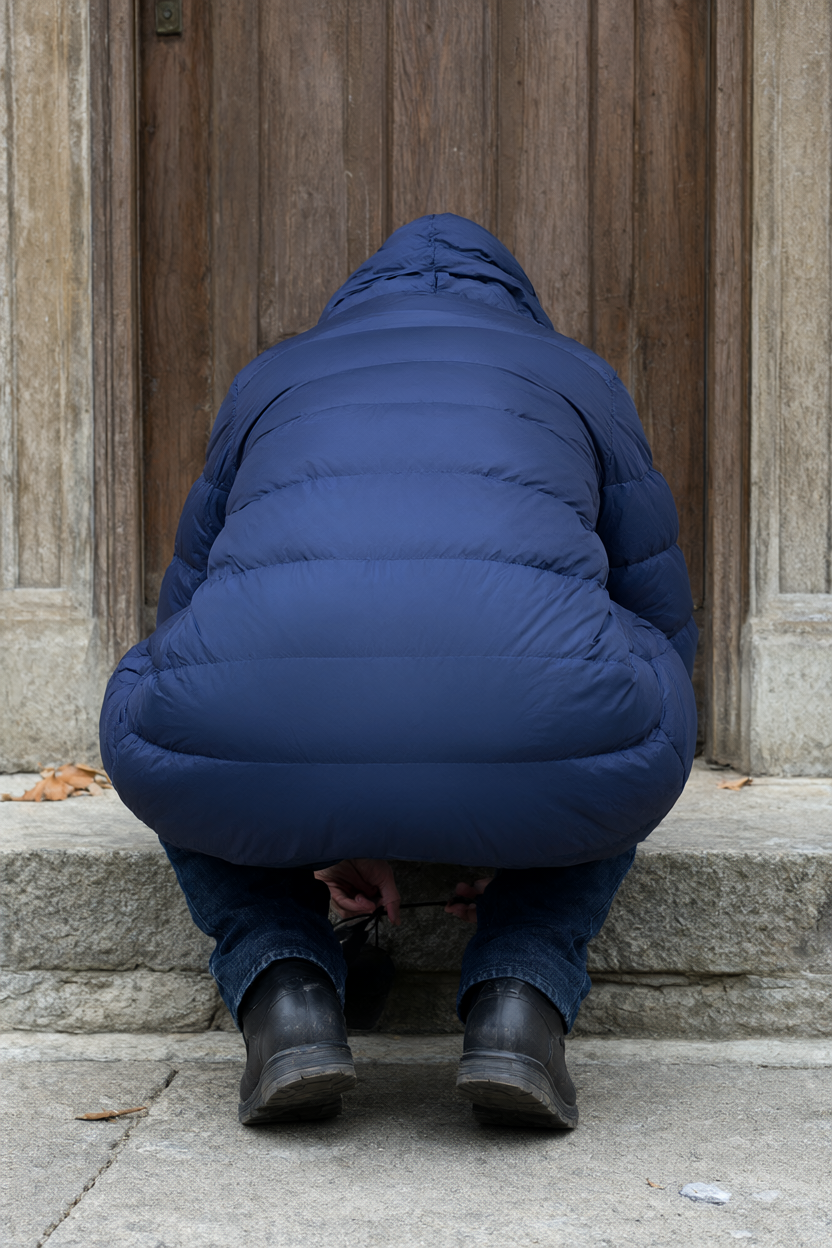
At first glance, this looks like someone caught in a rather cheeky pose on a doorstep. The eye lands on two rounded, padded shapes and the mind, always in a hurry, finishes the picture on its own. Nothing about that first read is unreasonable: the figure is crouched, the camera is behind, and the broad curve of the coat fills the frame exactly where a joke would live.
Then the details arrive. The surface is quilted nylon, not skin. Horizontal stitching runs across both curves, the sleeves end in cuffs, and a pair of boots is planted firmly on the stone. It is a person in a very thick navy puffer coat, crouching to tie a lace or reach a key, and the coat is simply doing what padded coats do: holding a shape. Your brain made a fast guess and the fabric let it. That is the whole trick, and it is a friendly reminder that our first impression of a picture is often a prediction, not a fact.
2. Two Loaves, One Cheeky Silhouette
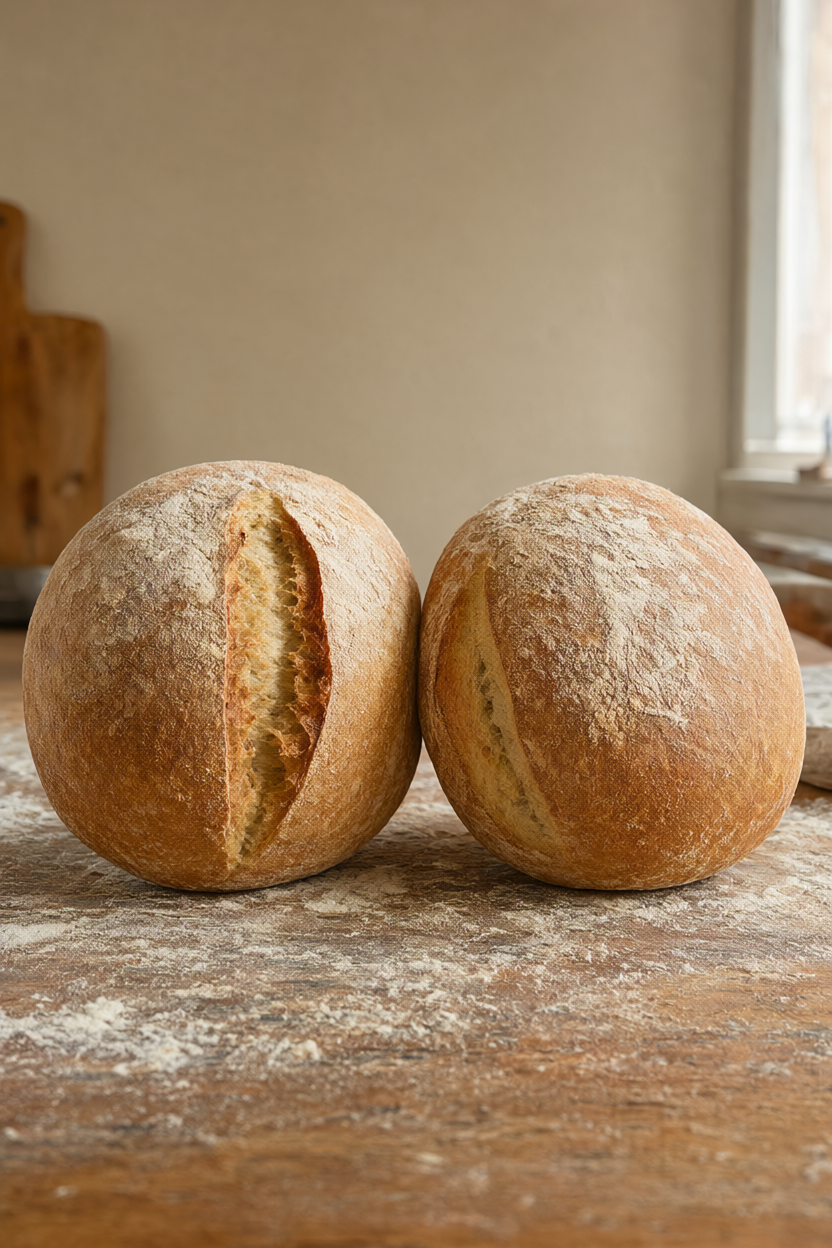
Two warm shapes sit close together on a floured table, and for half a second the arrangement suggests something a little cheeky. The baker in you knows better almost immediately, but the first impression is strong: the domes are round, the gap between them is just wide enough, and a dark slash runs down the middle of each one like a drawn line.
Look closer and the kitchen appears. A fine dusting of flour covers the wood, the crusts are blistered and golden, and the deep cuts are the scoring marks bakers make so steam can escape as the loaf rises. These are two round sourdough loaves cooling side by side, nothing more. The joke belongs entirely to the angle and to a brain that enjoys finding familiar shapes in unfamiliar places. Once you see bread, it is very hard to see anything else.
3. Two Hay Bales, One Raised Eyebrow
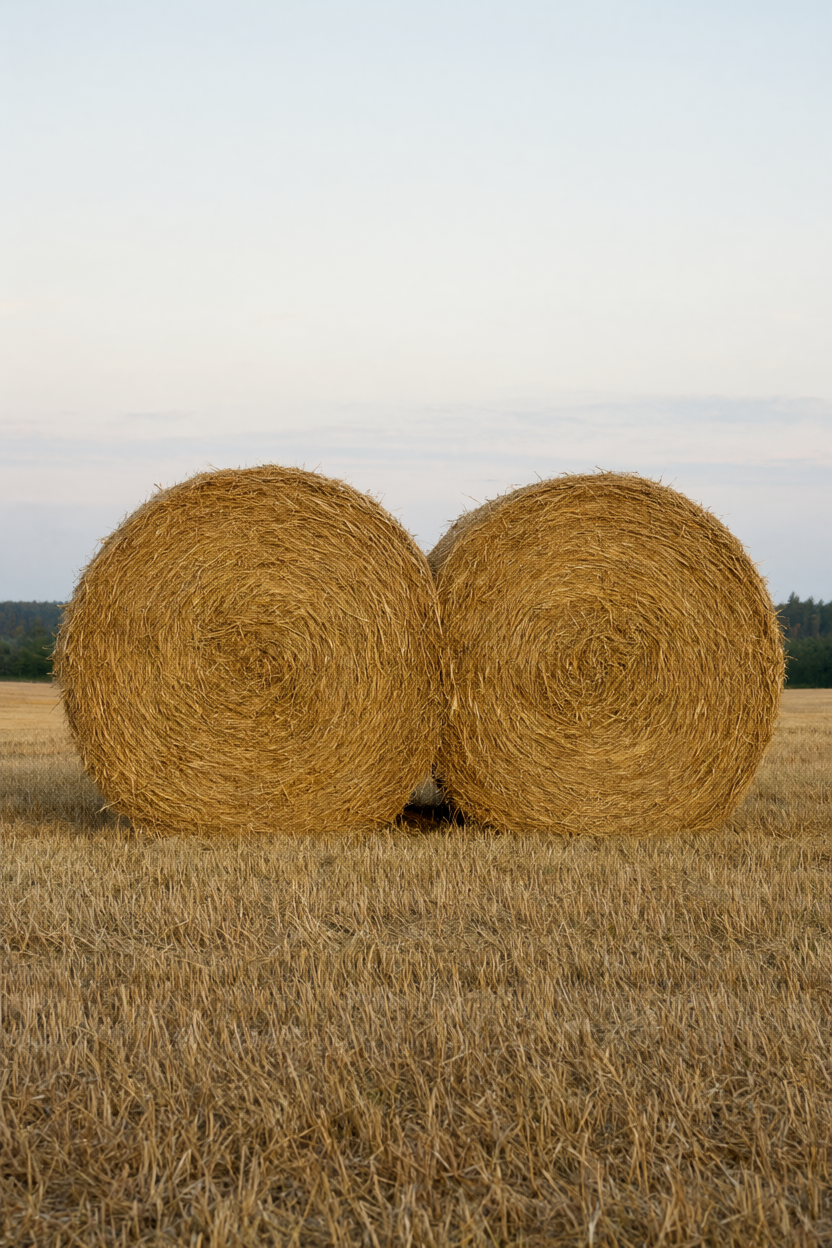
Out in a pale stubble field, two enormous round bales sit shoulder to shoulder, and the silhouette they make is unmistakable for a moment. The mind supplies a joke before it supplies a farm: two plump circles, a narrow valley between them, and a low horizon that makes them look almost human in scale. It is the kind of shape that makes people slow down on a country road.
The giveaways are everywhere once you stop laughing. Golden straw pokes out in coarse strands, dry stubble runs between the bales, and the curves are far too wide and heavy to be anything but harvested grass. These were rolled and left in the field to dry, and their round shape helps rain run off instead of soaking in. The illusion depends on distance: from here the texture disappears and only the outline survives. Step closer, and the field takes its bales back.
4. The Man Wearing A Very Live Hat
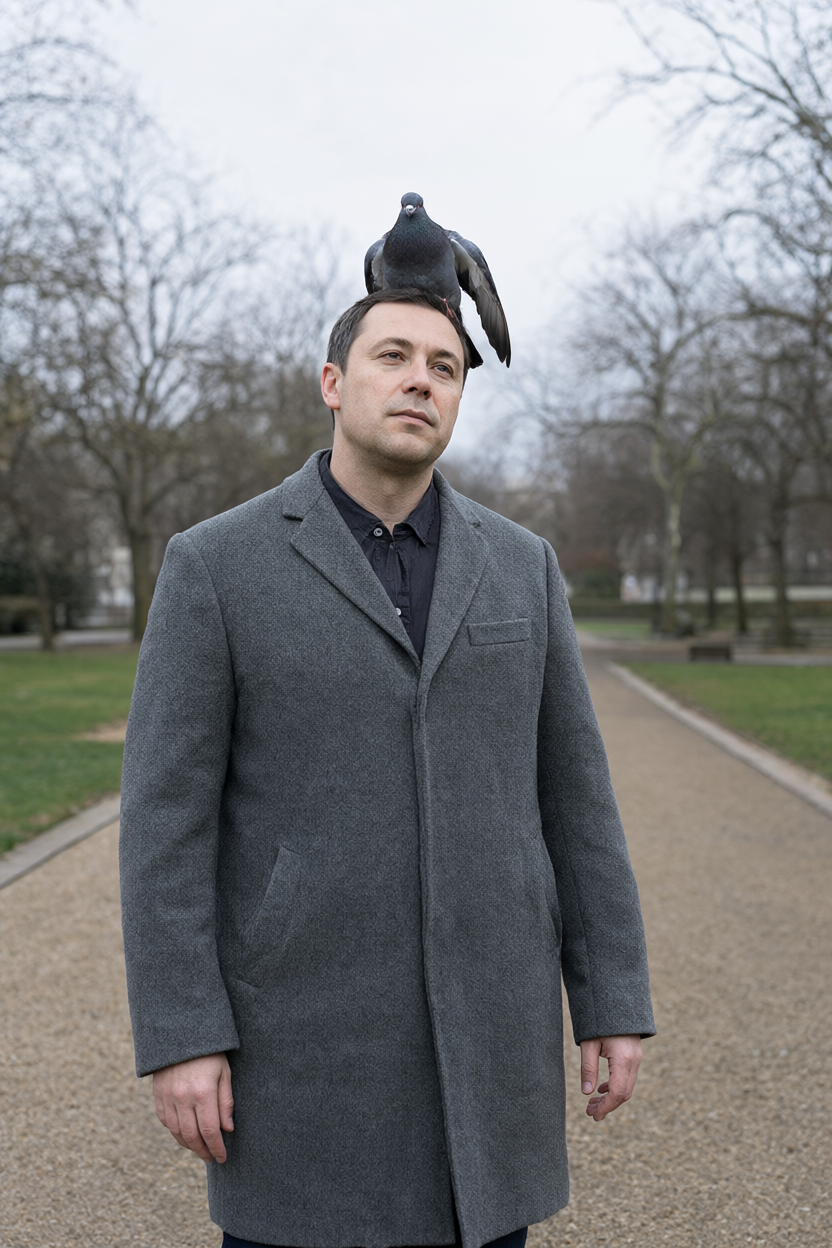
A man stands in a plain park with his hands in his pockets, and on his head sits the most extraordinary hat: gray, softly rounded, with a little feathery fringe at the back. For one second it looks like the boldest fashion choice in the park. The brain has a slot for a thing worn on a head, and this shape slides into it neatly.
The hat, of course, is a pigeon. It has landed on the man with the calm confidence of a bird that has found a warm perch, and it faces the same way he does. The giveaway is the outline: a beak, a rounded breast, a tail sloping down behind his ear. He seems completely unbothered, which is half the charm. Pigeons bob their heads when they walk to steady their view of the world, and this one is holding very still. Look at the tail again and the hat disappears.
5. One Tall Stranger, Two Heads
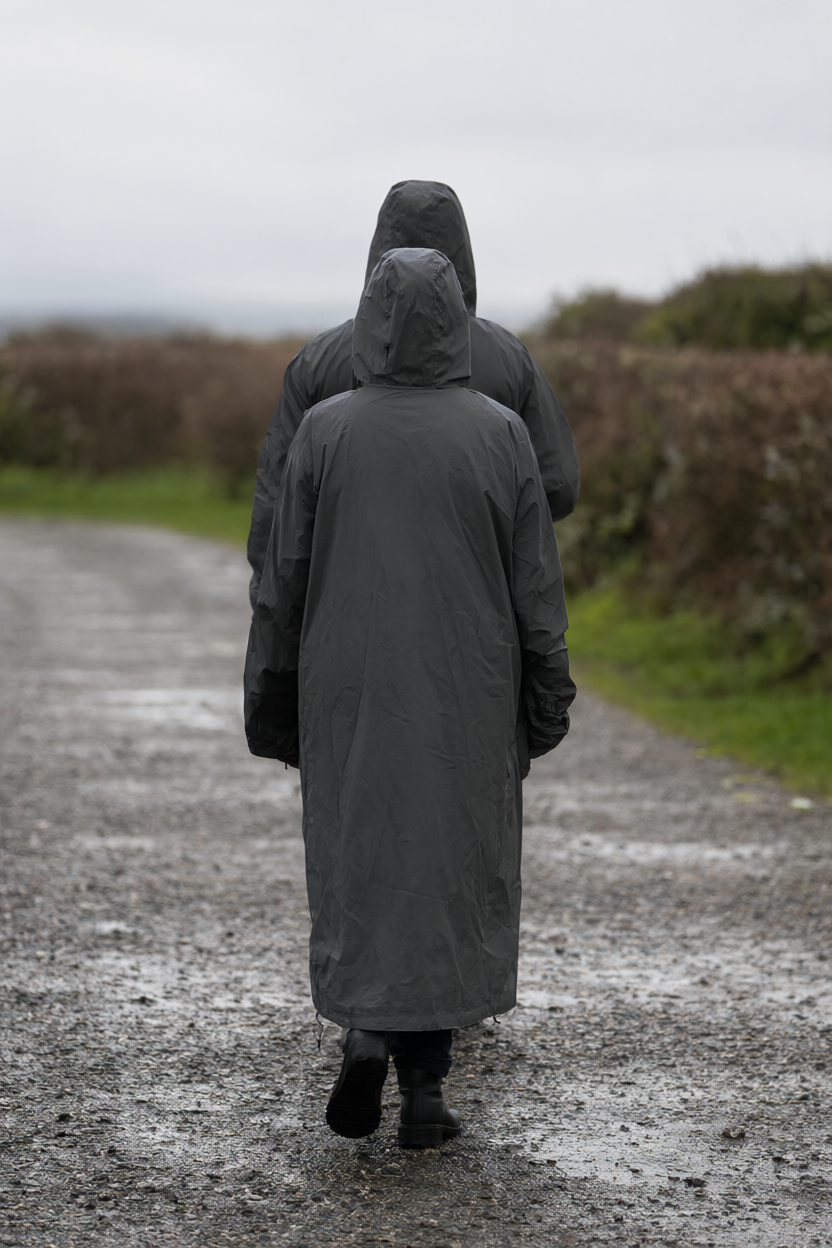
Two figures in hooded coats walk along a path, one directly behind the other, and the outline they make is genuinely strange. For a moment it reads as a single very tall person with two heads, or perhaps a figure in a wide cloak with a second face peering over its shoulder. The eye tries to make one body out of two because the coats match so closely.
The correction comes from the gap. Look between the heads and you can find the edge of the nearer hood, then the shoulder line of the person behind it. Two sets of shoulders sit at different heights, two pairs of boots move at different speeds, and the matching gray coats are simply doing what uniforms do: erasing the boundary between people. Our brains group similar things together before they bother to count them, which is why a pair of walkers can become a two-headed stranger for exactly one second.
6. The Woman With The Borrowed Head
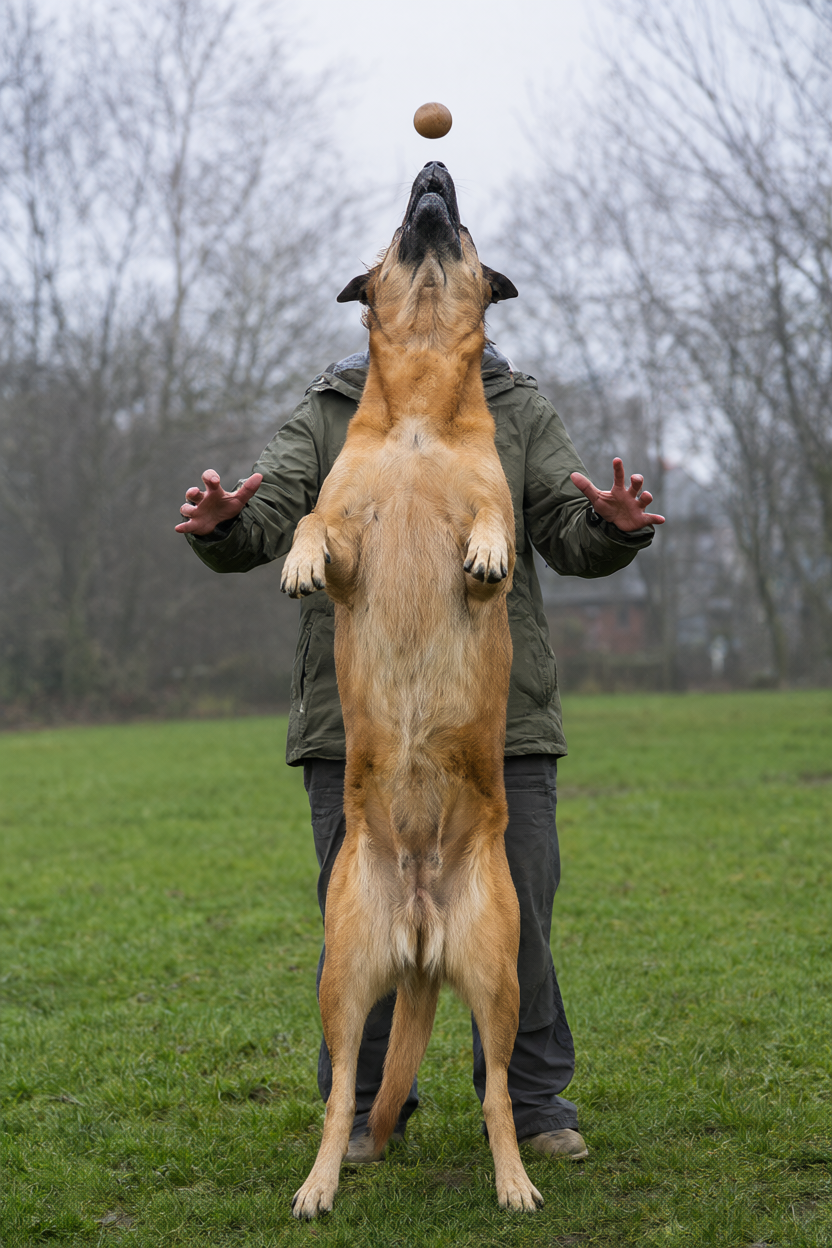
There is a woman in a park with what appears to be a dog for a head, and she is smiling about it. The dog is mid-leap, front paws stretched, ears up, mouth open around a ball, and its head lands exactly where hers should be. For a heartbeat the picture is a cheerful monster.
Then the layers separate. The woman stands closer to the camera, her real head tilted back as she follows the throw. The dog is behind her and slightly above, caught at the top of its jump. The ball is the clue: it sits just past the dog snout, and the whole leap is aimed at it. This is forced perspective, the same trick that lets a friend appear to hold up a distant monument. It is simply two moving things at two distances, agreeing for a fraction of a second.
7. Two Cats, One Pair Of Shoulders
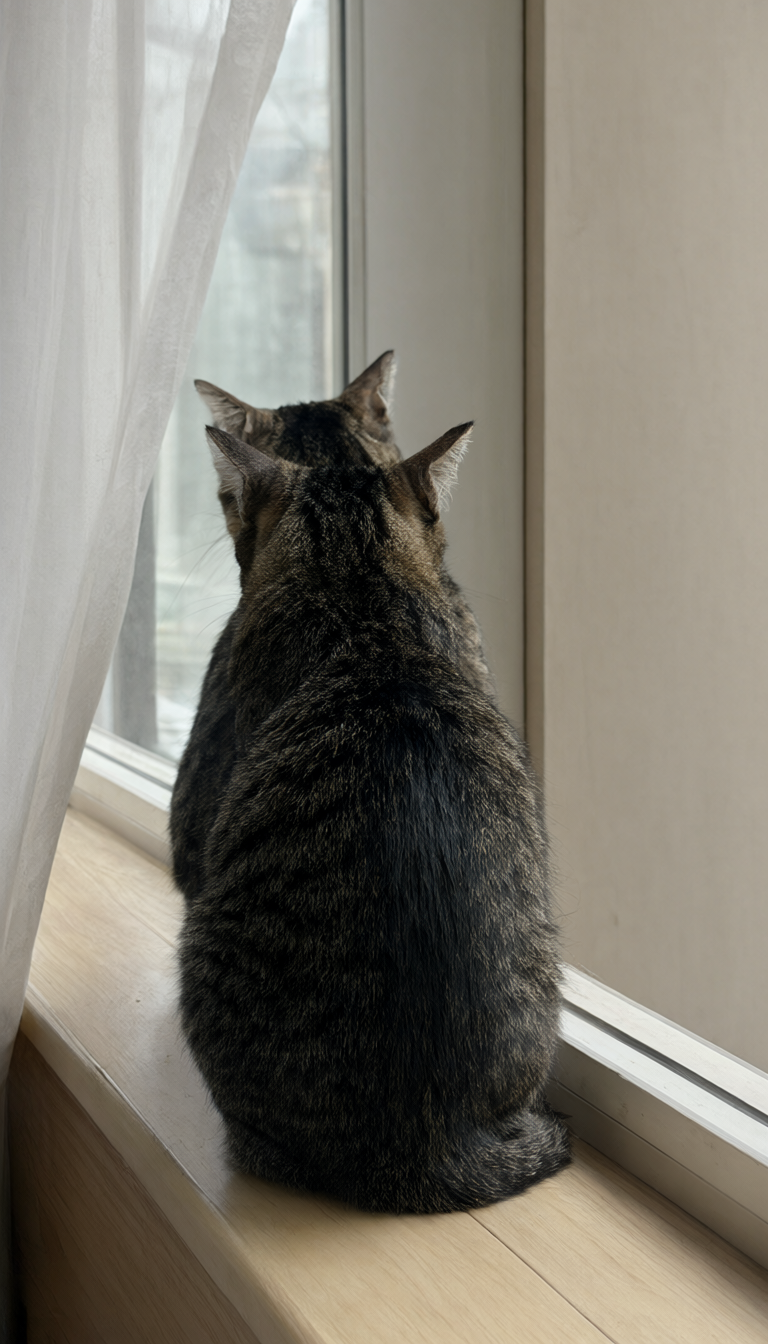
On a windowsill, a tabby cat sits facing the glass, and above its shoulders there seem to be two heads. Both are striped, both have the same alert ears, and both look in exactly the same direction. It is briefly the most serene two-headed cat in the world.
The second head belongs to a second cat sitting directly behind the first. The nearer cat back and haunches fill the space where the other body should be, so only the head and shoulders of the back cat show. Look for the seam: a faint line where one striped flank ends and the other begins, and two pairs of front paws tucked at slightly different depths. Cats arrange themselves like this all the time, which is why a group of them can look like one very long animal. Once you find the second tail, the spell is broken.
8. A Very Strange Strut Across Town
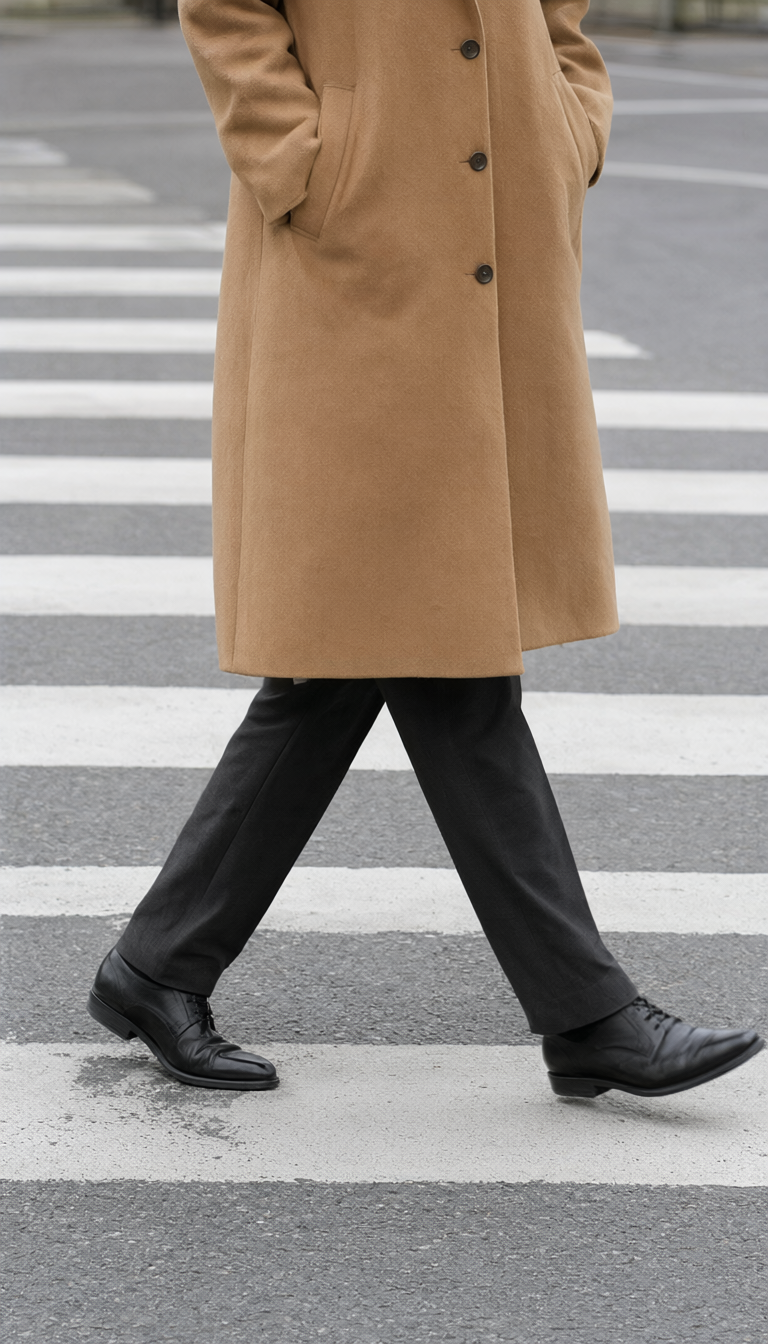
A figure strides across a crosswalk in a long camel coat, and something is badly wrong with the legs. They are dark, trousered and mid-stride, and they do not match the elegant coat above them at all. For a second the picture offers a very tall stranger in two outfits at once.
The truth is simpler and a little rude: a man is walking past in front of the woman, and his legs have landed exactly beneath her coat. Her own legs are hidden behind him, his torso is hidden behind her, and only the useful parts of each person survive in the frame. The white lines give it away if you follow them: his shoes are far ahead of where her stride should be, and the coat hem floats at the wrong angle. Photographers call this occlusion, and it is one of the strongest clues our eyes use to judge depth. Here, the clue is doing the opposite of its job.
9. The Quiet Man And His Shadow
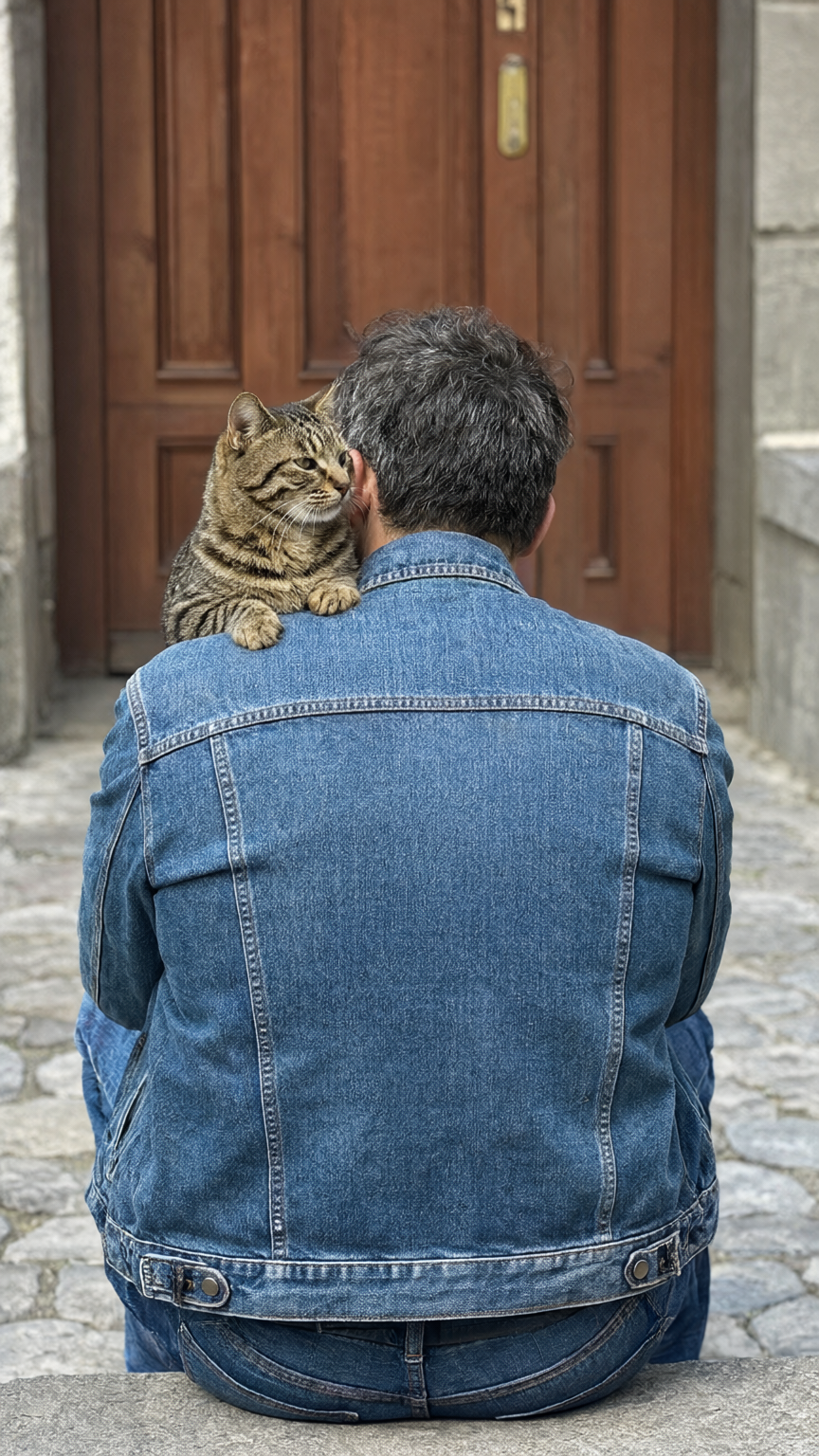
A man sits on a stone stoop with his back to us, and above his shoulders rise two heads. One is his, cropped and still. The other is smaller, striped, and turned at the same angle, as if the pair are sharing a single thought about the door.
The second head is a tabby cat perched on his left shoulder, settled in the hollow of his denim jacket as if it has been there all afternoon. The giveaways are small: a pointed ear cutting the outline, a whiskered cheek just past his neck, one paw draped over the seam. The cat has chosen the highest comfortable spot on a warm person, which is a very cat decision. Look at the gap between the two heads and the whole picture relaxes into what it is: a man, his cat, and a quiet minute on a doorstep.
10. The Oddest Pair At The End Of The Jetty
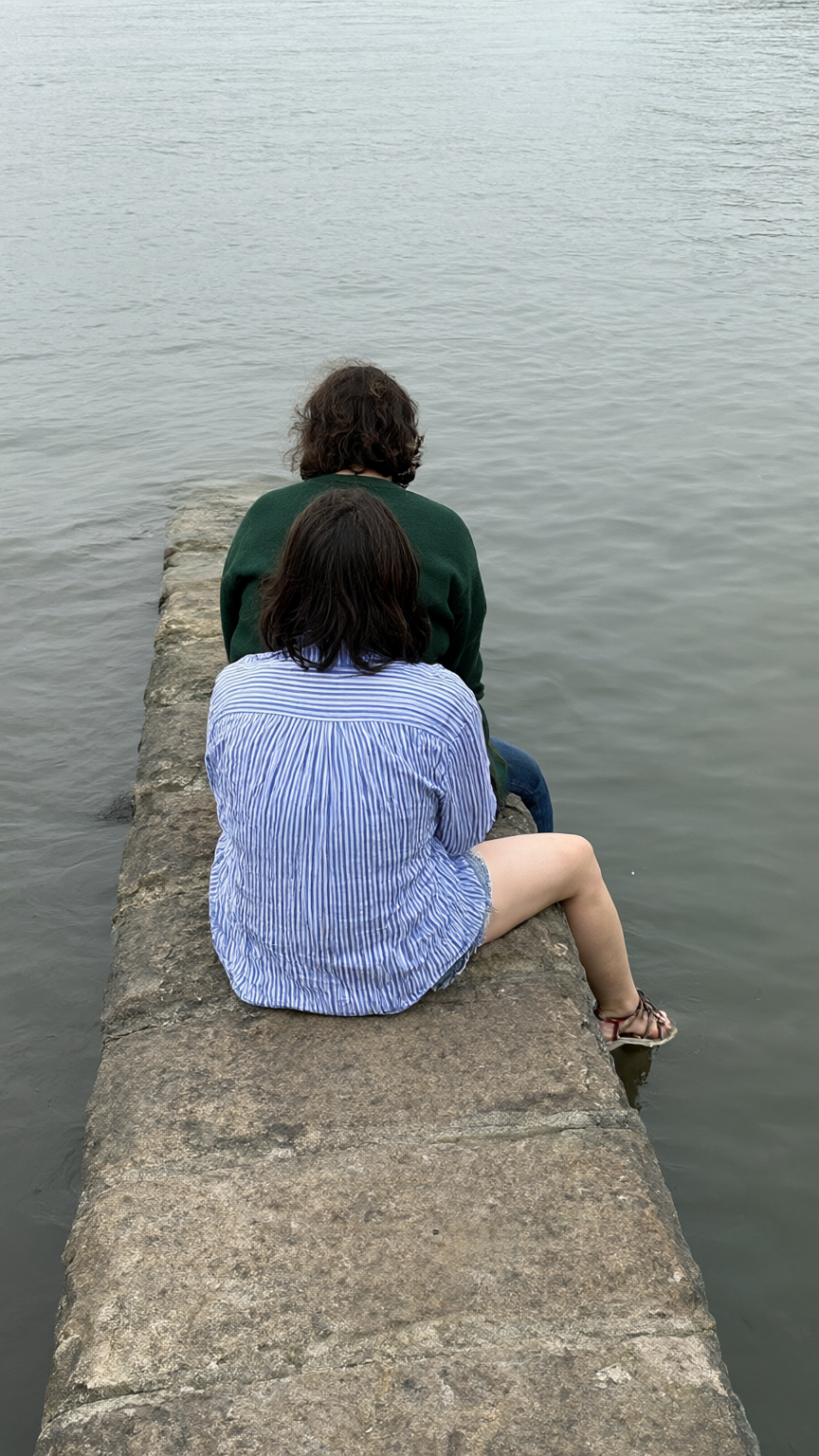
Two women sit at the end of a stone jetty with their backs to us, and the nearer one appears to have no legs at all. Her striped shoulders float above the edge while a single sandaled foot dangles over the water, and the figure behind her seems to be all torso and no lower half.
It is an ordinary summer stack. The woman in the striped shirt sits in front, one leg over the edge. Her friend sits directly behind her, and the first woman back covers the second woman legs completely. Two people, one silhouette. The water is calm, the stone is pale, and nothing moves fast enough to break the spell. Our visual system assumes that things continue behind whatever blocks them, so it stitches the two sitters into one impossible body. Find the second pair of shoulders, slightly higher and to the right, and the jetty returns to normal.
11. The Mailbox Has Some Alarming News
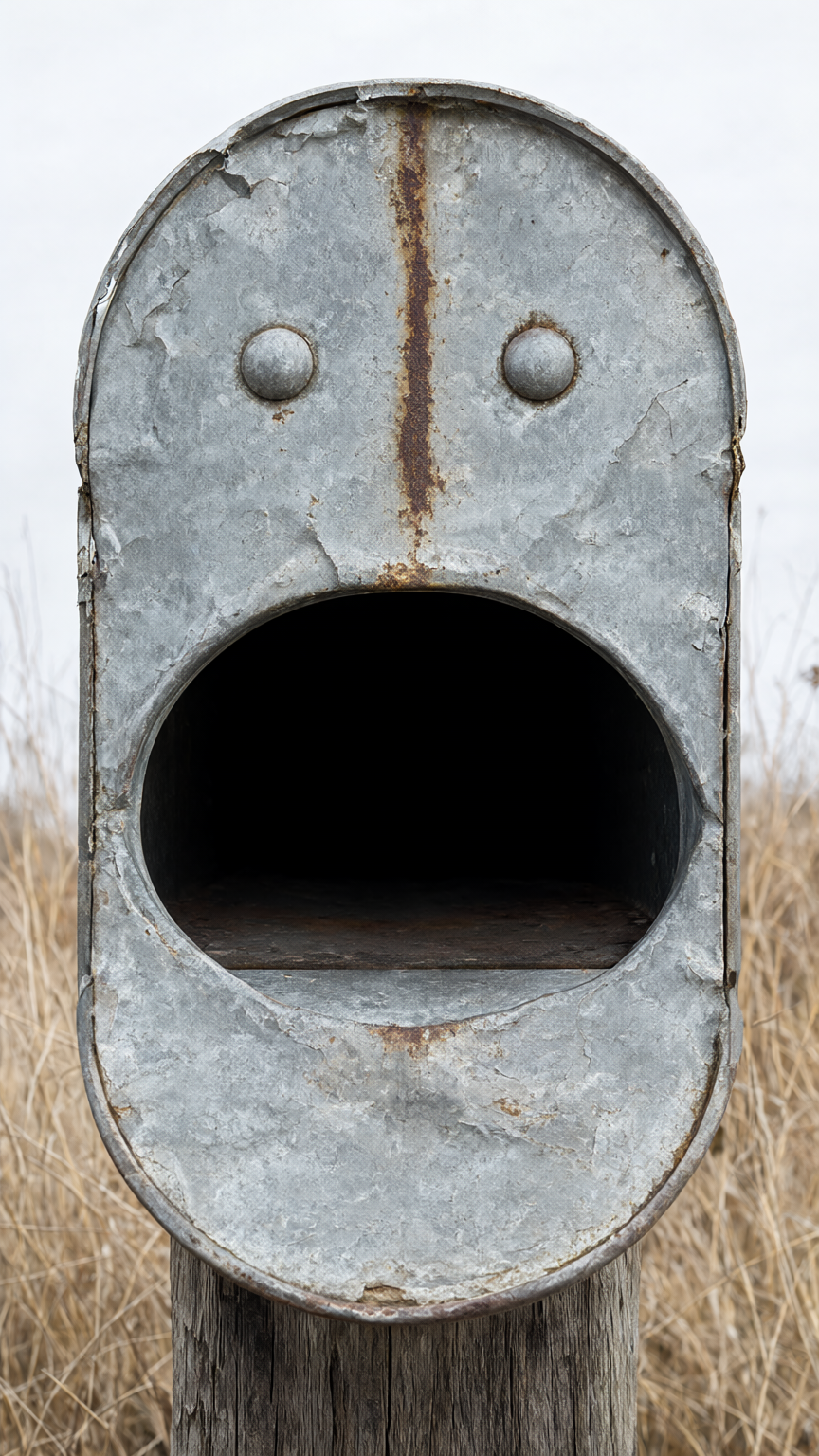
A mailbox on a rural post looks alarmed. The flap hangs open in a wide dark oval, two round rivets sit above it like eyes, and a rust streak runs down between them like a nose. It is a face, and not a calm one; it seems to have just heard the news.
Nothing about it was designed as a face. The oval is the opening where letters go, the rivets hold the latch, and the rust is simply what happens to galvanized steel in weather. Our brains are tuned to find faces, especially in objects, because a face is the most important thing a person can spot. Researchers call it pareidolia, and it explains why we see expressions in sockets, car fronts and clouds. Look at the hinge, the dents and the dry grass, and the face dissolves into a battered mailbox doing its job.
12. The Woodpile Is Fast Asleep
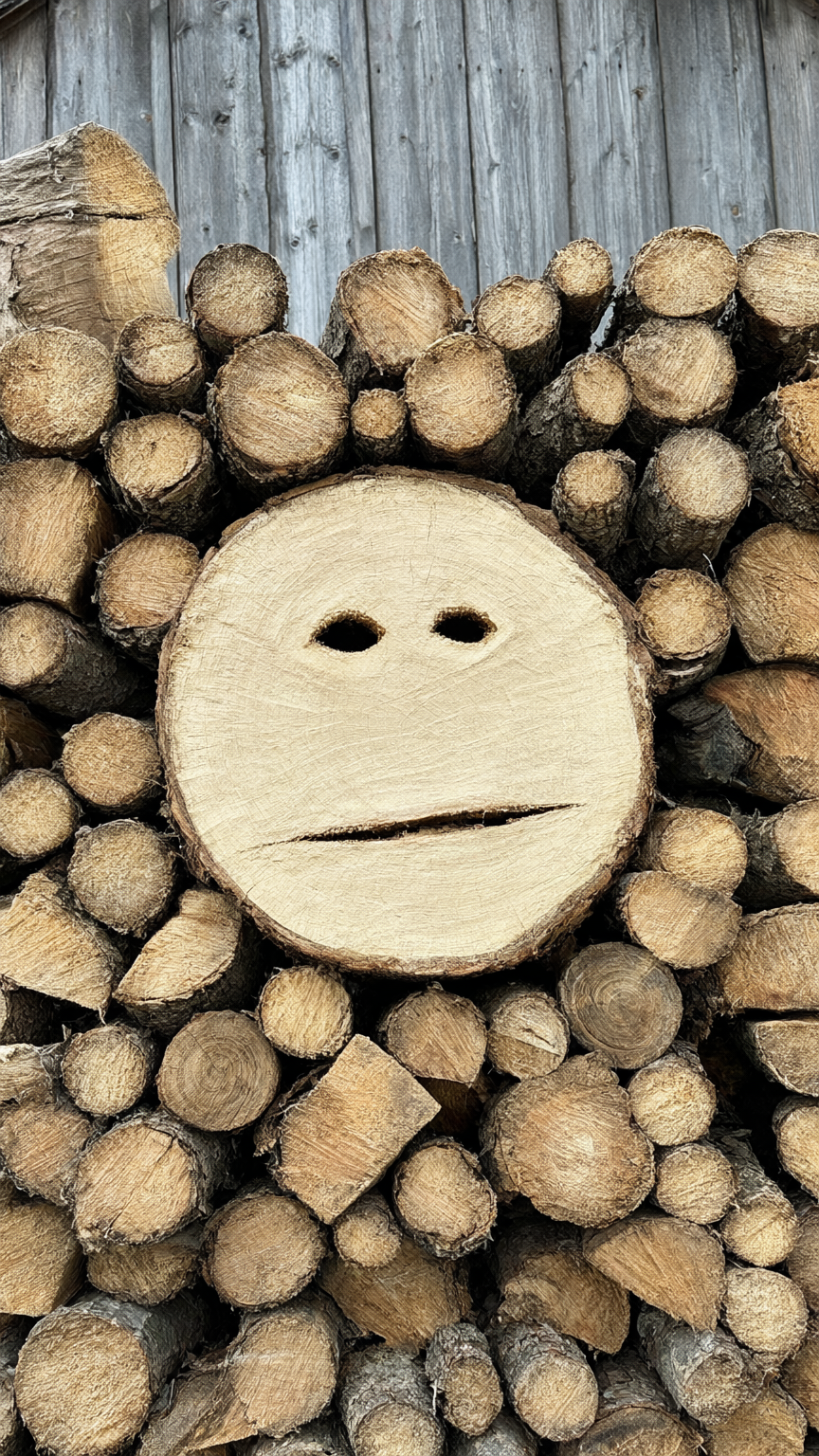
The end of one round log in a stack of firewood looks deeply asleep. Two dark knot holes sit high like closed eyes, a straight split runs below them like a mouth, and the pale circle of the log end frames the whole expression. It is the face of someone dozing through a long afternoon.
The face is an accident of the tree. Knots are where branches once grew, and the pale wood around them dried and split as the log seasoned. The stack behind, the gray cabin siding and the sharp focus are all ordinary. What makes the picture work is the circle. A round shape with two marks near the top and a line underneath is close enough to a face for the brain to finish the job, and a sleeping face is the easiest kind to imagine. Step back and the woodpile is just a woodpile; look at that one log again and it is snoring.
13. The Grumpiest Thing In The Hallway
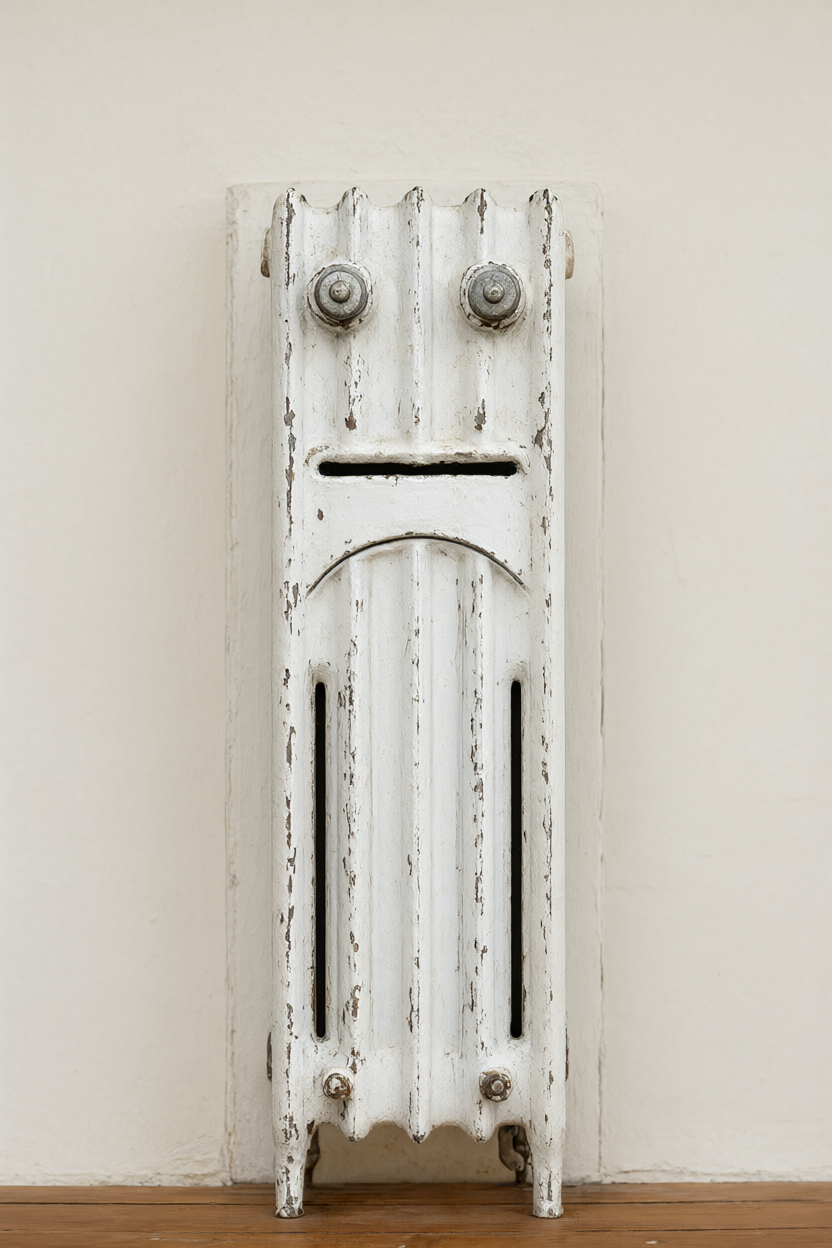
An old radiator in a hallway wears the expression of someone who has been asked to do the same job for years. Two round valve caps sit high on its white face like heavy-lidded eyes, and a narrow vent slot between the fins makes a flat, unimpressed mouth.
It is a very good grumpy face and a very ordinary object. The caps are there to adjust the valves, the slot lets air escape, and the chipped paint is the result of years of feet and furniture. Cast-iron radiators like this one heat a room by warming the air around them and letting it rise, which is why the hallway always feels warmer at the top. The grumpiness is pure pareidolia, our habit of reading moods into geometry. Still, you might find yourself saying good morning to it.
14. Two Clogs, One Very Long Sigh
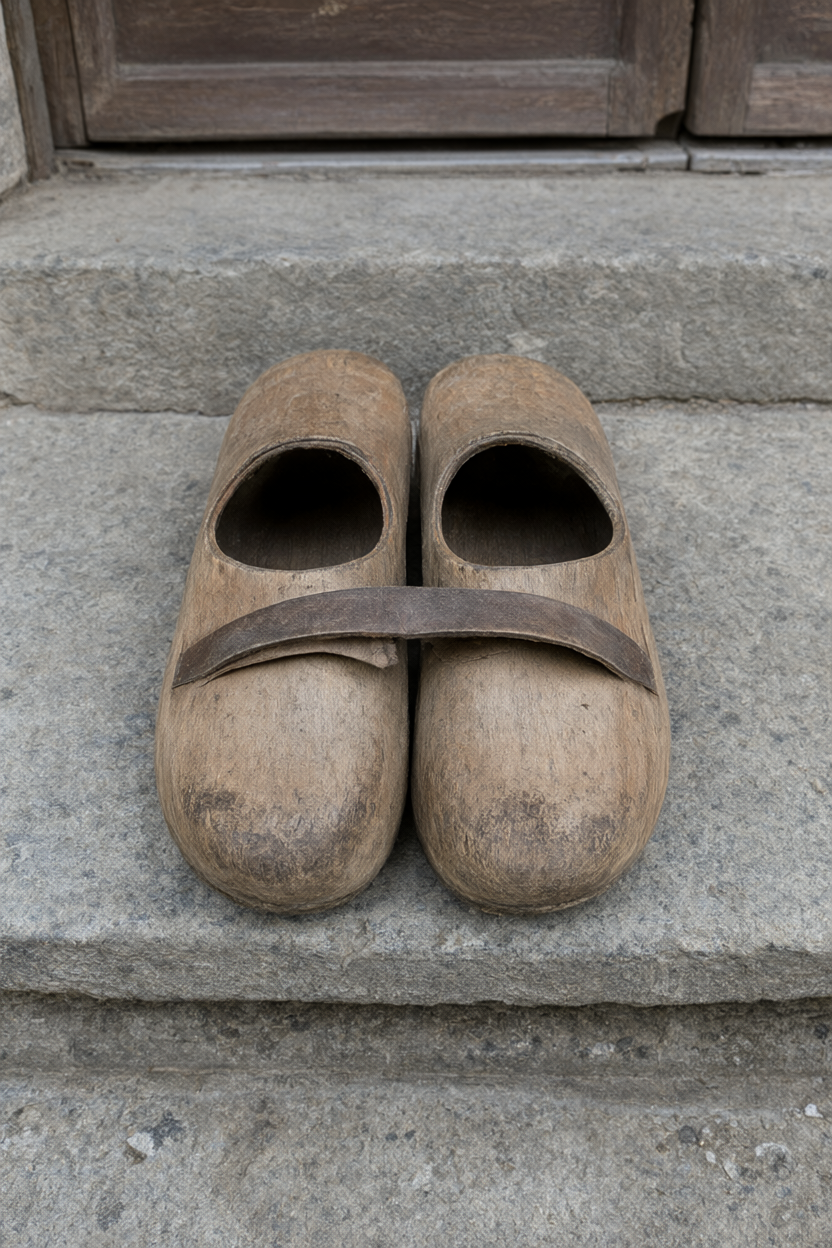
Two worn wooden clogs sit side by side on a stone step, and together they look like a face that has seen too much. Their dark openings sit close together like two tired eyes, and the single leather strap beneath them pulls into the flat, patient line of a mouth.
The face is made of shoes. The openings are where feet go, the strap holds them on, and the mud on the toes is from real garden work. Wooden clogs have been worn for centuries in wet, muddy places because the wood keeps feet dry and the soles grip, and a pair left on a step is a small portrait of a working day. That is probably why the expression reads as long-suffering rather than sad: it looks like a pair of shoes that has earned a rest. Look at the strap and the mouth returns to leather.
15. The Endless Brown Field From Up Here
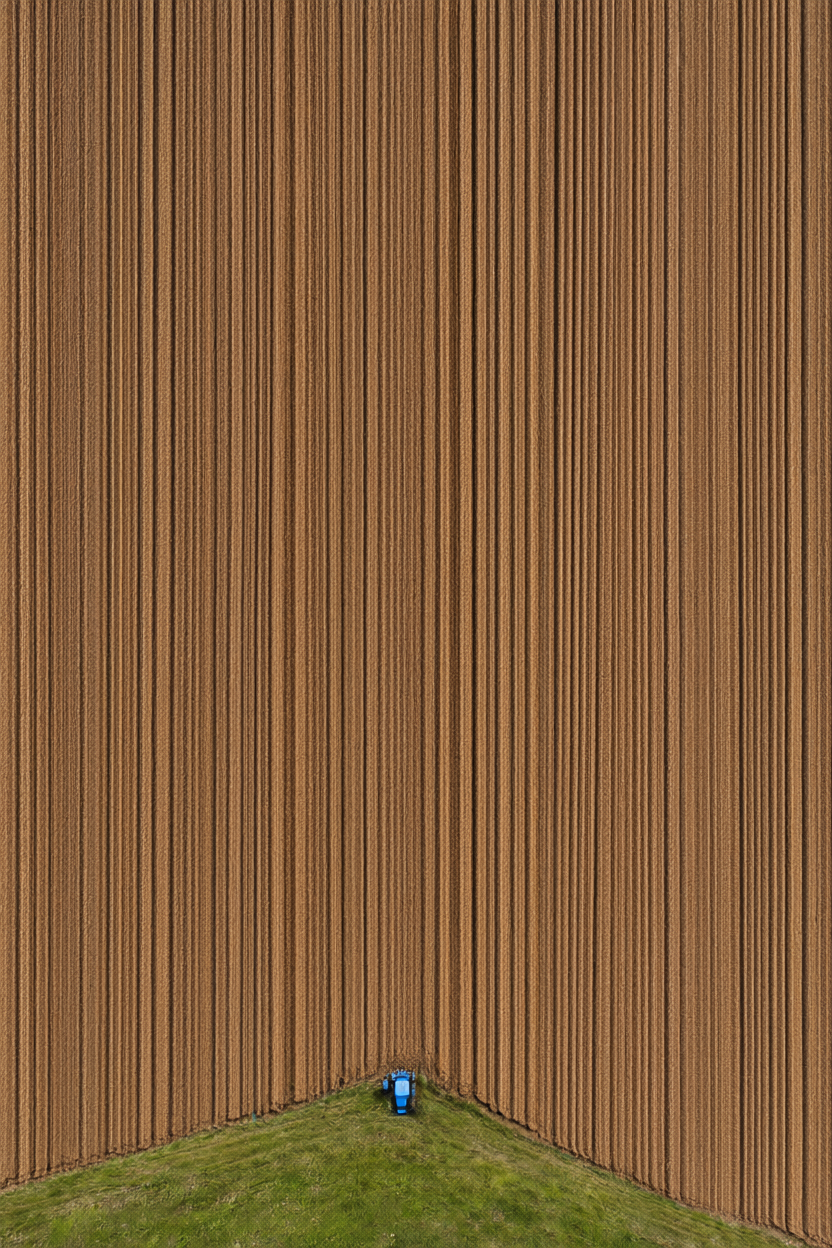
From a hillside, the whole frame fills with fine parallel brown lines, so evenly spaced that it looks like a swatch of corduroy fabric laid over the land. The ridges run edge to edge, and the eye keeps expecting a hem.
The giveaway is the tractor. A tiny blue machine sits at the lower edge, the size of a thumbnail, and once you find it the scale flips: those lines are furrows, each one wide enough to walk down, cut by a plow across a field. Distance does the rest. Fine, regular lines are the signature of both woven cloth and plowed earth, and the brain picks the first match it knows. Stand on the hillside and you would smell soil and hear the engine; from here, it is a piece of brown fabric. Follow one furrow to the tractor and the field comes back.
16. Snow Day, Or Just Sunday Morning?
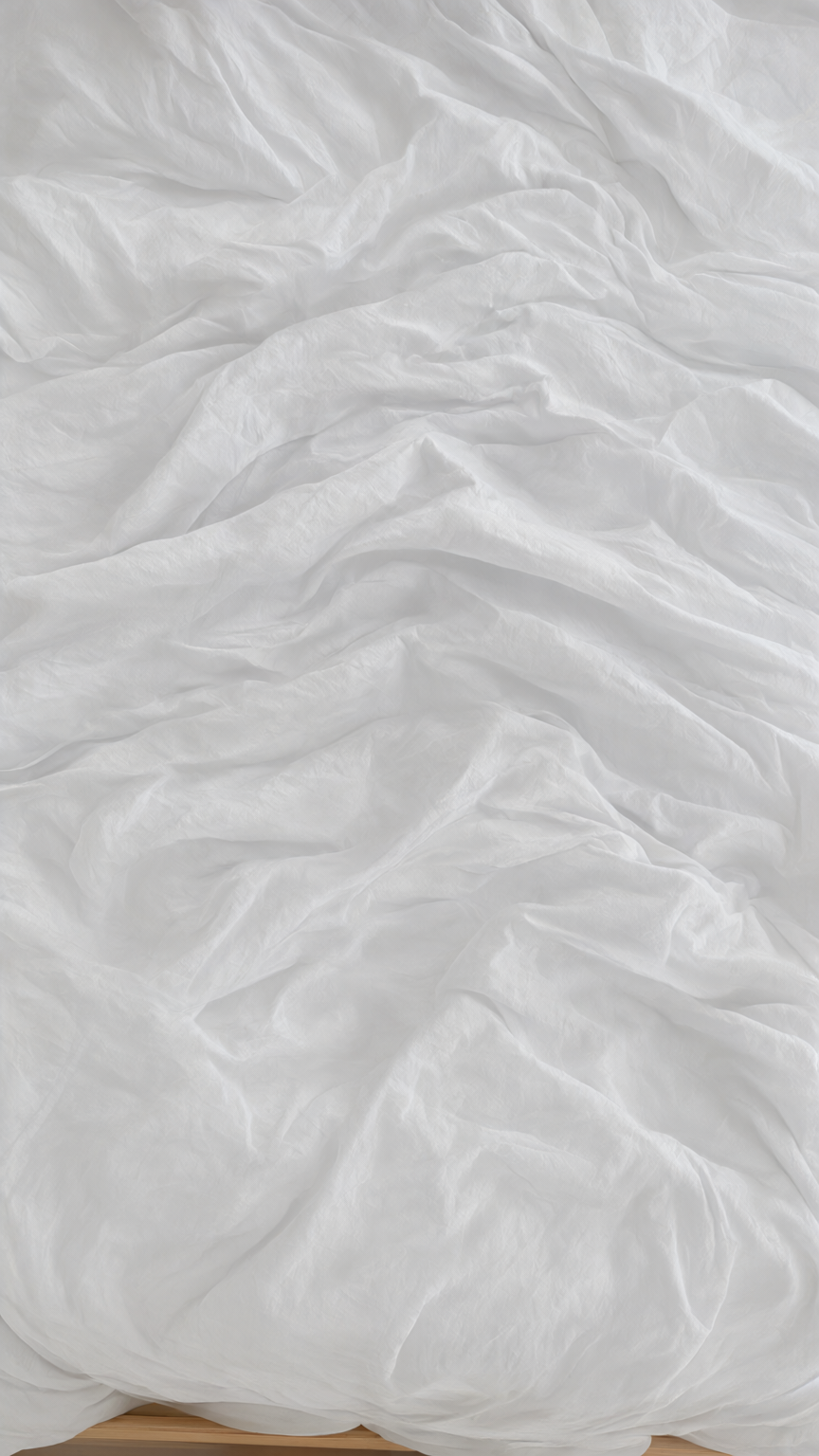
A range of soft white peaks rolls across the frame, with gray shadows in the valleys and bright ridges catching the light. It looks like an aerial photograph of snow-covered mountains on a still, cold morning.
Then the corner of a pale wooden bed frame appears at the bottom edge, and the mountain range becomes a duvet. The peaks are folds, the shadows are where the fabric dips, and the light is ordinary bedroom daylight. Shading is one of the strongest depth cues we have: a bright ridge next to a soft gray dip reads as height even when the surface is only a few centimeters thick. A rumpled duvet is full of exactly that pattern. Look for the stitched seams and the whole landscape folds back into Sunday morning.
17. Somewhere In This Room Is The Floor
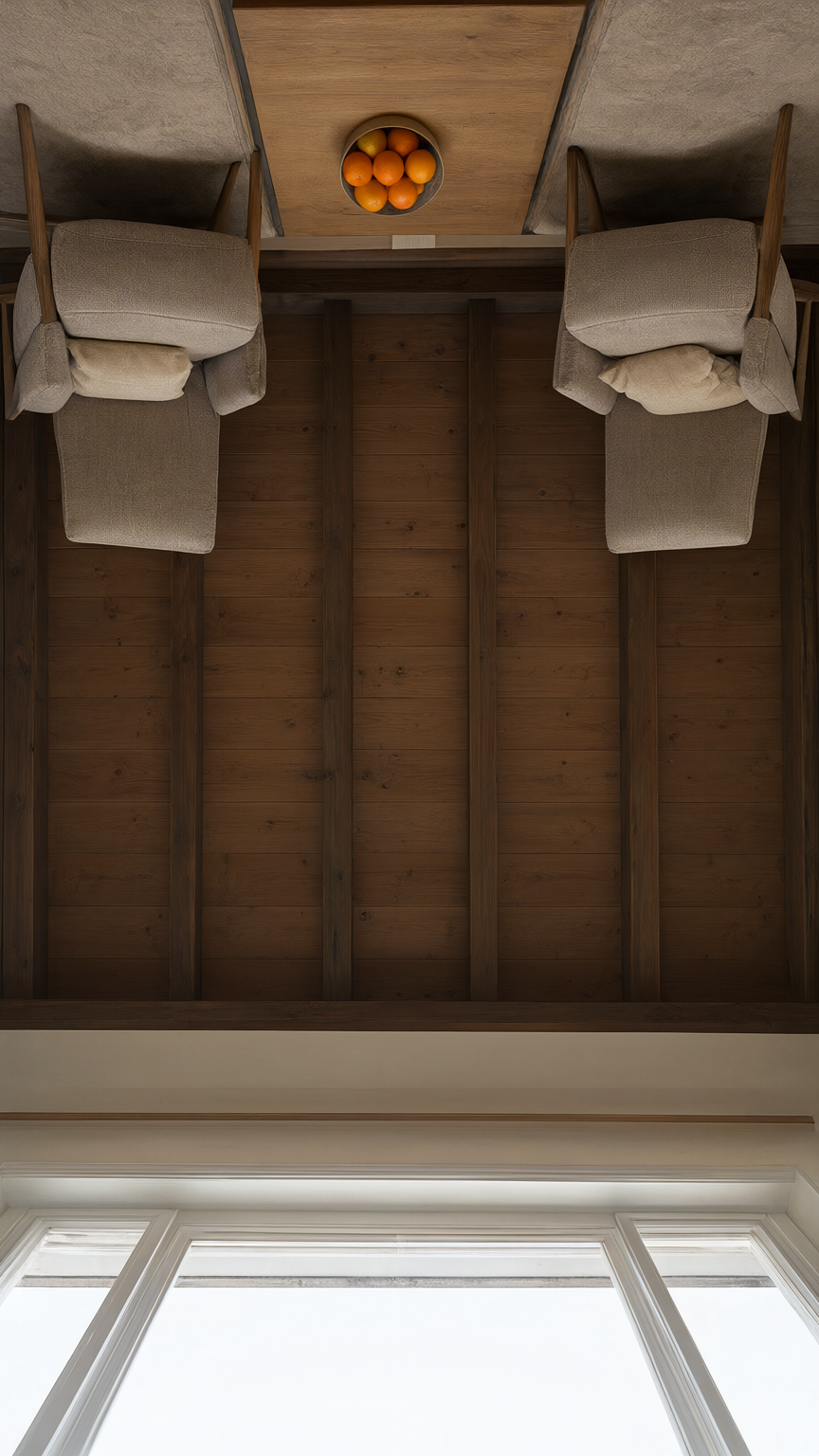
The room is upside down. A dark beamed ceiling fills the lower half of the picture, two armchairs hang from it pointing at the floor that should be above, and a bowl of oranges sits calmly at the very top of the frame. Daylight seems to pour in from below.
Nothing is floating; the camera was simply held upside down. The ceiling is still a ceiling, the armchairs still stand on the floor above the frame, and the oranges rest on a low table that is now near the top of the picture. What makes the picture so unsettling is how much we trust a room to tell us which way is down. Turn the photo around and the scene becomes an ordinary living room; leave it as it is and your inner ear argues with your eyes. The bowl of oranges is the best clue: fruit does not rest on a ceiling.
18. The Pond’s Most Perfect Circle

On a dark green pond, a small wooden rowboat and its reflection meet along the waterline and close into a single perfect oval. It looks like an eye, or a seed pod, or a hole in the world. The symmetry is so clean that the boat is almost lost inside it.
The top half is a rowboat with an oar resting across the gunwales; the bottom half is the same boat upside down in still water. Reeds at the top edge and the faint texture of the pond are the only reminders that there are two halves at all. Perfect reflections happen when the water is completely calm, which is why early morning is the best time to find them. Your brain loves symmetry and will happily merge two mirrored shapes into one object. Find the two ends of the oar and the oval splits back into a boat and its shadow.
So which one got you? Maybe the coat on the step, maybe the two-headed cat on the windowsill. The best part of a gallery like this is that the answer changes every time you scroll back through. Look once more, slowly, and enjoy the second where your brain is still deciding. Then come back for the next gallery.