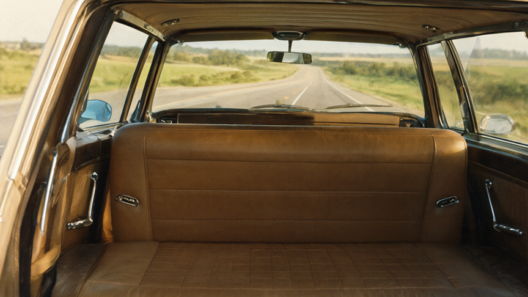
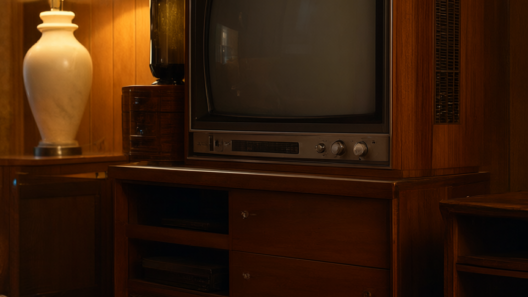
Some rooms stay with you longer than the people who owned them. For a lot of us, that room was the garage: a cool, dim kingdom that smelled of sawdust, motor oil and old rubber, where the light came in dusty stripes and every shelf held something you were told not to touch.
If you grew up in the seventies or eighties, chances are your house had at least a few of the things in this gallery. Count them as you scroll. Maybe it was the vise bolted to the bench, the coffee can of nails, or the extension cord that reached all the way to the back fence.
Take your time with each photo. These are AI-generated illustrations, but the memories they stir are stubbornly real.
All photos in this gallery are AI-generated illustrations.
1. The Vise That Held Everything
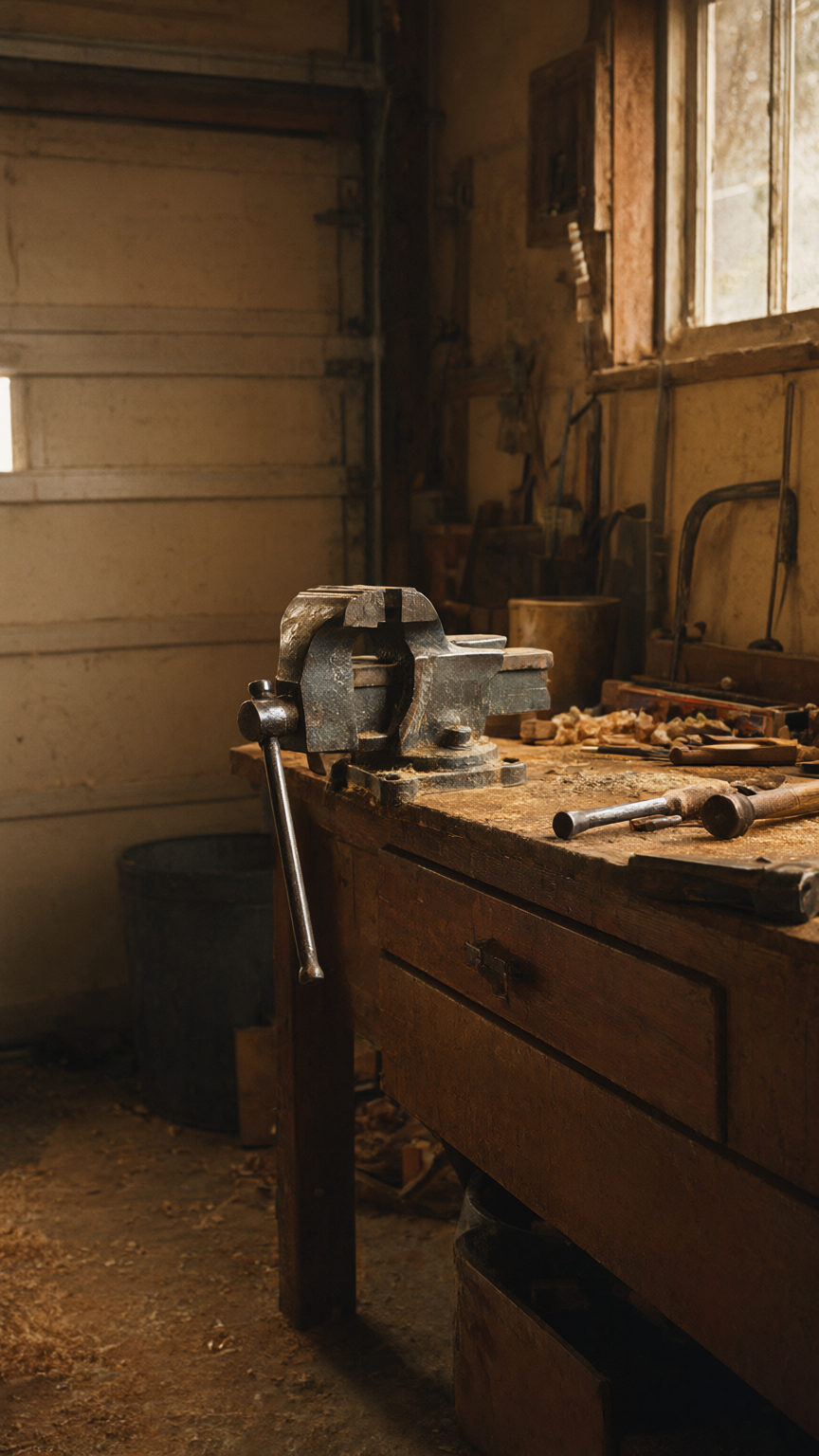
Every garage had one spot that felt a little more important. Ours was the bench vise, bolted to the edge of the workbench, its jaws scarred by years of small jobs. You could smell the oil on the screw and feel the grit under the handle. Dad gave it a half turn, and whatever was clamped there stayed put. The rule at home was simple: never turn the handle with your fingers in the jaws. We tested that rule once.
A vise holds on because of a screw thread, the same simple machine that lifts a car jack. Each turn moves the jaw only a little, but that small movement becomes a very strong squeeze. No battery, no plug, just a good handle and a sturdy bench. Did yours have a dent in the handle from a missed hammer swing?
2. Tools That Knew Their Places
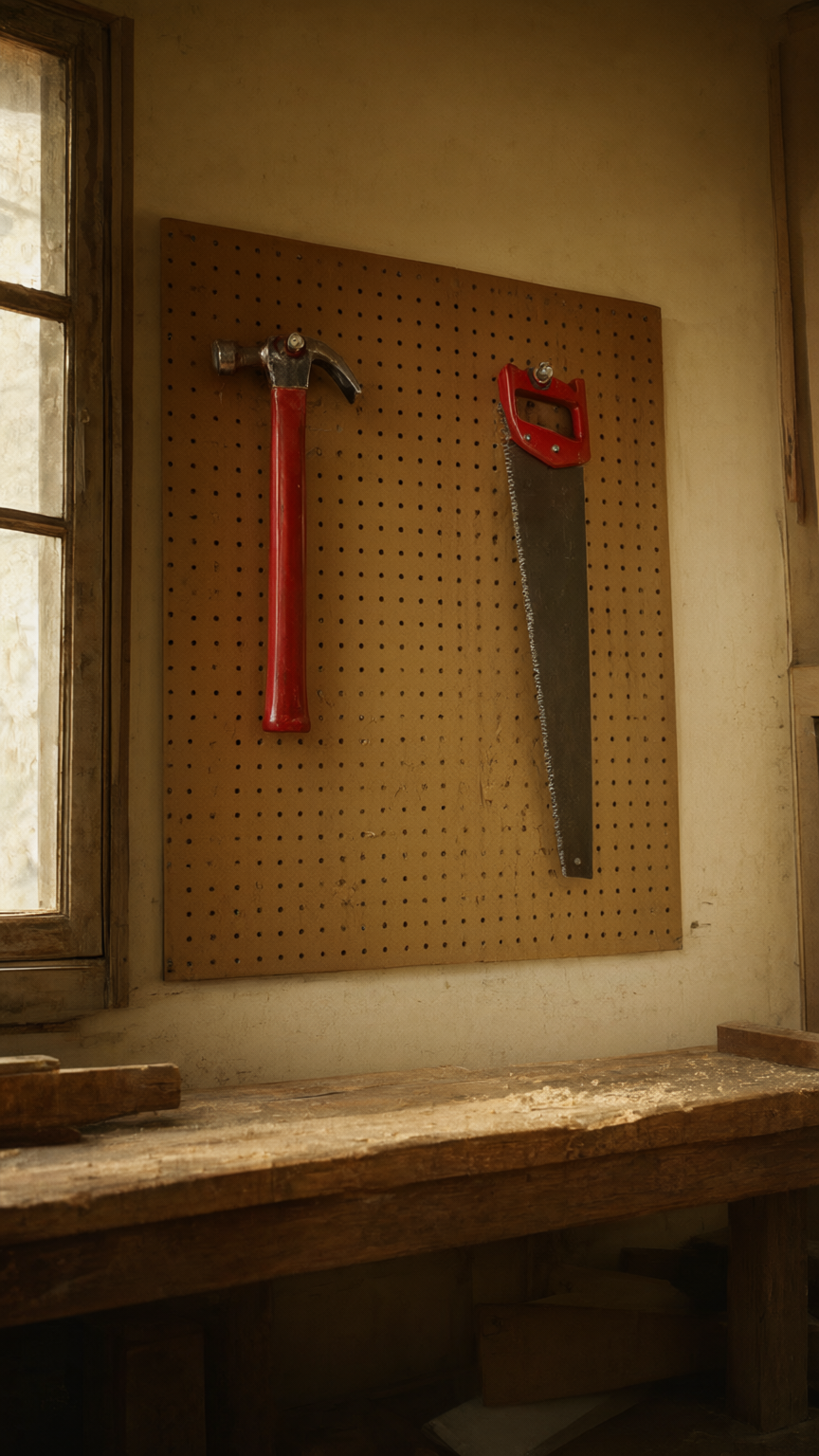
The pegboard above our workbench was a map of my father’s patience. Every tool had a hook, and every hook had a shadow traced around it in pencil. The hammer hung beside the saw, both with red handles, and the room smelled of sawdust and machine oil. Putting a tool back in the wrong spot was a small crime, and I committed it often.
A pegboard works because its holes sit in a regular grid, so hooks can be moved without drilling new holes. The hand saw is just as clever: most Western saws cut on the push stroke, when the blade stays under tension and is less likely to buckle. Did your garage have pencil outlines around the tools, too?
3. The Can Of Rusty Treasures
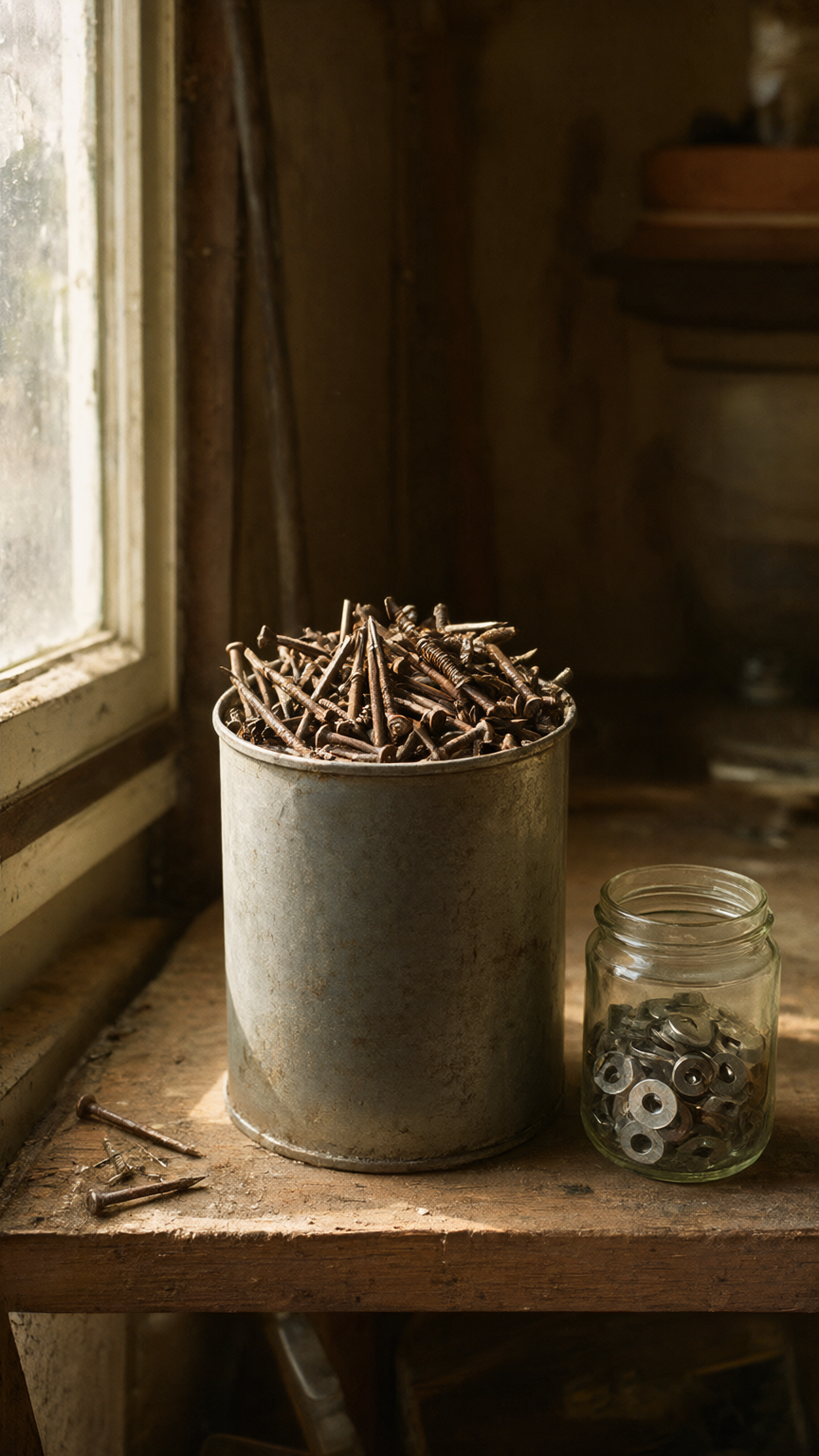
There was always a can of nails somewhere, usually a coffee can with a faded label and a lid that never quite fit. Shake it and the whole can hissed like a tiny rainstorm. Tip it onto the bench and you got a small mountain of bent nails, washers and screws, each saved for someday. The rule at home was firm: sort them on a rag, never on the floor. I learned that one on my knees.
Rust is what happens when iron or steel meets oxygen and moisture. It flakes and spreads, turning old nails rough and dark. A magnet is the fastest way to pick them up, and it will grab a screwdriver too if you are not careful. Did your family keep nails in a coffee can, too?
4. The Wheel That Sang
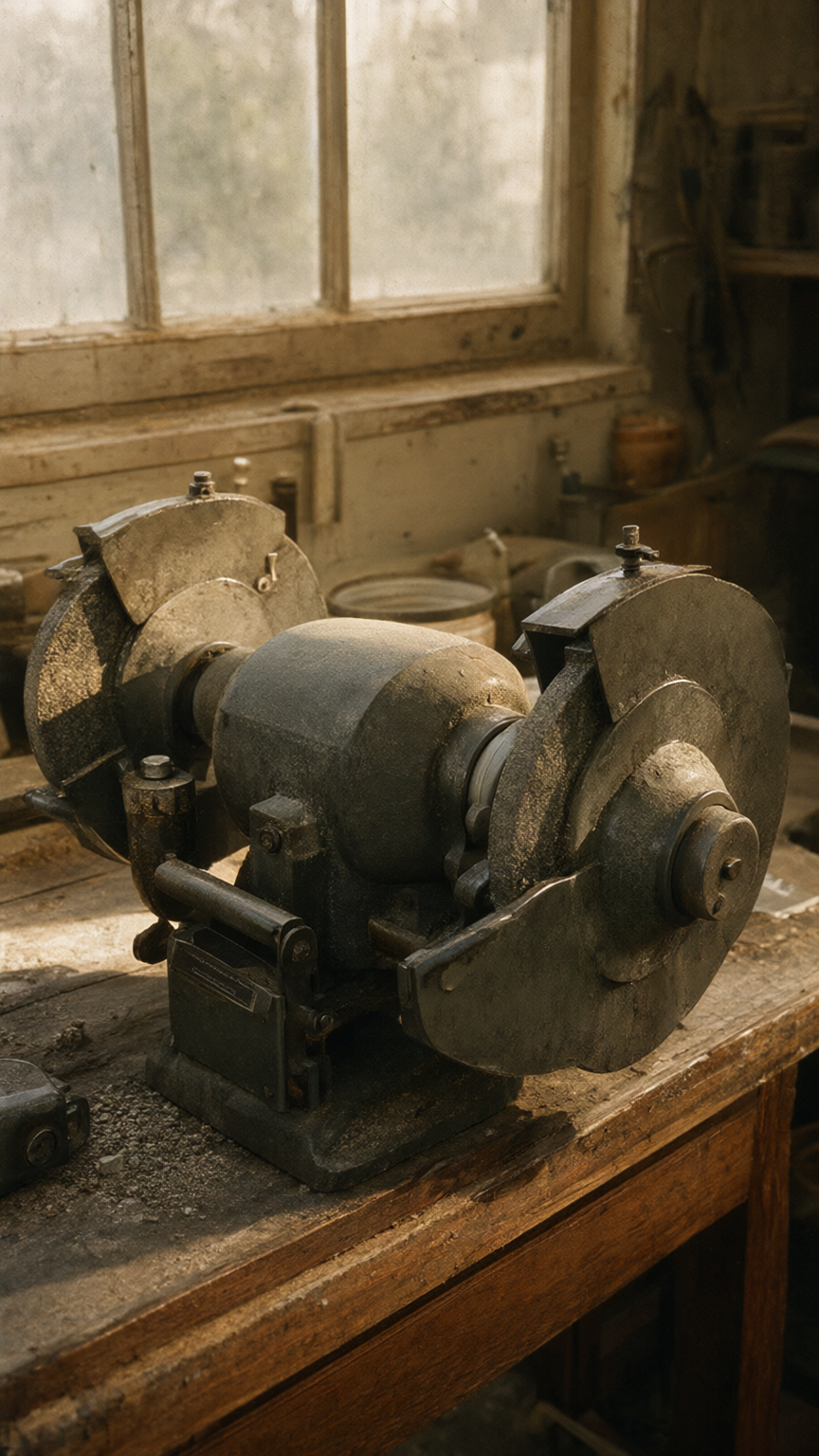
The bench grinder lived at the back of the workbench, a heavy gray machine with two stone wheels and a smell of hot metal. Dad would press the switch and the whole bench would hum. Sparks jumped in a bright little fountain, and the air filled with the sharp smell of ground steel. We were allowed to watch, never to touch.
Those stone wheels are abrasive, not toothed. They grind by wearing away tiny bits of metal, which is why they can sharpen a chisel or smooth a rough edge. The sparks are bits of metal glowing from the friction. A grinder is simple, loud and strangely beautiful. Did you ever watch the sparks from a safe distance, too?
5. The Bike That Flew Upside Down
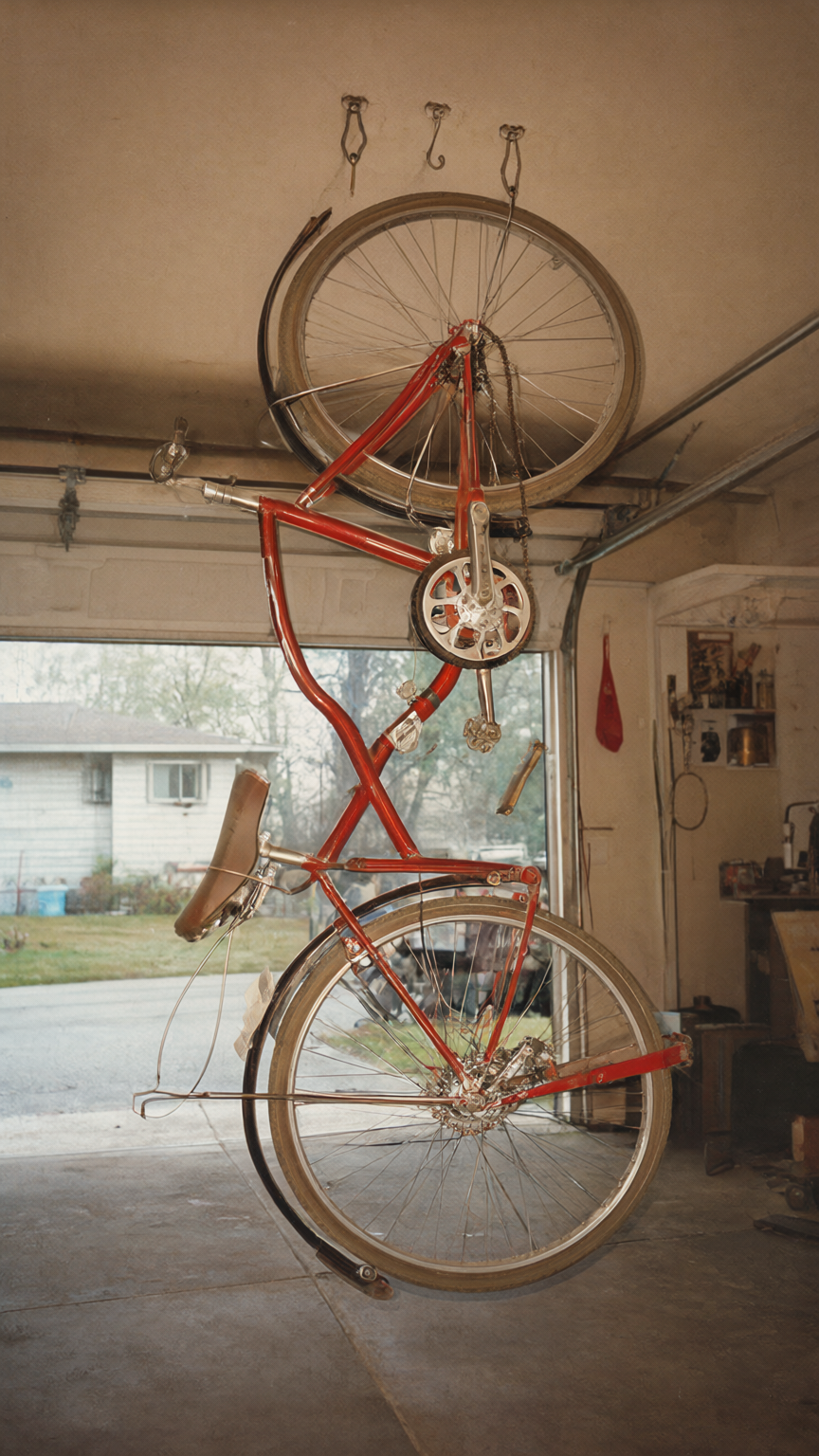
Our garage ceiling had a hook, and from that hook hung a red bicycle, upside down and slightly crooked. The seat and handlebars made a strange silhouette in the dim light. I used to stare at it from the car and wonder if it ever felt dizzy. Dad said hanging it by the wheel saved floor space and kept the tires round. The rule was that nobody unhooked it alone.
A bicycle wheel is strong in the direction it is built to roll, and hanging a bike by one wheel puts very little stress on the rim or spokes. It also keeps the tires off the cold floor. The bike looks like it is waiting for something. Maybe it was. Did your family hang a bike from the ceiling, too?
6. The Hose That Lived On The Wall
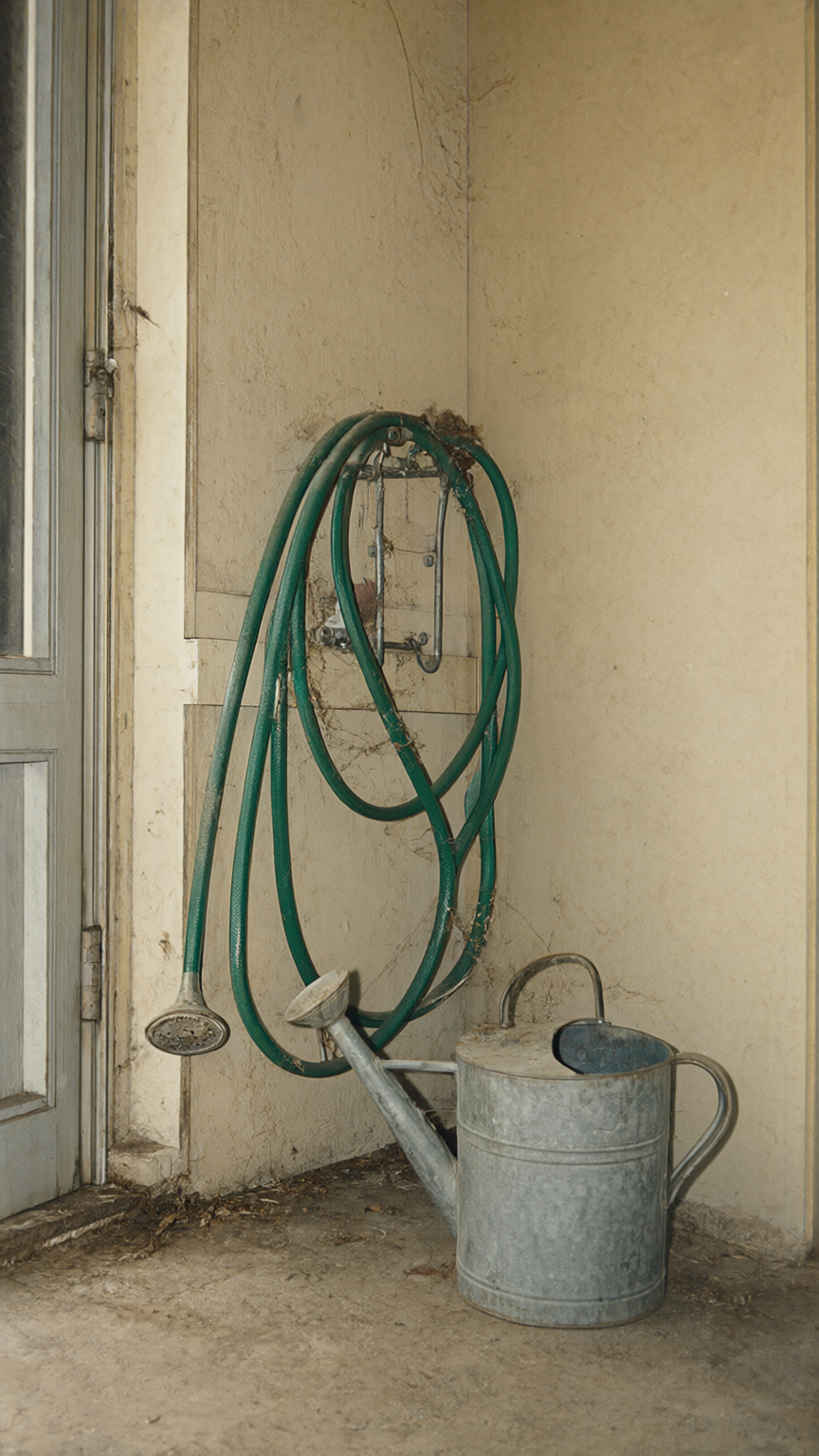
A green garden hose hung in fat loops on a bracket by the garage door, always a little gritty and always cold to the touch. In summer it smelled of rubber and warm water. You had to unwind it carefully or it would kink and stop the flow. The rule at home was to drain it before hanging it up. Someone always forgot the rule.
A kink stops a hose because it pinches the inner tube closed, the same way bending a straw stops a drink. Most garden hoses are made of rubber or vinyl around a woven reinforcement, which is why they can take the pressure without bursting. Draining one before storage keeps mold and ice out. Did yours have a favorite kink that refused to straighten?
7. The Mower That Roared
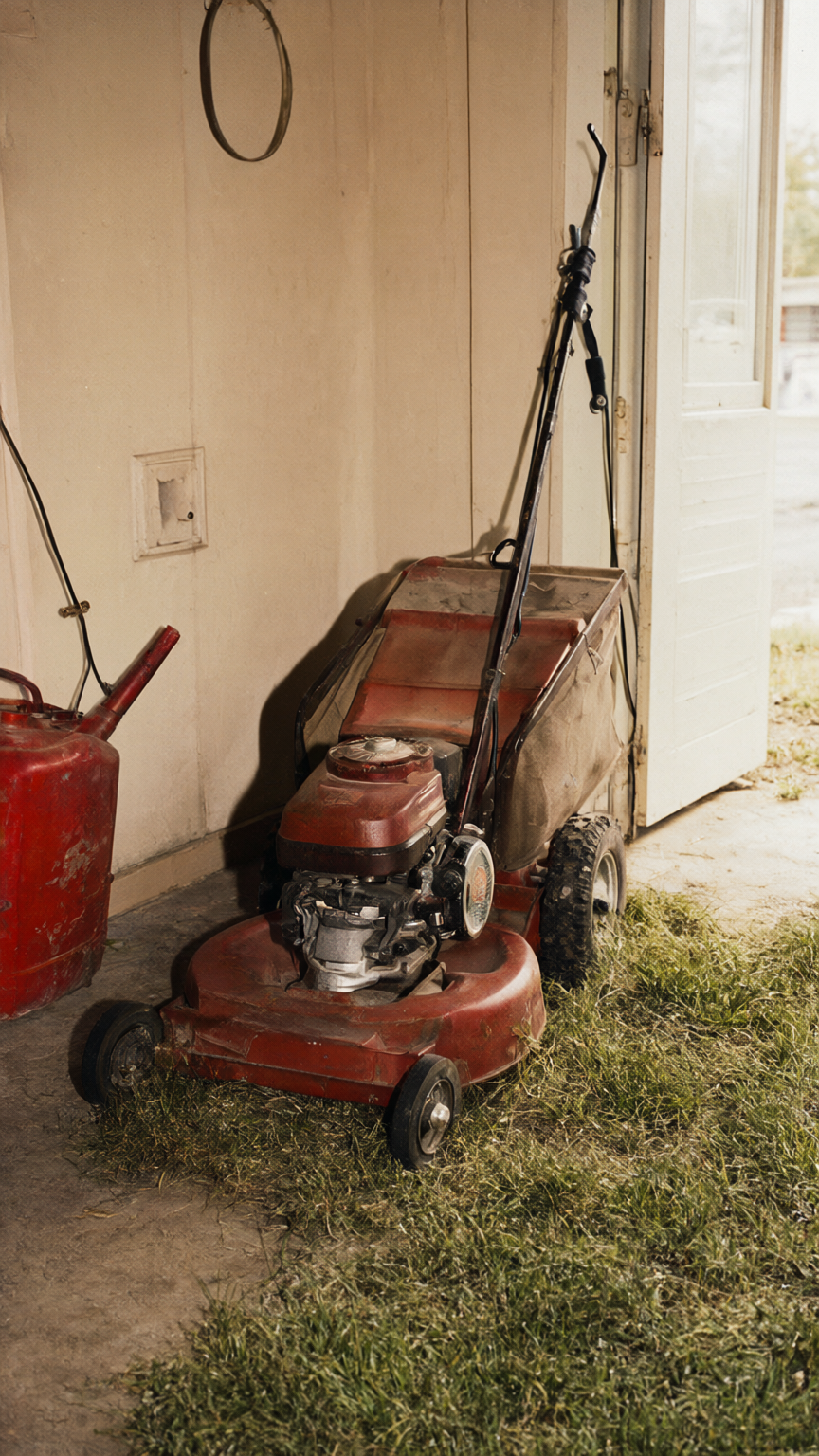
The old push mower sat in the corner like a red insect, its canvas bag hanging off the back. On Saturday mornings it came out with a rattle that set the whole neighborhood on edge. The smell of cut grass and gasoline mixed with the dust of the driveway. Dad pushed, and we followed at a safe distance, collecting the clippings that spilled from the bag. The rule was to stay behind the handles.
A walk-behind mower with a canvas bag is a simple machine. A steel blade spins under the deck, and the airflow it creates carries the clippings up into the bag. The gas can beside it was a reminder to fill up before starting. Did the sound of a mower wake you up on Saturday mornings, too?
8. Cans With Crusty Lids
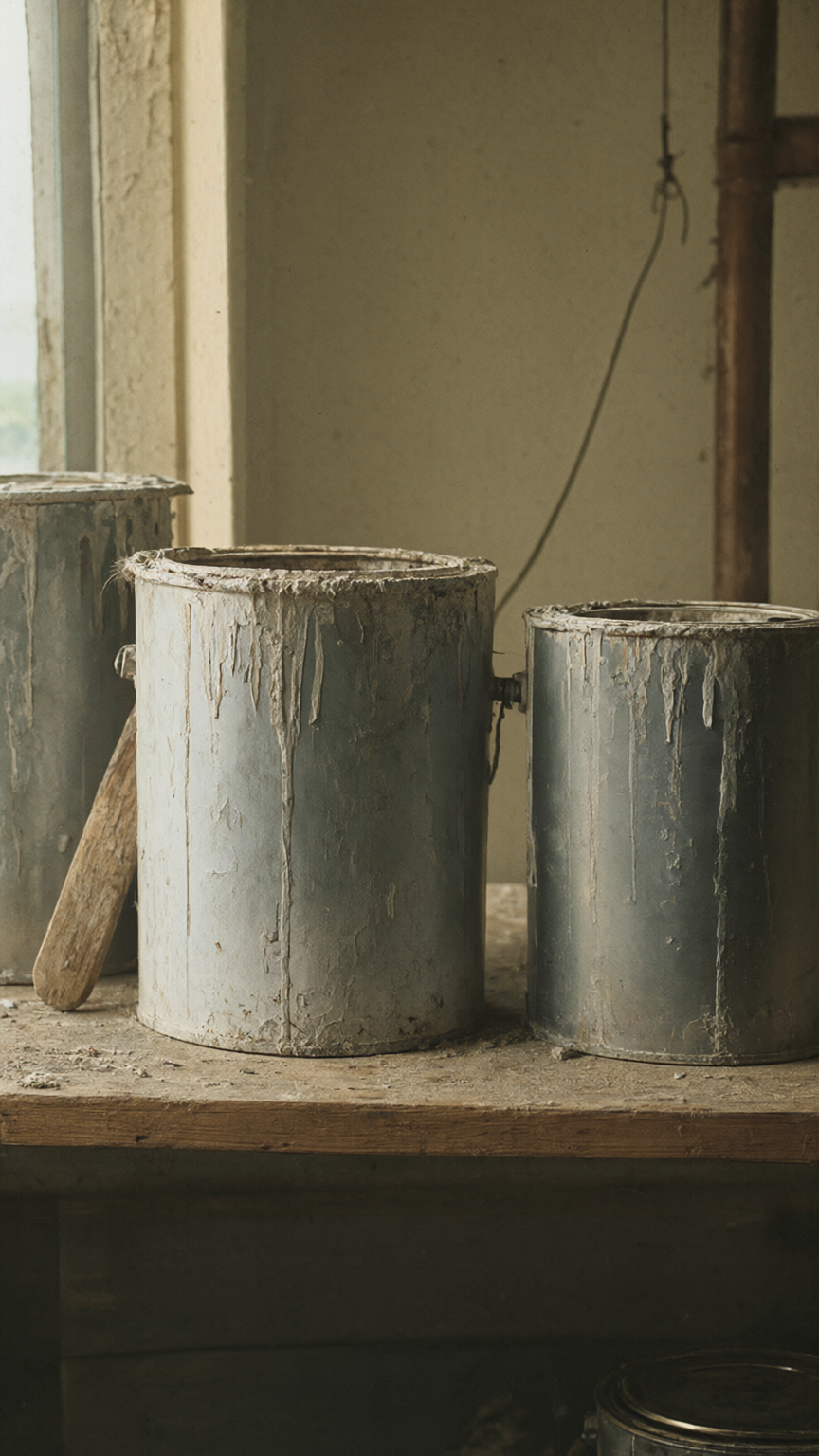
Paint cans lived on the shelf long after the walls were finished. Each lid was crusted with old color, and the sides wore drips like medals. You could smell the sharp, sweet tang of paint thinner when Dad pried one open with a screwdriver. The stirring stick was always nearby, pale and stiff with dried paint. The rule was to tap the lid down tight, and never to shake an old can.
Paint dries because the liquid part evaporates and the solid part hardens into a film. A skin can form on top if the lid is not sealed. Stirring brings the pigment back up from the bottom. Most of those cans held more history than paint. Did your garage shelf have a row of cans with names written on the lids?
9. A Box Of Bright Little Secrets
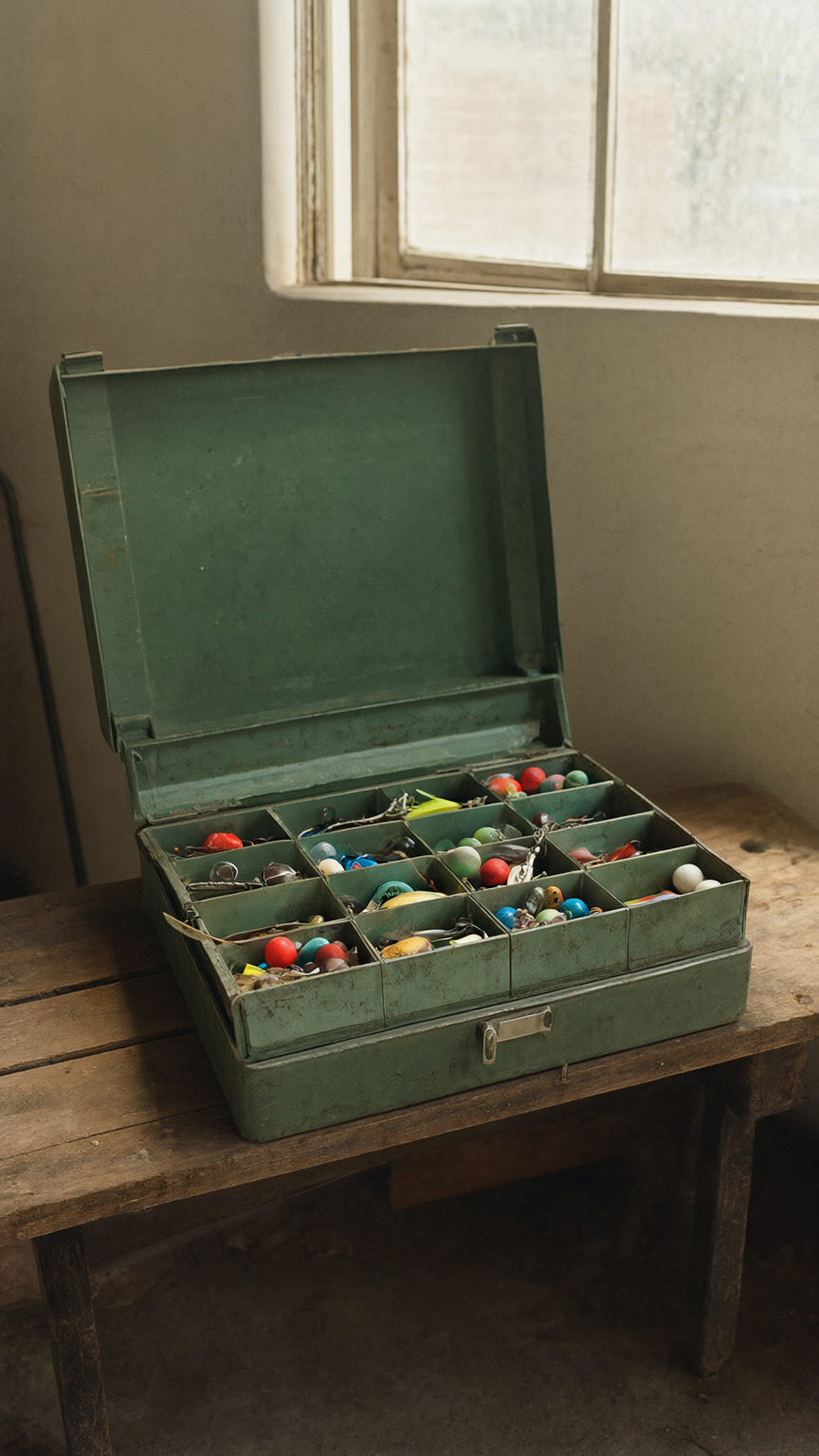
The tackle box sat on the bench like a little green suitcase full of secrets. Open it and the smell of rubber worms and old wood hit you first. Every compartment held something bright: red and white bobbers, silver spinners, hooks in their paper sleeves. Dad let us look but not touch the hooks. The rule was simple, and the hooks were sharp. I spent a lot of time just opening and closing that lid.
A tackle box is really a set of small boxes inside a bigger one, which keeps lures from tangling and hooks from finding fingers. The bobbers float because they trap air, and the lures are painted to flash in the water like small fish. The whole thing fits in one hand. Did you ever organize a tackle box just for the pleasure of it?
10. The Cord That Reached Everything
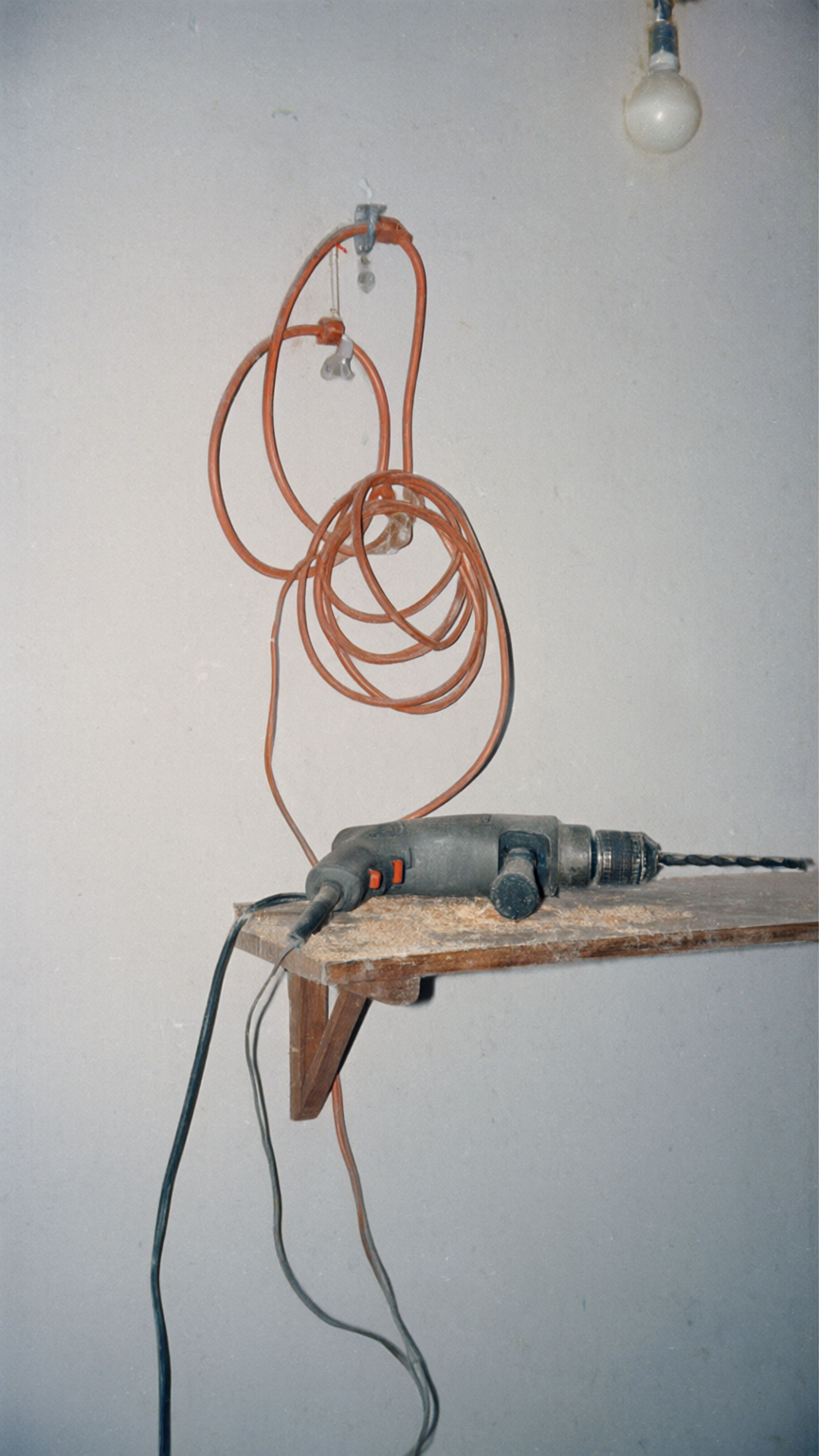
The orange extension cord hung on a hook by the door, coiled like a sleeping snake. Beside it sat the corded drill, its long bit pointing at the ceiling. The cord was always cold and slightly sticky, and it left orange dust on your hands. Dad warned us about the plug, about water and tripping. The rule was to coil it loose, never tight, and to unplug it before changing a bit.
An extension cord is rated for a certain amount of current, and a coiled cord can heat up when it carries a heavy load. The drill itself is a motor in a handle: squeeze the trigger and the bit spins, simple as that. The cord that reached everything was also the cord that demanded respect. Did yours have a knot that never came out?
11. A Knot Of Forgotten Lights
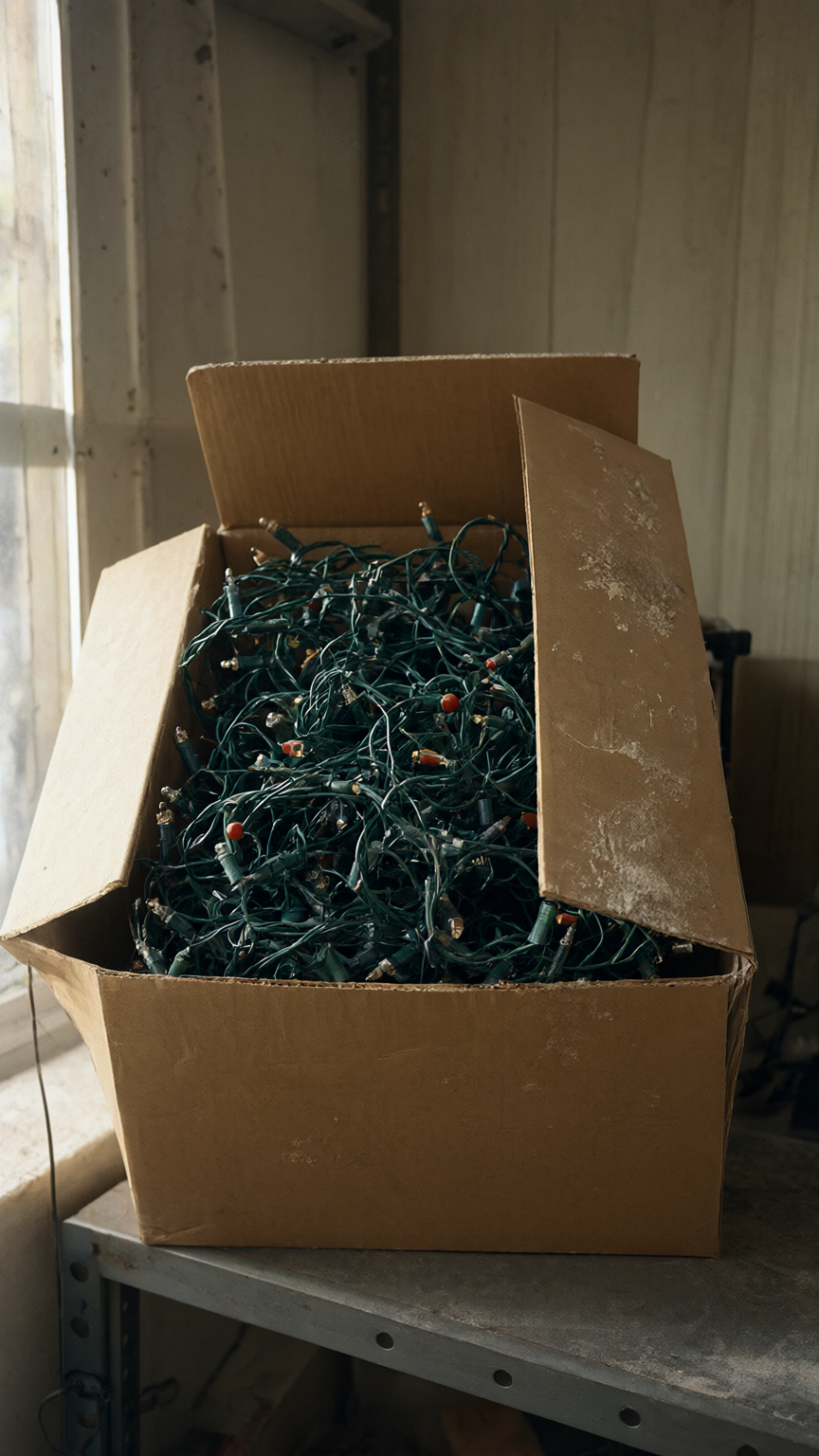
The box of Christmas lights came down from the shelf once a year, and every year it was a bigger knot than the last. Green wires, tiny colored bulbs, and a tangle that seemed to have grown in the dark. We spread it across the living room floor and followed the wire with our fingers. The rule was to test each bulb before hanging the string. Most of them were always dead.
Old string lights were wired in series, so one loose bulb could break the whole chain. That is why we went bulb by bulb with a spare in hand, and why one bad connection could turn a cheerful evening into a puzzle. Modern sets often use parallel wiring, but the old boxes still hold their mystery. Did your family have a special way of untangling the lights?
12. A Can That Bristled With Brushes

The can on the windowsill bristled with paintbrushes like a bouquet of old flowers. The handles were stiff with dried paint, and the bristles had given up being soft years ago. Dad kept them anyway, because a brush might come back to life with the right solvent. The rule was to clean brushes right away, which almost never happened.
A paintbrush holds paint in the spaces between its bristles, and once the paint hardens there, the brush turns stiff and scratchy. Solvent can soften some of it, but rarely all. The putty knife beside the can is for scraping, not painting. Together they tell the story of every half-finished job. Did your garage have a can like this, full of brushes that deserved a second chance?
13. Jars That Kept The Small Things
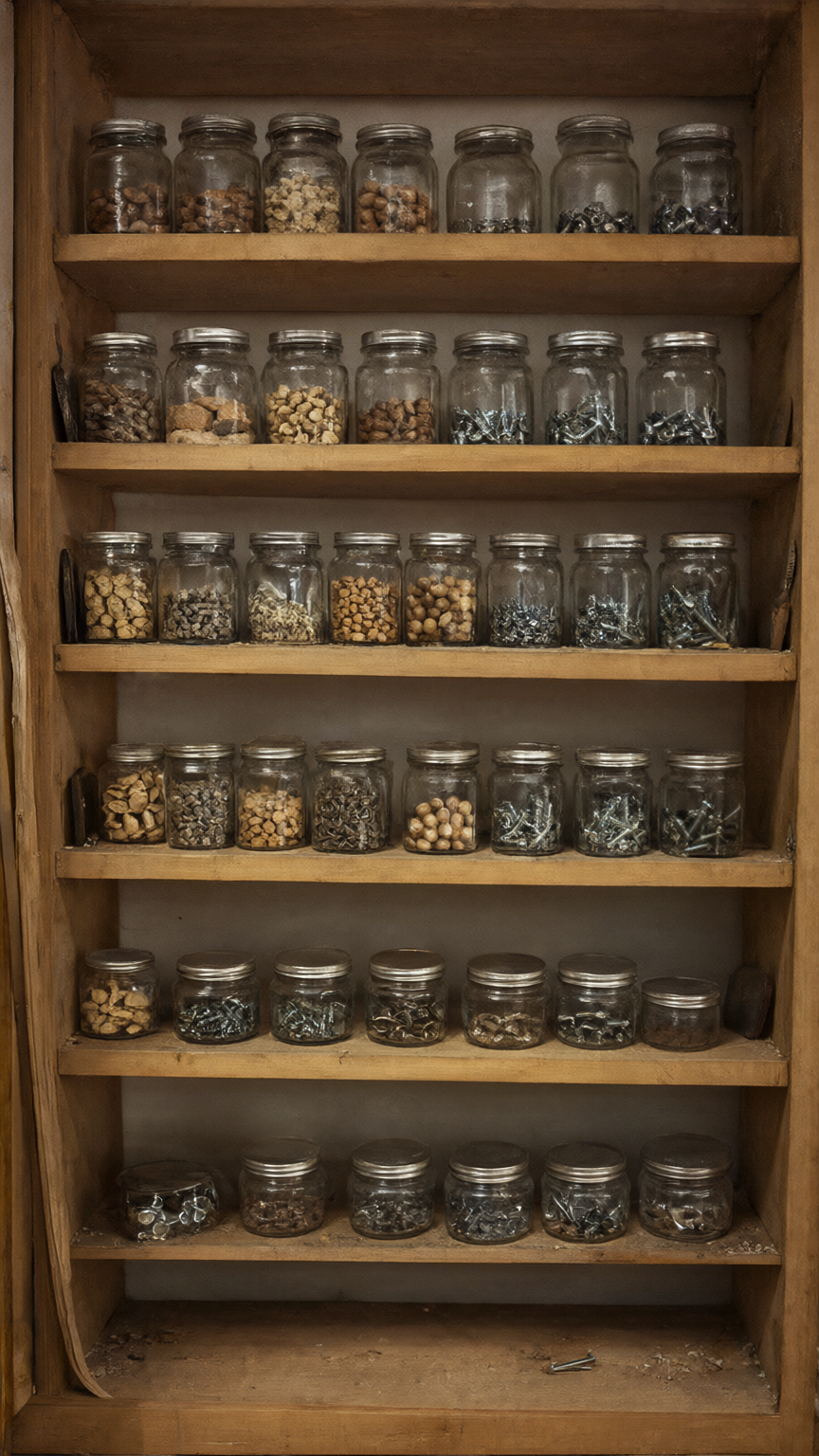
The shelf of jars was my favorite kind of library. Clear glass, plain metal lids, and inside each one a small population of nuts, bolts and washers sorted by size. You could shake a jar and hear the hardware settle with a sound like tiny rain. The jars were reused jelly jars and pickle jars, labels scrubbed off but never quite gone. The rule was to put each piece back in the right jar.
Sorting hardware by size saves time when something needs fixing, and a clear jar lets you see what is inside without opening it. Glass also keeps out dust and moisture better than a cardboard box. There was something satisfying about a shelf where everything had a place. Did your family sort nails and screws into jars, too?
14. The Beast That Swallowed Sawdust
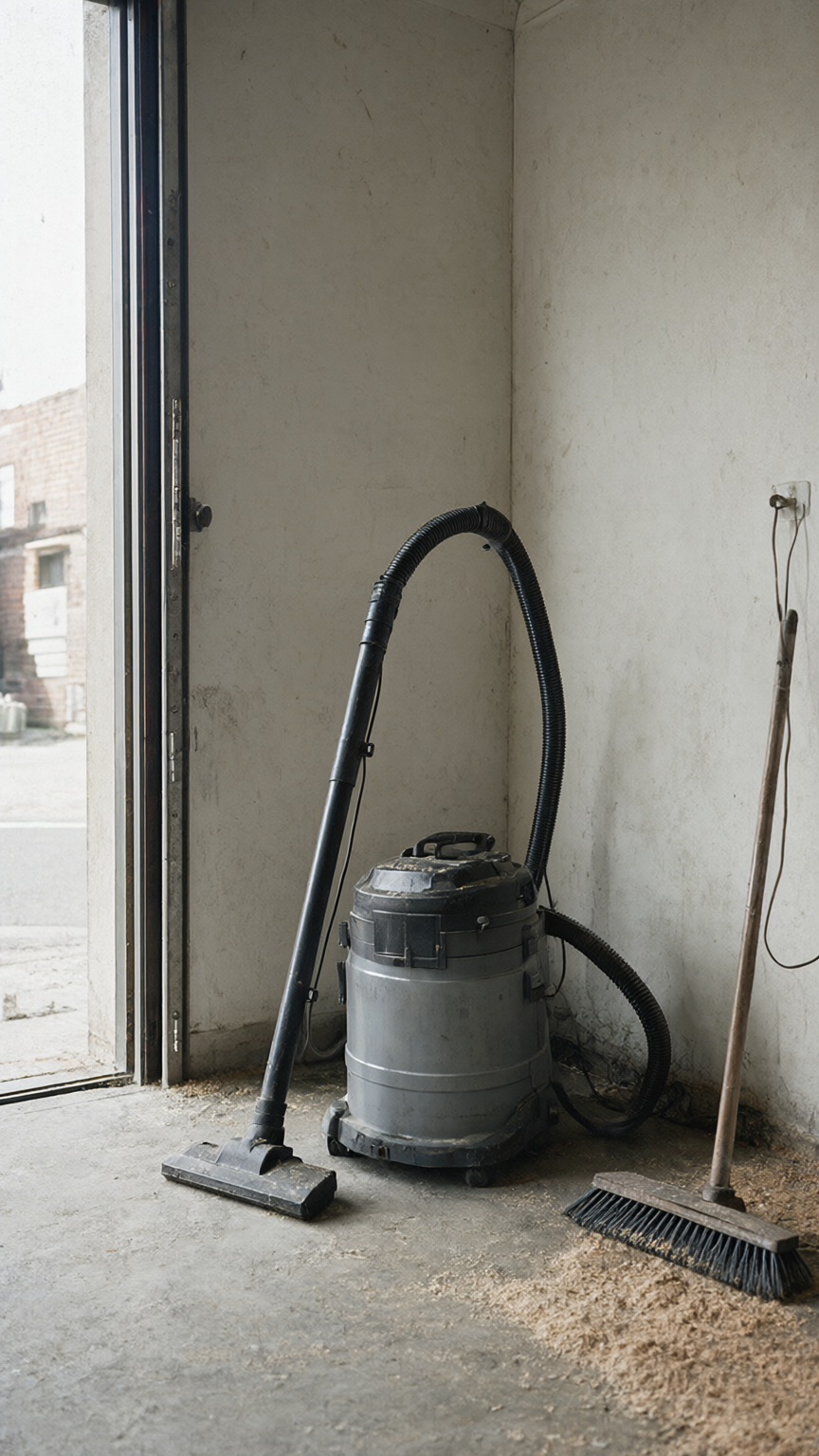
The shop vacuum stood in the corner like a gray sentry, its black hose looped over the top. When Dad switched it on, the whole garage seemed to lean toward it. The sound was enormous, a deep roar that made you shout just to be heard. It swallowed sawdust, screws, spiders and, once, a sock. The rule was to check the filter before using it.
A shop vacuum is built to handle messes a household vacuum cannot: wood chips, dust, even small puddles of water. A strong motor pulls air through a filter, and the debris drops into a tank below. The broom beside it was for the messes too big to suck up. Did yours sound like a small airplane taking off?
15. The Cart That Rested Against The Wall
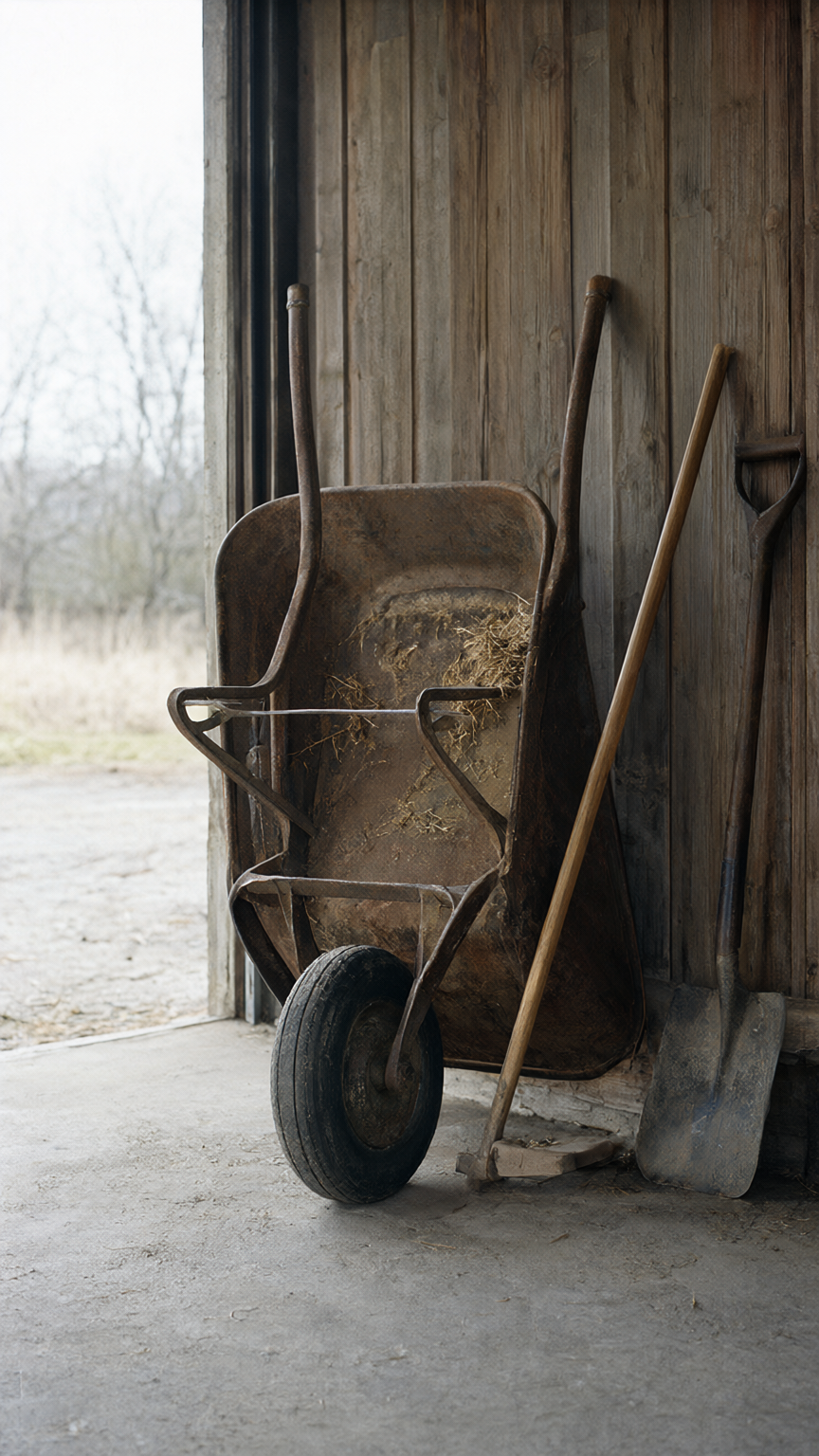
The wheelbarrow leaned against the garage wall with its tray tipped up, as if it were resting after a long day. The rusty metal smelled of old grass and rain. One wooden handle was smoother than the other from years of grip. The rake and shovel leaned beside it. The rule was to tip it up after use so rainwater would not collect in the tray.
A wheelbarrow is a lever on wheels: the single wheel carries the load, and the handles give you leverage to lift and push. That is why a heavy load feels lighter than it looks, as long as you keep it balanced. Tipping it up also keeps the tray dry. Did your family’s wheelbarrow have a wobbly wheel that always pulled to one side?
16. A Box With A Mean Bite
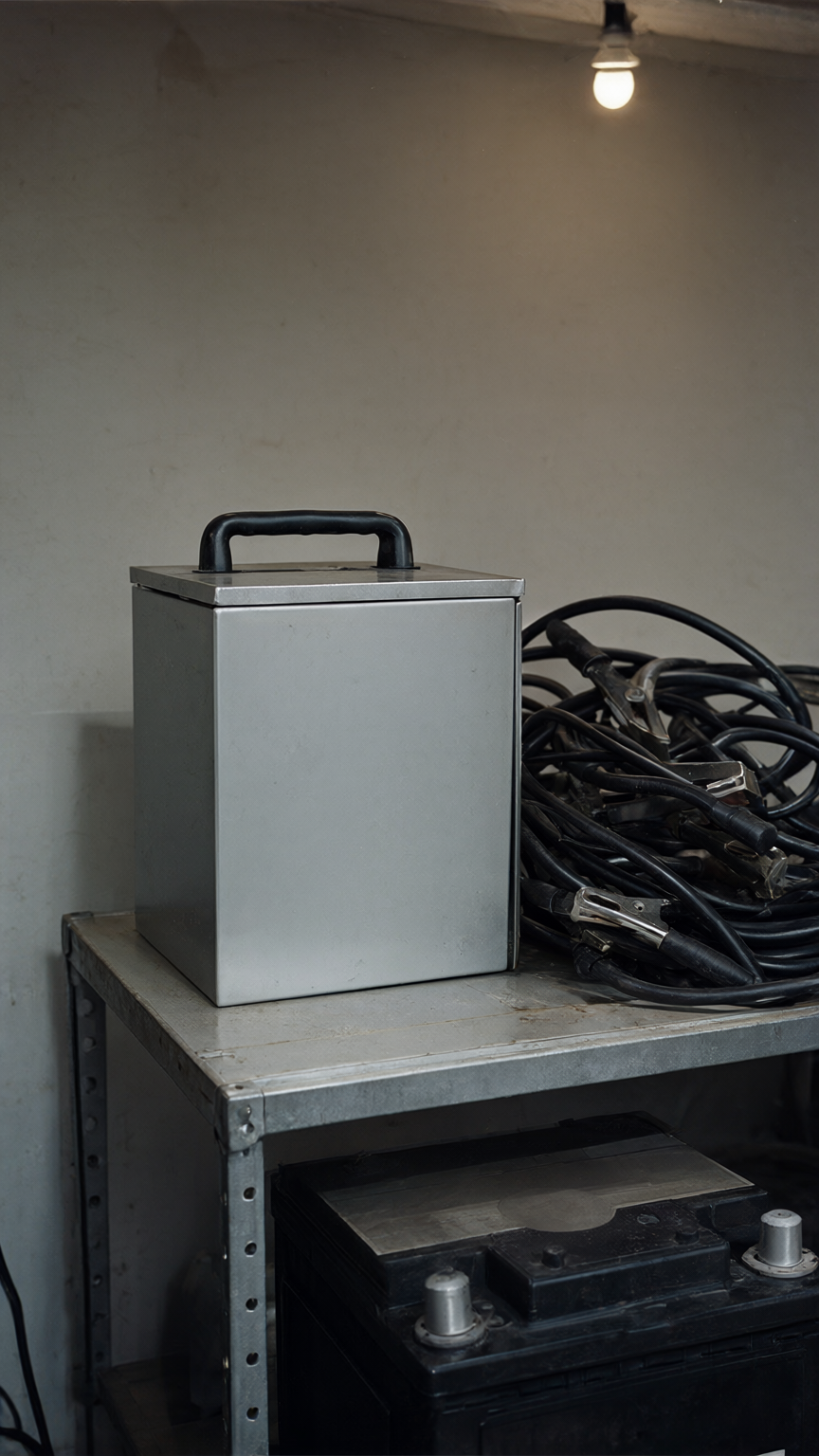
The battery charger sat on the shelf like a heavy black brick. Its cables coiled beside it, and the clamps looked like the jaws of a patient animal. The car battery below was dusty and quiet, waiting for a jump. Dad warned us about sparks and about touching the clamps together. The rule was to connect the right clamp to the right post.
A battery charger takes household electricity and turns it into the lower voltage a car battery needs. The clamps are color-coded for a reason: one goes to the positive post, one to the negative. Reversing them can damage the battery or create a spark. The charger was not a toy, and we knew it. Did your garage have a charger that seemed to weigh as much as the car?
17. The Voice That Kept Dad Company
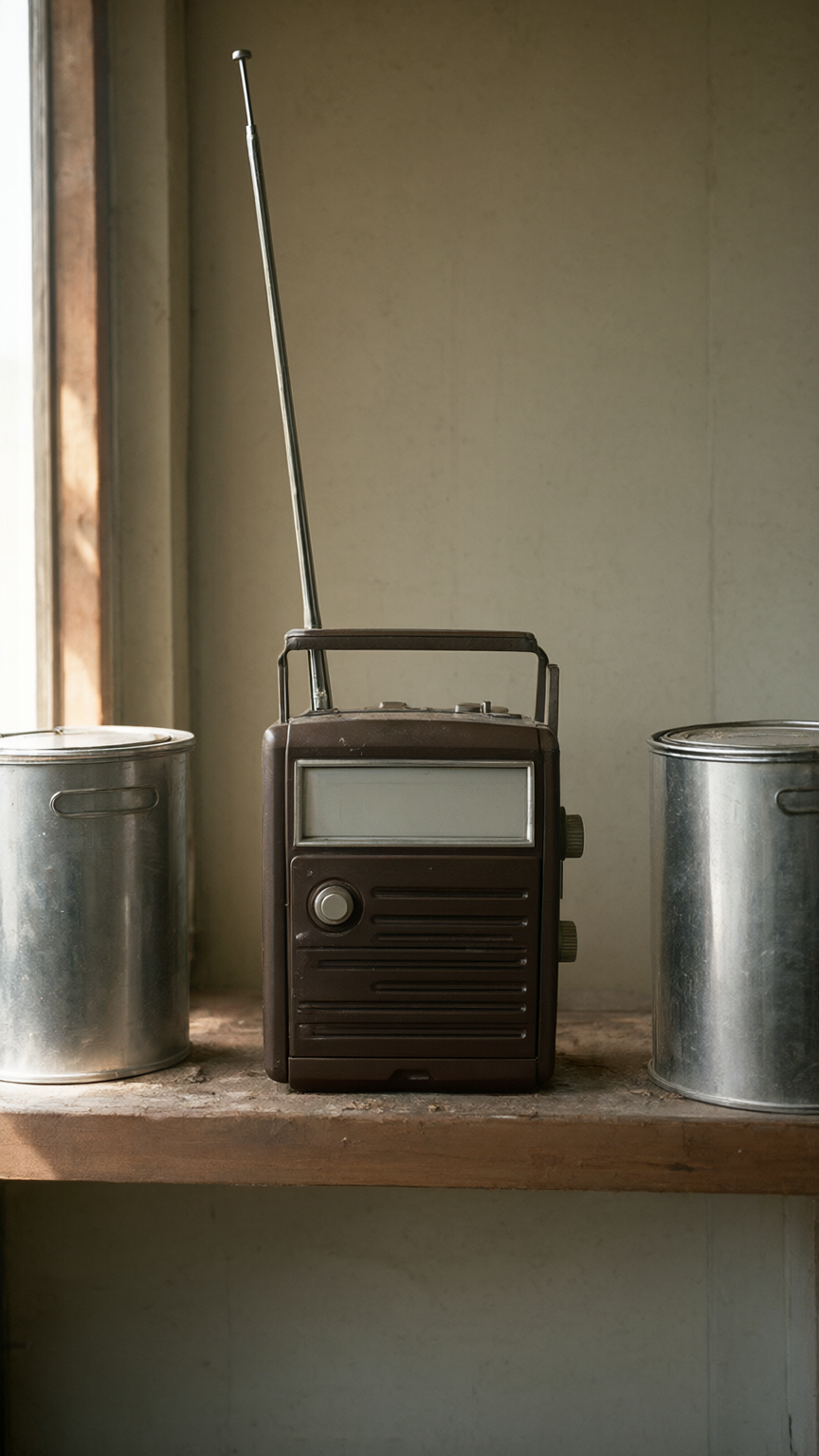
The brown radio sat between two paint cans, its antenna bent at an angle that looked permanent. The dial was blank, but Dad knew where the stations were by feel. On weekend afternoons it played ball games and old songs, mixed with static and the hum of the garage. The sound was never quite clear, and that was part of its charm. The rule was not to touch the dial once the game had started.
An antenna works best when it is extended and pointed toward the signal. AM radio waves travel farther than FM, especially at night, so a garage radio could pull in stations from towns you had never visited. The paint cans made a kind of shelf. Did your garage radio have a favorite station that faded in and out?
18. The Can That Never Stayed Full
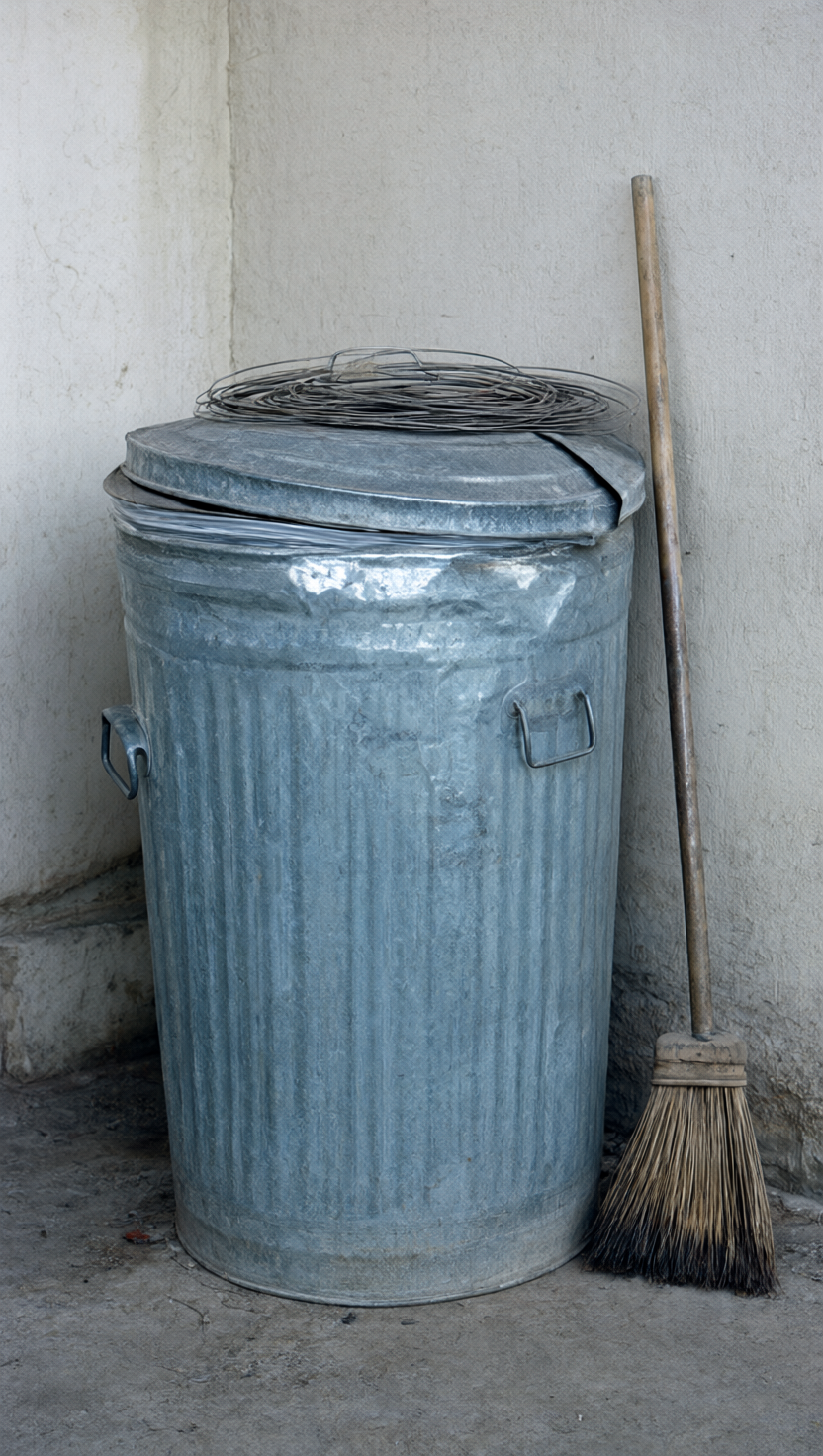
The galvanized trash can stood in the corner with its lid crooked, as if it had been interrupted. The metal was dented and dull, and the handles were cold. A coil of wire sat on top, saved for some job that never came. The broom leaned beside it. The rule was to put the lid on straight, which nobody ever did.
Galvanized steel is coated with zinc, which protects the iron underneath from rust. That is why old cans can look mottled and still hold together for years. A crooked lid let the rain in, which is why the can often smelled of wet metal. It was never just a trash can. Did yours double as a place to hide things you did not want to carry inside?
19. Steps That Went Nowhere Today
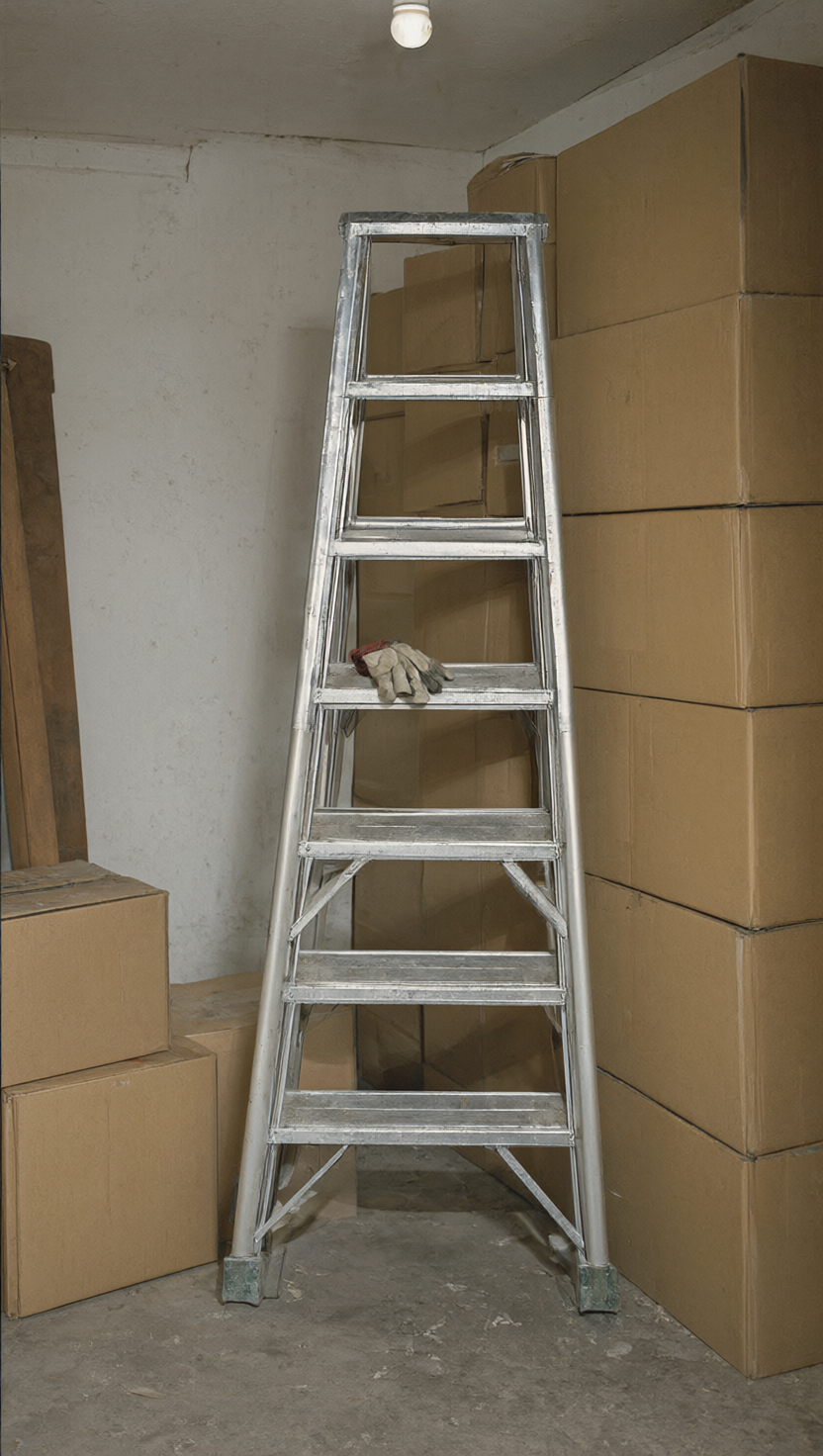
The step ladder leaned in the corner beside a stack of boxes, its aluminum legs pale in the overhead light. It was light enough to carry with one hand, and it folded flat with a satisfying click. A dusty work glove sat on one step, forgotten. We were not allowed to climb it without an adult, which made it the most interesting object in the garage. The boxes beside it held things nobody had opened in years.
An aluminum step ladder is strong because of its shape: the legs form a triangle, and triangles do not bend easily. Aluminum is also light. The glove on the step was a small reminder of a job interrupted. Some boxes are better left closed. Did your garage have a ladder that was always in the way and always useful?
20. Two Legs And A Spinning Blade
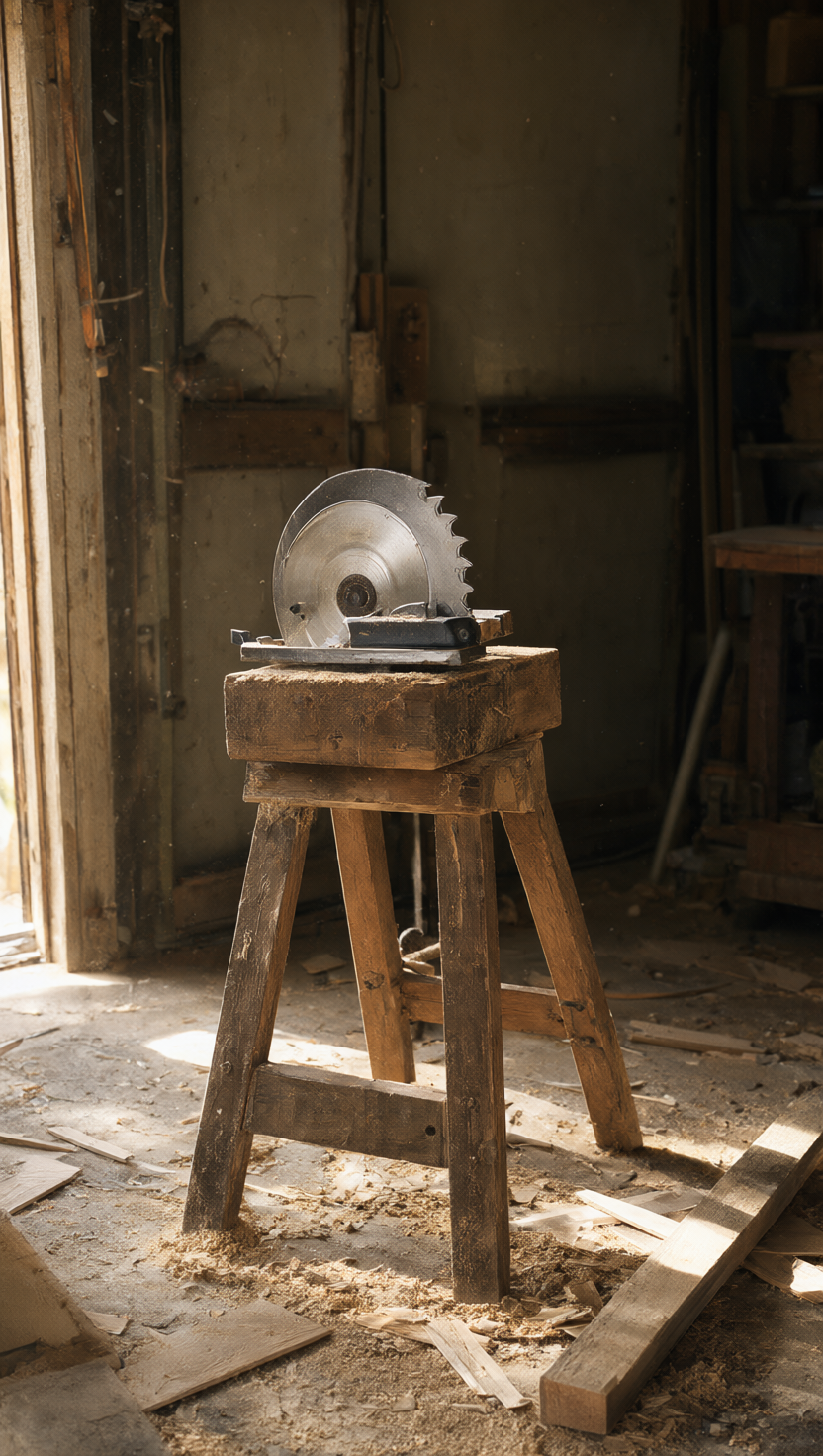
The sawhorse held the circular saw like a patient assistant. Its wooden legs were scarred with old cuts, and sawdust drifted around its feet. The saw’s blade was dull gray, its cord looped over the frame. When it ran, it made a sound that seemed to come from the floor itself. The rule was to unplug it before changing the blade.
A circular saw cuts with a spinning toothed blade, and the flat base plate keeps the cut straight. A sawhorse raises the work off the ground so the blade can pass through without hitting the floor. That is why offcut boards always ended up underneath. The combination is simple and old and still everywhere. Did your dad have a sawhorse with your name carved into it somewhere?
Maybe one of these took you straight back: the vise, the coil of orange cord, the box of lights that never untangled. Garages were where the useful things waited and where kids learned to be careful and curious at the same time. Thank you for wandering through this one with us. Keep an eye out for the next gallery of small things worth remembering.