Some days the only thing standing between you and a steadier routine is a piece of paper in a place you actually look. This free monthly habit tracker printable gives you one calm page to mark the small things you keep showing up for, all month long, without a streak counter shouting at you. It also includes a habit-ideas checklist and a reflection page, so you can start small and finish the month knowing what genuinely helped.
This printable is not a substitute for professional help.
What’s inside the printable
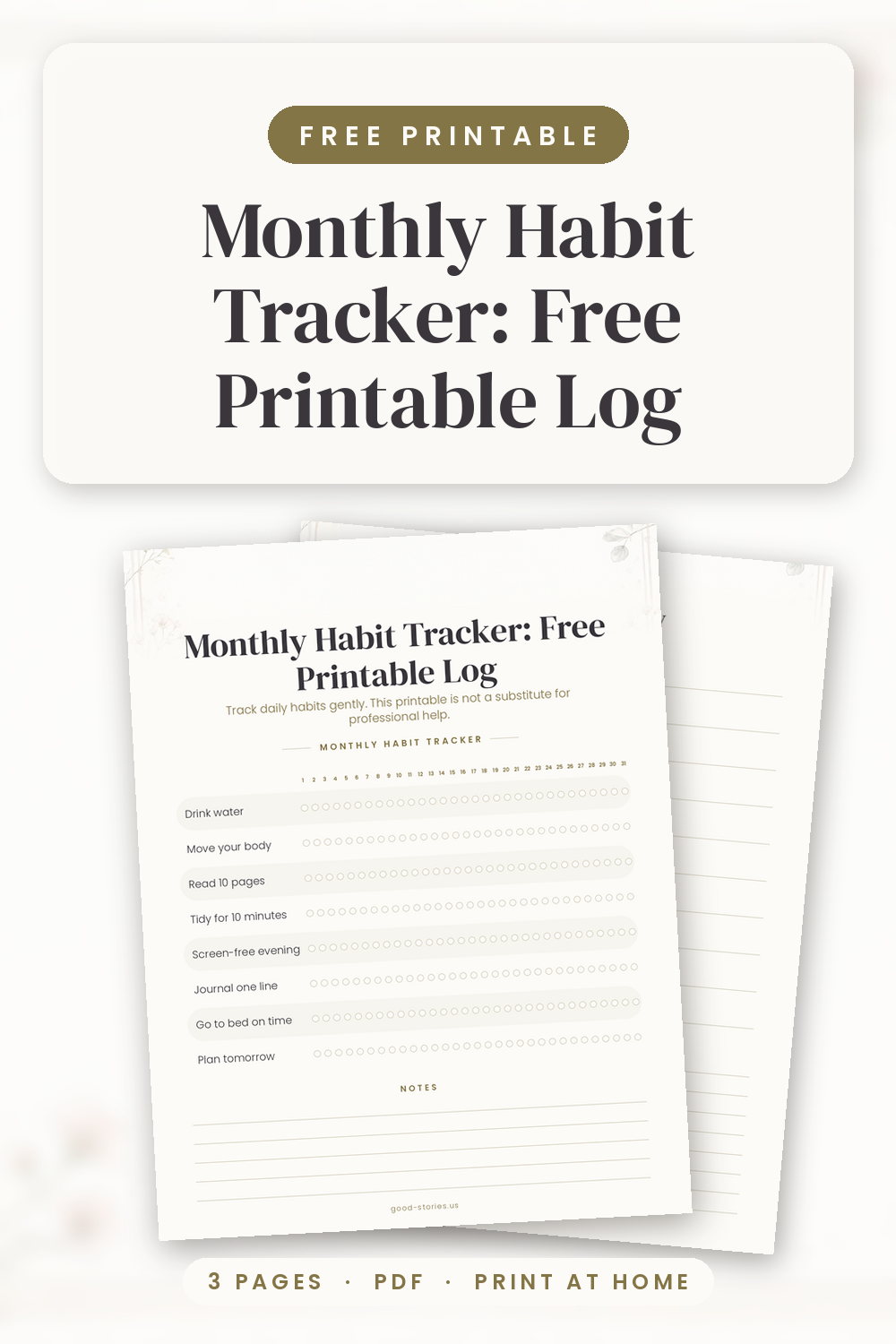
The PDF is three pages, and each one has a job.
- Page 1 – Monthly Habit Tracker: a 31-day grid with eight habit rows for water, movement, reading, tidying, a screen-free evening, journaling, bedtime and planning tomorrow.
- Page 2 – Habit Ideas to Try: a 10-item checklist of starter habits to tick or copy onto page 1.
- Page 3 – Monthly Habit Reflection: four prompt questions with writing lines for an end-of-month review.
Why a Monthly Habit Tracker Works
Most habits follow a loop: a cue nudges you, you do the thing, and a small reward tells your brain it was worth repeating. The loop gets stronger with repetition, not intensity, which is why ten minutes of reading on twenty days beats one heroic three-hour session. A monthly tracker makes that repetition visible.
There is also something quietly powerful about seeing a whole month on one page. You are not staring at one bad Tuesday; you are looking at four weeks of evidence. Patterns appear that a daily to-do list hides — the days you consistently skip, the habit that only works before lunch, the week that fell apart because you were travelling. The grid is a mirror, not a judge.
Paper has one more advantage: it is boring in the best way. No notifications, no badges, no red rings. You fill in a dot and get on with your day.
How to Choose 5-8 Habits That Meet You Where You Are
The eight blank rows are tempting, but a tracker works best when it is a little under-filled. Start with five habits and treat eight as the ceiling. Pick things you can do in a few minutes, because a habit you can complete on a bad day is a habit you will still have in March.
Then attach each one to something that already happens. Drink water after you start the kettle, journal one line before you open your laptop, stretch while the bath runs. Write the rows in the order they occur in your day so the page reads like your morning and evening rather than a random list.
How to Fill In the 31-Day Grid Without Guilt
One column per day, one row per habit. A dot, an X or a small tick — whatever your pen does naturally. Fill it in at a time you will remember: with your morning coffee, after dinner, before bed. The aim is an honest record, not a beautiful one.
Once a week, spend two minutes looking back. Notice what worked and what got skipped, and ask why without turning it into a character flaw. Missed days are information. Three missed days in a row usually means the habit is too big, the cue is missing, or the week was simply full — so shrink the habit or move the cue, and keep the page.
One practical rule: never let the tracker become homework. If you forget it for a few days, mark what you remember and carry on. Backfilling an entire month on the last evening defeats the purpose.
Habit Ideas to Try, and How to Make Them Yours
Page 2 holds ten starter habits: waking at the same time, a glass of water, a ten-minute walk, stretching before bed, one gratitude line, reading before scrolling, tidying one small surface, planning tomorrow tonight, stepping outside for daylight, and unplugging half an hour before bed. Choose two or three, copy them onto page 1, and save the rest for another month. The list is a menu, not a to-do list.
If none of them fit your life, write your own in the same spirit: small, specific and doable in under ten minutes. “Text one friend” counts. “Overhaul my entire evening” does not.
An End-of-Month Reflection in Four Questions
The last page asks which habit felt easiest, which you skipped most often, what made the skipped days harder, and which small change you will try next month. Ten minutes with a cup of tea is enough. Honest answers are more useful than flattering ones.
Then build next month from what you learned: keep the habit that worked, shrink the one that did not, and drop the one that only sounded good in theory. That reflection is where the tracker stops being a chart and starts being a tool.
How to use your printable
- Print page 1 on US Letter at 100% for the crispest grid.
- On A4 paper, choose “Fit to page” in your print dialog so the edges are not clipped.
- Print a fresh copy at the start of each month and keep page 2 nearby when you choose your habits.
- Clip the tracker to the fridge, a clipboard or the front of your planner where you will actually see it.
- Laminate page 1 or slide it into a plastic sleeve and use a dry-erase marker to reuse it month after month.
- Use a fine-liner in a colour you like. A pleasant pen is a surprisingly good cue.
Routines rarely change in one grand gesture; they change in small, repeated actions that stop feeling like effort. Print the page, choose five habits, and let the month show you what works. Next month’s version can be a little wiser.