The holiday baking season is short and the cookie tin fills up fast. Between the cookie exchange, the office party, and the batch you make just for the house, December can turn into one long sugar rush. The good news is that lighter Christmas cookies do not require a new recipe box. A handful of small swaps, a little less sugar here and a little yogurt there, keep the cookies you love while making them a touch lighter. None of this is a diet trick. These are sensible little adjustments that still leave you with cookies worth putting on the holiday table.
Trim the Sugar in Drop Cookies by a Quarter
Sugar is not just sweetness in a drop cookie. It draws in moisture, helps the dough spread in the oven, and turns the edges that deep golden brown we all look for. That is why cutting sugar in half tends to backfire: the cookies stay pale, dome up, and taste flat. Start with about a quarter less than the recipe calls for. A recipe with one cup of sugar becomes three-quarters of a cup.
The dough will spread a little less, so flatten the tops gently with the back of a spoon before baking, and check the first tray a minute or two early. Most drop cookies, chocolate chip, oatmeal, and snickerdoodles included, handle the trim without complaint. Keep the full amount in recipes where sugar is doing structural work, like meringues and thin crisp cookies.
Swap Half the Butter for Greek Yogurt or Applesauce
In soft drop cookies, butter brings richness and moisture. It also brings a lot of fat. Plain Greek yogurt and unsweetened applesauce can take over half of it and still leave you with a tender, chewy cookie. Use the thick plain yogurt, not the flavored cups, and stir it well so it measures evenly. Applesauce adds a gentle sweetness and works especially well in oatmeal and spice cookies. Yogurt brings a slight tang that plays nicely with chocolate.
Keep the other half of the butter exactly as written, because fat carries flavor and gives the cookie its body. Leave this swap alone for shortbread, butter cookies, and any dough meant to bake up crisp. Those recipes are mostly butter, and they need all of it.
Use Whole-Wheat Pastry Flour for Half the Flour
Regular whole-wheat flour can make cookies heavy and a little gritty. Whole-wheat pastry flour is milled much finer from a softer wheat, so it behaves more like all-purpose flour while adding a bit more fiber. Swap half the all-purpose flour in the recipe, not all of it. If a recipe calls for 1 1/2 cups all-purpose, use 3/4 cup all-purpose plus 3/4 cup whole-wheat pastry flour.
Whisk the two flours together before you measure so the blend is even. If the dough feels dry, add milk a teaspoon at a time until it comes together. The cookies will look slightly darker and taste a little nuttier, which is a happy thing in a holiday tin.
Dark Chocolate Chips, Smaller Scoops, and a Half-Uniced Batch
Three small moves finish the batch.
- Pick dark chocolate chips over milk chocolate. Dark chocolate has more cocoa and less sugar per chip, so a smaller handful tastes bigger and the cookies still read as chocolatey.
- Scoop 1-tablespoon cookies instead of 2-tablespoon ones. The batch goes further, the cookies bake a little faster, and each one is a built-in smaller portion.
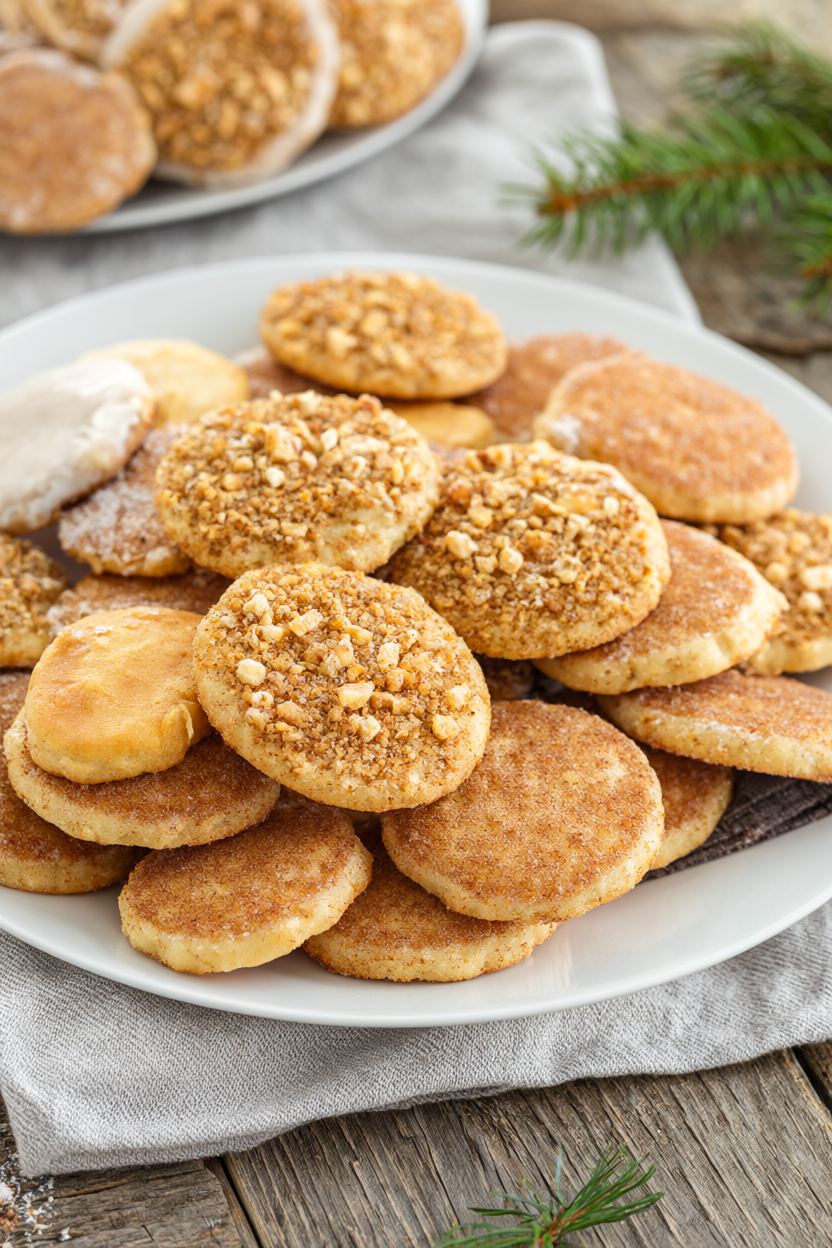
- Leave half the batch uniced. Skip the frosting on every other cookie and finish those with cinnamon sugar or crushed nuts instead. You lose a layer of added sugar and gain a little crunch.
The uniced half also gives you two kinds of cookies for one effort, which is a nice thing when the tin has to stretch to a few houses. Set the iced ones on one cooling rack and the cinnamon-sugar ones on another so nobody has to guess.
None of these swaps makes a holiday cookie taste like a compromise. Trim the sugar a little, borrow moisture from yogurt or applesauce, blend in some pastry flour, and let dark chocolate and a smaller scoop do the rest. The result is a lighter Christmas cookie that still belongs on the table, and a baking afternoon that feels easy rather than fussy. Happy baking, and save a warm one for yourself.